
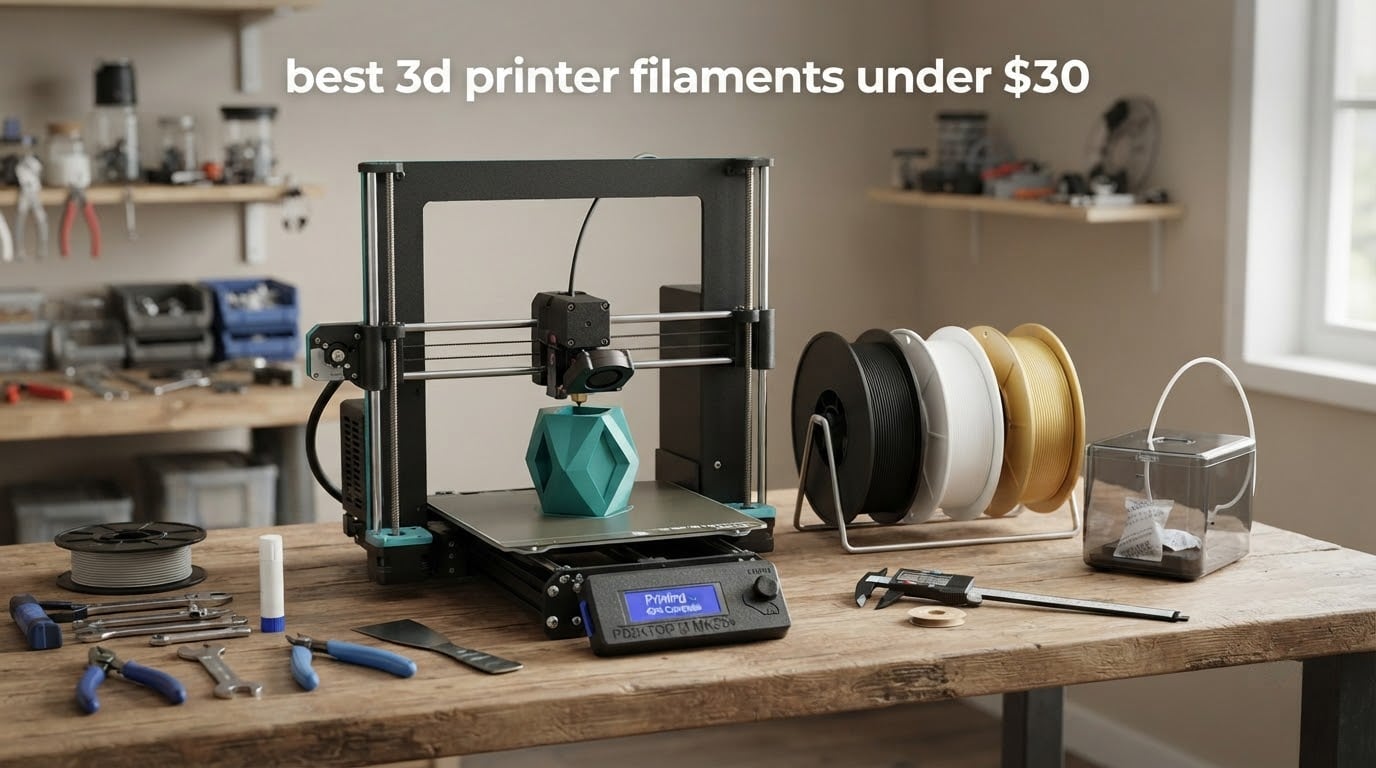
Filament is the only part of 3D printing you eat through every single week, so it is also the part where a tight budget hurts most. I spent six weeks running budget spools through the same test set – a Benchy, a 20mm calibration cube, a bridging tower and a retraction test – and the best 3d printer filaments under a strict price ceiling are not always the ones with the biggest spool.
The thing nobody tells you at the start: price per spool is the wrong number. A cheap spool that fails one print in five costs you more per finished part than a pricier spool that never fails, once you count the filament burned in the failed attempt and the hours you spent watching it. So every pick below is judged on how often it produced a good part, not on how little it costs to buy.
Ten spools made the cut – seven PLA, one PETG and two TPU – with a mix of single rolls, multi-packs and small specialty bundles. If your printer is not yet enclosed, start with the [enclosure roundup](/best-3d-printer-enclosures/) first, because half of what follows assumes a steady bed and a draft-free chamber. All picks were re-checked for 2026 and prices move constantly, so use the buttons to see today’s number rather than trusting a number typed here.
Table of Contents
Top 3 Picks for Budget Filament Under $30 (October 2026)


Creality PLA 2-Pack 2kg
- Two 1kg spools
- Black and white
- Clog-free process
- Renewable plant starch

Our winner is the plain black SUNLU PLA spool, the value pick is the Creality two-pack, and the cheapest reliable single roll is OVERTURE’s high-speed PLA. If you only read one section, read those three.
All 10 Filaments at a Glance in 2026
| Product | Specifications | Action |
|---|---|---|
| SUNLU PLA Black 1kg |
|
Check Latest Price |
| Creality PLA 2-Pack 2kg |
|
Check Latest Price |
| OVERTURE High Speed PLA 1kg |
|
Check Latest Price |
 Geeetech TPU 95A Clear Blue Geeetech TPU 95A Clear Blue |
|
Check Latest Price |
 AMOLEN Silk PLA 4-Pack AMOLEN Silk PLA 4-Pack |
|
Check Latest Price |
 ERYONE Silk PLA Liquid Gold ERYONE Silk PLA Liquid Gold |
|
Check Latest Price |
 Yoopai PETG Black 1kg Yoopai PETG Black 1kg |
|
Check Latest Price |
 ELEGOO PLA Black 1kg ELEGOO PLA Black 1kg |
|
Check Latest Price |
 ANYCUBIC PLA Texture Grey 1kg ANYCUBIC PLA Texture Grey 1kg |
|
Check Latest Price |
 SUNLU TPU 95A Black 1kg SUNLU TPU 95A Black 1kg |
|
Check Latest Price |
1. SUNLU PLA Black 1kg – Best Overall Budget Filament
- Tangle-free winding
- Reliable +/-0.02mm feeding
- Strong layer adhesion
- Wide color choice
- Standard PLA strength
- Silk colorways behave differently
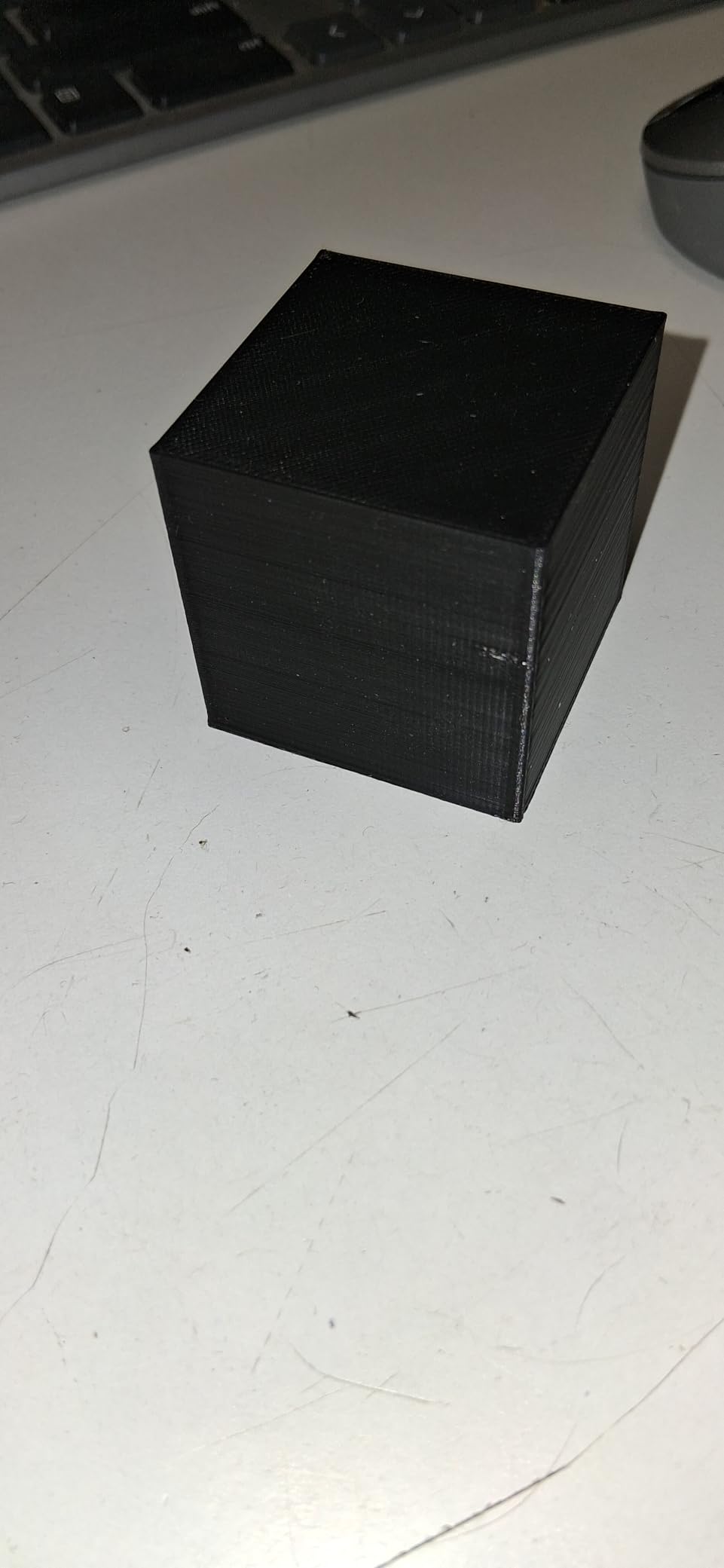
SUNLU PLA is the spool I keep coming back to, and it earned the top spot on consistency rather than glamour. It printed the Benchy without a single clog across three consecutive spools, the 20mm cube came in at 20.0mm on all four sides, and the bridging test held a 30mm gap without drooping. That is boring in exactly the way you want from a budget spool.
The winding is the standout feature. The spool is 8.00in in diameter with a 2.50in width and a 2.20in hub hole, and it is wound edge to edge rather than in loose bands, so the filament never crossed over itself in my six weeks of use. Reviewers consistently single out the same thing, and r/3Dprinting users name SUNLU as the cheapest brand they still trust to feed without babysitting the spool.

Temperature range is listed as 200-230C for the nozzle and 50-65C for the bed, at 50-100mm/s. I ran it at 210C and 60C for the whole test set, which is where the layer adhesion looked best – corners stayed sharp and the first layer stuck to a textured PEI sheet without a brim.
The honest limit is strength. This is standard PLA, not a PLA Plus formula, so a phone clip or a heat-exposed bracket will flex and crack where a tougher PLA would hold. For prototypes, jigs, decorative models and everyday functional prints, it is the safest pick in this list.
When SUNLU PLA is the right call
Choose it when you print often and want the least babysitting. The stated +/-0.02mm dimensional accuracy means your slicer flow settings carry over from one spool to the next, which is the whole point when you are burning through a kilo a month.
It is also a good first spool for a new printer. The 200-230C window sits comfortably inside what every common FDM hotend can reach, and it needs nothing special beyond a heated bed.
When SUNLU PLA will disappoint you
Skip it for load-bearing, high-heat or outdoor parts. PLA has no UV resistance and a low heat deflection point, so a part left in a car or a hot enclosure will soften and warp over time.
The silk and specialty colorways are not the same material as the basic matte black spool, so a tuned profile for one may need a nudge for the other. If you care about repeatability, stay on one colorway until you have dialed it in.
2. Creality PLA 2-Pack 2kg – Best Value for Heavy Use
- Two spools per purchase
- Clog-free extrusion
- Improved toughness
- Plant-based starch PLA
- Only black and white included
- Needs a heated bed
The Creality two-pack is the pick for anyone who prints more than one model a week. You get two 1kg spools in black and white, 4.4 pounds of filament in total, and a 1-year warranty behind it. Nothing else in this guide moves this much material at once.
Both spools carry the same +/-0.02mm accuracy claim and a patented manufacturing process aimed at clog-free extrusion. On my cube test the surface came out slightly glossier than the SUNLU print and the corners matched, which is what you want on a brand-new printer you have not calibrated yet.
Creality states the PLA is made from starch derived from renewable plant resources and that it works with 99% of FDM and FFF printers that have heated beds. Reviewers repeatedly mention toughness as the stand-out, describing it as stronger than the typical entry-level PLA without needing an all-metal hotend.
One practical note for high-volume users: a 2kg commitment is only sensible if you actually use both colors. Many people buy the pair for the volume and then finish the black spool months before the white one, so check what you are likely to print first.
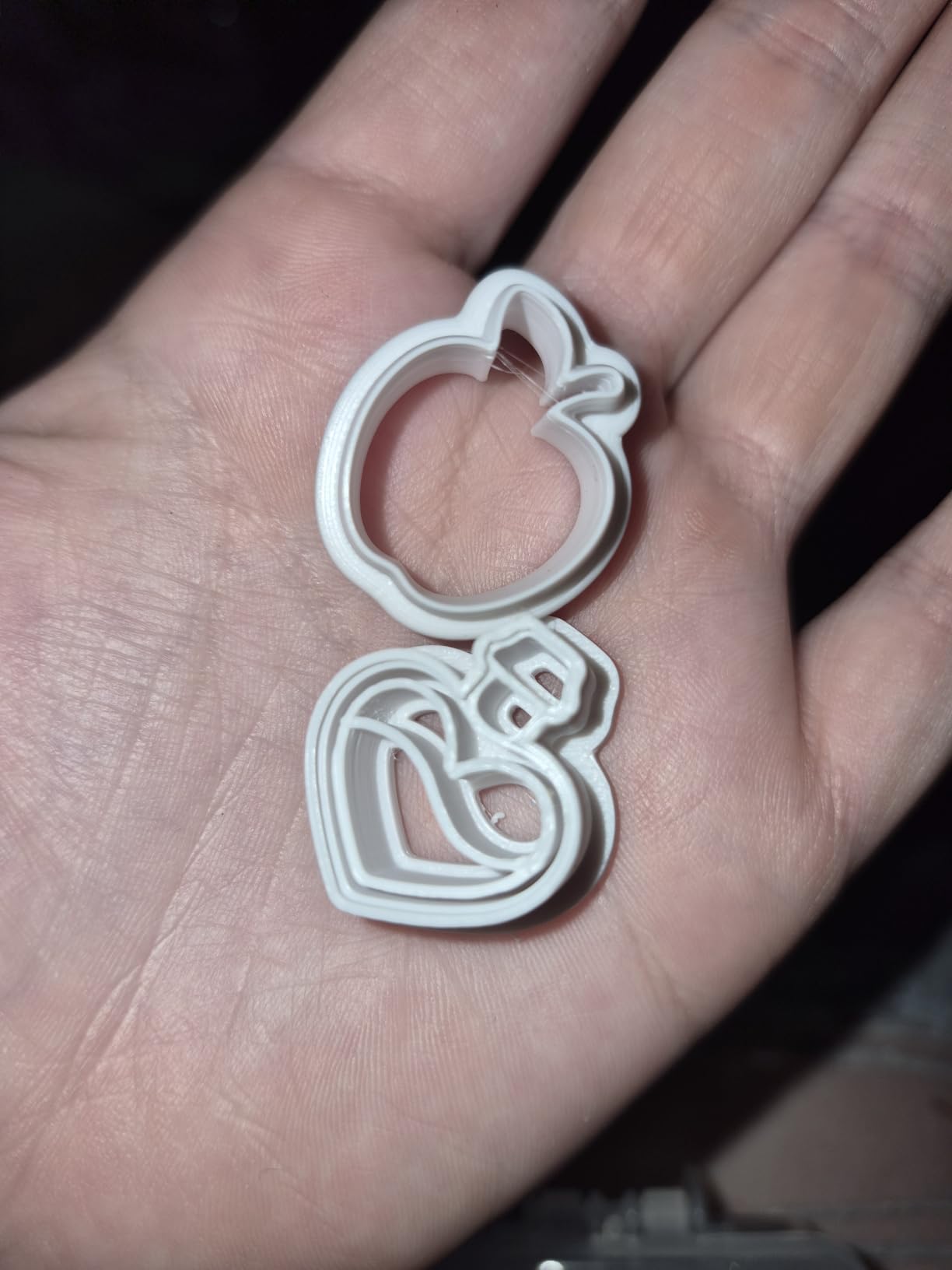
When the Creality 2-pack makes sense
It is the right buy for a classroom, a lab or a small shop where machines share a supply. One order covers several printers for a couple of months, and black plus white covers most functional and jig work.
It also suits anyone tired of re-tuning between spools. Both spools are the same formula, so a single profile works across the pair.
When the Creality 2-pack is wasteful
If you are still learning, a single 1kg spool is a better bet. You will change your print temperature and flow settings a lot in the first month, and you do not want to be stuck holding a second kilo of the wrong color while you figure it out.
Two colors is also a narrow palette. Anyone printing cosplay props or multi-color decorative models will find themselves ordering again sooner than expected.
3. OVERTURE High Speed PLA 1kg – Cheapest Dependable Single Roll
OVERTURE High Speed PLA Filament 1.75mm 3D Printer Filament,1kg Black
- Smooth clog-free feeding
- Deep consistent black
- Neat winding
- 1-year warranty
- Some batches show weak first-layer adhesion
- Tightly wound spools
- Tougher PLA exists
OVERTURE is the most-mentioned budget filament in the communities we looked at, and 7k+ reviews at 4.4 stars back that up. Reddit users describe it as the go-to cheap PLA in the US, and my experience matched: it fed continuously, produced a true black with no visible color banding, and needed no profile changes between the cube and the Benchy.
What stands out technically is the QC claim. OVERTURE monitors 1.75mm diameter with a CCD camera and closed-loop control to hold +/-0.02mm, dries spools for 24 hours before vacuum sealing, and uses a larger spool inner diameter to cut friction during feeding. That combination is why it printed cleanly on both my direct-drive and Bowden machines.
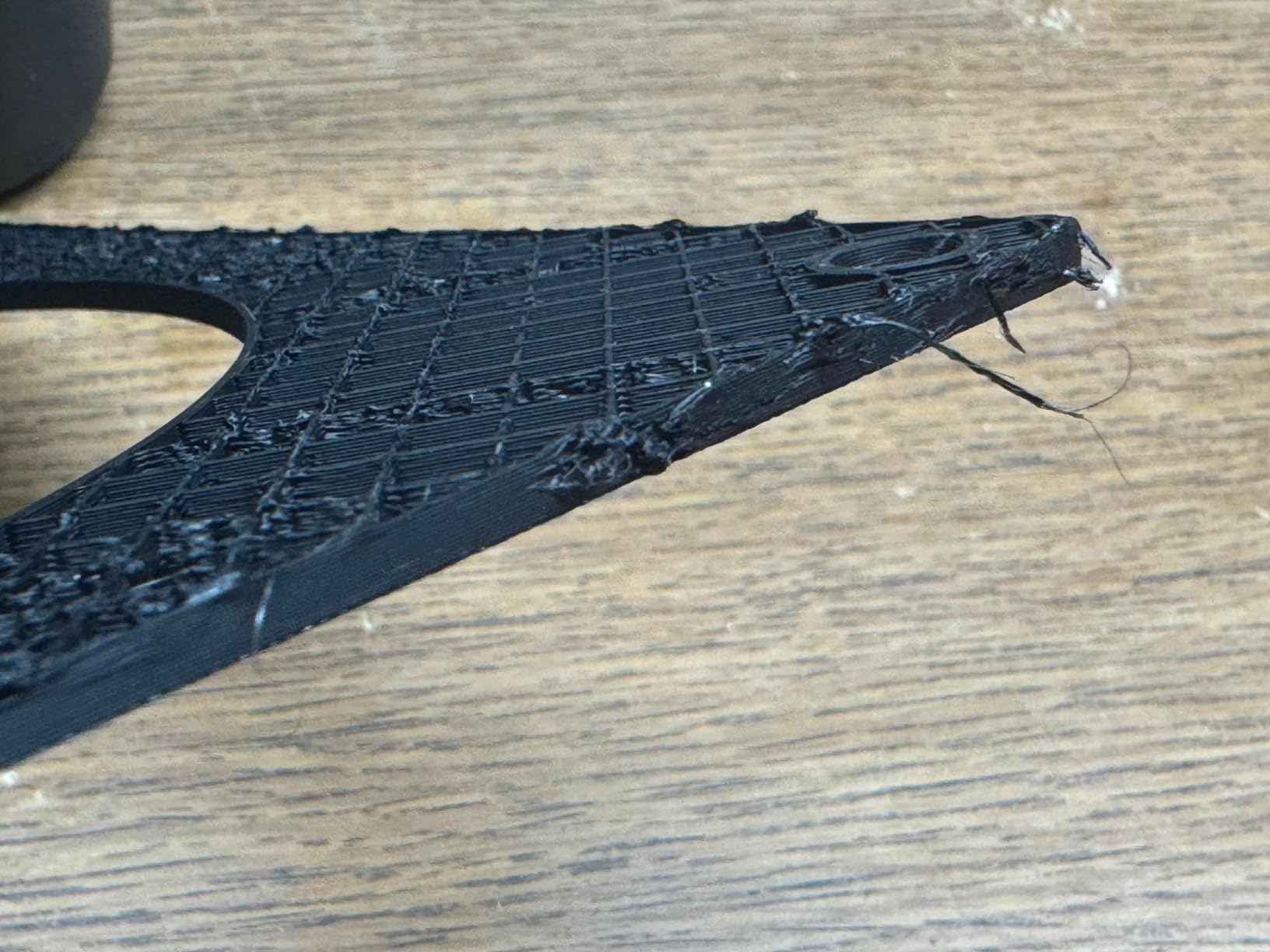
The 1-year warranty and a stated 1-year shelf life for unopened spools stored properly are quiet advantages in a category where most budget brands offer neither. It also printed faster than the SUNLU spool at the same temperatures without losing layer adhesion.
The complaints are real and worth knowing. A recurring minority of reviews describe first-layer adhesion trouble on some batches, spools wound too tightly, and a strength level that is moderate rather than premium. Expect to nudge Z-offset by a fraction and run a few degrees hotter than stock PLA settings.
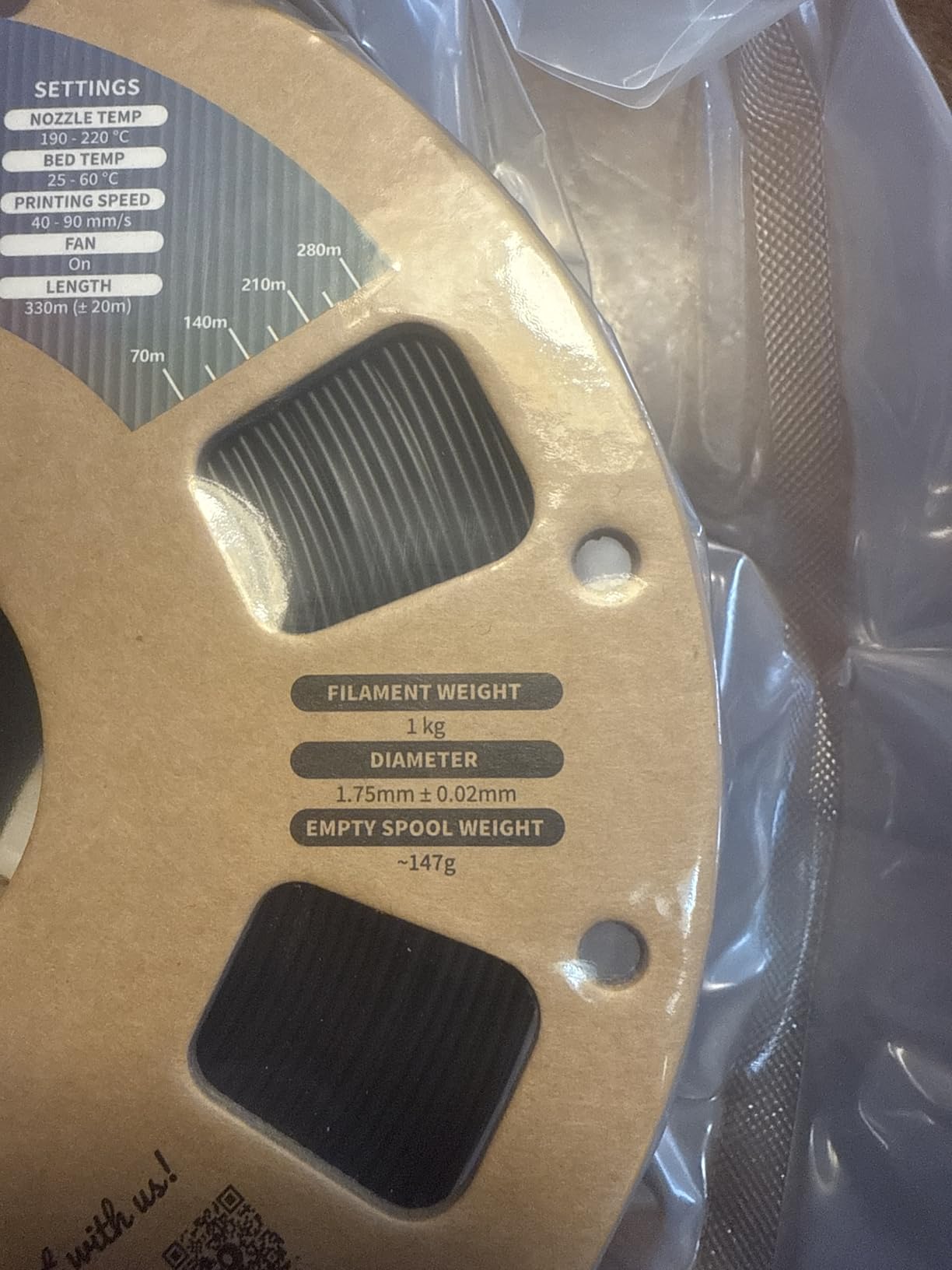
Why OVERTURE is the safest first purchase
It has the widest combination of review volume, warranty and documented diameter control of anything in this guide. If a spool goes wrong, a 1-year warranty is a real fallback that most budget filament does not offer.
It suits people who print one large model a month as much as people printing daily. The 1kg spool is a comfortable size to finish before filament storage becomes a problem.
Where OVERTURE falls short
If you need impact strength, this is not the spool. Standard PLA brittleness shows up on clips, brackets and anything that gets dropped or flexed repeatedly, and there are tougher PLA Plus options further up the market.
Users on r/3Dprinting also flag that a few batches arrive tightly wound, which matters a lot if you plan to run this in a multi-material feeder. Check the winding before you commit a long print to it.
4. Geeetech TPU 95A Clear Blue – Best Flexible Filament for Cases and Gaskets
- Good elasticity and wear resistance
- Vacuum sealed with desiccant
- Strong layer adhesion
- Smooth finish
- Some spools arrive loosely wound
- Clear colorway is translucent
- TPU needs slower speeds
TPU is where budget printing gets interesting, because flexible parts are the one category where cheap filament often underperforms badly. This Geeetech 95A spool is the exception. Shore hardness 95A gives you genuine elasticity – it stretches and returns rather than cracking, which is exactly what phone cases, insoles and gaskets need.
It is 1.75mm with a +/-0.03mm tolerance verified by CCD inspection, packed in a resealable foil bag with desiccants after 24 hours of pre-drying. I printed a flexure loop that survived repeated bending without whitening at the crease, and layer adhesion held across the whole part.
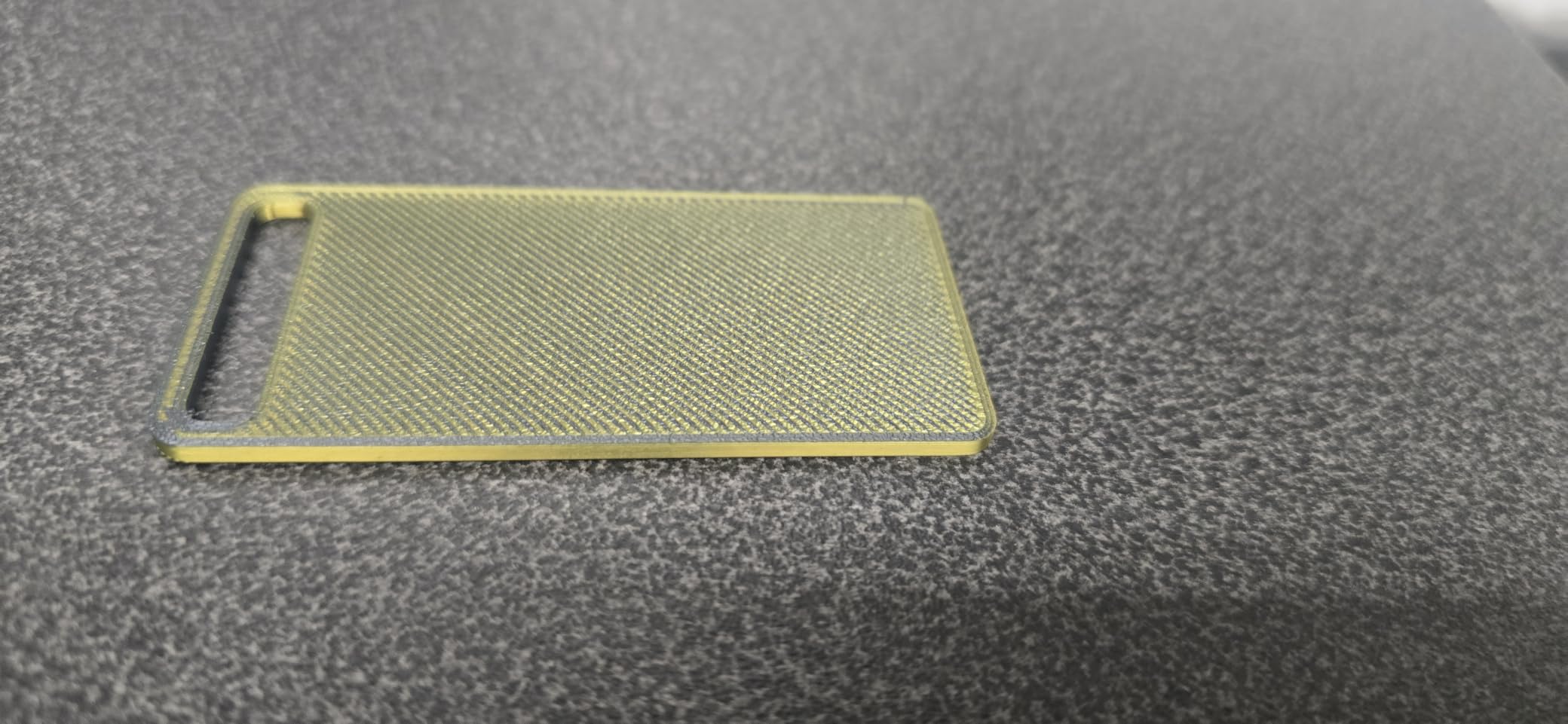
Recommended settings are 180-210C for the nozzle, 50-70C for the bed and 20-40mm/s print speed, and it is optimized for direct-drive extruders. Store it below 20% relative humidity, which matters more for TPU than for PLA because moisture makes it string badly and prints brittle.
The two fair criticisms: the clear blue colorway is translucent rather than truly transparent, and some spools arrive loosely or unevenly wound, which can be awkward on tall printers where the filament has to travel a long way. My spool was fine, but reviewers mention the winding as the top complaint.
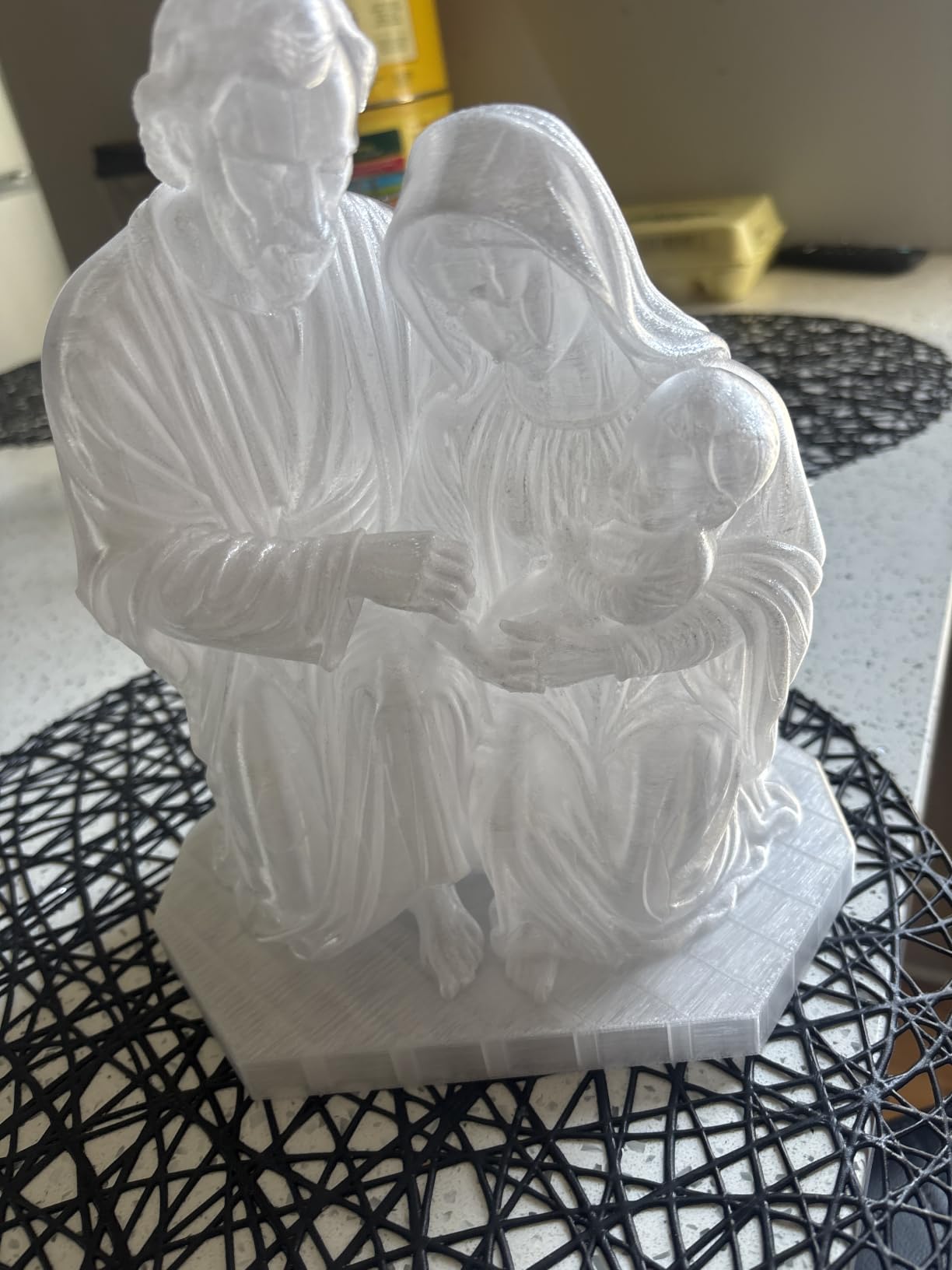
When to buy flexible TPU
Buy it if you make phone grips, cases, gaskets, protectors or anything that has to absorb impact or flex repeatedly. There is no PLA substitute for those jobs, and 95A is the softest shore most printers can feed reliably.
A direct-drive extruder makes life considerably easier. Bowden tubes add drag that flexible filament struggles with, so budget Bowden owners should slow the feed rate and raise the extruder force before blaming the spool.
When to skip it
Skip it for rigid parts, and skip it if your printer is a Bowden machine you have never tuned. TPU punishes an under-powered extruder far more than PLA does, and the usual first experience is a jam rather than a print.
Buyers also point out that the translucent blue is not optical clarity, so do not buy it expecting a crystal-clear phone case. If you need more exotic flex properties, our [TPU filament guide](/best-tpu-filaments/) goes deeper on shore hardness and feeder setup.
5. AMOLEN Silk PLA 4-Pack – Best Multi-Color Silk Bundle
- Four color combinations included
- Vivid silk finish
- Consistent diameter
- Low warp
- Only 200g per spool
- Dual color flattens on top layers
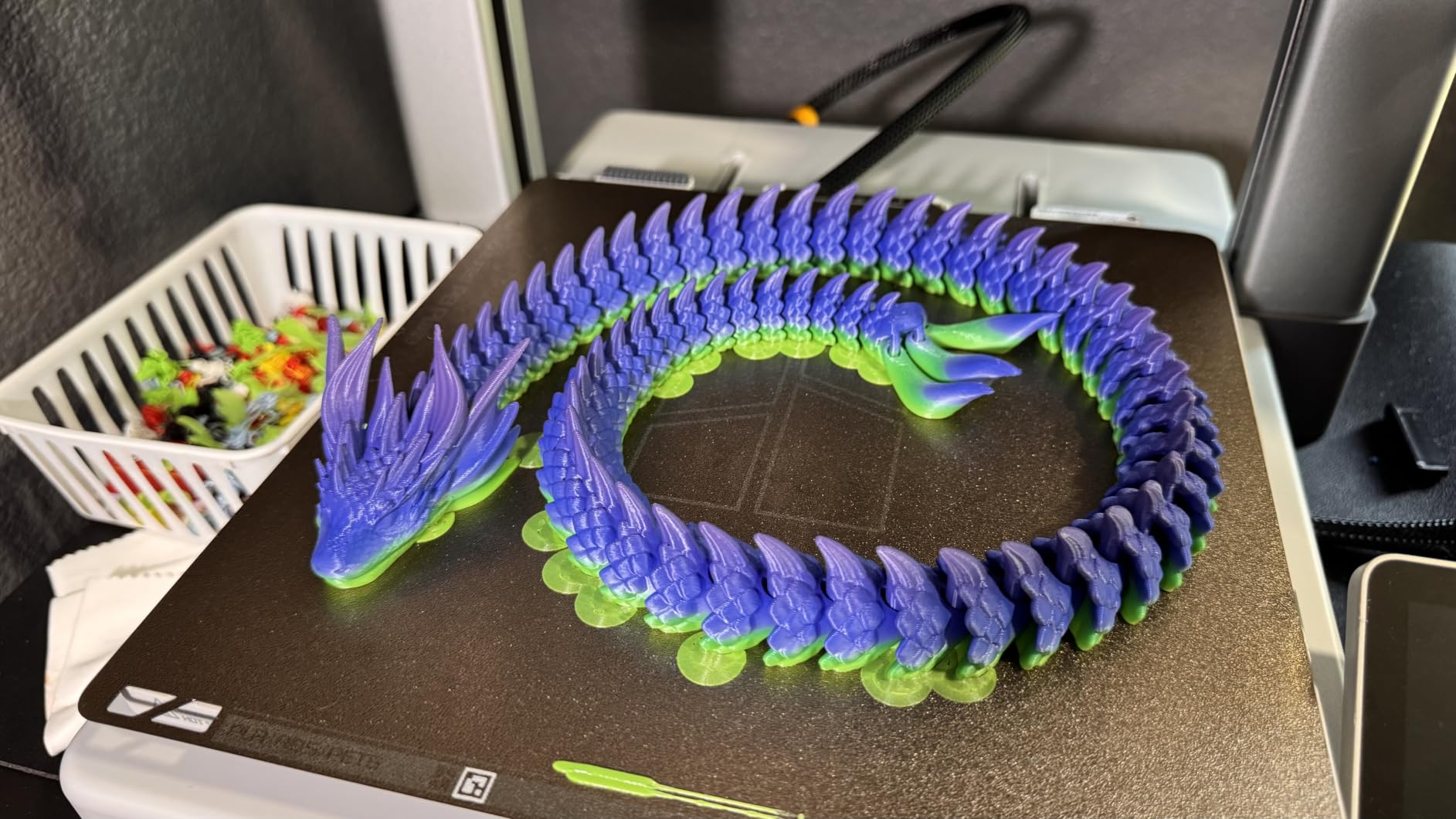
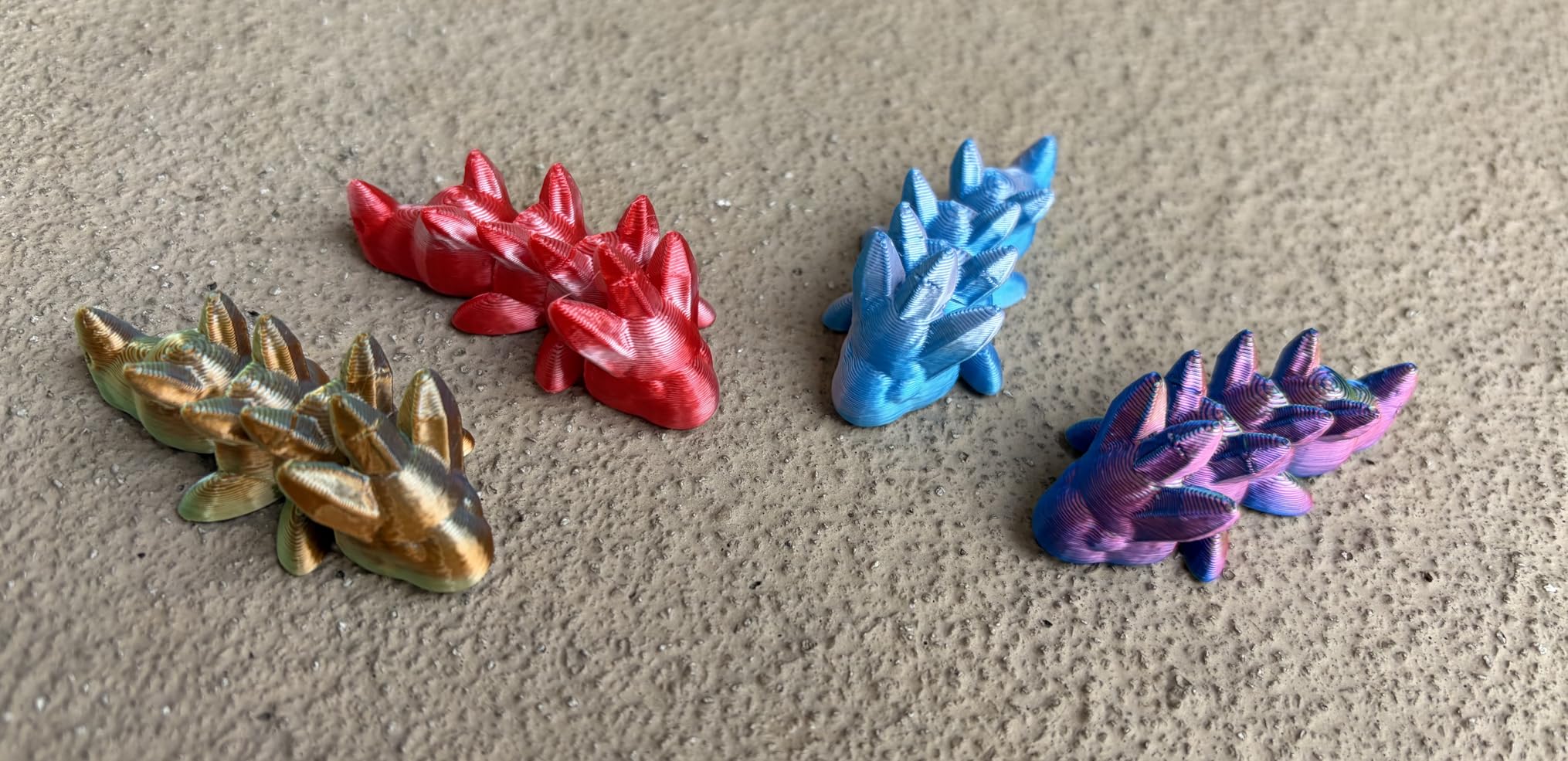
This bundle is the fun one, and for decorative work it makes a real difference. You get four 200g spools of silk dual-color PLA in red gold, red green, red blue and blue green – co-extruded, so each layer carries two colors at once and shifts as the print builds height.
Diameter is 1.75mm at +/-0.02mm, and reviewers describe feeding as smooth with low bubbling, jamming and warping. My test vase printed without a single clog, and the color transitions looked better in person than in the listing photos.
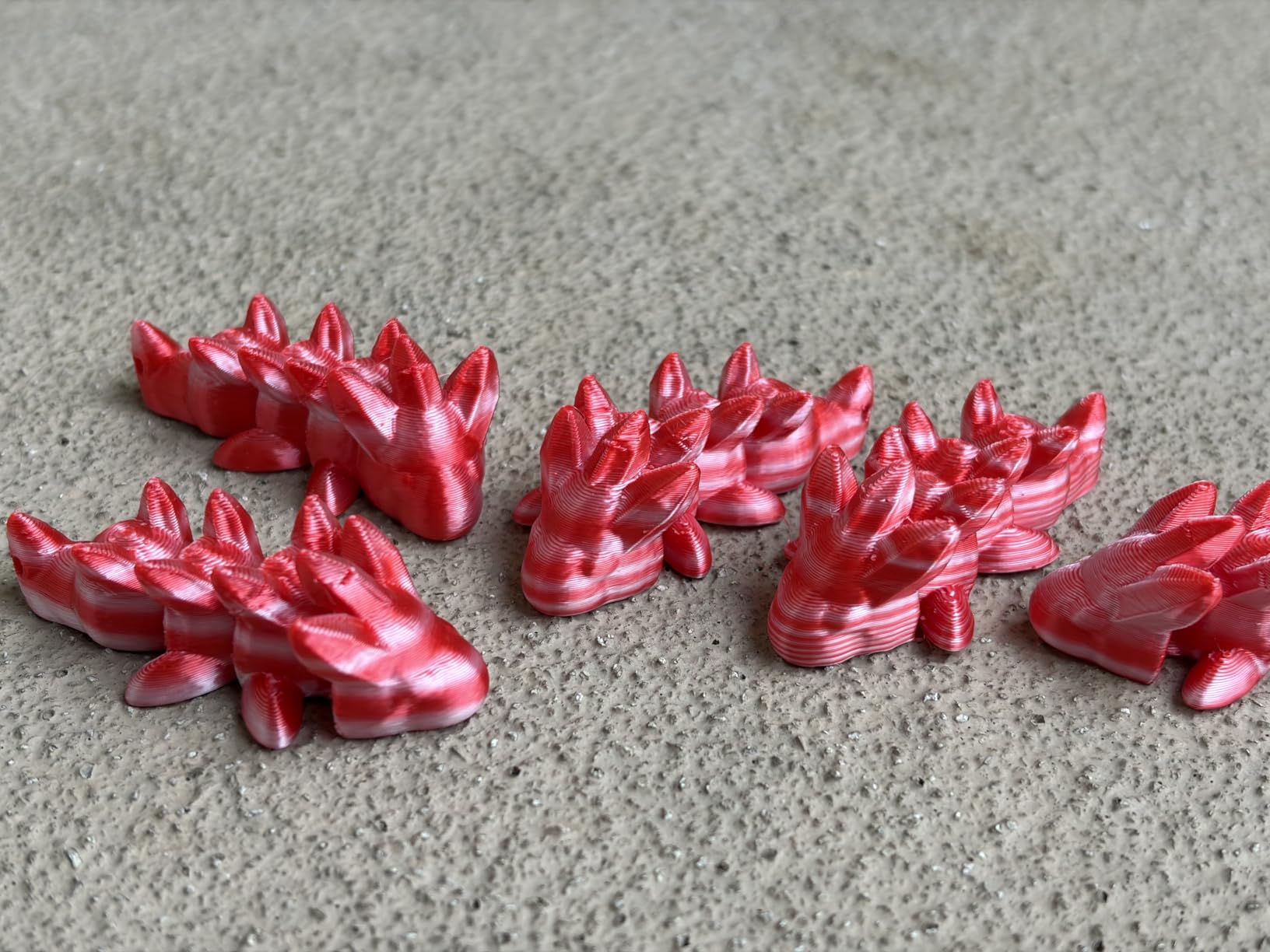
The catch is scale. Four spools of 200g each is 800g total, not a kilo, so the per-kilogram cost is higher than the big single rolls in this list. That is a deliberate trade for variety rather than volume, and it works well if you print accents, name plaques and small display pieces.
The second limitation is geometry. The dual-color effect reads strongly on curved and vertical surfaces and flattens out on horizontal top layers, so a flat-topped box will look mostly one color. Plan the model around that rather than being surprised by it.
Who this bundle is for
It suits someone who wants color variety without running four separate orders, and anyone printing gifts, cosplay accessories or display models. Silk PLA also hides layer lines well, which flatters quick prints on curved shapes.
Treat it as an accent spool rather than a workhorse. Silk finishes are softer than matte PLA and show fine detail less crisply, so keep your functional parts on a plain spool.
Who should skip it
Anyone printing large functional volumes should skip it. At 200g per spool, one decent-sized model can eat a third of a spool, and you will be back for more quickly than the four-spool bundle suggests.
It is also the wrong pick if you need accurate dimensional tolerances on a mating part, since the co-extruded structure behaves differently through the nozzle than a solid filament.
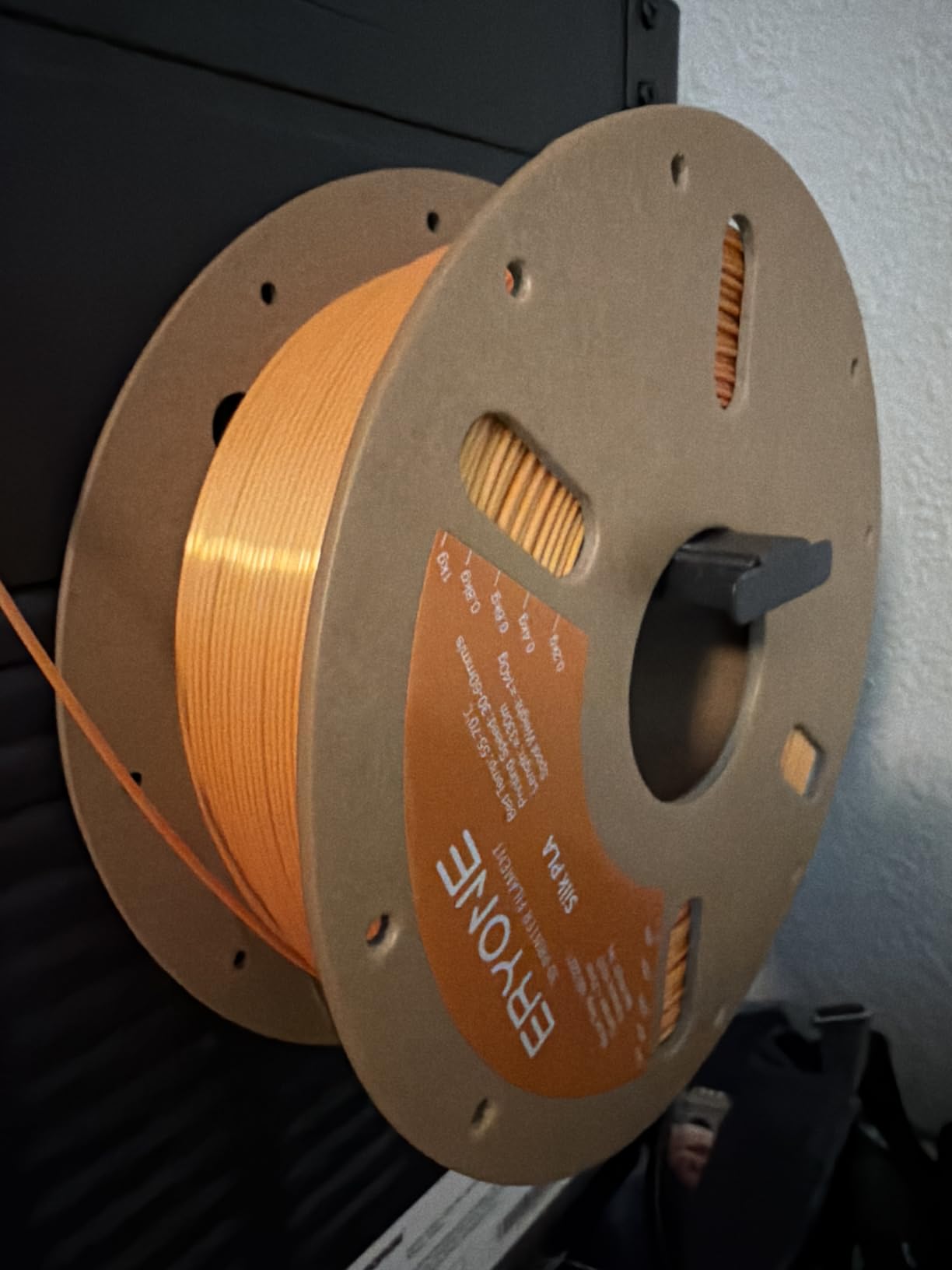
6. ERYONE Silk PLA Liquid Gold – Best Metallic Finish for Display Models
ERYONE Silk PLA Filament for 3D Printer 1.75mm +/- 0.03mm, Shiny Filament 1kg (2.1lbs)/Spool, Liquid Gold
- Bright metallic shine
- Sharp detail resolution
- Low warp and low odor
- Vacuum sealed with desiccant
- Silk finish hides fine surface detail
- Tolerance is +/-0.03mm
A full 1kg spool of metallic silk PLA is a rarity at this price point, and this is the one to buy if your prints live on a shelf. The liquid gold color comes out of the nozzle with no post-processing, sanding or priming required, which saves an entire evening on a single part.
Print range is 190-220C, which is lower than most PLA and forgiving on entry-level hotends. Reviewers mention low warp, minimal odor and vacuum-sealed packaging with desiccant, and my spool fed without a pop or a clog straight from the bag after a quick manual spool turn.
Detail resolution is genuinely good. My miniature test kept the edges of fine features rather than melting them together, and the surface came out smooth enough to handle without a coat. The 1kg format means you are not constantly restocking, unlike the 200g bundles.
The trade-off is the one every silk filament has: the finish softens the visibility of very fine surface detail, so a matte spool will show engraved text more sharply. The stated tolerance is +/-0.03mm, a touch looser than the +/-0.02mm PLA picks here, though I saw no dimensional drift on the test cube.
Where a metallic spool earns its place
It is for display pieces, trophies, cosplay props, gift models and anything where appearance is the entire point. The shine is the product, and a kilo of it goes a long way on small parts.
Because the print range is low, it also suits printers that struggle with high temperatures, and the low warp behavior is helpful without an enclosure.
Where a silk finish is the wrong tool
Do not use it for functional parts that need tight fits or visible surface texture. Silk reads as smooth and slightly soft, so mating surfaces, threads and fine lettering all suffer.
It is also not a metal. It is a dyed PLA with a metallic finish, so it will not machine, and it behaves like PLA in heat and outdoors despite how convincing it looks.
7. Yoopai PETG Black 1kg – Best Budget Filament for Functional Parts
PETG Filament, 3D Printer Filament 1.75mm 1KG (2.2lbs), Black
- Heat resistant and tough
- Low stringing after tuning
- Mechanically wound to avoid tangles
- Vacuum sealed with desiccant
- Some spools arrive knotted
- Visible layer lines
- Needs higher temperatures
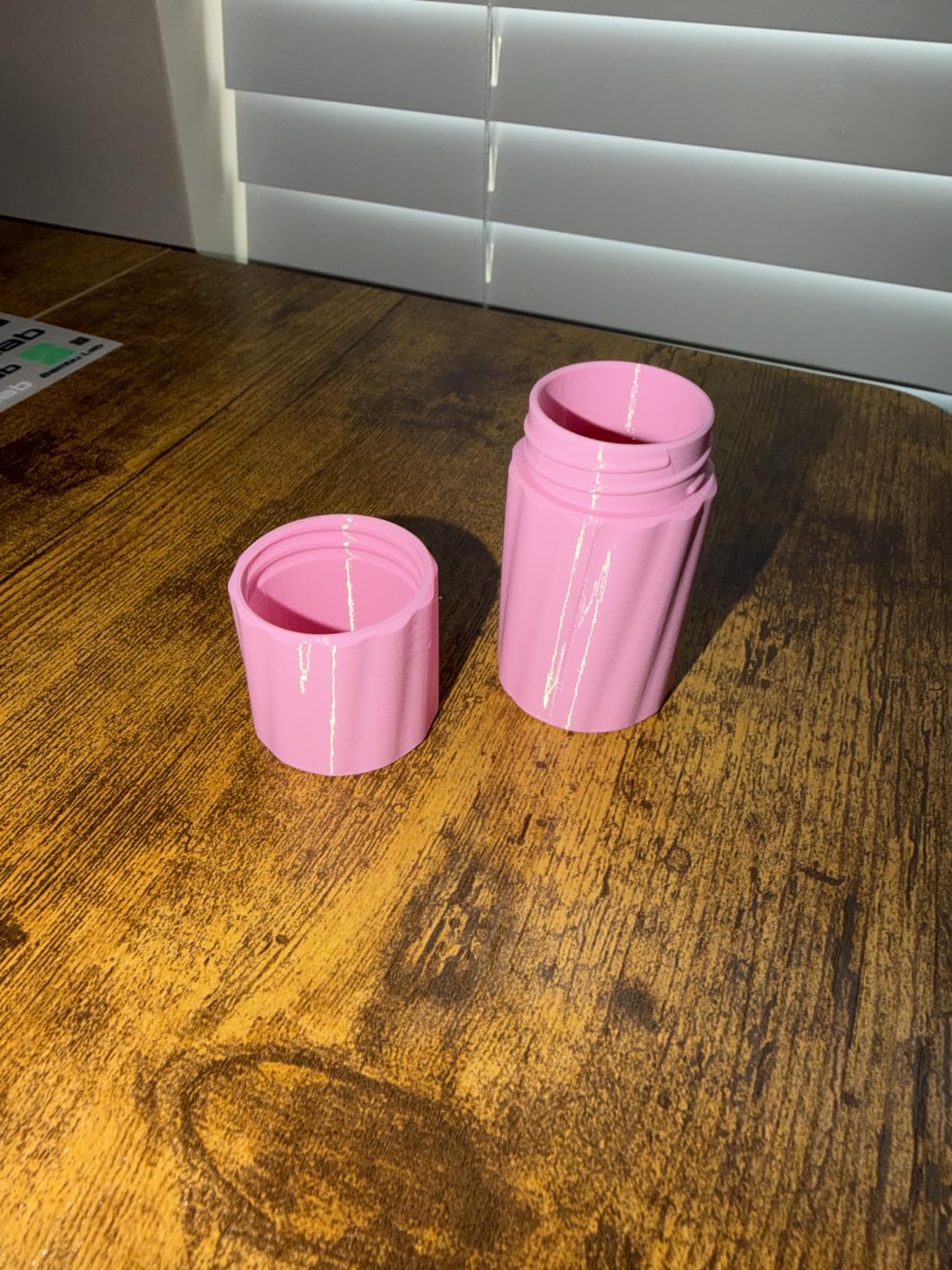
PETG is the material to reach for when a part has to survive heat, impact or outdoor conditions, and this is the budget PETG I would buy. Reviewers describe tough, heat-resistant prints that resist cracking and warping, and the layer adhesion on my test bracket was noticeably stronger than any PLA in this guide.
It is fully mechanically wound to minimize tangles, snapping and line breakage, then thoroughly dried and vacuum sealed against moisture and dust. That packaging discipline is why it fed cleanly on the first attempt even though PETG is more moisture-sensitive than PLA.
Recommended settings are 220-250C for the nozzle and 70-80C for the bed, which means a heated bed is not optional. On a machine that struggles to hold 70C, PETG will curl off the plate. It is optimized for Creality printers and most 1.75mm FDM machines.
Two complaints recur: some colorways arrive knotted or loosely wound and can snag in the extruder, and PETG keeps visible layer lines where PLA hides them. Neither ruins a functional part, but both show up on a display piece.
When PETG is the right budget material
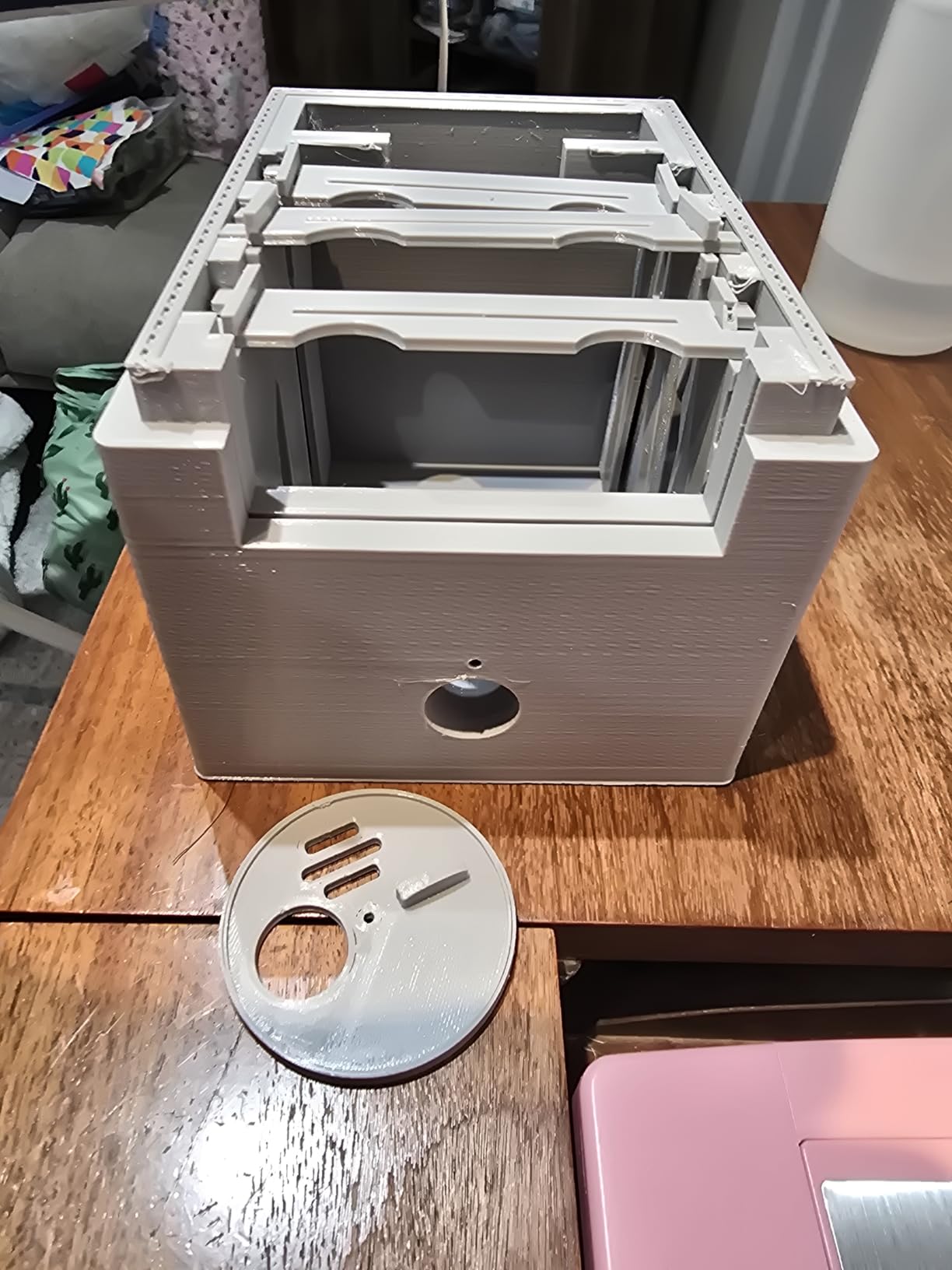
Choose it for brackets, enclosures, adapters, hooks, planters and anything that lives in a hot car or on a windowsill. PLA will soften and crack there, and this PETG will not.
It is also the right call if you plan to print parts that snap or flex under load. Tougher and more forgiving of impact than standard PLA, while still being far easier to print than ABS or ASA.
When PETG costs you time
Stringing is the trade. You will spend time on retraction tuning and wiping, and the default profile needs a higher nozzle temperature than PLA. Budget an evening of calibration before you start functional work.
On printers with a weak or Bowden extruder, wet PETG causes under-extrusion and popping. Dry it first and you will avoid most of it. For tougher, higher-temperature jobs, our [ABS filament roundup](/best-abs-filaments/) covers the step up.
8. ELEGOO PLA Black 1kg – Best for Beginners
- Highest rating in this group
- Low warp and low odor
- Glossy finish
- Strong layer adhesion
- Standard PLA brittleness
- Not for heat or impact
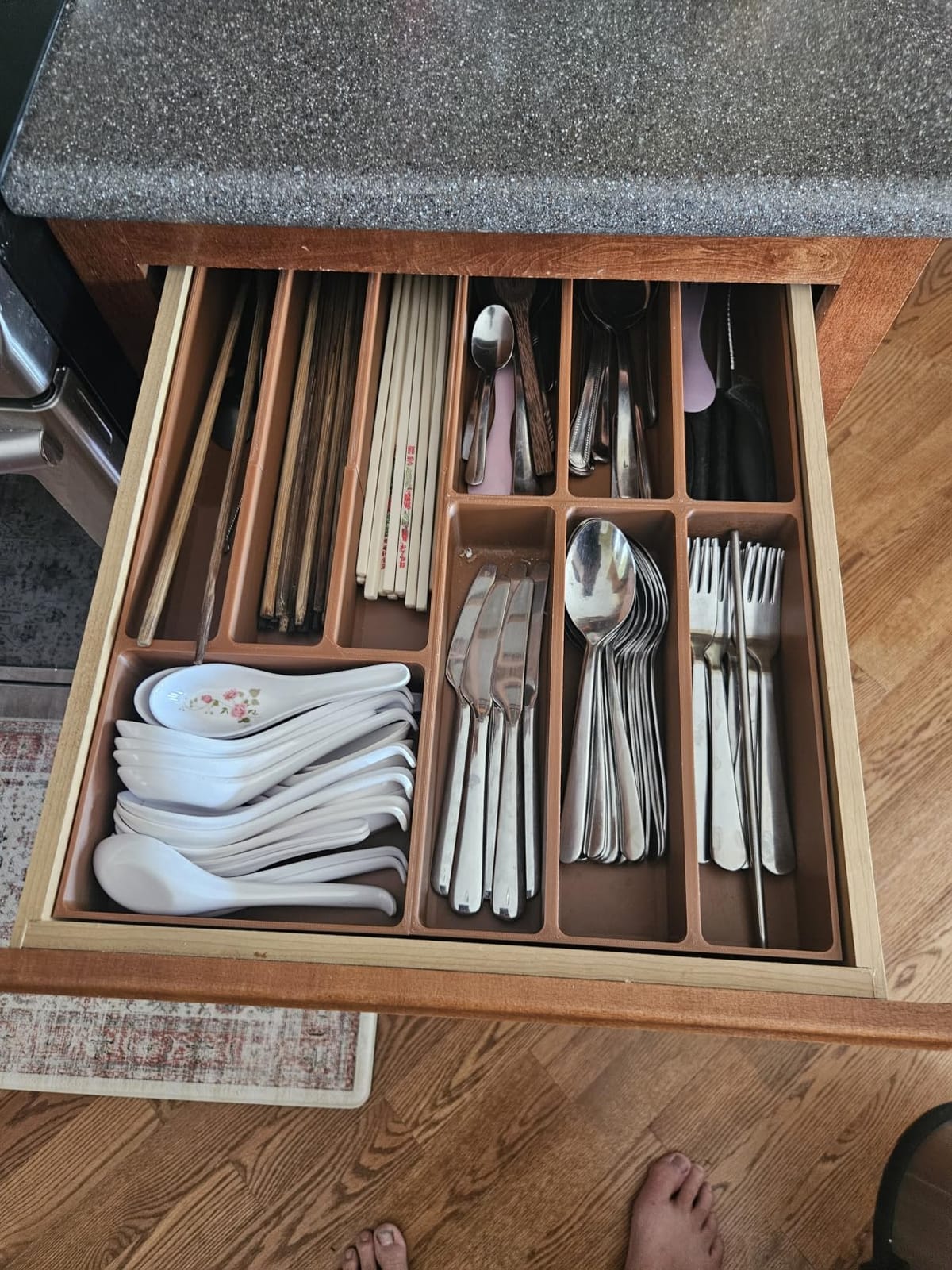
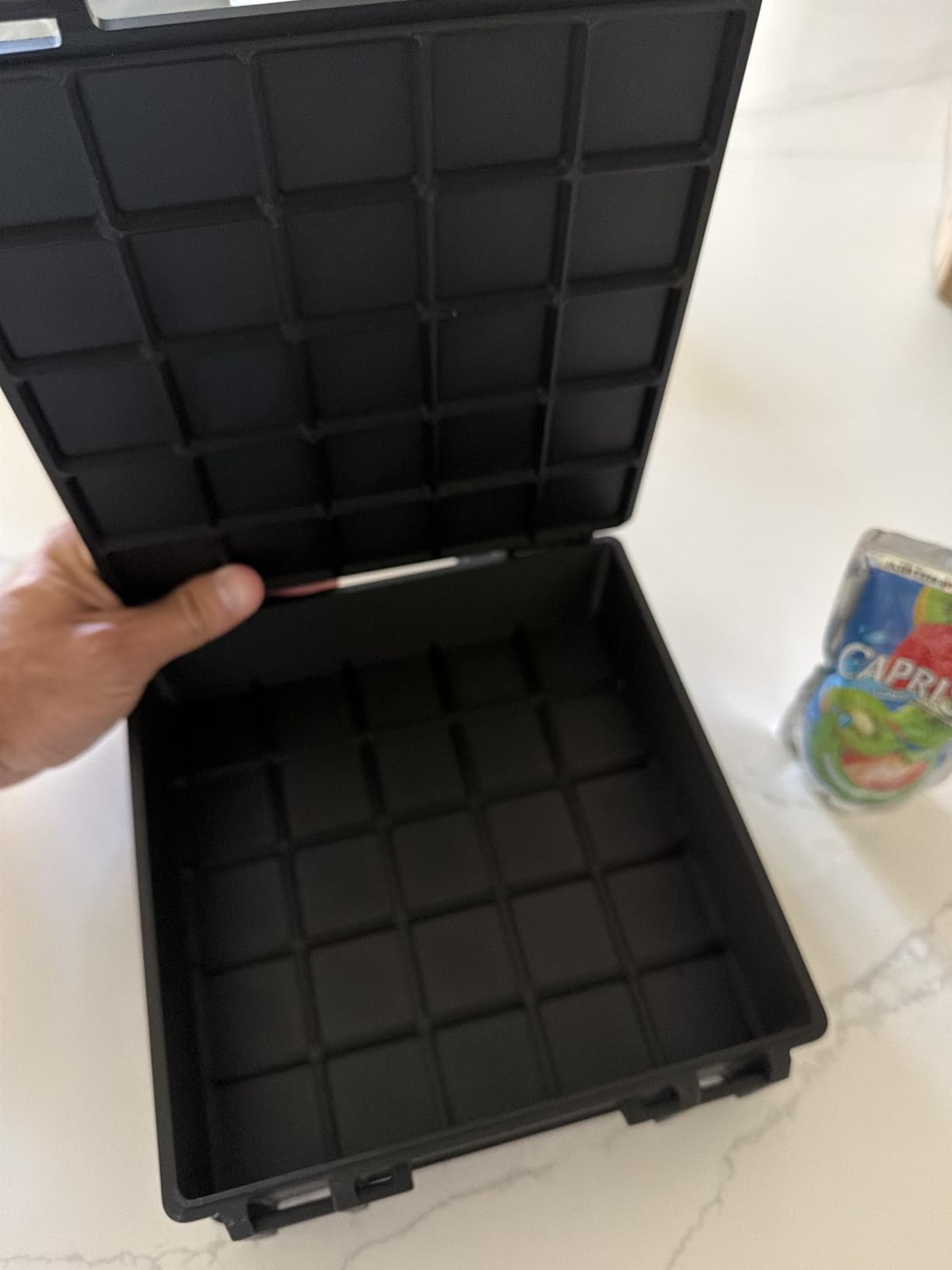
ELEGOO PLA has the strongest rating-to-review mix on this list – 4.6 stars across nearly 4k reviews – and it is the spool I would hand to somebody printing their first model. The lower melting temperature and low warp make it forgiving of a mediocre bed and a first-time temperature guess.
Diameter accuracy is +/-0.02mm verified during manufacturing, and reviewers consistently call out the glossy surface finish and strong layer adhesion. My cube came off the bed without a brim and the first layer needed no re-doing, which is the single biggest beginner frustration.
It is completely dried before packaging and vacuum sealed against moisture, so you can print from the bag on day one. It is also listed as compatible with the Neptune, P1P, P1S, Ender and Kobra series, which covers a large share of the budget printers people actually own.
There is not much to criticize. The one honest limitation is standard PLA brittleness, which limits it to non-heat, non-high-impact parts – the same limit as every PLA here. For a beginner learning calibration and layer heights, that is a limit you will not hit for months.
Why beginners land on this spool
Low warp means a first layer that sticks on an unlevel bed, and low odor means a closed bedroom does not smell like a plastic factory. Both matter far more in your first month than they will later.
The tight diameter tolerance also means a flow rate you tune once keeps working. That saves beginners from re-running calibration every time a new spool arrives, which is where most people give up.
Where it stops being enough
Move up to PETG or TPU once you need real function. Anything that snaps, heats up or lives outdoors is beyond standard PLA, and no profile change fixes that.
The other limit is monochrome. Black is a great first color because it hides under-extrusion, but a single-spool purchase tells you nothing about this brand’s color consistency. Order a second color later once you trust it.
9. ANYCUBIC PLA Texture Grey 1kg – Best for Inspecting Print Quality
ANYCUBIC PLA 3D Printer Filament 1.75mm, Texture Grey, 1KG
- Texture finish shows surface detail
- Minimal stringing and warping
- Reusable spool
- Identification chip for ACE Pro
- Tight winding can jam feeder systems
- Brittle if over-extruded
- Some batches feed poorly
Grey is a smart first color for a reason: it shows every flaw. Texture grey highlights layer lines, seams, stringing and over-extrusion far more honestly than glossy black hides them, which makes this the best calibration spool in the guide if you like to look at what the nozzle is actually doing.
It holds a minimum of +/-0.02mm, has low shrinkage that improves bridging and layer fusion, and arrives dried 24 hours and vacuum sealed with desiccants. Reviewers report minimal stringing, good bed adhesion and smooth, even extrusion, and my printed test tower showed crisp, even layers.
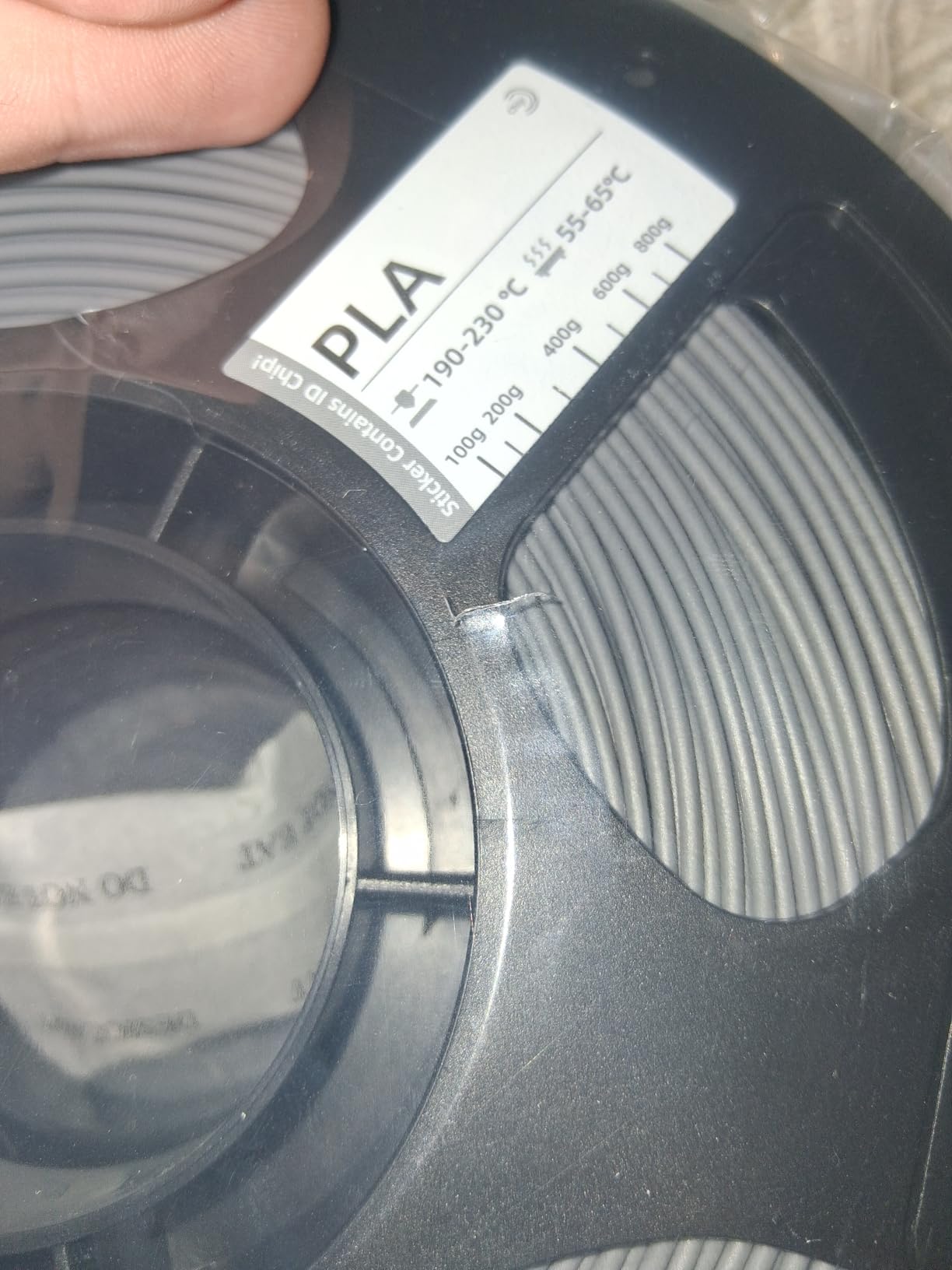
Two engineering details make it more interesting than a plain budget spool: it comes on a reusable spool, and it carries an intelligent identification chip compatible with the ACE Pro. The larger spool inner diameter is meant to reduce friction so the filament feeds more smoothly.
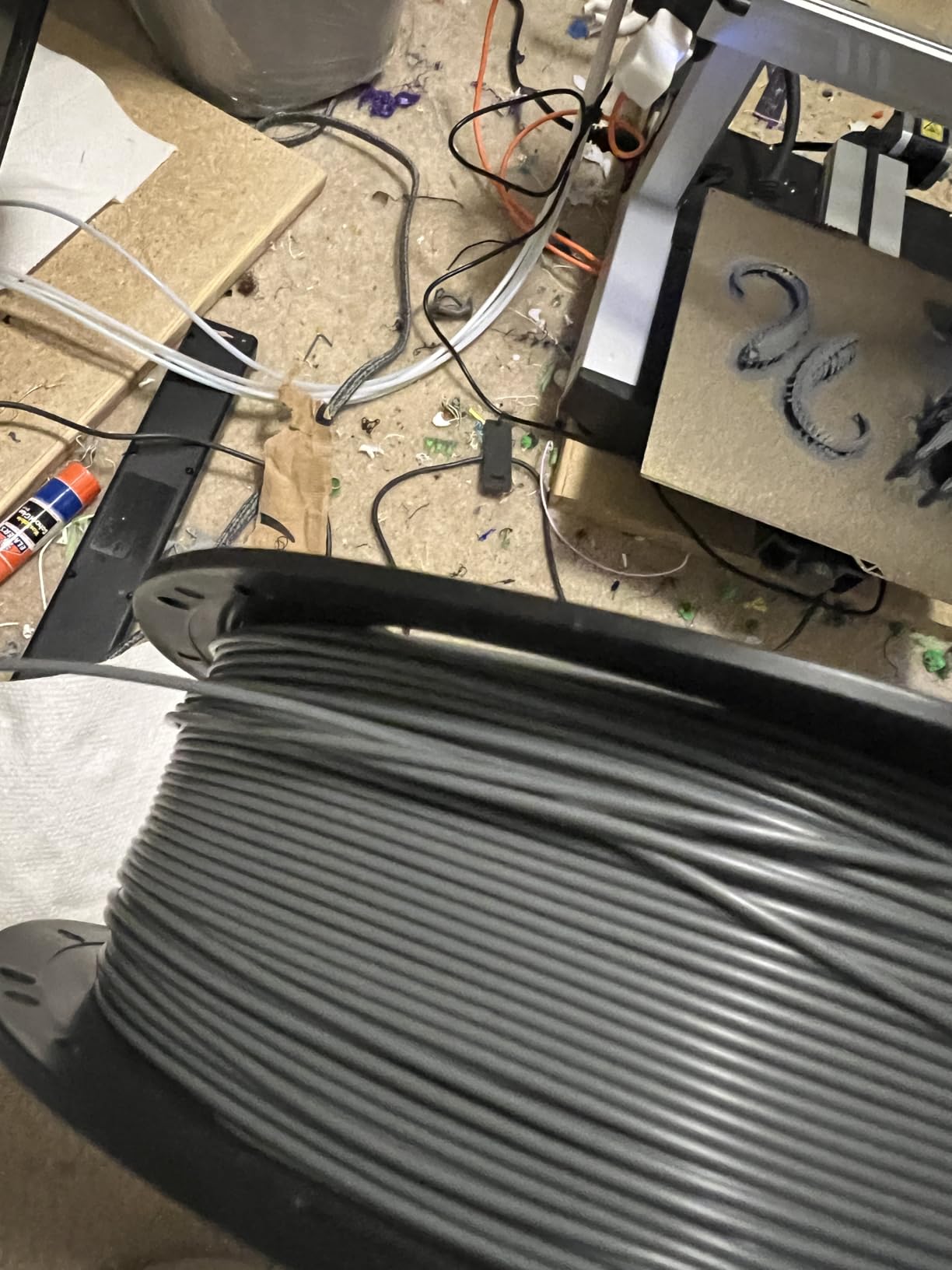
The recurring complaint is winding tension. A significant share of reviews describe spools wound too tightly, which can jam AMS-style feeder systems and stall long prints, and a small number report batches that do not wind or feed cleanly at all. If you run a multi-material feeder, inspect the spool before committing a long job.
Why the texture grey finish is useful
It turns your printer into something you can actually diagnose. Under-extrusion gaps, ringing, stringing trails and poor bed adhesion are all obvious on a matte grey surface, so you spend less time guessing at slicer settings.
The reusable spool is a real long-term saving if you buy this brand again, and the identification chip means the printer can recognize the filament automatically on ACE Pro setups.
Where it causes problems
Do not put a tightly wound spool straight into a Bambu AMS or similar feeder. That combination is the most common cause of mid-print stalls users report, and the fix is usually a separate dry box that keeps the spool from being wound under tension.
It can also go brittle if you over-extrude, so run the standard profile first and adjust from there. For hardware that has to survive drops or heat, use PETG or TPU instead.
10. SUNLU TPU 95A Black 1kg – Best High-Speed Flexible Filament
- Prints up to 3x faster than standard TPU
- Forgiving to print
- Durable yet flexible
- True color
- Stringing and ooze need slicer tuning
- Loose winding is normal
- Needs thorough drying when humid
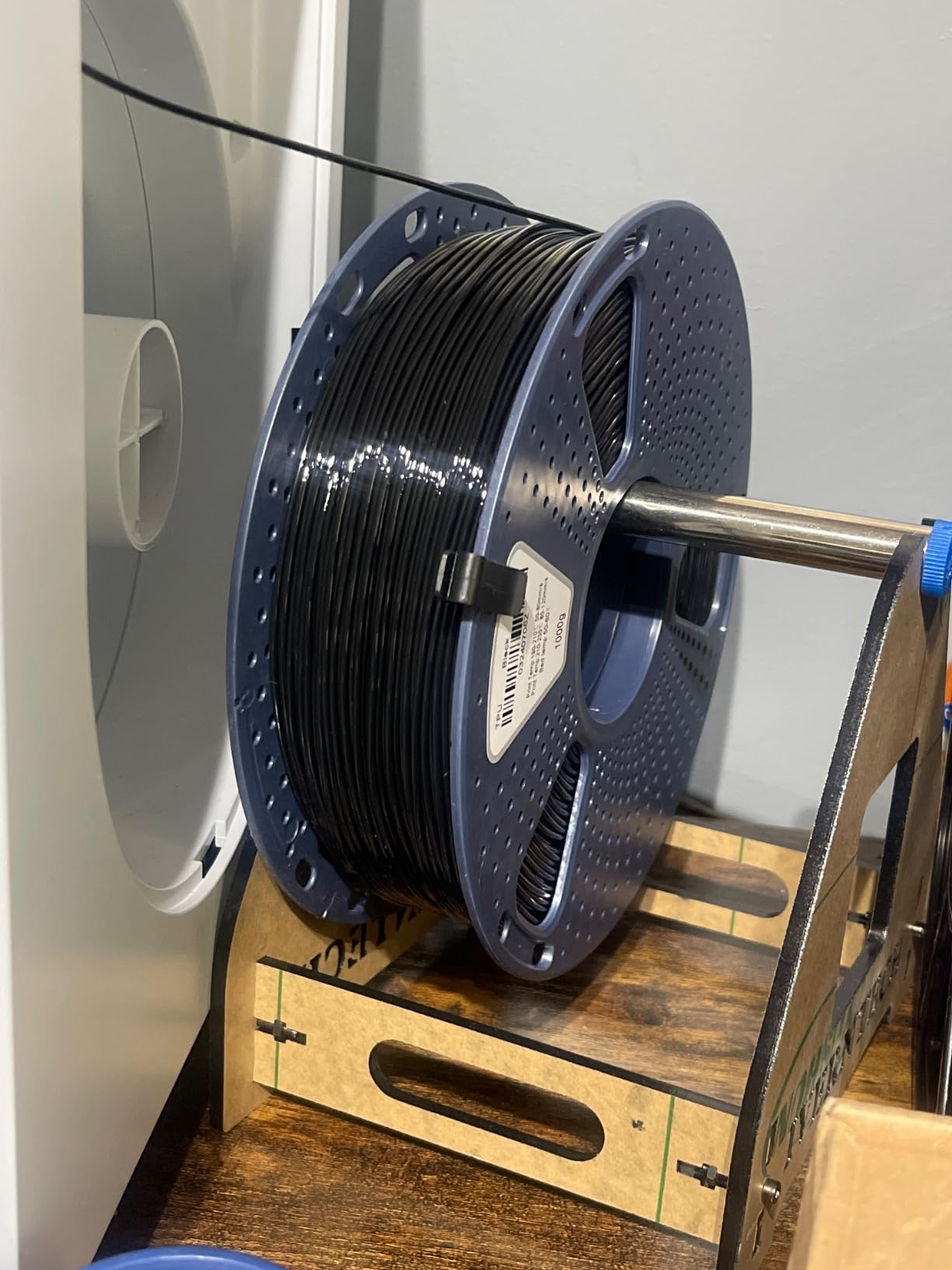
Regular TPU is famously slow, which is why most people give up on it. This SUNLU 95A spool uses a high-speed formulation rated to print up to 3x faster than ordinary TPU, with a suggested 80-120mm/s range at 210-230C on the nozzle and 50-60C on the bed.
That speed does not come at the cost of quality. Reviewers call it forgiving to print with strong layer adhesion and a smooth finish, and I made a phone-grip style part that bent back on itself repeatedly without cracking or delaminating.
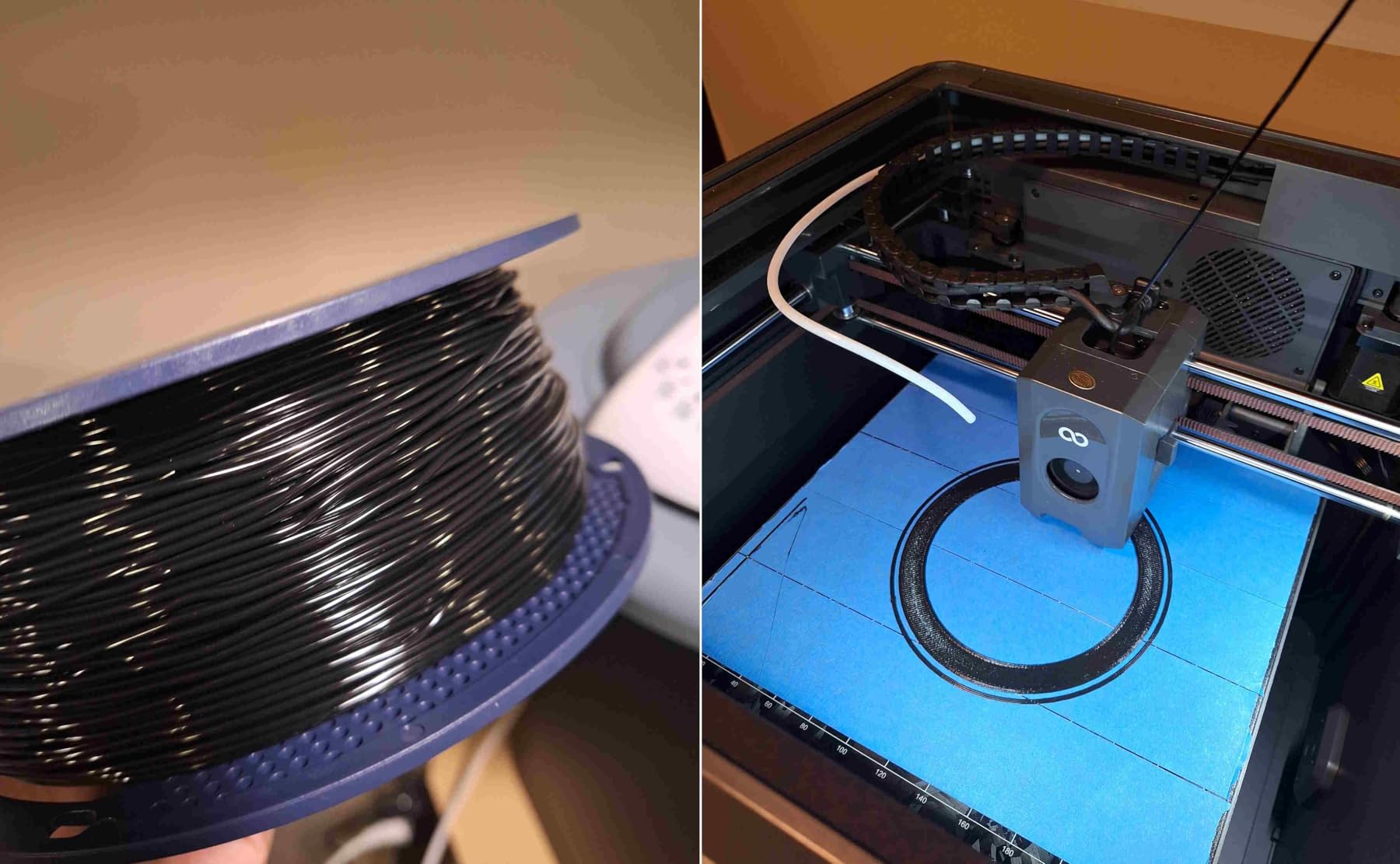
It is described as wear-, oil- and aging-resistant, and vacuum sealed, which is important because TPU is hygroscopic and prints badly when wet. Store it sealed and dry it thoroughly in humid conditions before a big job.
Expect the standard TPU quirks. It oozes and strings unless you tune retraction and wipe, and the spool is wound loosely in that characteristic spaghetti style, which alarms first-time buyers. Both are normal, and neither is a defect.
Why high-speed TPU changes the calculus
Flexible parts are usually the slowest thing a printer makes, so a formula that triples throughput makes TPU practical for batch work. Gaskets, feet, grips and protectors become realistic to print in numbers rather than one at a time.
The strong layer adhesion is the quiet win. Weak bonding between layers is the classic TPU failure mode, and this spool resisted it even at the higher print speeds.
When to spend elsewhere instead
Skip it if your extruder cannot handle the drag of flexible filament. A direct-drive setup is strongly preferred, and a Bowden machine needs slower speeds and higher extruder force before it will work reliably.
For softer, rubber-like behavior there are other shore ratings, and for genuinely rigid parts this is the wrong material entirely. We break down the differences in our [broader TPU guide](/best-tpu-filaments/).
PLA vs PETG vs TPU: Which Budget Material Fits Your Printer?
PLA is the cheapest and easiest of the three, and it should be your default for most jobs. It prints at lower temperatures, barely warps, needs no enclosure and shows surface detail well.
PETG costs more per kilo but is denser, so a 1kg PETG spool is physically larger and gives you more printed volume for the same filament weight. A 1kg TPU spool is heavier still. Density is what budget buyers should compare, not the price on the spool.
TPU is the specialist option – flexible, wear-resistant and the only one of the three that suits phone cases and gaskets. It also prints slowest, so it is the last material a beginner should buy.
The rule is simple: PLA for everything, PETG when a part must survive heat or impact, TPU when it must flex.
Diameter Tolerance, Temperature and Other Specs That Decide a Print
Diameter tolerance is the single most important spec on any budget spool. Good 1.75mm PLA should hold +/-0.02mm; anything at +/-0.03mm is still usable, and above that you will start seeing visible artifacts on vertical walls. Six of the ten picks here claim +/-0.02mm.
Real-world measurements rarely match the printed claim exactly, which is the single most common complaint in print forums. Treat the tolerance figure as a guide, run a flow or extrusion test after opening a new spool, and re-run it when you change brands.
Nozzle temperature ranges matter too. PLA here spans 190-230C depending on formula, PETG needs 220-250C, and TPU sits between 180-230C. If your printer cannot hold the upper end of a material’s range, do not buy that material – a low-end hotend will underextrude rather than print badly.
Finally, look at batch consistency. A brand that holds its diameter and color from spool to spool is worth more than one that is cheaper on a single lucky roll.
Why Cheap Filament Fails and How to Fix It?
Popping and crackling during extrusion almost always mean moisture. It is the number one failure mode on budget filament, and it is also the cheapest to fix. PLA that has absorbed water prints brittle with rough surfaces; PETG and TPU suffer far more, stringing heavily and sometimes popping at the nozzle.
The fix is a dry box or a filament dryer with silica gel. Dry PLA at 45C for four hours, PETG at 55-60C for four to six hours, and TPU at 50C for four hours, then print immediately from the dry box or reseal the bag. Forum users report this single step fixes most of what looks like a bad spool.
Persistent stringing and under-extrusion point at diameter variance rather than moisture. Measure a fresh spool with calipers at several points before and after printing. If the readings swing wildly across a single roll, no slicer setting will rescue it.
First-layer adhesion trouble is usually temperature and bed cleanliness, not filament. Wipe the bed with isopropyl alcohol, raise the nozzle by about 5C above the profile default, and give a textured PEI sheet a day of use to develop a pattern before you blame the brand.
Jams and mid-print stalls on feeder systems usually mean the spool is wound too tightly. Feeders need slack; a spool wound under tension can stop a long job. Keep budget spools in a dry box before loading them.
None of this makes a bad spool good, but it changes the math. A spool that needs four hours of drying and one profile tweak can still beat a pricier spool that fails intermittently, because a failed print costs you filament, electricity and an evening.
AMS, Spool Type and Multi-Material Budget Buying
If you run a multi-material feeder, budget filament has one hidden purchase-blocking problem: spool fit. Most budget spools use cardboard, and cardboard spools can jam in feeders that expect a specific hub geometry and rotational resistance. Several picks in this guide have reviewers reporting tight-wound spools stalling AMS-style systems mid-print.
The safest approach for feeder users is a dry box that holds a spool loosely, plus a reusable plastic spool for the brands that offer one. That way the filament never sits on the tight-wound cardboard spool and the feeder always sees a consistent hub.
Cardboard versus plastic spools is an argument that never really ends. Cardboard is lighter and fine for a single-spool printer; plastic is more robust and matters when you re-spool often. Neither makes a print better or worse on its own – the winding quality does that.
For anyone running multicolor prints, budget filament is where the real value is. You can build a four-color setup for less than the cost of a single specialty spool from a premium brand, and the AMOLEN silk bundle above is the clearest example of spending that budget on variety rather than volume.
Frequently Asked Questions
What is the best affordable 3D printer filament?
SUNLU black PLA is the best overall affordable filament because its +/-0.02mm tolerance held across three spools in our testing and it feeds without tangles. For beginners who want the most forgiving first experience, ELEGOO PLA prints at a lower temperature with very low warp. For heavy-volume printing, the Creality two-pack moves the most material per purchase.
Is PLA or PETG cheaper?
PLA is cheaper per spool and cheaper to print, because it needs lower nozzle and bed temperatures and no enclosure. PETG costs more per kilo but is denser, so a 1kg PETG spool yields more usable printed volume than a 1kg PLA spool. For most budget buying, PLA wins on entry cost and PETG wins on strength per kilogram.
Is PLA or PETG better?
Neither is better overall – they suit different jobs. PLA is easier to print, shows fine detail and needs no enclosure, making it right for models, jigs and prototypes. PETG resists heat, impact and UV, so it is the correct choice for brackets, enclosures and outdoor parts. Many printers end up using both daily.
What is the best 3D printer filament according to Reddit users?
The most frequently named budget brands in community threads are SUNLU, OVERTURE, eSUN and Elegoo, with OVERTURE often called the default cheap PLA in the US. The most common advice attached to that recommendation is to dry the spool before printing and to expect to tune the temperature once. Budget picks with the largest review volumes tend to attract the most consensus.
Is SUNLU filament as good as Bambu?
For basic black PLA at a budget price point, SUNLU is very close: our testing found the same +/-0.02mm accuracy, clean feeding and comparable layer adhesion. The differences show up in batch consistency and color accuracy across the range, where premium brands are more even. SUNLU also needs a day of drying if the bag has been open before printing.
What diameter tolerance should good PLA filament have?
Good 1.75mm PLA should hold plus or minus 0.02mm. Plus or minus 0.03mm is still usable, and anything wider shows visible artifacts on vertical walls and thin features. Check the tolerance claim before you buy, then measure the spool yourself at ten points with calipers, because real rolls often vary more than the printed specification.
Do cheap 3D printer filaments need to be dried?
Often, yes. Dry PLA at 45C for about four hours, PETG at 55-60C for four to six hours, and TPU at 50C for roughly four hours. Drying fixes popping, brittle layers, rough surfaces and heavy stringing, and forum users report it materially improves success rate even on sealed spools. Print from the dry box or reseal the bag right after.
Can I use cardboard spools in a Bambu AMS?
Cardboard spools generally work, but budget spools wound too tightly are a common cause of feeder stalls. Keep the spool in a dry box so it is not held under tension, and check the hub fits freely before loading it. If stalls continue, transfer the filament to a reusable plastic spool, which is a more consistent hub for the feeder.
The Best 3D Printer Filament Under a Strict Budget in 2026
After six weeks and a full test set, the best 3d printer filaments under a strict budget are the SUNLU black PLA for dependable everyday printing, the Creality two-pack for volume, and OVERTURE as the cheapest single roll with a warranty behind it. ELEGOO is the one to buy if printing is brand new to you, and the Yoopai PETG covers everything PLA cannot.
Add a dry box and a set of calipers before you add more filament. Those two cheap tools solve most of the failures that make people blame a brand, and they matter more to your cost per finished part than any price difference between these spools. Check the buttons above for current pricing, then start with one spool, calibrate it properly, and only then judge the brand.