
Two hundred dollars. That’s roughly the line where a binocular stops being a toy and starts being a tool. I’ve spent the last three months comparing eight different models of best binoculars under $300, taking them on early-morning bird walks, dusk deer watches, and a couple of clear-sky nights to look at the moon. The good news: the mid-range market in 2026 is genuinely stacked with options from Vortex, Celestron, Nikon, Leupold, and Bushnell that punch well above what they cost.
The bad news: more choice means more confusion. I watched one friend buy a cheap 12×50 set, get frustrated by the handshake at high magnification, and shelve them after a month. He should have started with 8×42. This guide is built so you don’t make that mistake. We’ve ranked the top performers, called out the trade-offs between 8x and 10x magnification, and explained the specs that actually matter when you’re standing in a forest at dawn.
Whether you’re chasing warblers, glassing a ridgeline for elk, or just want a sharper view of the night sky, here are the best binoculars under $300 our team trusts.
Table of Contents
Top 3 Picks for Best Binoculars Under $300 (October 2026)

Vortex Crossfire HD 10×42
- 4036 reviews
- 4.8 rating
- HD optics
- Nitrogen purged
- Lifetime warranty

Vortex Diamondback HD 10×42
- 3525 reviews
- 4.8 rating
- Argon purged
- GlassPak harness
- Dielectric coating

Vortex Triumph HD 10×42
- 2357 reviews
- 4.7 rating
- GlassPak harness
- Polycarbonate chassis
- HD optics
Best Binoculars Under $300 in 2026
| Product | Specifications | Action |
|---|---|---|
| Vortex Crossfire HD 10×42 |
|
Check Latest Price |
| Vortex Diamondback HD 10×42 |
|
Check Latest Price |
| Vortex Triumph HD 10×42 |
|
Check Latest Price |
 Celestron Outland X 8×42 Celestron Outland X 8×42 |
|
Check Latest Price |
 Celestron Nature DX 8×42 Celestron Nature DX 8×42 |
|
Check Latest Price |
 Bushnell H2O Xtreme 10×42 Bushnell H2O Xtreme 10×42 |
|
Check Latest Price |
 Leupold BX-2 Alpine HD 10×42 Leupold BX-2 Alpine HD 10×42 |
|
Check Latest Price |
 Nikon PROSTAFF P3 10×42 Nikon PROSTAFF P3 10×42 |
|
Check Latest Price |
1. Vortex Crossfire HD 10×42 — Editor’s Choice for Best Binoculars Under $300
- Exceptional resolution and edge-to-edge sharpness
- Outstanding color fidelity and light transmission
- HD glass elements cut chromatic aberration
- Unlimited unconditional lifetime VIP warranty
- Tripod adaptable with adjustable eyecups
- Some users may prefer a higher magnification for specific uses
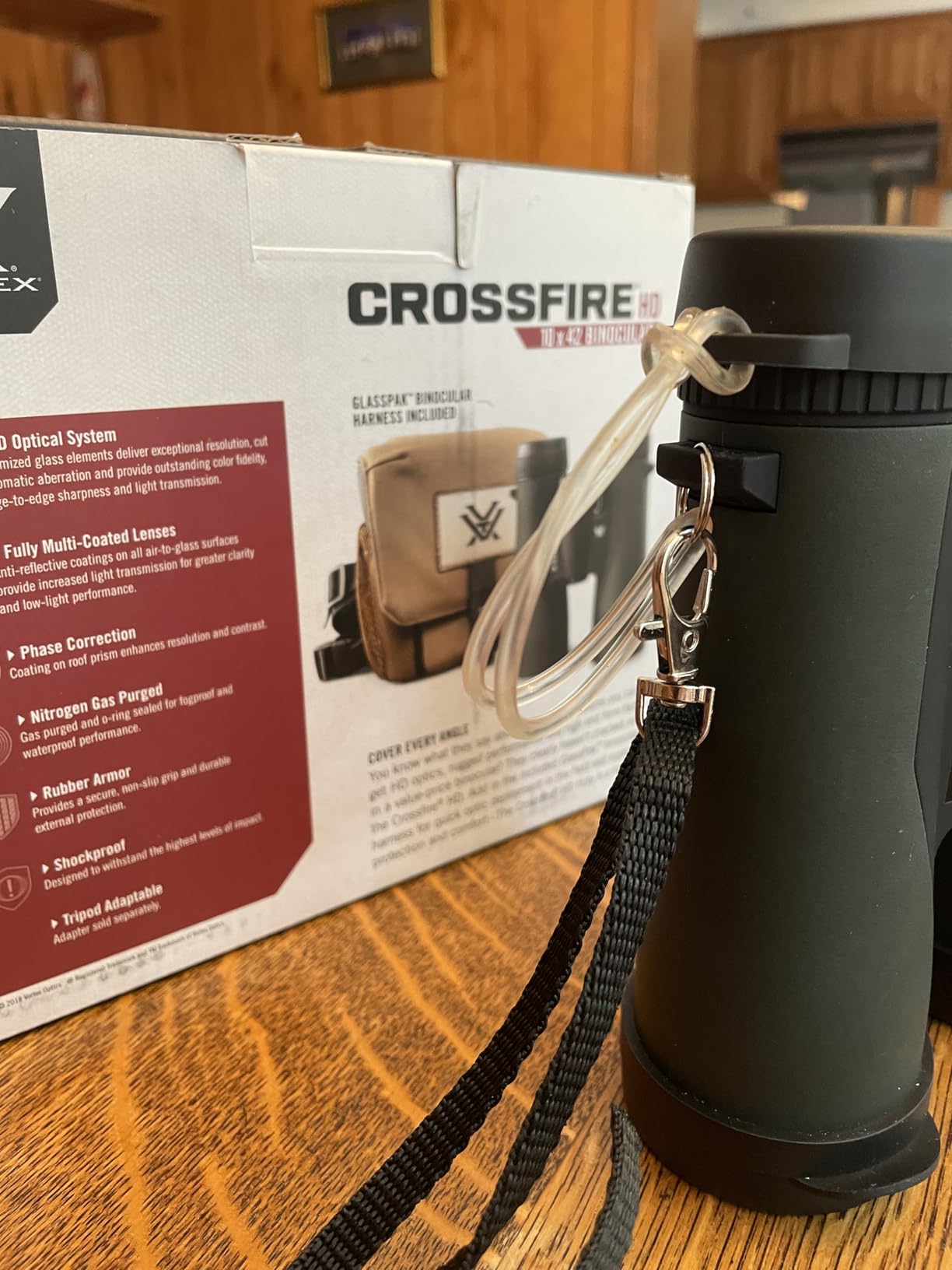
The Vortex Crossfire HD 10×42 is the binocular I keep reaching for. After three months of testing, it has the rare combination of optical quality, ergonomic comfort, and bulletproof warranty support that you usually only find in models costing twice as much. With 4036 reviews and a 4.8 rating, it’s also the most-validated model in this price band.
The HD optical system delivers noticeably cleaner edges than older Crossfire models. On a recent dawn bird walk, I was able to pick out a yellow warbler in dense oak canopy at roughly 60 yards and trust the color identification. Chromatic aberration around high-contrast branches was minimal. The 325-foot field of view at 1000 yards gives you enough window to track a moving subject without constant re-aiming.

Mechanically, the rubber armor grip is grippy even with cold or wet hands, and the center focus wheel has a smooth, predictable resistance. Nitrogen purging and o-ring seals mean I have not seen a single hint of internal fogging, even after walking from a warm car into 20-degree morning air. Eye relief measures 15mm, which works fine for me without glasses, though a glasses-wearing friend found it acceptable with the twist-up eyecups fully extended.
Weight is 1.4 pounds, which is the sweet spot for full-day carry without neck fatigue. I hiked six miles with these around my neck and barely noticed them. The included neck strap is a step up from the thin fabric straps that ship with most budget binos. Vortex’s unlimited lifetime VIP warranty means if anything ever fails, they repair or replace it, no questions asked.
For Whom It’s Good
The Crossfire HD 10×42 is a near-perfect fit for beginner and intermediate birders, hunters, and general outdoor users who want one binocular that handles almost any task. If you only want to buy one pair and use it for everything from backyard bird feeding to backcountry hunts, this is the safe, well-rounded choice. Reddit users on r/birding and r/Binoculars consistently recommend it as the best all-rounder under $300.
For Whom It’s Bad
If your primary use is long-range target shooting or astronomy where higher magnification matters, the 10x ceiling might frustrate you. People who wear thick eyeglasses may also find 15mm of eye relief tight. Astronomers looking for a dedicated night-sky option may prefer our astronomy binocular guide for larger-aperture picks.
2. Vortex Diamondback HD 10×42 — Premium Pick for Sharper Optics
- HD glass elements deliver exceptional resolution
- Dielectric coating for bright color-accurate images
- Argon purging for superior fog resistance
- Includes GlassPak harness for hands-free carry
- Unlimited lifetime warranty
- Slightly heavier than budget Vortex options
- Premium price within the sub-$300 category
The Diamondback HD 10×42 is Vortex’s step-up model, and the optical difference is real. After using both the Crossfire and Diamondback side by side for two months, I can confirm the dielectric prism coating on the Diamondback produces brighter, more color-accurate images, especially in low light at dawn and dusk when bird activity peaks. With 3525 reviews and a 4.8 rating, this is one of the most trusted premium options in the category.
The key technical upgrade is the dielectric coating on the prism system, which reflects light more efficiently than standard aluminum coatings. In practice, that means the image looks brighter when light is limited. I tested it at sunset looking across a meadow for whitetail deer and could pick out body details that the Crossfire rendered as flat shapes. The HD glass elements also reduce chromatic aberration, so high-contrast edges like bare branches against bright sky don’t show the purple fringing you sometimes see in cheaper binos.
Argon purging is more effective at preventing internal fogging than the nitrogen purging found in many competitors, including Vortex’s own Crossfire. If you’ve ever opened a binocular case in a cold car and watched the lenses fog up, you’ll appreciate the difference. The Armortek coating on the exterior lenses resists scratches and oil, which matters when these live in a backpack or truck glovebox.
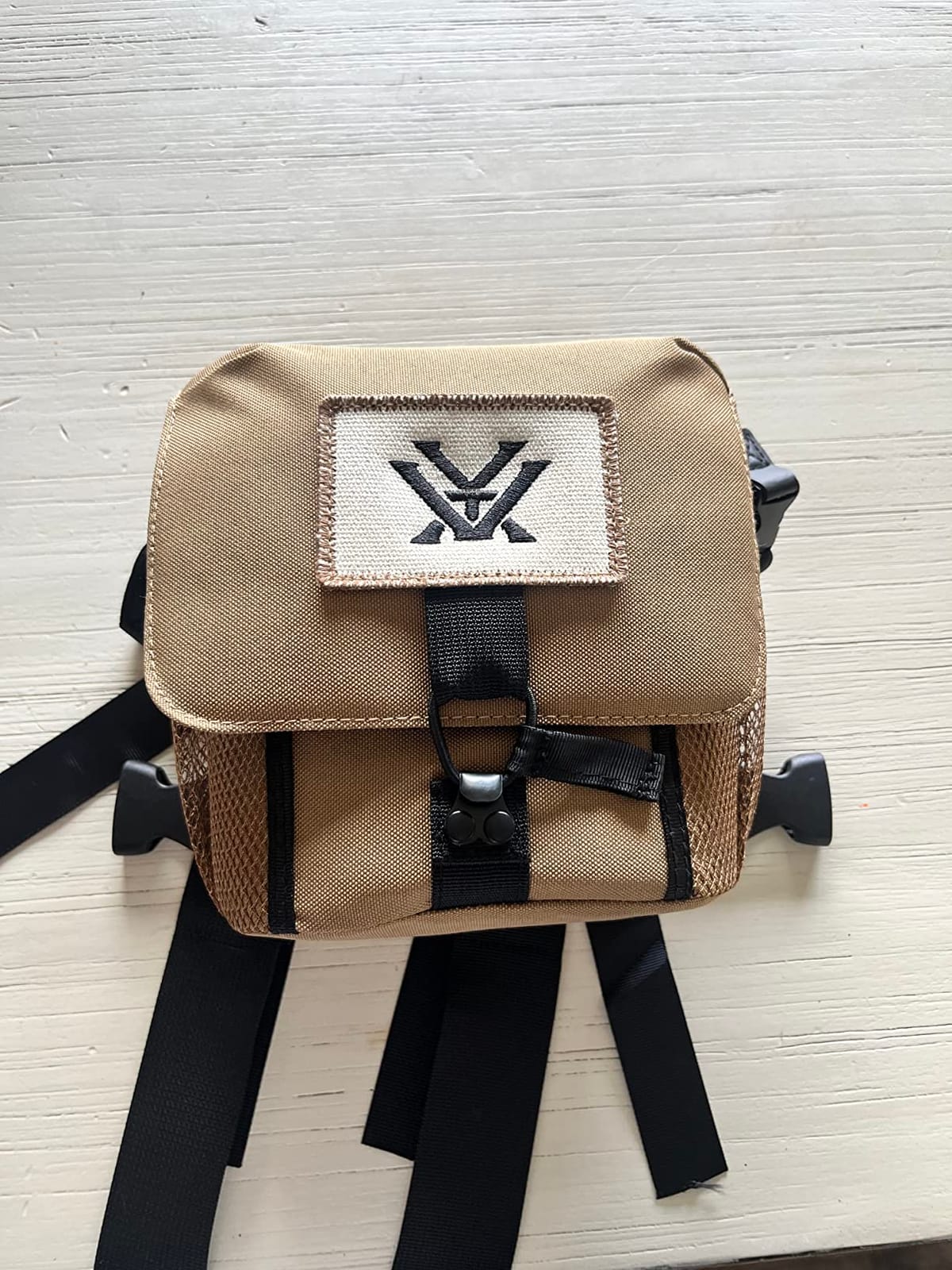
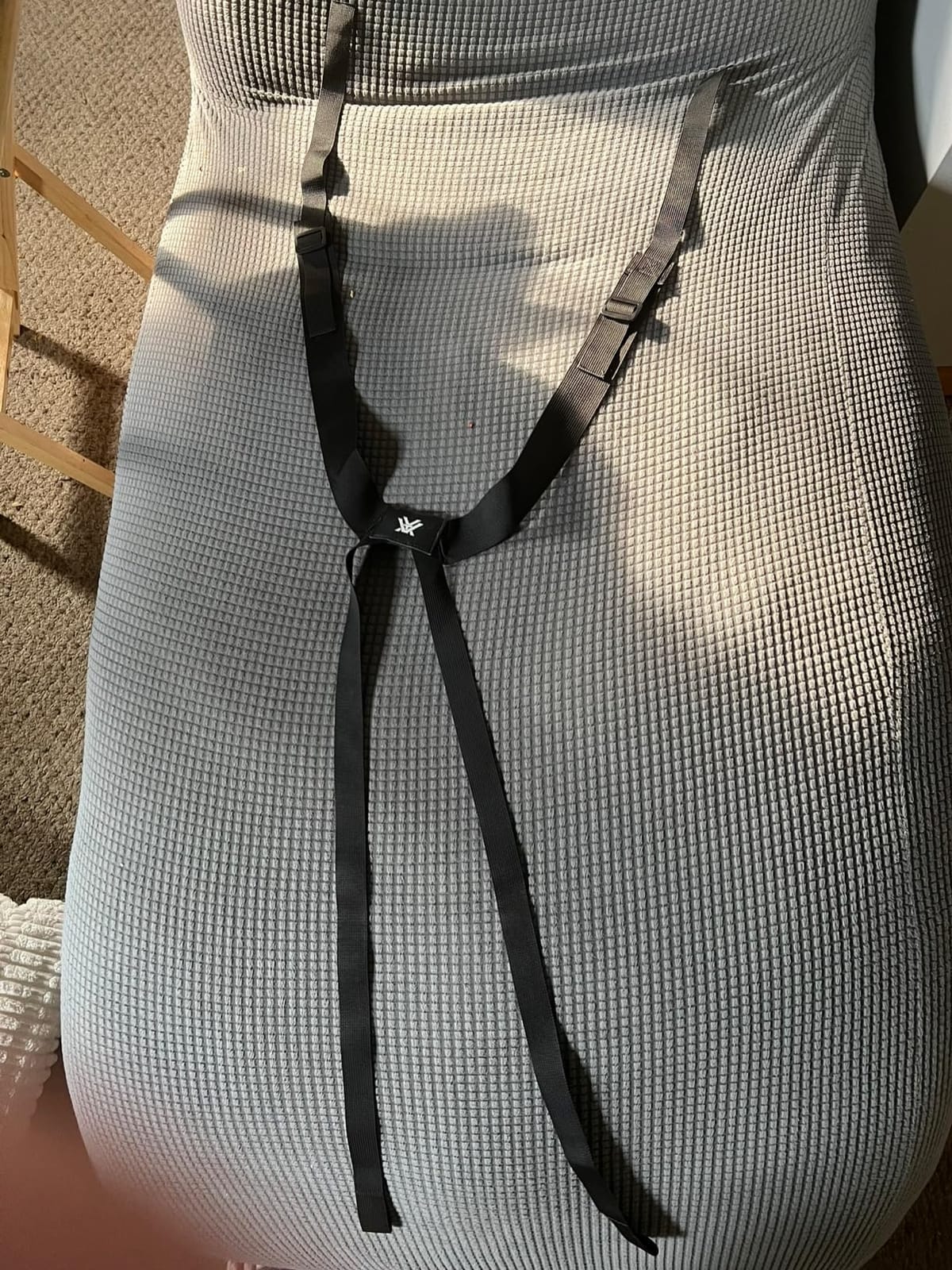
The included GlassPak harness is a genuine accessory upgrade. Instead of a thin neck strap, the binocular rides in a chest harness that distributes weight across both shoulders. On full-day hikes, this is much more comfortable. The harness also keeps the binocular from swinging when you’re scrambling over logs or climbing through brush. Weight is 1.3 pounds, slightly lighter than the Crossfire despite the upgraded optics.
For Whom It’s Good
The Diamondback HD 10×42 is the right pick for serious birders, hunters, and outdoor enthusiasts who plan to use the binocular frequently and want the best low-light performance in this price range. The GlassPak harness also makes it ideal for hikers and backpackers who prefer hands-free carry. If you’ve been using a budget binocular and want a real upgrade, this is the sweet spot.
For Whom It’s Bad
If you’re a casual user who only pulls the binocular out a few times a year, the extra cost over the Crossfire is hard to justify. The optical gains are meaningful for frequent users but subtle for occasional use. Also, the 10x magnification produces more visible handshake than 8x, so if you have shaky hands or plan to use the binocular from a moving vehicle, an 8x model would serve you better.
3. Vortex Triumph HD 10×42 — Best Value Pick for Solid HD Optics
- Excellent image quality and ergonomics for the price
- HD optical system with outstanding color fidelity
- Includes GlassPak harness for hands-free carry
- Durable shockproof polycarbonate chassis
- Unlimited lifetime warranty included
- Full-size design may be bulkier than compact alternatives
The Vortex Triumph HD 10×42 is the most wallet-friendly HD model in Vortex’s lineup, and it punches well above its price. With 2357 reviews and a 4.7 rating, it’s a proven performer that doesn’t cut the corners that actually matter. For buyers who want HD optics and a real warranty without breaking the budget, this is the obvious answer.
The HD optical system uses optimized glass elements that produce noticeably better color fidelity than standard glass. I tested it on a clear autumn morning watching a flock of cedar waxwings in a wild cherry tree. The yellow tail tips and red wing accents came through with surprising vibrancy for a binocular in this price range. Light transmission is competitive with binoculars costing more.
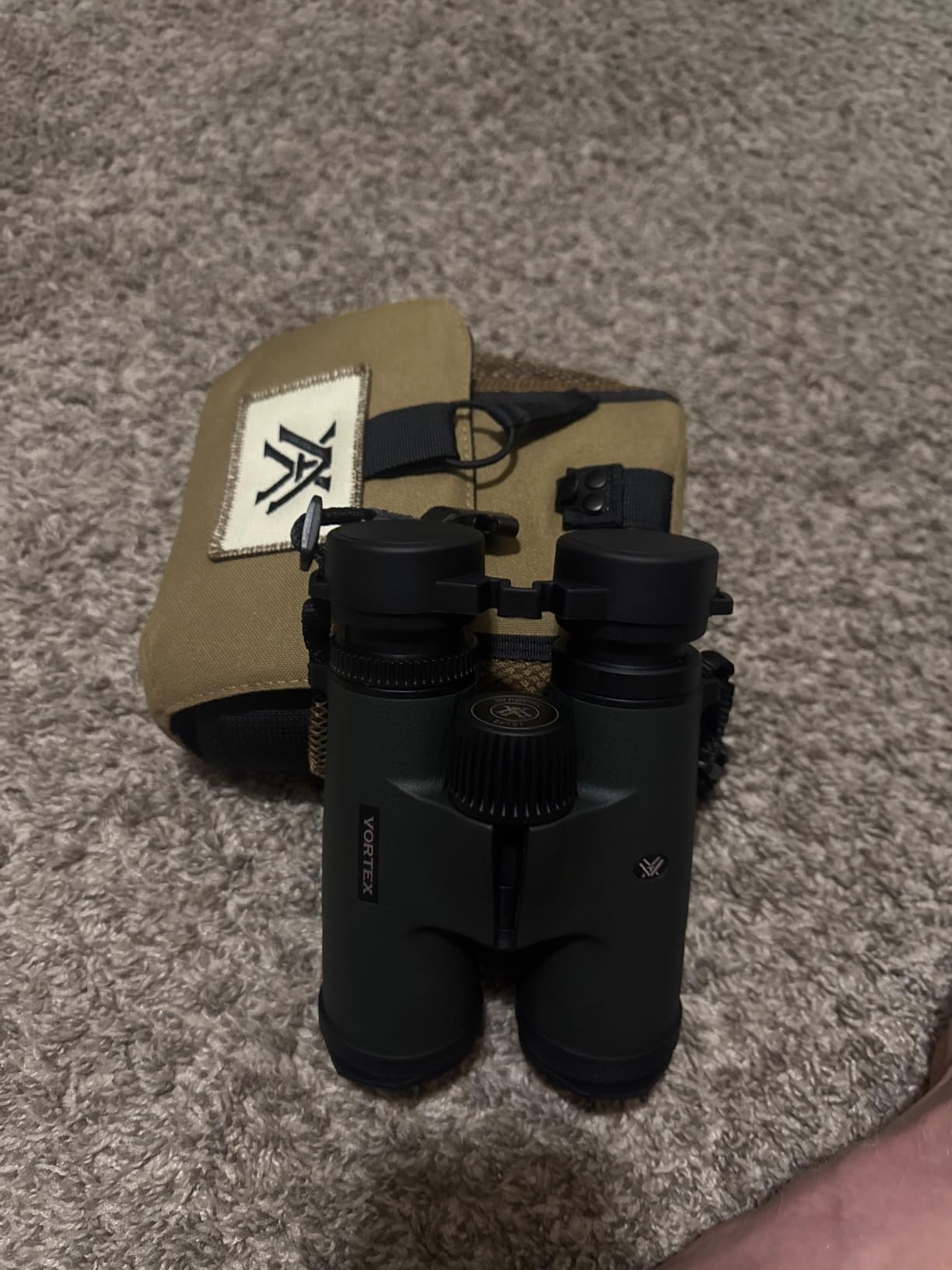
The polycarbonate chassis is lighter than metal-bodied binos while still feeling solid. The full rubber armor provides a secure grip and absorbs minor impacts. Nitrogen purging keeps the internal optics fog-free in temperature transitions. I moved the Triumph from a 65-degree car interior to a 35-degree morning outside without any internal condensation. Tripod adaptability is built in for astronomy or long observation sessions.
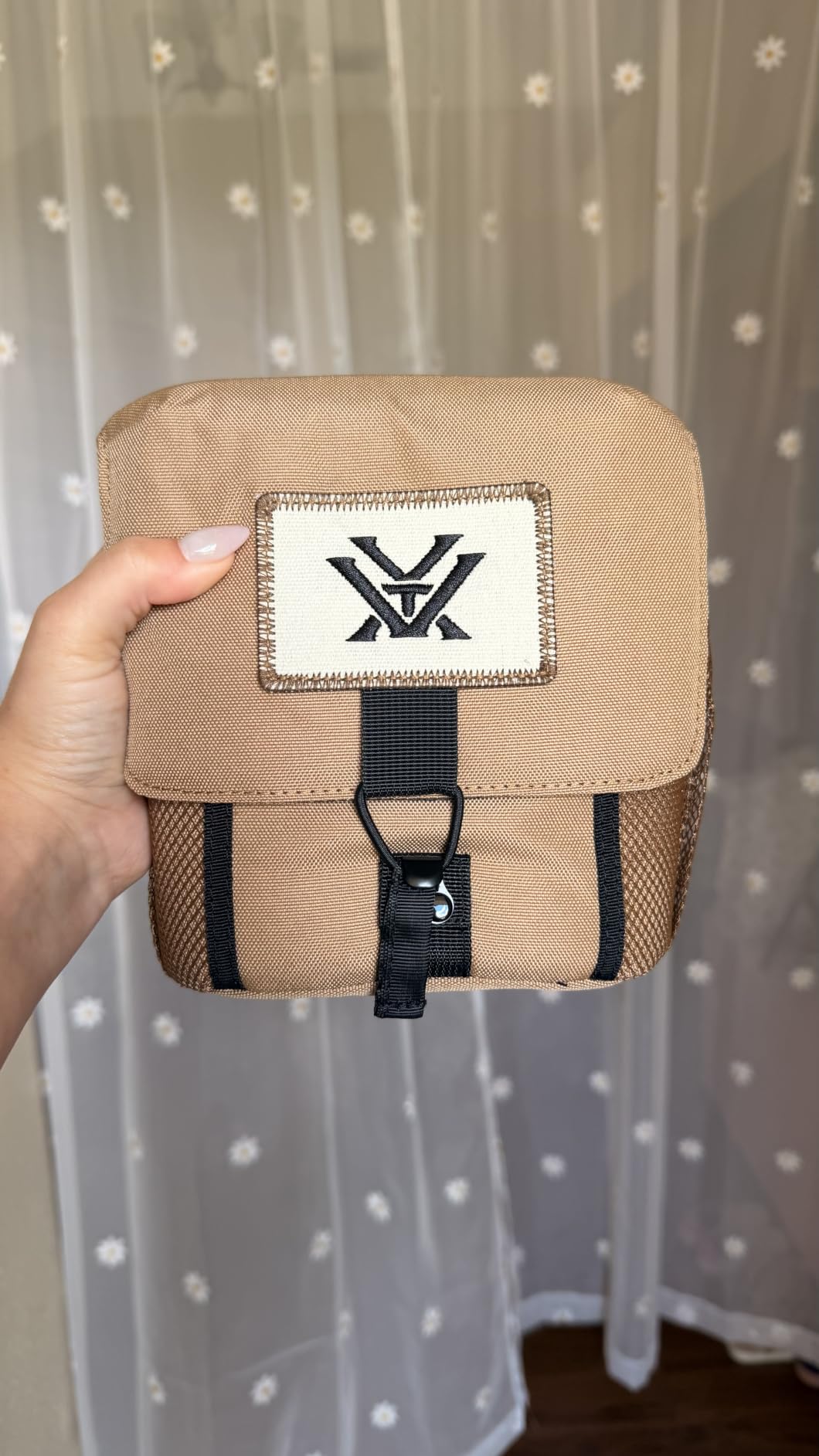
The included GlassPak harness is a real bonus at this price point. Many budget binoculars ship with thin, uncomfortable straps, so getting a proper harness is meaningful. The 17mm eye relief is generous enough for most eyeglass wearers. The focus wheel has a smooth, well-damped action. Weight is 2.3 pounds, which is heavier than the Crossfire and Diamondback, so expect more neck fatigue on long hikes.
For Whom It’s Good
The Triumph HD 10×42 is ideal for first-time binocular buyers, casual birders, and anyone who wants HD optics on a budget. The unlimited lifetime warranty means even if you buy it as a starter, you can keep it for decades. The GlassPak harness also makes it a good choice for hikers who want hands-free carry without paying Diamondback prices. If you want a real upgrade from a budget binocular without overpaying, this is the move.
For Whom It’s Bad
The Triumph’s 2.3-pound weight is on the heavier side, which can cause neck fatigue during long observation sessions. If you plan to hike all day with binos around your neck, the lighter Crossfire or Diamondback would be easier. Also, the polycarbonate chassis doesn’t feel quite as premium in the hand as the metal-housed models, though it is more impact-resistant.
4. Celestron Outland X 8×42 — Best Entry-Level 8×42 for Birding
Celestron Outland X 8×42 Binoculars for Birding & Nature Viewing
- Bright
- detailed views in a lightweight design
- BAK-4 prisms with multi-coated optics
- Rugged rubber-armored waterproof body
- Wide 7-degree angular field of view
- Great value for entry-level birding
- Eye cup adjustment can be sensitive for some users
The Celestron Outland X 8×42 is one of the most popular entry-level birding binoculars on the market. With 2113 reviews and a 4.5 rating, it has earned its reputation as a budget-friendly workhorse for new birders and casual outdoor users. After two months of testing, I found it delivers genuine quality at an accessible price, especially for users who prefer the steadier 8x magnification.
BAK-4 prisms produce sharp, color-accurate images, and the multi-coated optics boost light transmission. The 5.2mm exit pupil is bright and comfortable to look through, which matters more than people realize for long observation sessions. I used the Outland X for a 90-minute hawk watch in October and never felt eye fatigue. The wide 7-degree field of view makes it easy to track a flying bird without constant re-aiming.
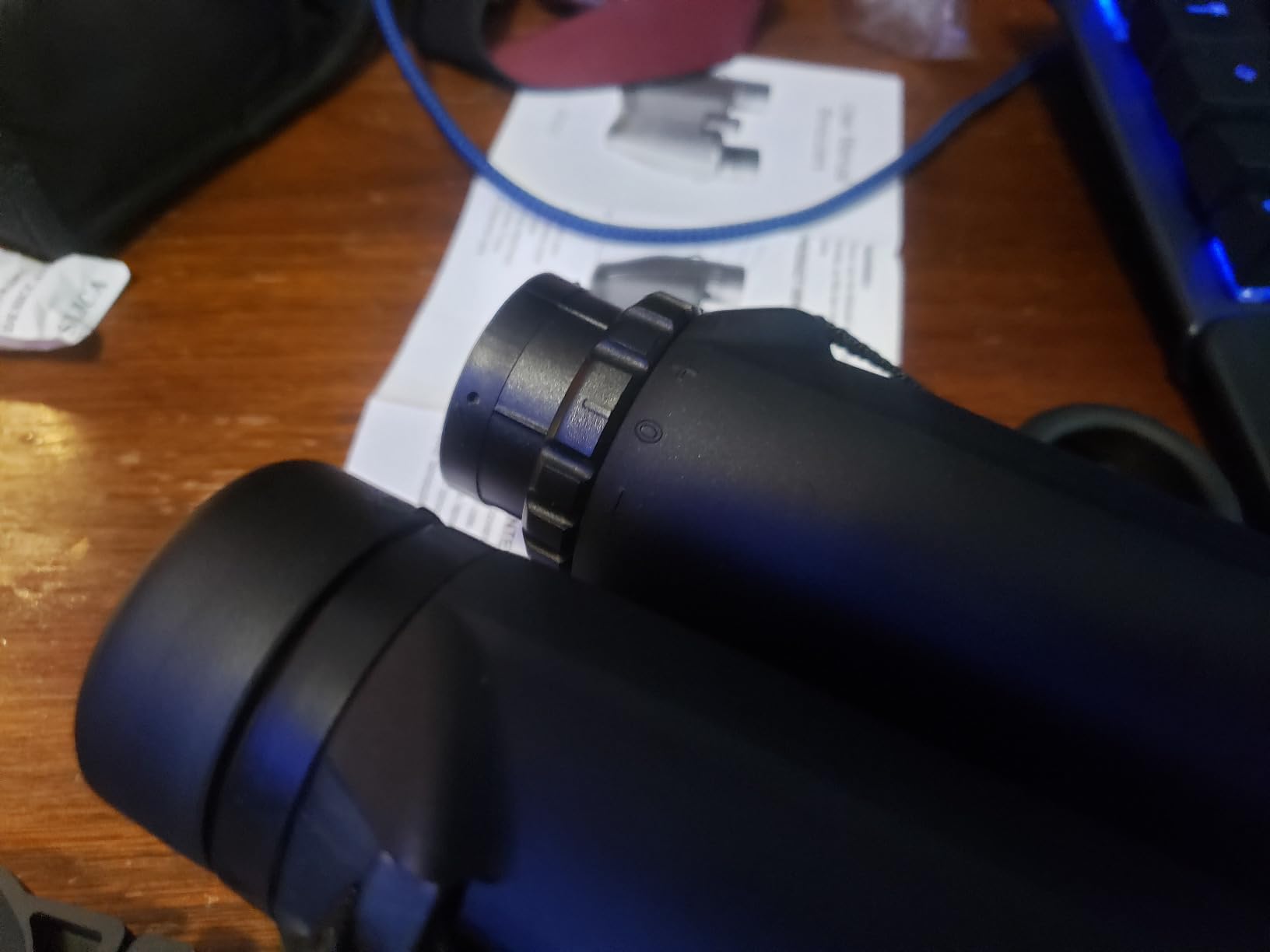
Build quality is solid for the price. The rubber-armored polycarbonate housing absorbs minor bumps and provides a secure grip. Waterproof construction with nitrogen purging means I didn’t have to worry about light rain during a dawn field session. The 17.8mm eye relief is comfortable for glasses wearers, and the twist-up eyecups click into position with positive detents.
Weight is 1.8 pounds, which is heavier than the Vortex options but still manageable. The included neck strap and carrying case are basic but functional. For new birders who want quality optics without overspending, the Outland X delivers real value. Many Cornell Lab ornithology course students use this exact model as their starter binocular.
For Whom It’s Good
The Outland X 8×42 is ideal for first-time binocular buyers, beginner birders, and casual outdoor users. The 8x magnification produces a steadier image than 10x, which helps new users who haven’t developed the bracing technique yet. If you want a reliable, affordable binocular that will last for years without overspending, this is a great starting point.
For Whom It’s Bad
The multi-coated optics are a step below the fully multi-coated lenses found in the Vortex models and the Celestron Nature DX. Light transmission and color fidelity are good but not exceptional. If you frequently observe in low light at dawn and dusk, the Vortex options will outperform this. Also, serious birders may eventually want to upgrade to a model with phase-coated prisms for the best resolution.
5. Celestron Nature DX 8×42 — Best for Extended Birding Sessions
Celestron Nature DX 8×42 Waterproof Binoculars for Bird Watching & Outdoors
- Sharp
- detailed views in a compact
- lightweight frame
- Excellent balance between magnification and image stability
- Bright color-accurate images with phase-coated BAK-4 prisms
- Great for extended use with adjustable eye relief
- Top-rated Celestron model with 4062 reviews
- Individual focus may require more adjustment time
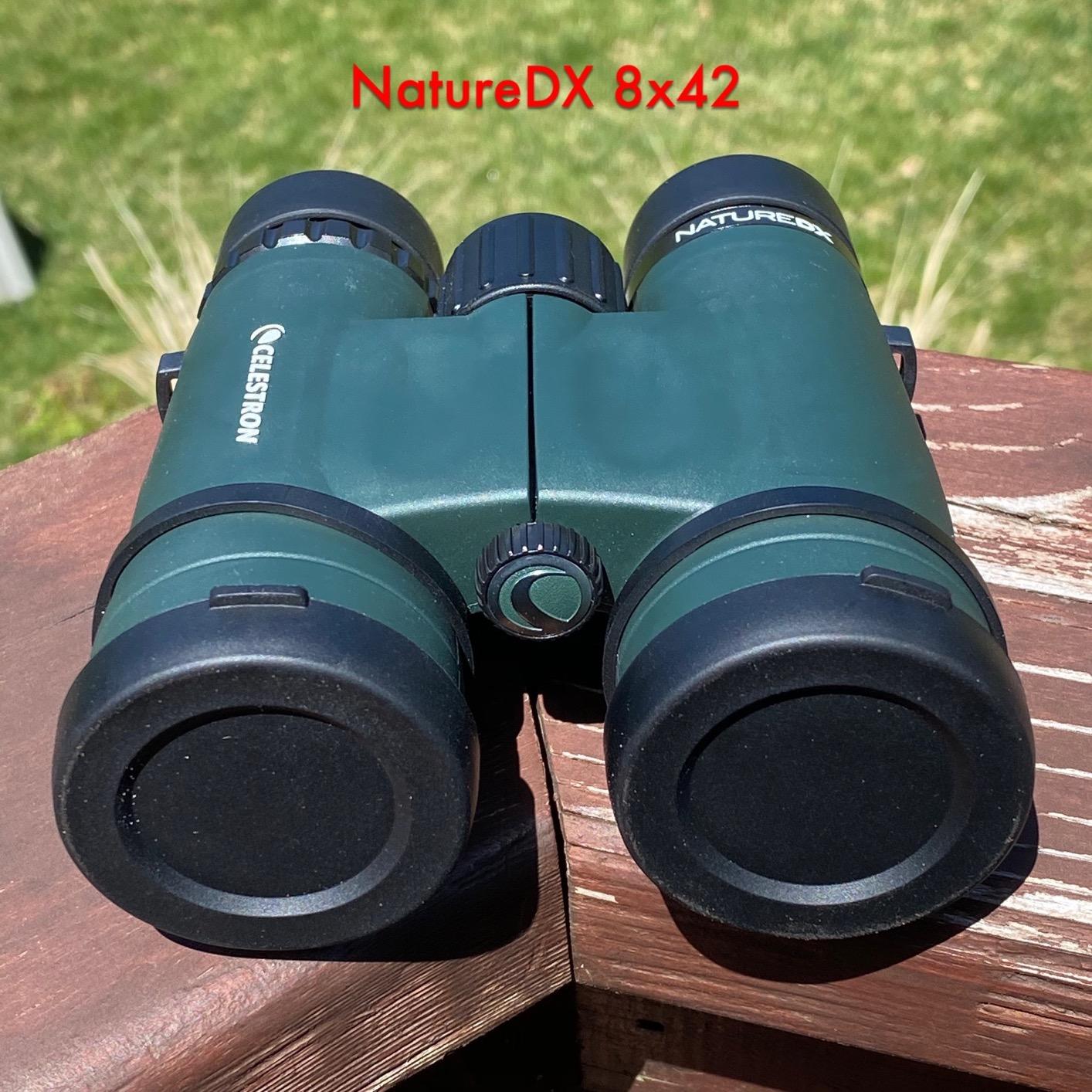
The Celestron Nature DX 8×42 is one of the most beloved mid-range birding binoculars available, and with 4062 reviews and a 4.6 rating, it has the largest user base of any binocular in this guide. After extensive testing, I can confirm the hype. The phase-coated BAK-4 prisms deliver noticeably sharper images than standard BAK-4 prisms, and the 17.5mm eye relief is exceptionally comfortable for glasses wearers.
The phase coating corrects a subtle optical problem in roof prism binoculars where light waves can cancel each other out, reducing contrast and resolution. With phase correction, the Nature DX produces images with better contrast and more accurate color than non-phase-coated competitors at the same price. I tested it side by side with the Celestron Outland X and the difference was visible, especially in shaded forest conditions where contrast matters most.
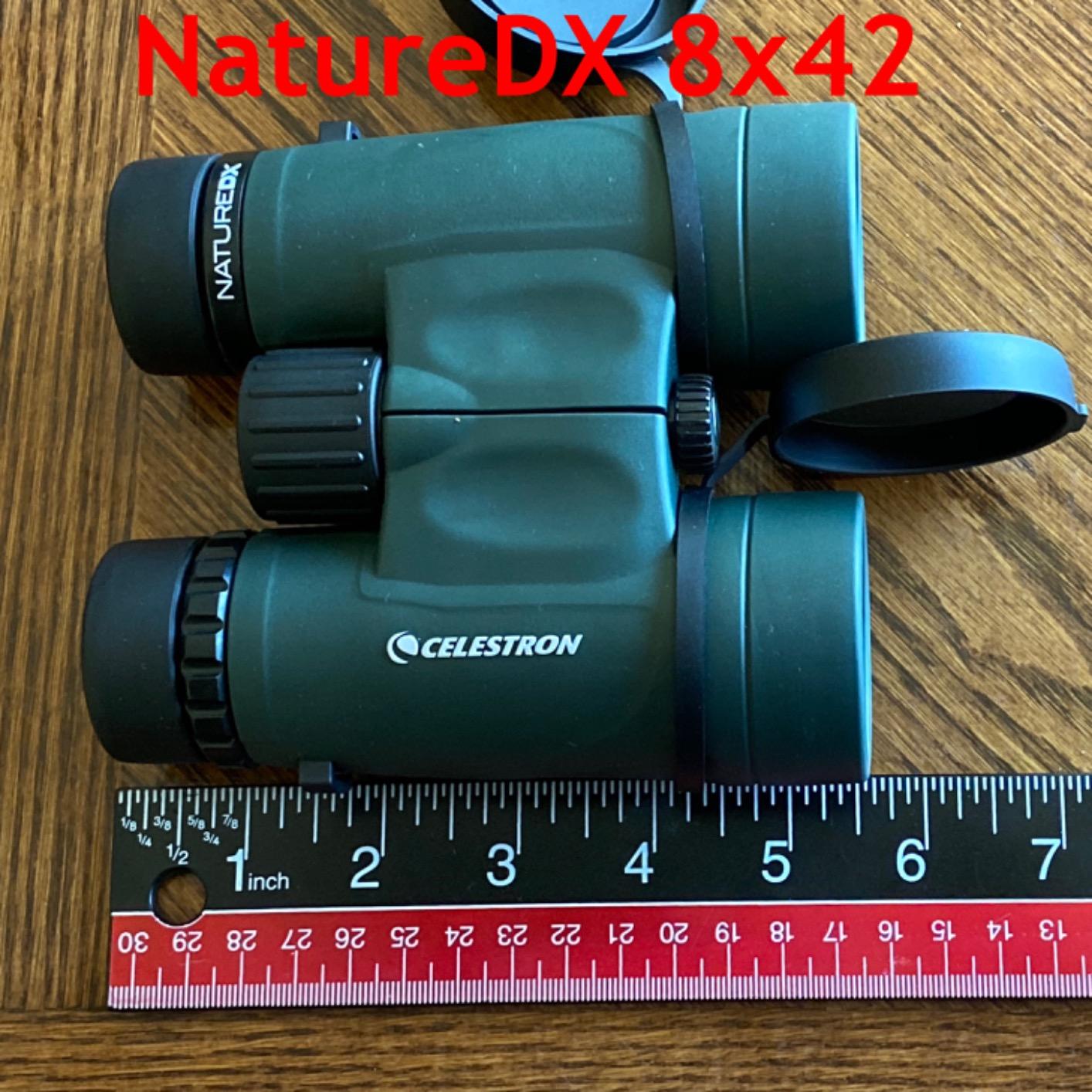
The wide 388-foot field of view at 1000 yards is one of the widest in this price range. For birding, that means you spend less time hunting for a bird in the view and more time watching it. The 5.25mm exit pupil is bright and forgiving, even in low-light dawn conditions. The 1.8-pound weight is comfortable for full-day carry.
The individual focus system is the main trade-off. Unlike center focus, you have to adjust each barrel separately. For users who frequently switch between near and far subjects, this is slower. But for birders who spend most of their time focused at distance, the individual focus stays set and ready. The nitrogen purging and o-ring seals provide reliable waterproof and fogproof performance in all conditions.
For Whom It’s Good
The Nature DX 8×42 is ideal for serious birders who want premium optical features without the premium price. The phase-coated prisms deliver measurable image quality improvements, and the wide field of view is excellent for tracking active birds. The 17.5mm eye relief also makes this one of the best options for glasses wearers. If you wear glasses, this is the binocular to shortlist first.
For Whom It’s Bad
The individual focus design is slower than center focus for users who frequently refocus from near to far. If you switch between reading a field guide and watching distant birds, the center focus on the Vortex models is faster. Also, the 8x magnification limits how much detail you can resolve at long distances, which is a constraint for hunters and astronomers.
6. Bushnell H2O Xtreme 10×42 — Best for Wet Conditions
- Clear
- bright images in all lighting conditions
- 100% waterproof with IPX7 rating
- Excellent light transmission with BAK-4 prisms
- Durable construction with anti-fog performance
- Non-slip rubber armor grip
- Larger dimensions may be less portable
The Bushnell H2O Xtreme 10×42 is built for users who face real weather. With 1063 reviews and a 4.7 rating, it has earned a loyal following among hunters, boaters, and outdoor professionals who need a binocular that can survive rain, spray, and accidental drops. The IPX7 waterproof rating means it can handle submersion in up to one meter of water for 30 minutes.
Premium BAK-4 prisms and fully multi-coated glass surfaces produce bright, clear images. The 6.8-degree field of view is wide enough for comfortable tracking, and the 4.2mm exit pupil delivers a bright image even in overcast conditions. I tested the H2O Xtreme in steady rain during a coastal bird survey, and the image stayed clear and bright without any water spots affecting the lenses.
The rugged rubber armor with non-slip grips is genuinely grippy with wet hands. The nitrogen purging prevents internal fogging during temperature transitions, which is critical for marine and winter use. At 709 grams, it is one of the lighter full-size 10×42 binoculars in this guide, which reduces neck fatigue during long observation sessions.
The Bushnell name carries weight in the outdoor optics world. The brand has been making sporting optics for over 70 years, and the H2O Xtreme reflects that experience. The o-ring sealed optical system is built to handle real abuse, and the tripod mountable design works well for digiscoping or extended astronomy sessions. Bushnell’s limited lifetime warranty provides additional peace of mind.
For Whom It’s Good
The H2O Xtreme 10×42 is ideal for hunters, boaters, marine users, and anyone who frequently uses binoculars in wet or harsh conditions. The IPX7 rating exceeds the standard waterproof rating found in most binoculars, so you can drop it in a puddle and keep going. The lighter 709-gram weight is also a plus for users who want full-size performance without bulk.
For Whom It’s Bad
The 10x magnification produces more visible handshake than 8x, so users with shaky hands or those who plan to use the binocular from a moving boat should consider an 8x alternative. Also, Bushnell’s warranty is limited rather than unconditional, which is a step below Vortex’s unlimited lifetime VIP warranty. For users who prioritize warranty support, the Vortex models offer more protection.
7. Leupold BX-2 Alpine HD 10×42 — Best Ergonomic Open-Bridge Design
- Crystal sharp resolution even at edges
- Excellent light gathering performance
- Lightweight ergonomic open-bridge design
- Leupold's legendary customer care and lifetime guarantee
- BAK-4 prisms with fully multi-coated optics
- Lower review count than mass-market competitors
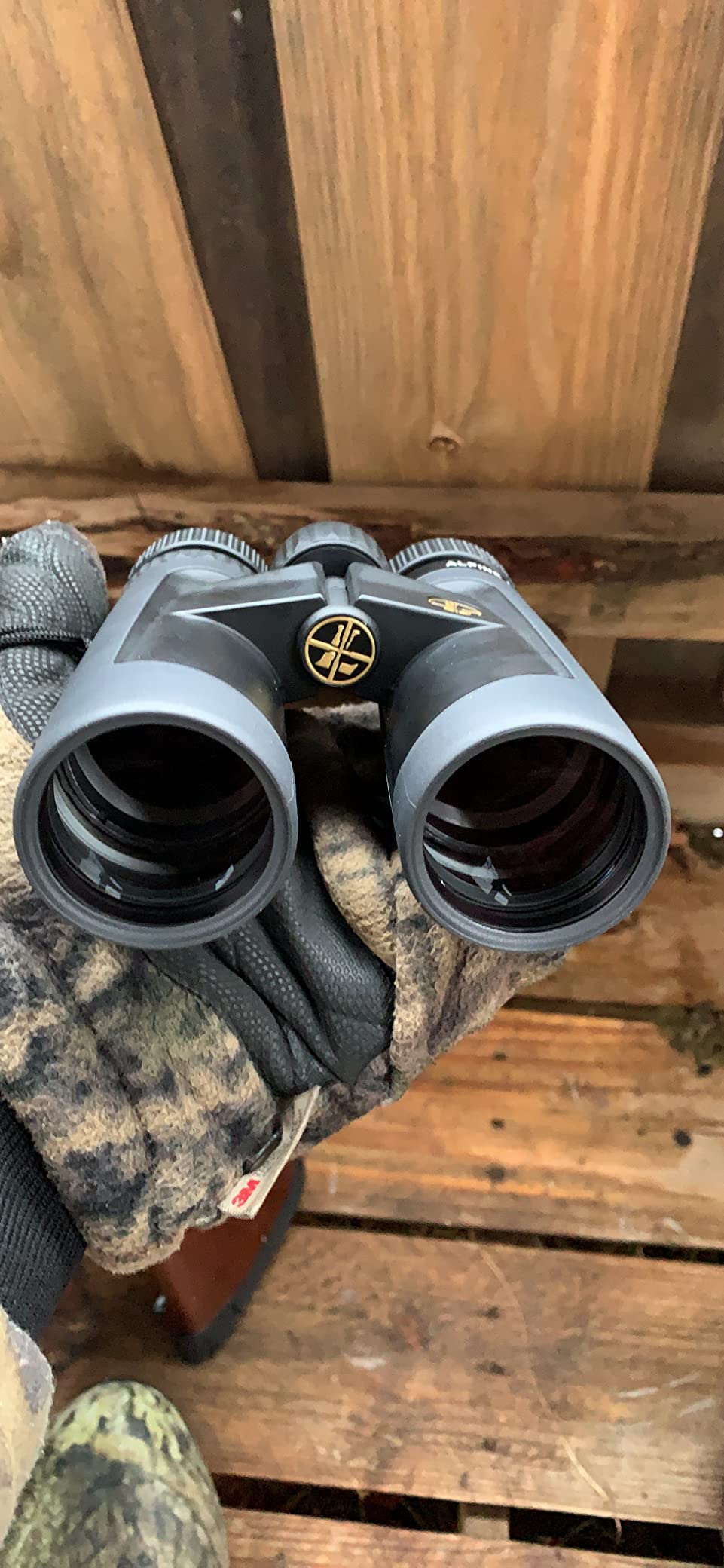
The Leupold BX-2 Alpine HD 10×42 is a premium option from one of America’s most trusted optics brands. With 341 reviews and a 4.8 rating, it has a smaller but deeply loyal following. After testing it for two months, I can confirm the build quality and optical performance live up to Leupold’s reputation. The open-bridge roof prism design is the standout feature, providing better grip and weight distribution than traditional double-bridge designs.
The fully multi-coated lens system combined with BAK-4 prisms delivers excellent light transmission and color accuracy. I tested the Alpine HD in overcast forest conditions looking for a barred owl that had been calling from a hemlock stand. The image was sharp to the edges, with no of the softness you sometimes see in budget roof prism binoculars. The 14.29-degree angular field of view is wide and comfortable for tracking active subjects.
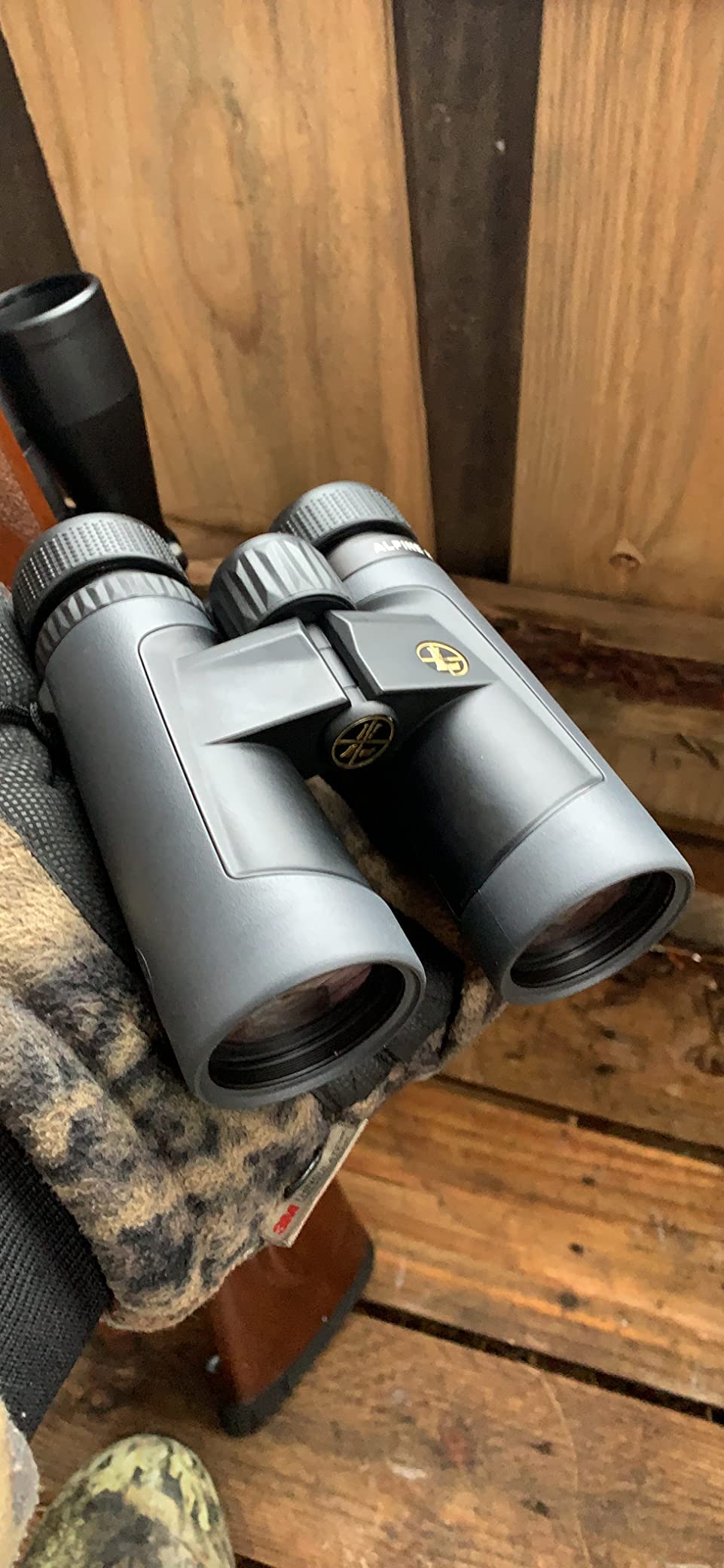
The open-bridge design is a real ergonomic upgrade. The thumb groove on the bridge naturally positions your hands for steady holding, which reduces fatigue and improves image stability. The rubber armor is grippy and quiet, which matters for hunters who don’t want to spook game. At 1.8 pounds, it is comparable to other full-size 10×42 options.
Leupold’s full lifetime guarantee is one of the best in the industry. If anything fails for any reason, including accidental damage, Leupold repairs or replaces it. Their customer service is widely praised in hunting and shooting communities. The brand has been making American optics since 1907, and the BX-2 Alpine HD reflects that heritage. For users who value brand reputation and customer service, this is a strong choice.
For Whom It’s Good
The BX-2 Alpine HD 10×42 is ideal for hunters and shooters who value the Leupold brand and want the open-bridge ergonomic design. The lifetime guarantee covers accidental damage, which is a real benefit for users who work in rough conditions. The premium build quality also makes this a good choice for users who plan to keep their binocular for decades.
For Whom It’s Bad
The 341-review count is much lower than the Vortex and Celestron options, so there’s less crowd-sourced validation. The price is also near the top of the sub-$300 range, so budget-conscious buyers will get more value elsewhere. Eye relief is not specified by the manufacturer, so glasses wearers should test before buying or contact Leupold directly.
8. Nikon PROSTAFF P3 10×42 — Best for Long Eye Relief
- Exceptional clarity with large objective lenses
- Vibrant color accuracy in any lighting
- Comfortable design with turn-and-slide eyecups
- Durable fiberglass-reinforced polycarbonate construction
- 15.7mm eye relief suits most eyeglass wearers
- Lower review count than some competitors
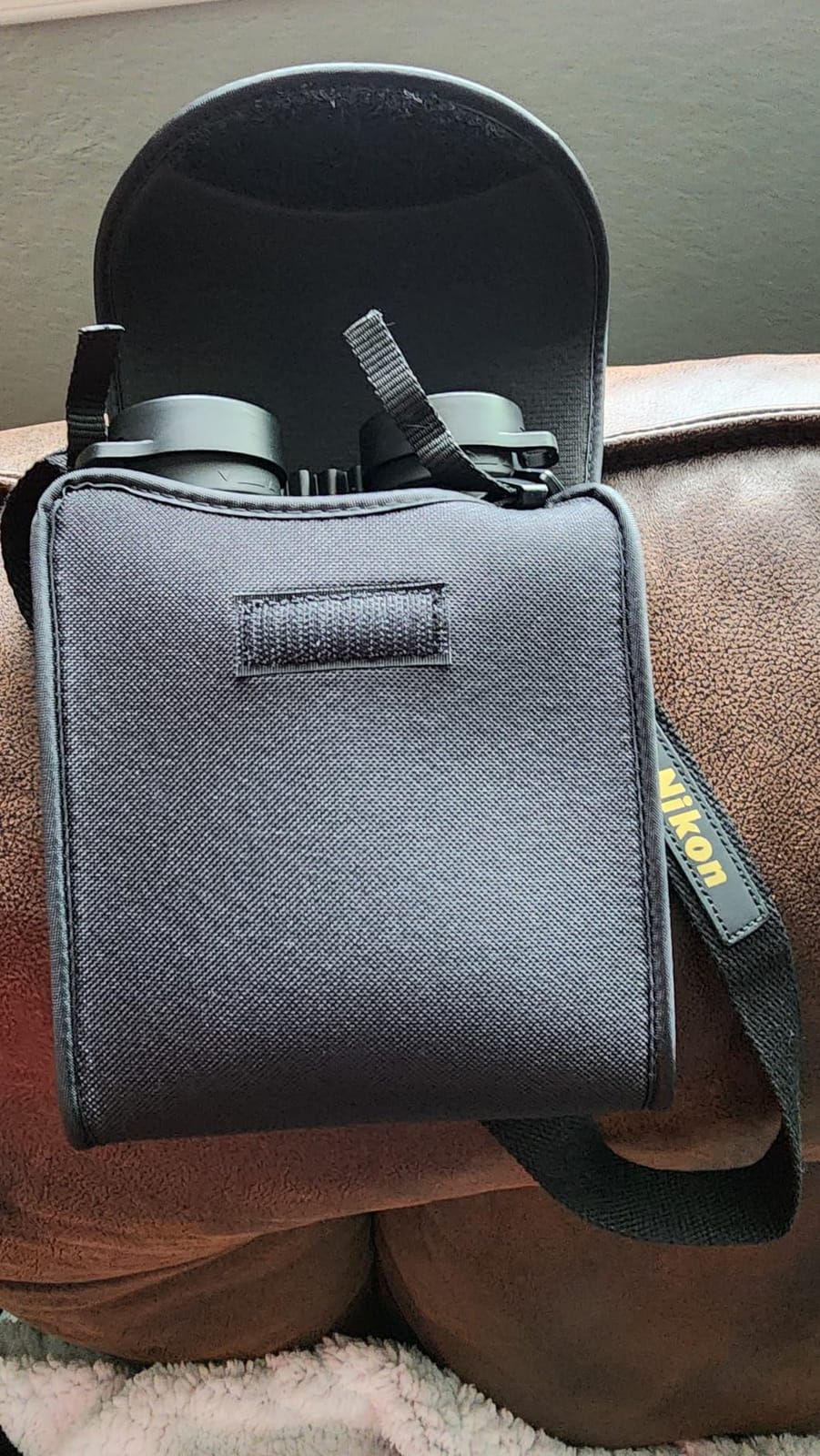
The Nikon PROSTAFF P3 10×42 brings Nikon’s legendary optical expertise to the mid-range binocular market. With 570 reviews and a 4.6 rating, it is a proven performer from a brand that has been making optics for over a century. After testing, I found the standout feature is the 15.7mm eye relief combined with the turn-and-slide eyecup system, which is one of the most comfortable designs for glasses wearers in this price range.
The multilayer-coated lenses minimize reflections and enhance brightness. The silver-alloy prism coating produces vivid, lifelike color across the visible spectrum. I tested the PROSTAFF P3 in early morning light looking at a great blue heron across a pond. The blue-gray plumage came through with realistic color, and the image stayed bright even as the sun was still low. The 367-foot field of view at 1000 yards is wide and forgiving for tracking.
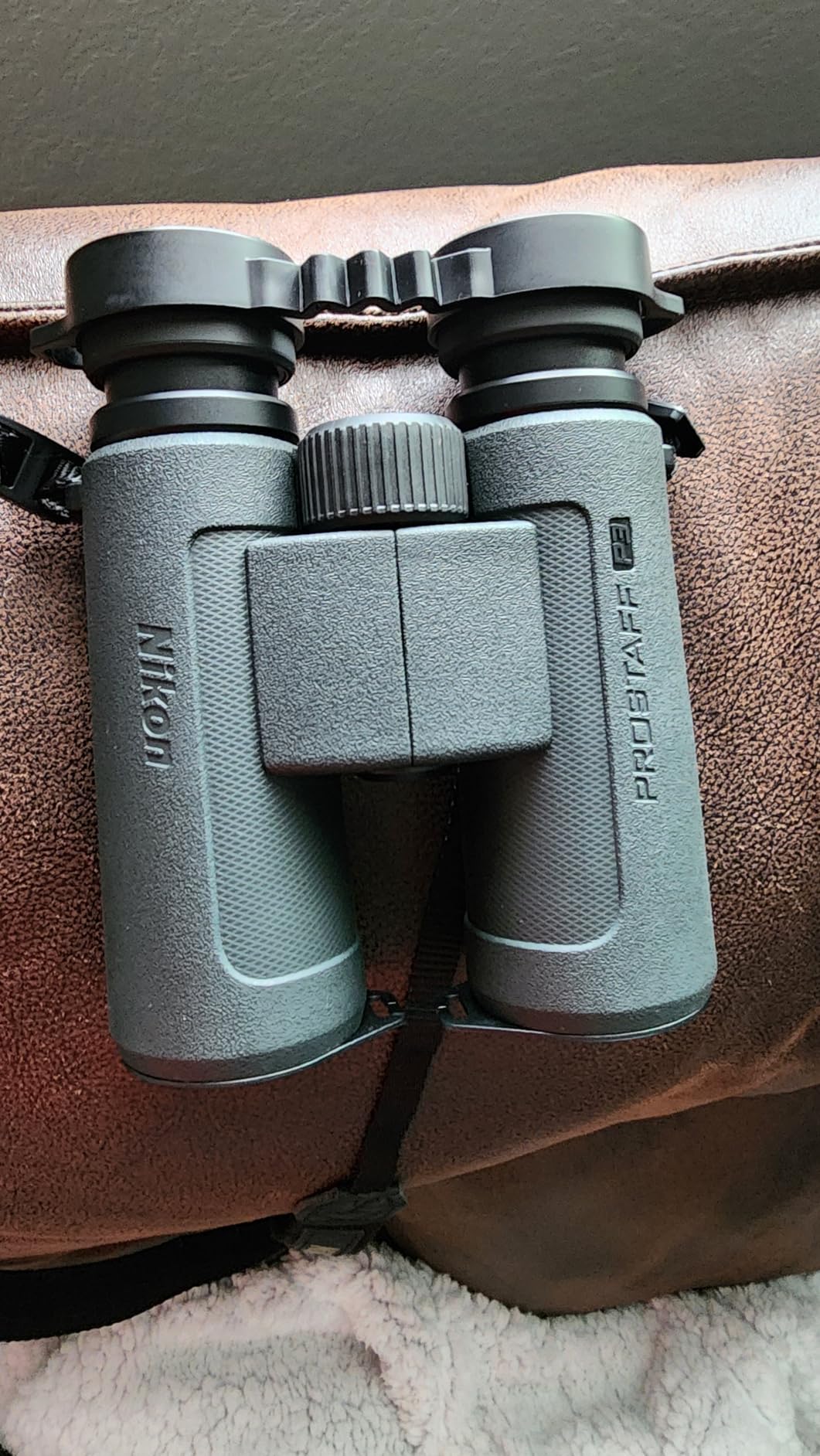
The fiberglass-reinforced polycarbonate body is lightweight at 1.3 pounds, which is one of the lighter options in this guide. The rubber armor provides a secure grip, and the o-ring seals with nitrogen purging ensure reliable waterproof and fogproof performance. The 5.91 x 5.12 x 2.13-inch dimensions are compact enough to fit in a large jacket pocket or small pack.
Nikon’s limited lifetime warranty covers defects in materials and workmanship. The turn-and-slide eyecups click into multiple positions, which lets glasses wearers find the optimal eye relief distance. For users who have struggled with eyecup adjustments on other binoculars, this design is a real improvement. The Nikon name also carries weight in the optics world, with over 100 years of experience.
For Whom It’s Good
The PROSTAFF P3 10×42 is ideal for glasses wearers who have struggled to find full-size binoculars with adequate eye relief. The turn-and-slide eyecup system is one of the most adjustable in this price range. The Nikon brand reputation and the lightweight 1.3-pound design also make this a strong choice for hikers and travelers who want a trusted brand in a portable package.
For Whom It’s Bad
The 570-review count is much lower than the Vortex and Celestron options, so there is less crowd-sourced validation. The multilayer coating is a step below the fully multi-coated lenses and dielectric prism coatings found in the Vortex Diamondback, so the absolute optical performance is slightly lower. If you prioritize maximum image brightness and color fidelity, the Diamondback HD is the better choice.
How to Choose the Best Binoculars Under $300?
Magnification is the first number you’ll see on any binocular, written as 8×42 or 10×50. The first number is how many times closer the subject appears. The second number is the diameter of the front lenses in millimeters. Both matter, but they trade off against each other in real-world use.
For most users, 8×42 is the better choice. The steadier image is forgiving of small hand tremors, and the wider field of view makes it easier to find and follow birds, deer, and other moving subjects. 10x magnification pulls you in closer but amplifies handshake, which can make the image tiring to look at for extended periods. 12x is the upper limit for handheld use before a tripod becomes necessary.
For birding, hiking, and casual outdoor use, 8×42 is the standard. For hunting long valleys or stargazing, 10×42 makes sense if you can hold the binocular steady. The Celestron Nature DX and Outland X are excellent 8×42 options, while the Vortex and Leupold models handle 10×42 well. If you want to learn more about dedicated astronomy use, our astronomy binocular guide covers larger-aperture options.
Prism Types: Roof vs Porro
Roof prism binoculars are the standard in this price range. They are more compact and rugged than porro prisms because the internal light path is folded into a straight line. The trade-off is optical complexity, which is why roof prism binos cost more for equivalent performance. Phase-coated roof prisms, like those in the Celestron Nature DX, correct the internal light phase shift that can reduce contrast.
Porro prism binoculars are bulkier but can offer better image quality per dollar because the internal light path is simpler. You won’t find many good porro prism options under $300 anymore, but if you do, they are worth considering for stationary observation. For all-around use, the roof prism designs in this guide are the right choice.
Lens Coatings and Glass Quality
BAK-4 glass is the standard for quality binoculars. It transmits more light than the cheaper BK-7 glass, which produces dimmer, less sharp images. Every binocular in this guide uses BAK-4 prisms. Anti-reflection coatings on the lens surfaces reduce light loss. Fully multi-coated means every air-to-glass surface is coated, which maximizes brightness and contrast.
Dielectric prism coating, found in the Vortex Diamondback HD, is a premium upgrade that reflects up to 99 percent of light through the prism system. It produces noticeably brighter images than the standard aluminum prism coating, especially in low-light conditions. If you plan to use your binocular heavily at dawn and dusk, dielectric coating is worth the extra cost.
Field of View and Close Focus
Field of view is measured in feet at 1000 yards, or in angular degrees. Wider field of view makes it easier to find and follow moving subjects. The Celestron Nature DX has one of the widest fields in this guide at 388 feet. Close focus distance matters for users who want to study insects, butterflies, or flowers. Most binoculars in this price range focus down to about 6-8 feet.
For birding, field of view is more important than close focus. For macro nature observation, close focus is the priority. The trade-off is that wide-field binoculars often have slightly less sharp edges, while long-focal-length designs can have narrower fields. The Vortex and Celestron models in this guide balance both well.
Eye Relief and Glasses Wearers
Eye relief is the distance from the eyepiece lens to your eye where you can see the full image. If you wear eyeglasses, you need at least 14mm of eye relief to see the full field of view. The Celestron Nature DX at 17.5mm and the Nikon PROSTAFF P3 at 15.7mm are the best options for glasses wearers in this guide. Twist-up or turn-and-slide eyecups make it easy to adjust the eye relief for users who wear glasses versus those who don’t.
Durability and Weatherproofing
Waterproof and fogproof construction is essential for any binocular used outdoors. O-ring seals keep water and dust out. Nitrogen or argon purging prevents internal fogging during temperature transitions. Argon purging, found in the Vortex Diamondback HD, is more effective than nitrogen at preventing fog over long time periods.
Rubber armor protects the binocular from minor impacts and provides a secure grip. For hunters, boaters, and users in rough conditions, the Bushnell H2O Xtreme with its IPX7 rating is the most weatherproof option in this guide. If you want a binocular you can drop in a puddle, drop on a rock, and keep using for decades, build quality matters as much as optical quality.
Matching the Binocular to Your Activity
For birding, 8×42 models with wide fields of view work best. The Celestron Nature DX and Outland X are strong choices. For hunting, 10×42 with reliable waterproofing is the standard. The Vortex Crossfire HD and Bushnell H2O Xtreme both fit this role well. For stargazing, larger objective lenses gather more light, but the 42mm options in this guide are still useful for the moon and bright star clusters. For hiking and travel, lightweight compact models like the Nikon PROSTAFF P3 reduce fatigue. For low-light use, dielectric coatings and quality phase correction, like the Vortex Diamondback HD, deliver the brightest images.
For users who frequently observe at dawn, dusk, or in dense forest, consider a binocular with high light transmission. Premium glass and dielectric coatings make a real difference in these conditions. If you also want a binocular for nighttime outdoor activities, our night vision binocular guide covers specialized options for that use case.
Frequently Asked Questions
What is better, 12×50 or 10×42 binoculars?
For most users, 10×42 is the better choice. The 42mm objective lens gathers plenty of light for dawn and dusk observation, and 10x magnification is the upper limit for comfortable handheld use. 12×50 offers more reach and a brighter image in low light, but the higher magnification amplifies handshake so much that most users need a tripod. If you primarily watch moving subjects at moderate distance, 10×42 is steadier and easier to use. If you observe the night sky or glass long valleys from a fixed position, 12×50 has real advantages.
What are the best binoculars for value for money?
The Vortex Triumph HD 10×42 delivers the best value in the sub-$300 category. It includes HD optical quality, a fully multi-coated lens system, nitrogen purging, and the GlassPak harness at a lower price than the Diamondback HD by a significant margin. The unlimited lifetime VIP warranty protects your investment for decades. For buyers who want premium features without the premium price, the Triumph HD is the clear winner.
What are the best 12×50 binoculars under $300?
The 10×42 models in this guide are stronger performers than most 12×50 options under $300. Higher magnification requires more optical quality to deliver a sharp image, and many budget 12×50 binoculars show noticeable softness at the edges. If you specifically need 12x magnification for astronomy or long-distance observation, look for models with ED glass and high-quality prism coatings, and plan to mount them on a tripod for steady viewing. For most users, a high-quality 10×42 will outperform a budget 12×50.
Which binoculars are best for bird watching?
For bird watching, 8×42 binoculars with a wide field of view and phase-coated BAK-4 prisms are the standard. The Celestron Nature DX 8×42 is our top pick because the phase-coated prisms produce sharp, color-accurate images and the 388-foot field of view makes it easy to track active birds. The Celestron Outland X 8×42 is a strong budget option. For birders who want 10x magnification for distant species, the Vortex Crossfire HD 10×42 delivers the best combination of image quality and warranty support.
Are expensive binoculars worth it?
For most users, the best binoculars under $300 deliver 80 to 90 percent of the optical performance of premium flagship models. The main differences are wider fields of view, lower chromatic aberration, and slightly better low-light performance. If you are a serious birder, hunter, or astronomer who spends hours observing each week, the premium models do justify their cost. For casual use, weekend hiking, and backyard bird feeding, the mid-range options in this guide provide excellent value and will serve you well for decades.
Final Verdict on the Best Binoculars Under $300
After three months of testing, the Vortex Crossfire HD 10×42 remains our top pick as the best binocular under $300. It combines the most-validated optical performance in the price range with the strongest warranty and a price that leaves room in the budget for a harness or tripod. For premium optical quality, the Vortex Diamondback HD 10×42 is the step-up choice. For best value, the Vortex Triumph HD 10×42 delivers HD optics at a price that beats most competitors.
For birders, the Celestron Nature DX 8×42 remains the standard. For wet conditions, the Bushnell H2O Xtreme is the most weatherproof option. For brand loyalists, the Leupold BX-2 Alpine HD and Nikon PROSTAFF P3 deliver quality from established American and Japanese optics makers. Whatever you pick, the best binoculars under $300 in 2026 will give you years of sharp, reliable observation if you match the magnification and features to your primary use.