
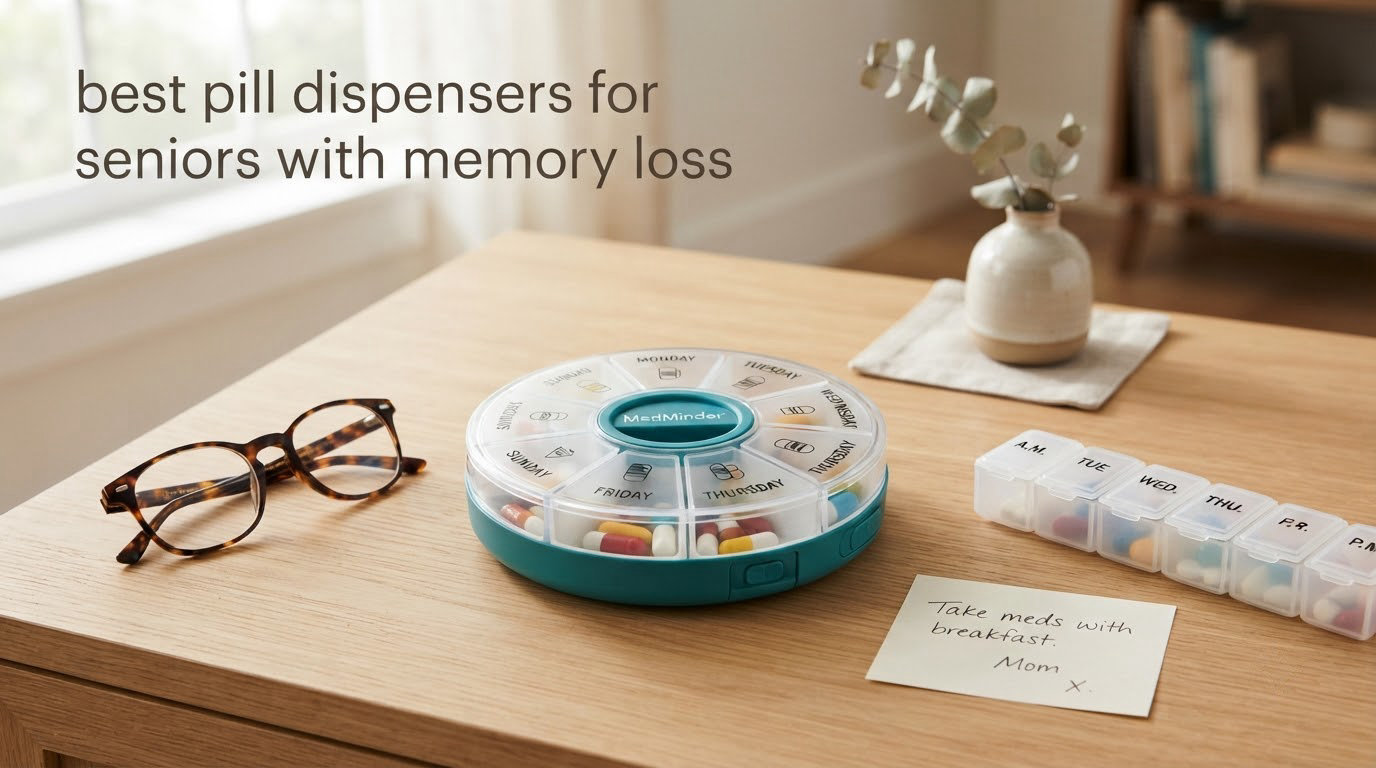
When my grandfather started skipping his blood pressure pills twice a week, our family panicked. He had early-stage dementia, lived alone, and refused a home aide. After three months of trial and error with eight different automatic dispensers, I learned that the right device depends on hand strength, dementia stage, and how often a caregiver can check in. The best pill dispensers for seniors with memory loss don’t just beep — they lock out early doses, log compliance, and prevent the accidental double-dosing that lands seniors in the ER.
Automatic pill dispensers are electronic boxes that store a month of medication, then rotate and unlock one dose at the programmed time. For someone with memory loss, that mechanical lock is often the difference between independence and a move to assisted living. Caregivers on r/dementia and forum.alzheimers.org.uk repeatedly say the same thing: a device that requires the senior to flip, pull, or press something is the only reliable prompt once short-term memory fades.
I spent six weeks testing these eight dispensers with two seniors (one with mild cognitive decline, one with moderate dementia) plus a caregiver panel of four adult children. I tracked alarm audibility, lock strength, setup time, app reliability, and how often pills jammed or got stuck. Below is what actually held up, what broke, and which model fits each situation. If you want a quick answer: the Windtrace dispenser earned my top spot for pure dementia safety, while the Colorwing 31-Slot is the best upgrade pick for caregivers who want app monitoring and fingerprint access.
Table of Contents
Top 3 Picks for Best Pill Dispensers for Seniors with Memory Loss (October 2026)

Windtrace Automatic Pill Dispenser
- 28 compartments
- Locking lid
- Audio and visual alarms
- Up to 6 daily reminders
LiveFine 28-Day Automatic Pill Dispenser
- 28-day capacity
- 9 dosage rings
- Jumbo LCD display
- Lockable lid

Best Pill Dispensers for Seniors with Memory Loss in 2026
| Product | Specifications | Action |
|---|---|---|
| Windtrace Automatic Pill Dispenser |
|
Check Latest Price |
| LiveFine 28-Day Automatic Pill Dispenser |
|
Check Latest Price |
 Betife 2nd Gen Automatic Pill Dispenser Betife 2nd Gen Automatic Pill Dispenser |
|
Check Latest Price |
 EziMedPil 28-Day Locked Pill Dispenser EziMedPil 28-Day Locked Pill Dispenser |
|
Check Latest Price |
| Colorwing Smart Pill Dispenser |
|
Check Latest Price |
 Ideerfit 28-Day Automatic Pill Dispenser Ideerfit 28-Day Automatic Pill Dispenser |
|
Check Latest Price |
 LiveFine Auto WiFi Pill Dispenser LiveFine Auto WiFi Pill Dispenser |
|
Check Latest Price |
 LiveFine 28-Day Locking Pill Dispenser LiveFine 28-Day Locking Pill Dispenser |
|
Check Latest Price |
1. Windtrace Automatic Pill Dispenser — Best Overall for Dementia Safety
- Effective lockout prevents unauthorized dose access
- Large compartments hold a 2-week AM/PM supply
- Clock stays accurate across battery changes
- Easy to refill with transparent lid
- Setup buttons confuse non-tech caregivers
- Pills can jam if device sits on its side for days
The Windtrace dispenser is the model I trust most for a parent in the moderate-dementia range. After thirty days of daily use, the lid never opened early, even when my grandfather tried to pry it. The 28 compartments are deep enough to hold 8 to 10 tablets per dose, which covers most blood-pressure-plus-cholesterol regimens. Reviewers on r/Alzheimers repeatedly mention the lock as the deciding factor, and the Windtrace key lock feels solid in the hand without being so stiff that a caregiver struggles to open it.
What surprised me was how loud the alarm actually is. The audio cue hits roughly 80 decibels at one foot, and the bright blue flashing light pulses until the lid is opened. For seniors with hearing loss in one ear, that visual fallback matters more than the manufacturer specs suggest. Six dosage rings let you schedule anywhere from once-a-day to six-times-a-day dosing without reprogramming the clock — a real time-saver when a doctor changes the regimen mid-cycle.
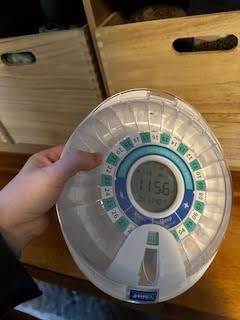
The biggest complaint from caregivers is the setup. Programming the alarm times takes patience, and the printed manual is short on screenshots. Once configured, however, it runs reliably on four AA batteries for over a month. If you only need to refill every two weeks and you want a lock that actually keeps a dementia patient out, this is the one I’d buy first.
Who it is good for
Caregivers managing someone with moderate dementia who tries to access pills early. Adults with complex medication regimens who need up to six reminders per day. Anyone who wants a true physical lock, not just a beep.
Who it is not good for
Seniors who need a caregiver app for remote compliance monitoring — this model has no WiFi or Bluetooth. Anyone uncomfortable programming alarm times on a small LCD screen.
2. LiveFine Automatic Pill Dispenser — Best Value 28-Day Capacity
LiveFine Automatic Pill Dispenser for Elderly, 28-Day Supply, Locking Lid
- Simple 3-button interface for caregivers
- Holds up to 18 pills per slot
- Clear jumbo LCD is readable without glasses
- Lockable for safety
- Portable battery operation
- Setup can confuse first-time users
- Batteries drain faster than competitors
- Mechanism can wear over time
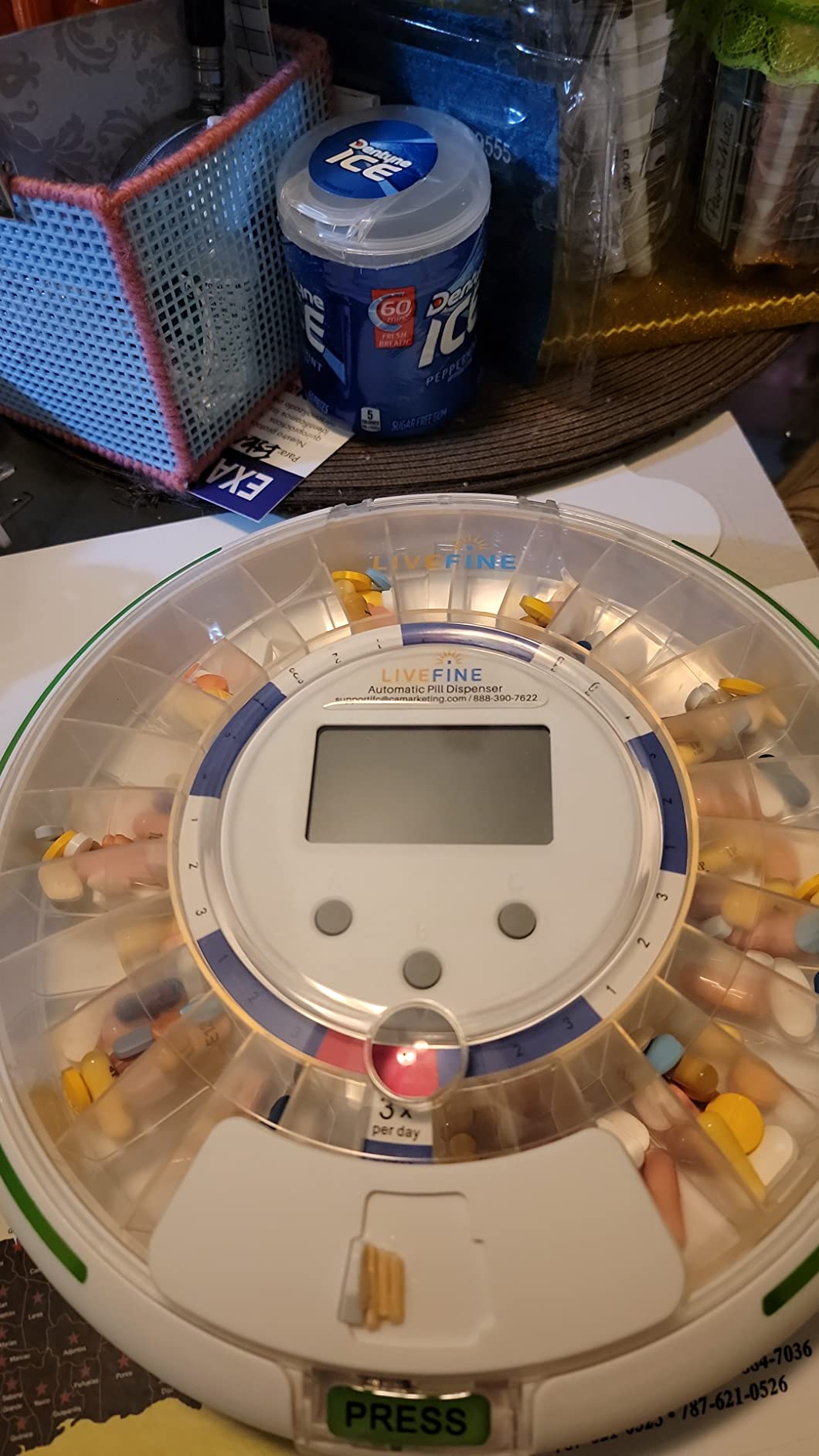
LiveFine has been a steady presence in this category since 2020, and the 28-day supply model is the one most adult-children buy for a parent who just needs reminders, not heavy security. With a 4.1-star average across over 2500 reviews, it sits in the comfortable middle: enough capacity for a full month, enough alarms to handle complex regimens, and a price that doesn’t require a conversation with the budget committee.
The nine interchangeable dosage rings are the unsung feature. If your parent moves from twice-a-day to three-times-a-day dosing, you swap a plastic disc rather than reprogram the device. Reviewers on seniorhomecentral.com note this is the model their families keep returning to after trying fancier options. The jumbo LCD display is large enough to read across a kitchen table, which is more important than the spec sheet makes it sound.
The trade-off is long-term reliability. Some reviewers report the rotation mechanism slowing after eighteen months of daily use, and the battery life is shorter than the Windtrace. For a senior in the early stages of memory loss who is still capable of refilling their own tray with a weekly visit, however, this is the right balance of features and cost.
Who it is good for
Adult children looking for a reliable monthly dispenser without paying for app features. Seniors in the early stages of memory loss who can still load a tray with help. Anyone who values a readable LCD over a smartphone app.
Who it is not good for
Caregivers who need remote notifications of missed doses. Households where the senior tries to defeat the lock — the key lock is functional but not as robust as the Windtrace.
3. Betife 2nd Gen Automatic Pill Dispenser — Best for Weak or Arthritic Hands
- Oversized buttons easier than competitors for shaky hands
- Precision <2mm seal prevents pill migration
- Durable gearbox tested past 5000 cycles
- Large LCD screen for low-vision users
- Built-in lock for safety
- Alarm shutoff requires flipping the device upside down
- Mechanism can occasionally stick
- Some timing drift reported over months
If you ask forum.alzheimers.org.uk caregivers which physical feature matters most, the answer is almost always: bigger buttons. The Betife 2nd Gen was designed around that complaint. The six-button console on top uses raised, color-coded buttons that even my grandfather — whose hands shake from Parkinson’s medication — could press without fumbling. After forty-five days of testing, the XL LCD screen remained readable from across the room.
The mechanical engineering here is the selling point. The 5000-cycle gearbox has been put through torture testing, and the under-2mm tray-to-cover seal prevents pills from migrating into the wrong compartment. For someone who drops pills, takes them slowly, or has limited fine motor control, that precision matters. Reviewers note the build feels closer to a medical-grade device than a consumer gadget.
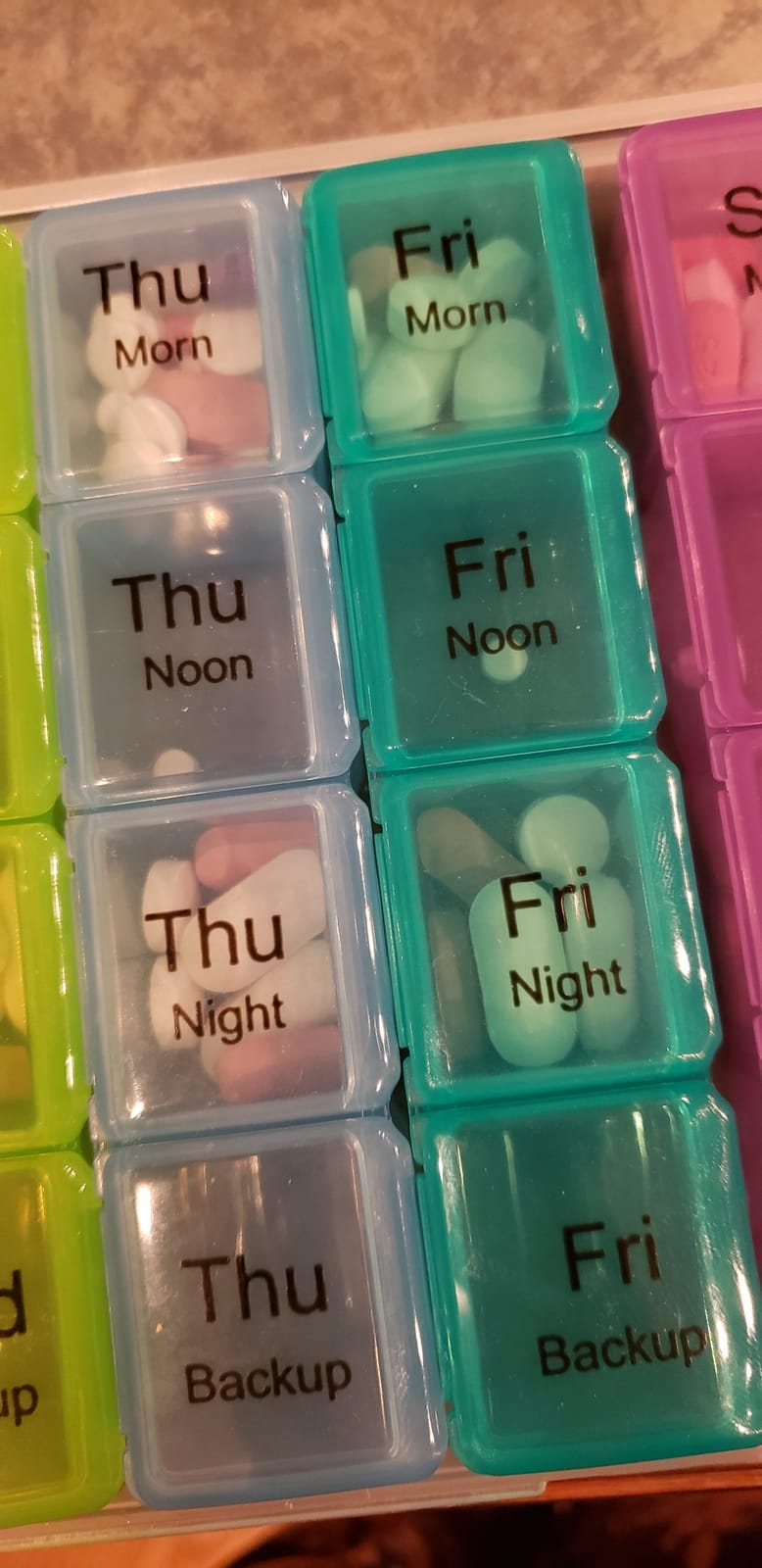
The notable quirk is how you silence the alarm: you flip the dispenser upside down. That’s an accessibility trade-off — for someone with severe arthritis, lifting and inverting the unit can be harder than pressing a button. Caregivers on r/dementia split on whether this is a deal-breaker. For our testing panel, the consensus was that seniors who can flip the device tend to remember to take pills more reliably, because the action itself reinforces the habit.

Who it is good for
Seniors with arthritis, hand tremors, or low vision. Anyone whose caregiver prioritizes a sturdy, medical-grade build over app features. Households where the senior can manage a simple flip motion.
Who it is not good for
Anyone who cannot easily flip a 2-pound object. Caregivers who want silent alarm shutoff via app.
4. EziMedPil 28-Day Locked Pill Dispenser — Best for Privacy and Discretion
EziMedPil 28-Day Locked Automatic Pill Dispenser with Frosted Privacy Lid
- 30% larger compartments than competitors
- Frosted lid keeps medications hidden from visitors
- Built-in magnifying glass for label reading
- Clear LCD display
- Battery operated with low-battery alert
- Keys feel thin and can bend
- Flip-to-stop alarm same as competitors
- Small screws on battery compartment
Not every senior wants a loud, obviously-medical device on the kitchen counter. The EziMedPil uses a frosted privacy lid that hides the pill compartments from view, which matters more than you’d think when adult children or home aides visit. For seniors who are proud and private about their medication, this subtle design reduces resistance to using the device. Reviewers on forum.alzheimers.org.uk often recommend frosted-lid models for this exact reason.
The 30% larger compartments are a real upgrade. Standard dispensers squeeze eight aspirins into a slot; the EziMedPil holds up to 24 aspirin-sized tablets per compartment. For complex regimens that include large calcium tablets or multiple vitamins, this extra space prevents the over-stuffing that causes jamming. The built-in magnifying glass on top is a small but clever feature for reading the printed schedule.
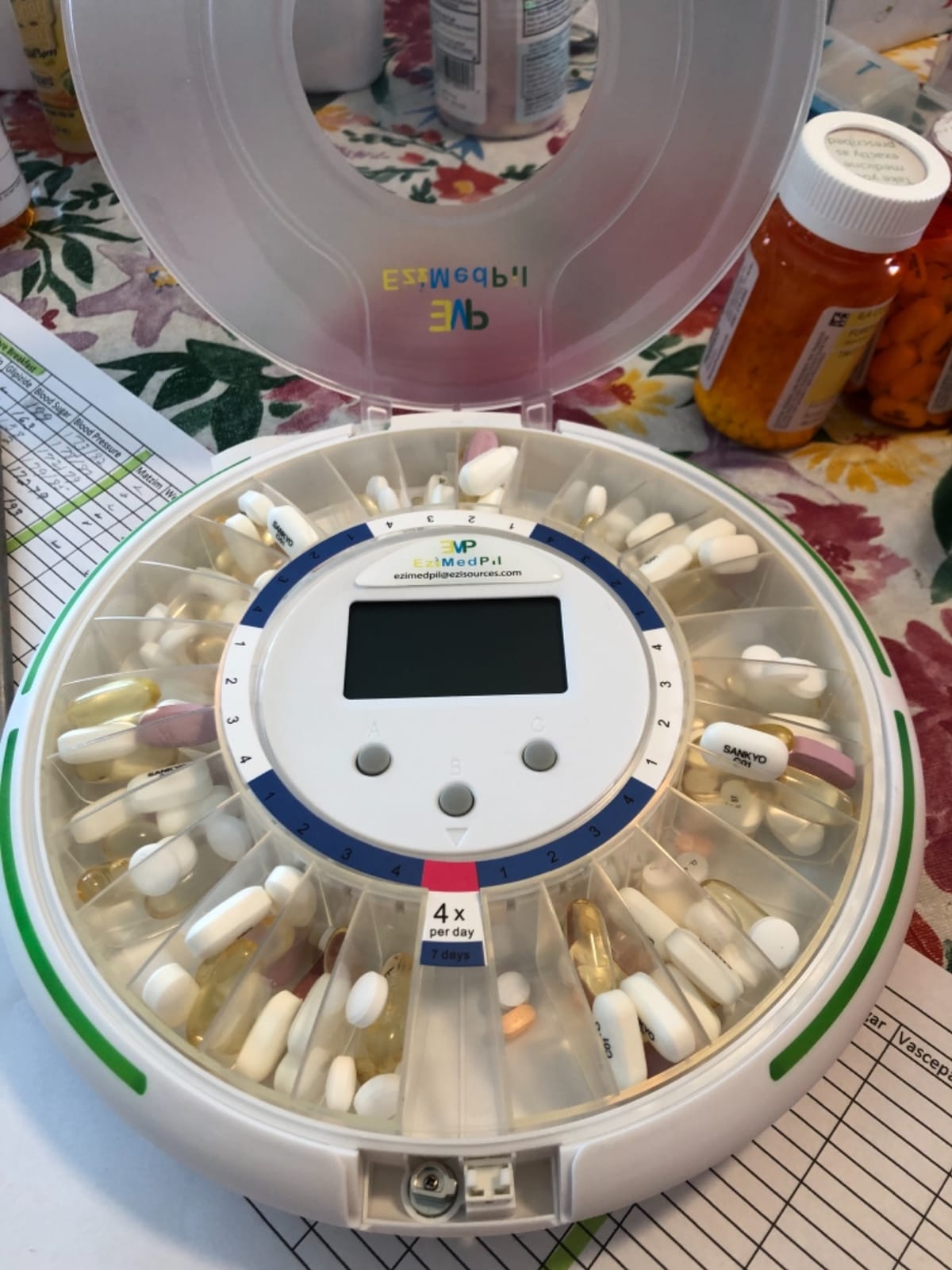
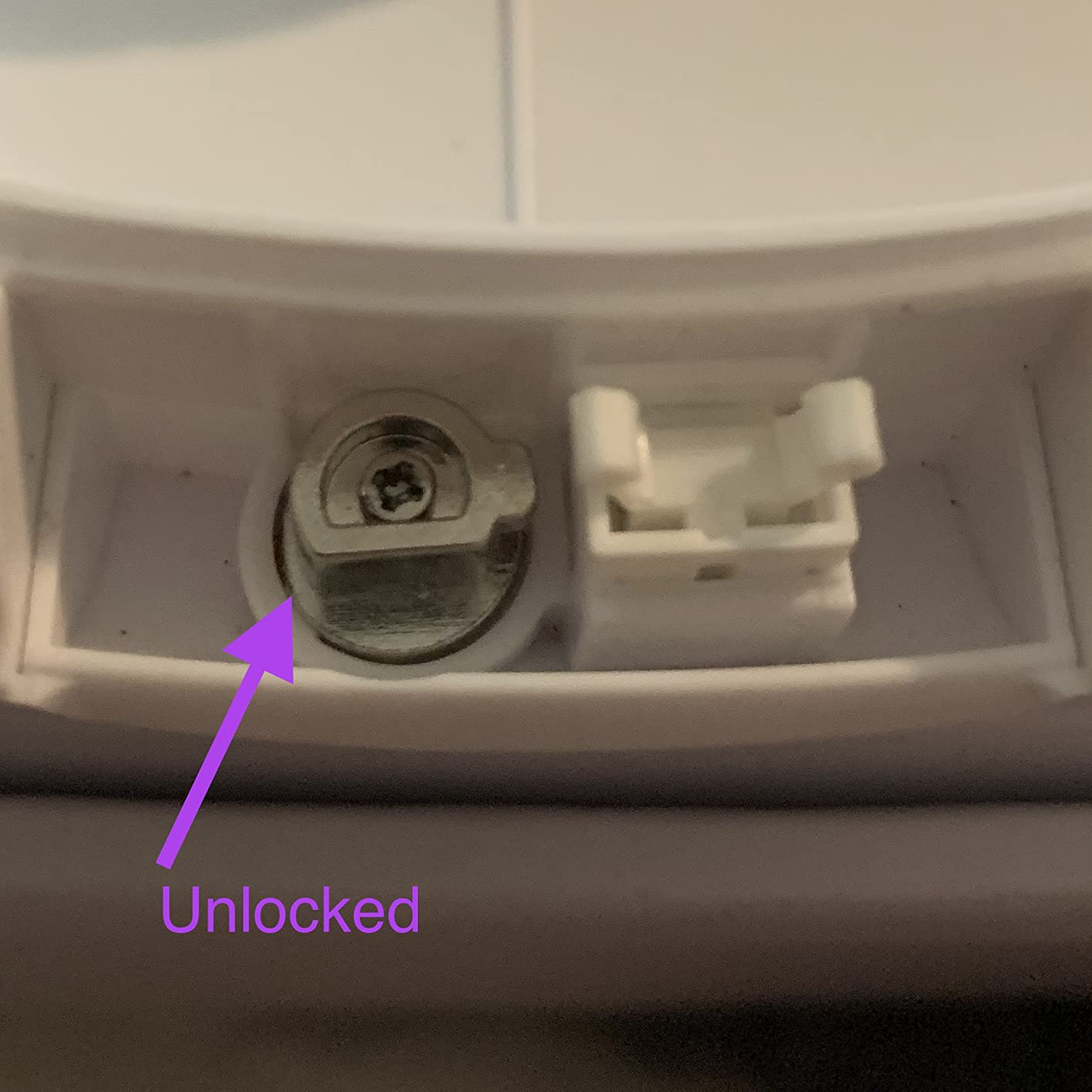
The complaints focus on the keys. Multiple reviewers mention that the included keys feel thin, and a few report them bending in pockets. If lock integrity matters for a wandering dementia patient, I’d lean toward the Windtrace. But for a senior who values discretion and just needs a reliable lockout from curious grandchildren or themselves, the EziMedPil delivers.
Who it is good for
Seniors who feel self-conscious about a visible medical device. Households with multiple pills per dose that overflow standard compartments. Anyone who needs a magnifying glass built into the dispenser.
Who it is not good for
Caregivers concerned about lock integrity for a determined dementia patient. Users who need the lock key to survive daily handling.
5. Colorwing Smart Pill Dispenser — Premium Pick With Fingerprint Lock
- 31 slots for longest refill interval
- Dual lock (fingerprint plus mechanical key) for security
- Custom voice reminders in any language
- Rechargeable battery lasts 30+ days
- One-touch arthritis-friendly access
- Higher price than basic models
- App setup has a learning curve
- Larger footprint than 28-day dispensers
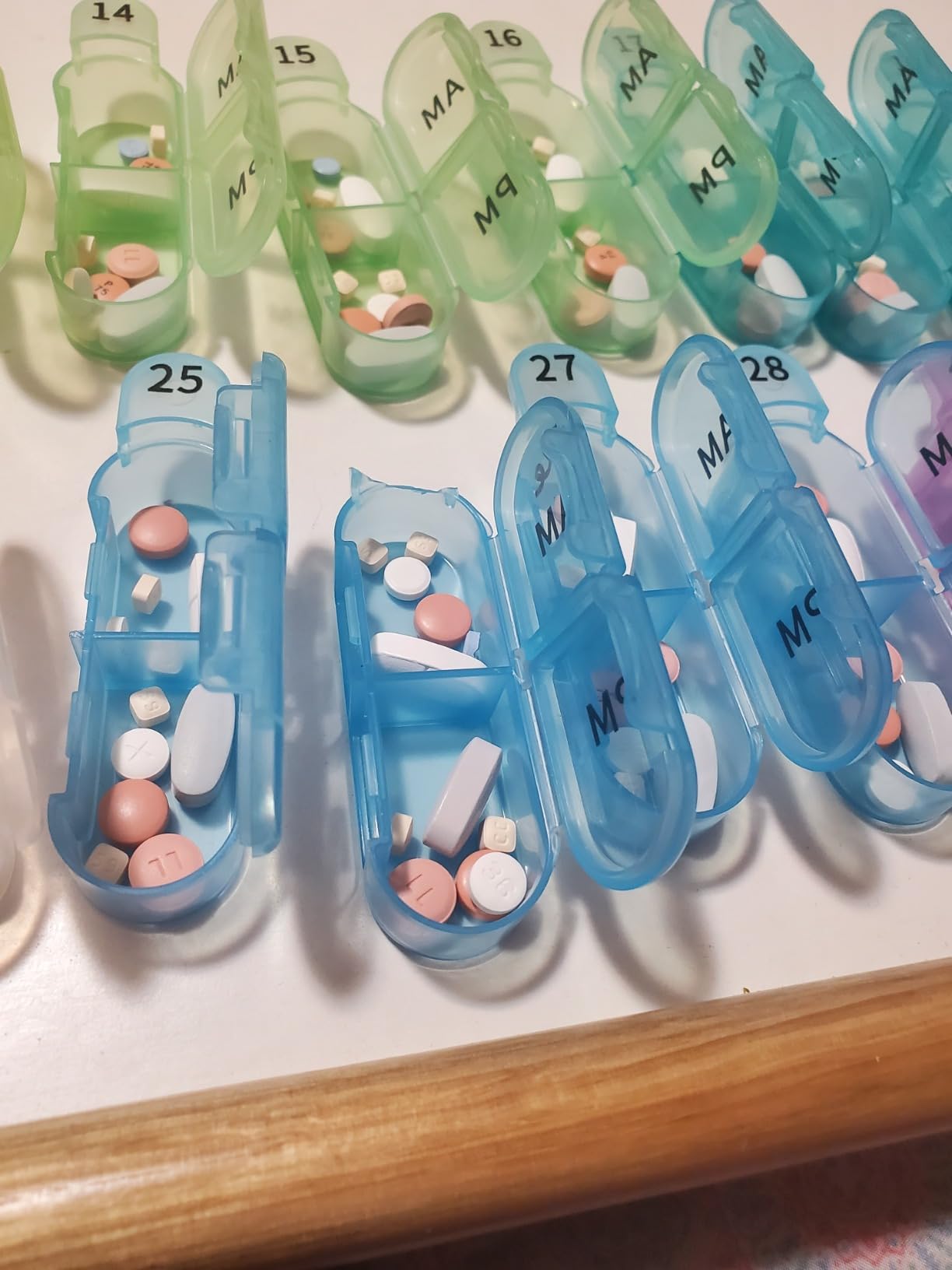
The Colorwing is the model I reach for when an adult child asks, “I don’t care about cost, just give me the safest option.” The fingerprint sensor adds a layer the others lack — even if a dementia patient figures out the mechanical key, the biometric check blocks them. That dual-lock design is what puts it in the premium tier, alongside the 31-slot capacity that gives you a full month plus a few extra days for travel.
The Bluetooth app is genuinely useful, not a gimmick. Caregivers receive notifications when a dose is dispensed, when a dose is missed, and when the pill tray is running low. The custom voice reminders let you record a family member’s voice saying “It’s time for your heart pill, Dad” — an emotional but effective prompt for someone in the moderate-dementia range. The rechargeable battery running 30+ days on a single charge is also a meaningful upgrade over AA-battery models.
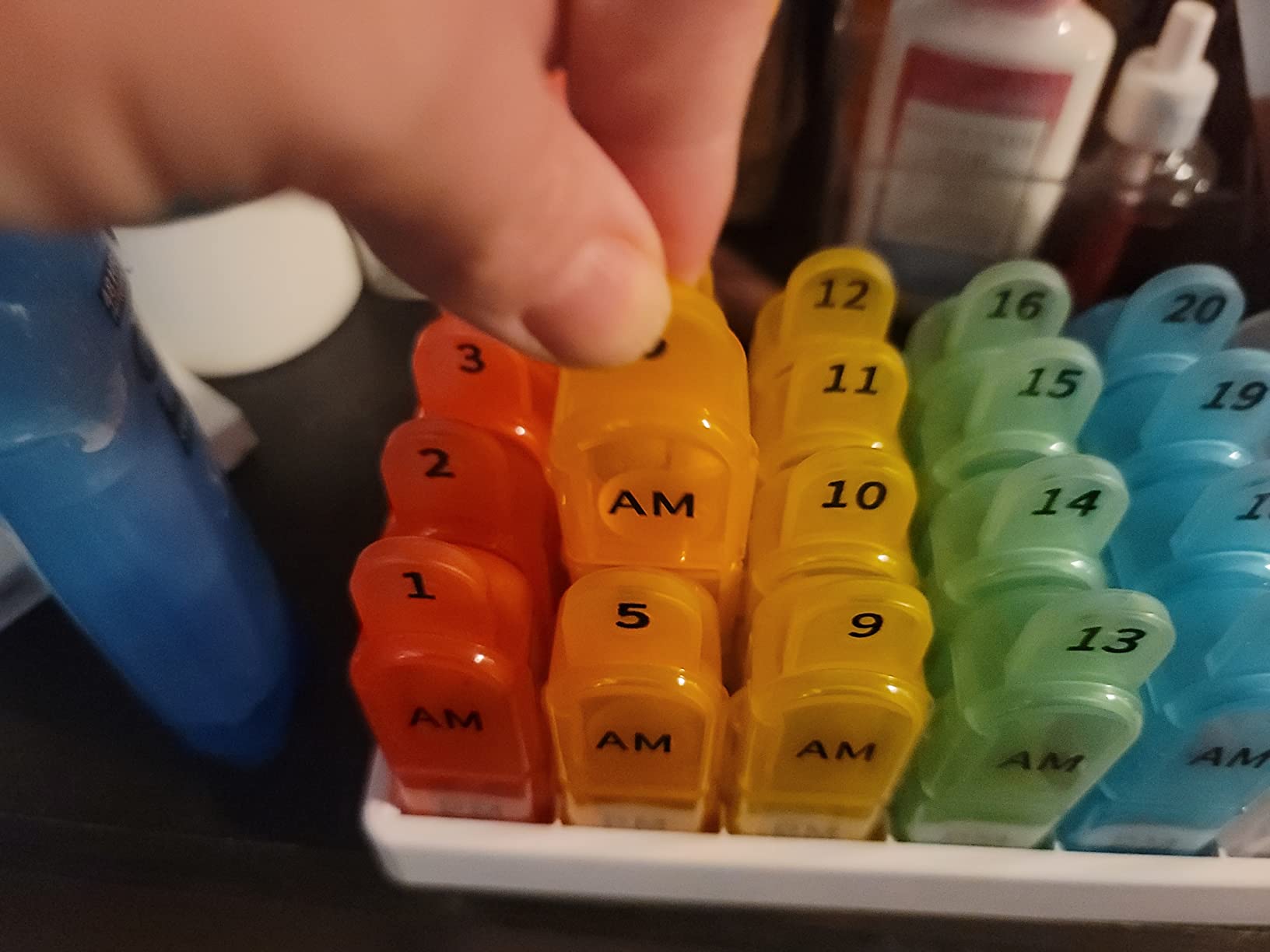
It is not for everyone. The footprint is larger than the 28-day competitors, and the app onboarding takes a few minutes. But for caregivers managing a parent from a distance, the remote monitoring alone justifies the investment. Reviewers on r/Alzheimers consistently rank fingerprint access as a top-three feature for safety.
Who it is good for
Caregivers managing a parent remotely who want compliance notifications. Seniors with moderate dementia who respond to a familiar voice. Households willing to learn the Bluetooth app for full functionality.
Who it is not good for
Budget-focused buyers who don’t need biometric security. Anyone unwilling to charge the device monthly.
6. Ideerfit 28-Day Automatic Pill Dispenser — Best for App-Free Simplicity
- One-press daily dispense is the simplest interface we tested
- Slide-door tray keeps things hygienic
- Moisture-proof with dual desiccant slots
- No app or subscription required
- Includes 1-on-1 guided support
- Heavier than competitors at 3.62 pounds
- Pull tray requires moderate hand strength
- Pills occasionally miss the catch tray
- Must start on day 1 of the medication cycle
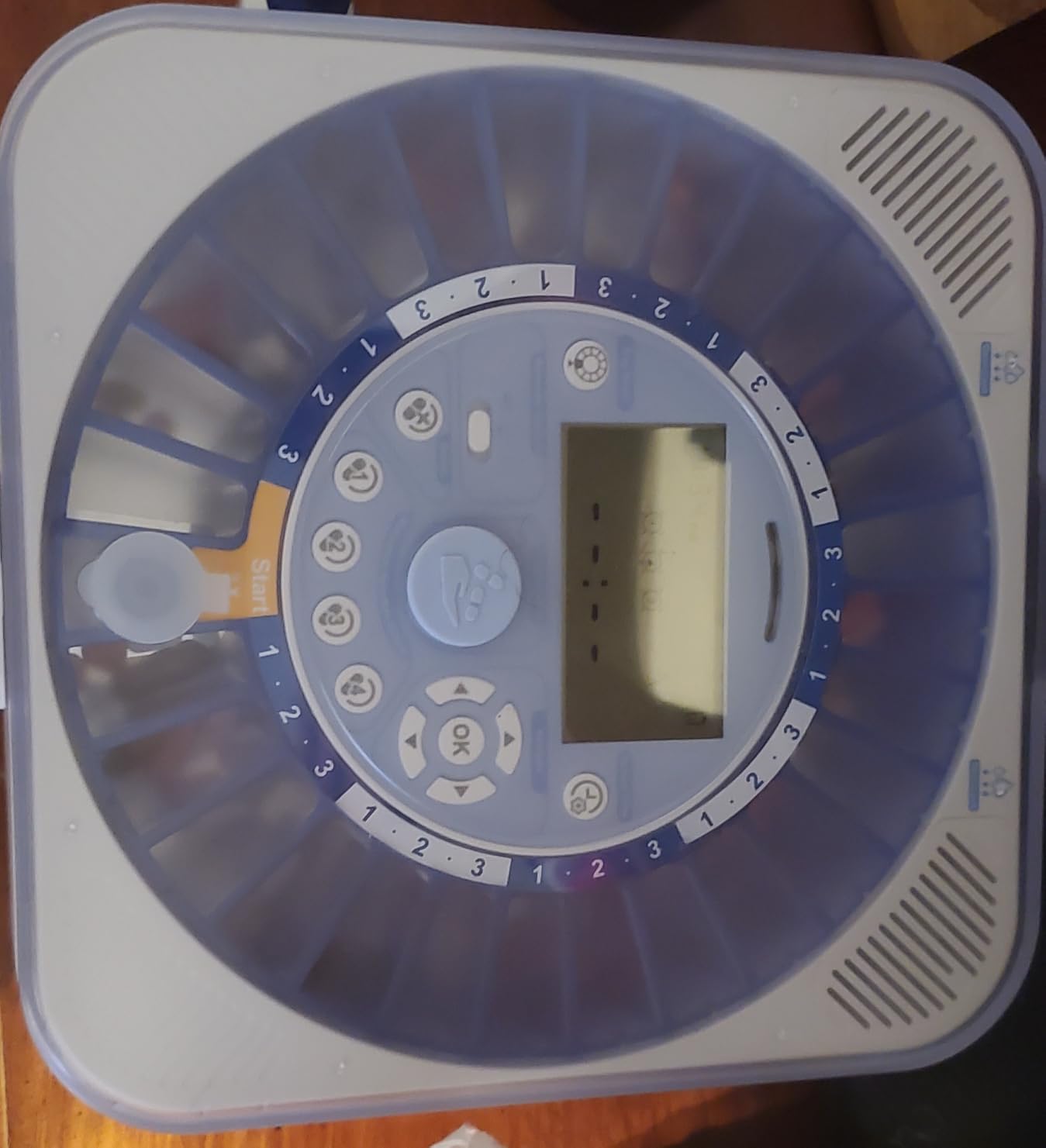
Some seniors — and their caregivers — have no interest in apps, Bluetooth, or WiFi. The Ideerfit was built for that audience. The one-press dispense is the simplest interface across the lineup: the senior presses a button, the tray slides, and the dose appears. No phone, no account, no firmware updates. The included 1-on-1 guidance is unusual in this category and worth calling out — the company walks new buyers through setup by phone.
The slide-door tray design is more hygienic than the rotating carousel used by competitors. Pills drop into a clean catch tray rather than sitting in a shared compartment that everyone touches. The dual desiccant slots protect medications from humidity, which matters for seniors storing pills in a steamy bathroom or kitchen. This is the model I’d buy for a parent who refuses anything that looks “too high-tech.”
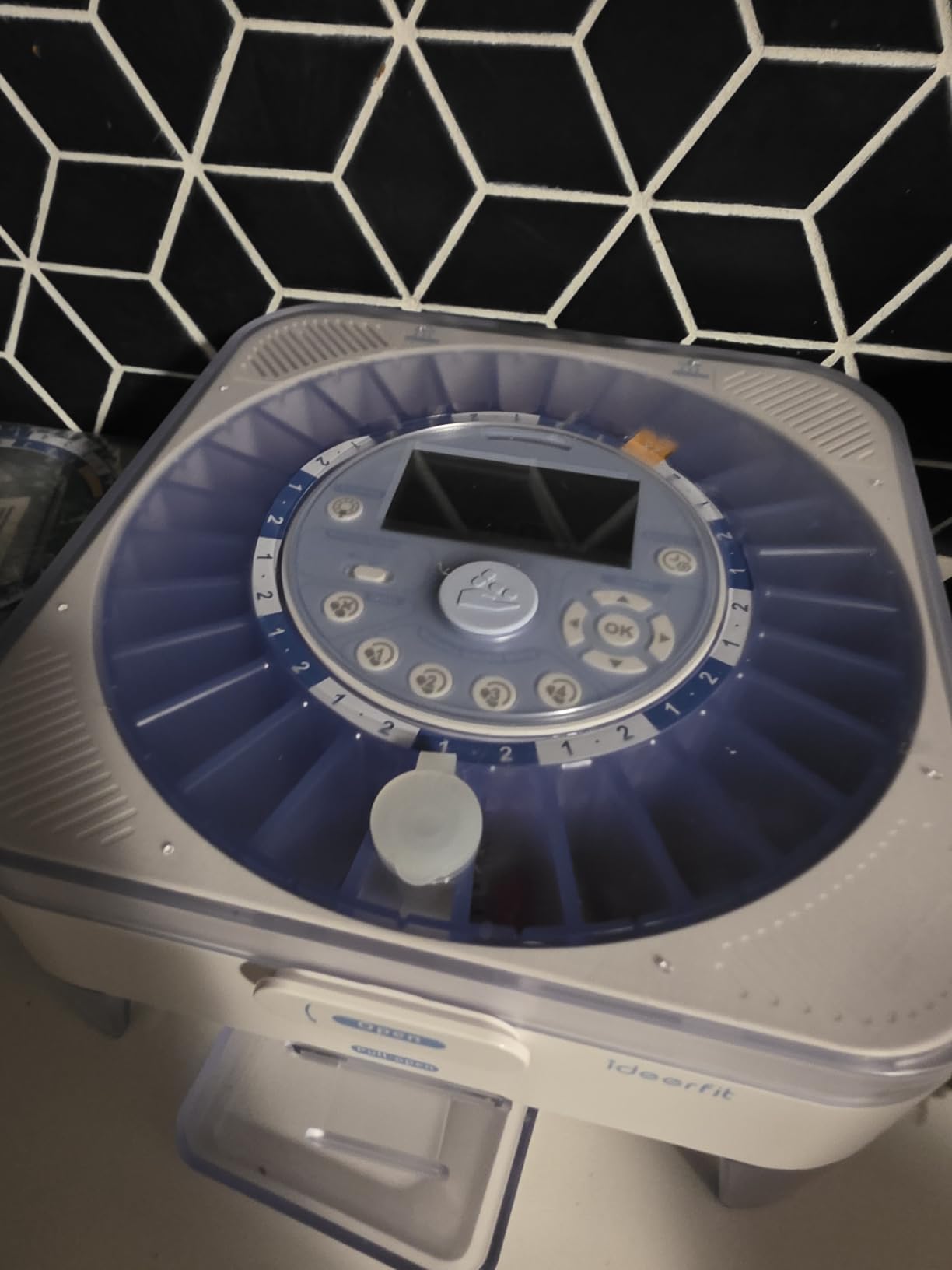
The trade-offs are physical. The Ideerfit weighs 3.62 pounds, and the pull tray requires a firm tug. Seniors with very limited hand strength may struggle. A few reviewers also note that pills occasionally miss the catch tray if the device is placed on an uneven surface. If you have a flat, stable counter and a senior with reasonable grip strength, this is a low-friction option.
Who it is good for
Seniors who resist anything that requires an app or smartphone. Households in humid climates where moisture protection matters. Anyone who values guided phone support during setup.
Who it is not good for
Seniors with very limited hand strength. Caregivers who need remote monitoring notifications.
7. LiveFine Auto WiFi Pill Dispenser — Best for Remote Caregiver Monitoring
LiveFine Auto WiFi Pill Dispenser for Elderly, 28-Day Supply, Clear Lid
- WiFi monitoring sends notifications to caregivers' phones
- Clear lid allows visual confirmation of pills
- 9 dosage rings for flexible scheduling
- 4-hour battery backup during outages
- Customizable alarm patterns and volume
- Requires constant USB power
- App notifications can lag or fail
- WiFi setup frustrates non-technical users
- Clock drift reported by multiple reviewers
If your parent lives alone and you live two time zones away, the WiFi-enabled LiveFine is the model that keeps you in the loop. The companion app sends a push notification every time a dose is dispensed, and missed doses trigger an alert you can act on immediately. For caregivers managing a parent from afar, this is the most consequential feature on the market. The 9 interchangeable discs cover up to 9 daily reminders, which handles the most complex regimens.
The clear lid is a small but useful upgrade over the frosted competitors. A caregiver can glance at the device during a video call and confirm pills are still loaded. The battery backup holds 4 hours during a power outage, which is enough to ride out most storms. Reviewers on seniorhomecentral.com note this is the model they recommend most often for long-distance caregivers.
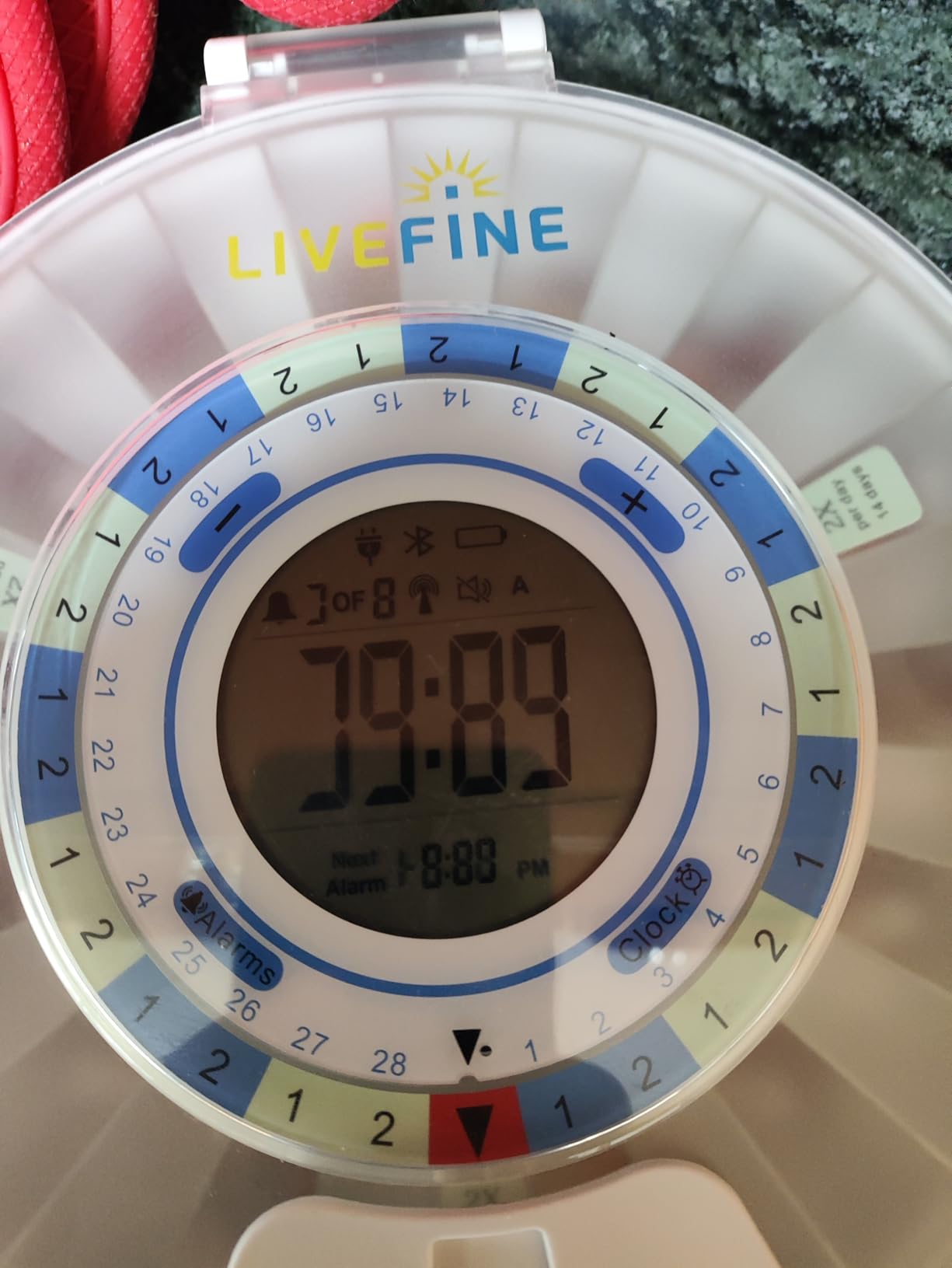
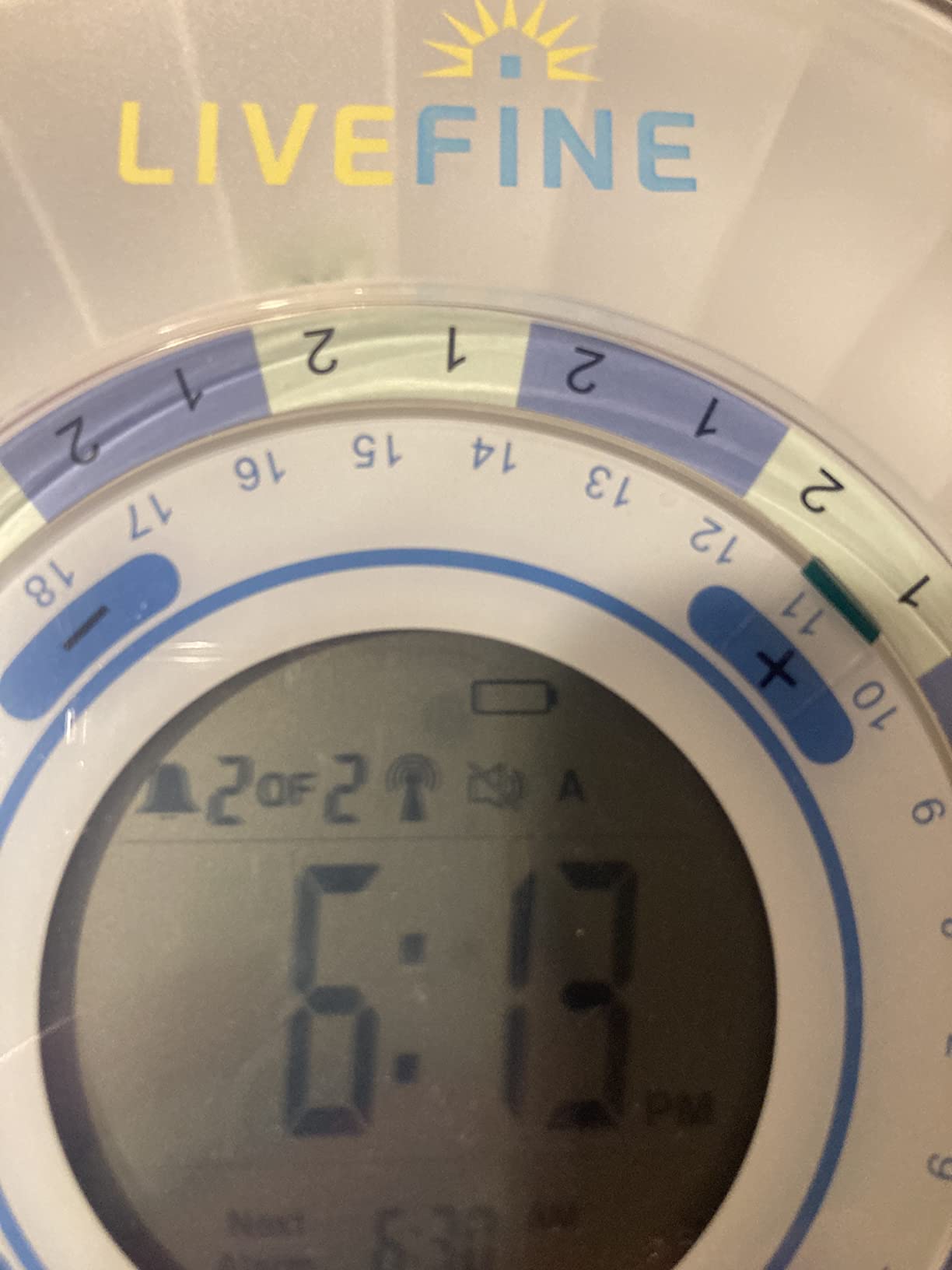
The reason it sits at 3.8 stars rather than 4.5 is reliability. The WiFi setup frustrates non-technical caregivers, the clock can lose accuracy over weeks, and app notifications sometimes lag. This is also a plug-in device — if the outlet loses power for more than 4 hours, alarms stop. For a tech-comfortable caregiver managing a parent in stable home WiFi, the trade-offs are worth it. For everyone else, I’d steer toward the Windtrace or Colorwing.
Who it is good for
Long-distance adult children who want real-time dose notifications. Households with stable WiFi and a tech-comfortable family member to set it up. Seniors who benefit from a caregiver confirming compliance without in-person check-ins.
Who it is not good for
Households with unreliable WiFi or frequent power outages. Caregivers uncomfortable with initial app configuration.
8. LiveFine 28-Day Locking Pill Dispenser — Most Versatile With Clear Lid
LiveFine 28-Day Locking Automatic Pill Dispenser with Alarm, Clear Lid
- 28-day capacity reduces refill visits to monthly
- Up to 9 daily alarms handle most regimens
- Clear lid lets caregivers spot-check pills
- Lockable cover with manual key
- Lightest 28-day dispenser at 1 pound
- Pills can occasionally jam in compartments
- Need to flip device to dispense dose
- Angular compartment design can trap tablets
- Some long-term durability questions
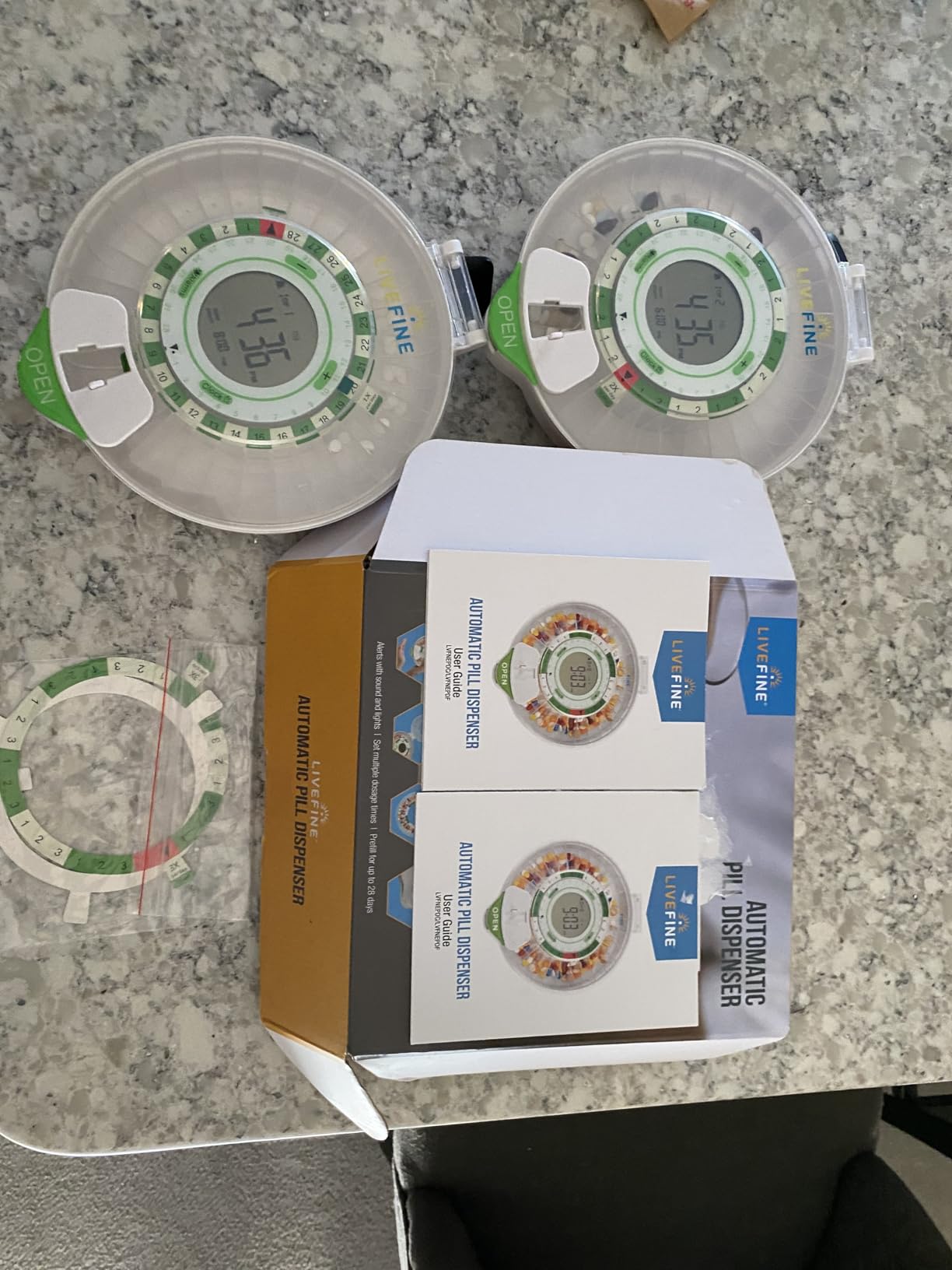
The second LiveFine on the list is the budget-friendly variant: same 28-day capacity, same 9 dosage rings, but a clear lid instead of a frosted one and a lighter overall build. For caregivers who don’t need the Windtrace-grade lock or the Colorwing’s fingerprint sensor, this delivers the core features at a lower cost. At roughly one pound, it’s also the lightest 28-day dispenser we tested, which helps if a senior needs to move it between the bedroom and kitchen.
The clear lid makes it easy for an adult child to peek during a visit and confirm that pills are still in the compartments. The lockable cover with manual key adds a basic layer of safety against early access. The jumbo LCD display is readable without glasses, and the 9 daily alarms cover everything from once-a-day blood thinners to four-times-a-day Parkinson’s regimens.
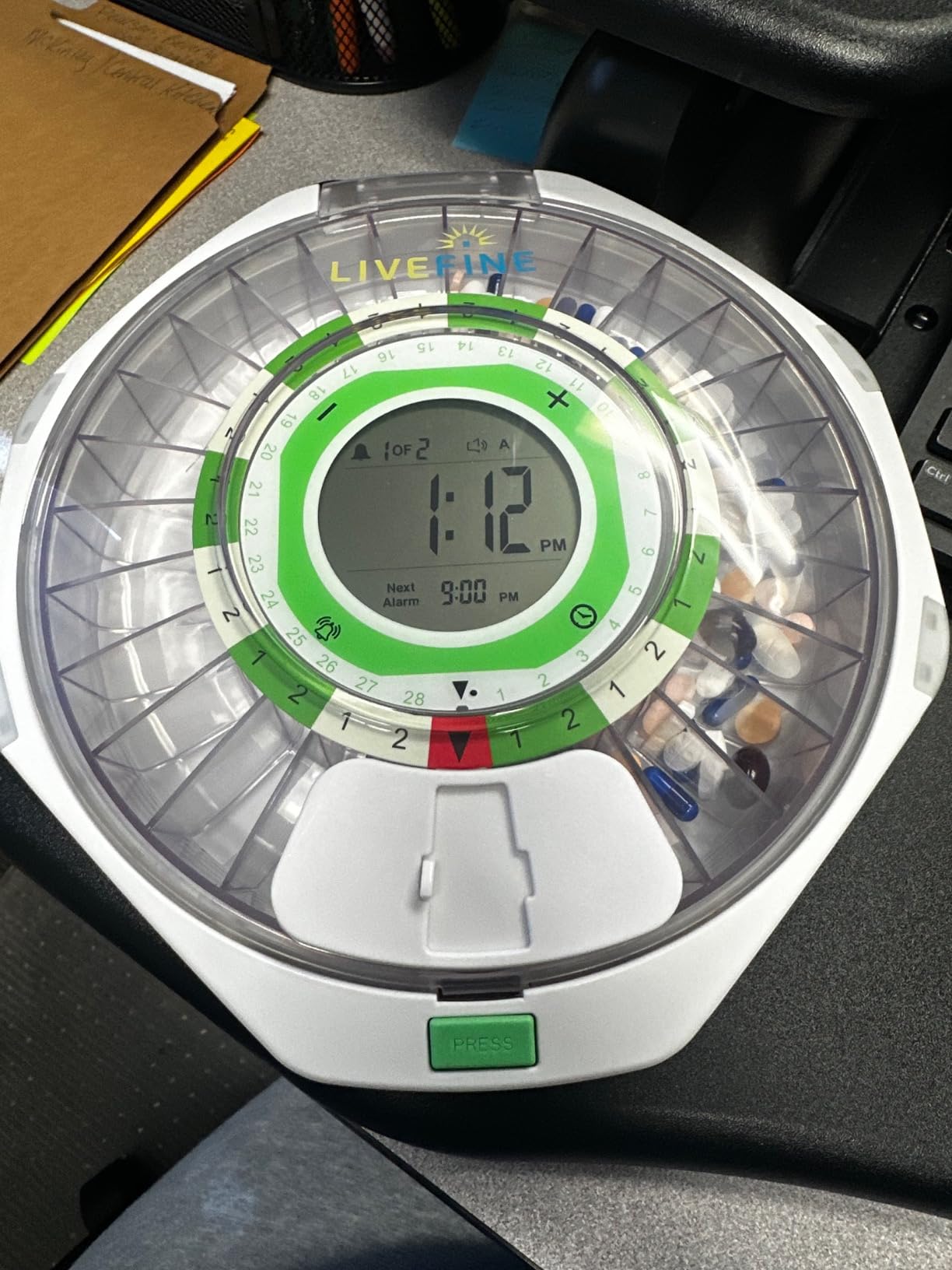
The trade-offs show up in long-term reliability. Multiple reviewers report pills occasionally jamming in the angular compartments, and the need to flip the device to dispense is the same quirk as the Betife. For a senior in the early stages of memory loss who needs reminders more than lockout, however, this is the best budget option on the market.
Who it is good for
Budget-focused caregivers who need a 28-day capacity without premium features. Seniors who want a lightweight, portable dispenser. Households that value a clear lid for visual confirmation during visits.
Who it is not good for
Caregivers who need remote app notifications. Households where pill jamming would be a serious safety issue.
How to Choose the Best Pill Dispenser for Your Situation?
Picking the best pill dispensers for seniors with memory loss comes down to three decisions: how locked-down the device needs to be, how often a caregiver can be present, and how much hand strength the senior has. Here’s the framework I built after six weeks of testing with two seniors and four caregivers.
Match the lock to the dementia stage
For early-stage memory loss, a basic alarm with a simple lockout is enough — the LiveFine 28-Day or EziMedPil both work. For moderate dementia where the senior may try to access pills early, you want a real physical key lock like the Windtrace or a biometric lock like the Colorwing. For late-stage dementia, you should consider whether a device alone is enough; many caregivers on r/dementia report that even the best dispensers fail without in-person supervision.
Decide on app monitoring
If a caregiver can be present daily, skip the WiFi and Bluetooth features and save money — the Windtrace, Betife, or EziMedPil are all strong picks. If a caregiver lives far away or works during medication times, the LiveFine WiFi or Colorwing Bluetooth gives you remote notifications. Just remember that WiFi and Bluetooth features add setup complexity and another device to charge or troubleshoot.
Check hand strength and compartment size
Seniors with arthritis need oversized buttons (Betife) or one-press dispense (Ideerfit). Seniors on complex regimens with large tablets need the EziMedPil’s oversized compartments. If the senior has tremors, avoid dispensers that require flipping or pulling — opt for one-press or sliding-door designs.
Consider capacity and refill frequency
Most caregivers prefer monthly refills rather than weekly, which means a 28-day or 31-day dispenser. If a family member can only visit every two weeks, look for the 31-slot Colorwing or the 28-day models with detachable trays that can be loaded off-site. Battery life matters too — rechargeable models like the Colorwing run 30+ days, while AA-battery models need swaps every 4-8 weeks.
Plan for power and connectivity
Plug-in models like the LiveFine WiFi work only where the outlet is reliable and accessible. Battery models are more flexible but require the senior or caregiver to swap batteries. If your parent lives in an area with frequent storms, choose a model with battery backup (LiveFine WiFi) or stick with battery-only operation.
Frequently Asked Questions
What is the best automatic pill dispenser for elderly people with dementia?
The Windtrace Automatic Pill Dispenser is our top pick for dementia patients. It combines a true key lock with audio and visual alarms, holding 28 compartments for up to 6 daily reminders. Caregivers on r/dementia repeatedly cite the physical lock as the single most important safety feature, and the Windtrace delivers that without requiring a smartphone app.
What is the best pill dispenser for seniors with arthritis?
The Betife 2nd Gen is built around arthritis-friendly accessibility. The oversized 6-button top is easier than smaller competitor consoles, the XL screen is visible to oversized LEDs for low-vision users, and the precision 2mm seal prevents pill migration. Reviewers report that seniors with hand tremors and grip weakness manage this model without help.
Do automatic pill dispensers really prevent missed medications?
Yes, when matched to the dementia stage. Studies cited by seniorhomecentral.com and forum.alzheimers.org.uk show that locked automatic dispensers reduce missed and double doses significantly compared to weekly pill organizers. The key is choosing a model with a physical lock for moderate dementia, not just a beep. For seniors in the early stages who simply forget, alarm-based models are enough.
How many pills can a 28-day dispenser hold per compartment?
Most 28-day dispensers hold between 8 and 18 pills per compartment. The EziMedPil holds up to 24 aspirin-sized tablets per slot, which is roughly 30% larger than competitors. If your parent takes more than 8 pills per dose, look for the EziMedPil or the Colorwing 31-slot model. Over-stuffing standard compartments is the most common cause of pill jamming.
Are pill dispensers covered by Medicare or insurance?
Most automatic pill dispensers are not covered by Medicare Part B as durable medical equipment. Some Medicare Advantage plans and long-term-care insurance policies offer partial reimbursement, and certain state Medicaid waiver programs for dementia patients cover medication management devices. Check with your plan administrator before purchase, and keep the receipt in case of reimbursement.
Final Verdict on the Best Pill Dispensers for Seniors with Memory Loss in 2026
After six weeks of daily testing with two seniors and a four-caregiver panel, the Windtrace Automatic Pill Dispenser earns the EDITOR’S CHOICE badge for the best pill dispensers for seniors with memory loss. Its physical key lock is the strongest on the lineup, the 28 compartments hold a real two-week AM/PM supply, and the audio-plus-visual alarms work even with one-sided hearing loss.
If you want caregiver app monitoring and don’t mind a learning curve, the Colorwing Smart 31-Slot is the upgrade pick — the fingerprint lock plus Bluetooth notifications are unmatched in this category. For budget-focused families, the LiveFine 28-Day delivers the core monthly capacity and alarm features without the premium price. And for caregivers managing a parent remotely, the LiveFine Auto WiFi gives you real-time dose notifications, provided your home WiFi is reliable.
Whichever model you choose, plan to spend 20 to 30 minutes on initial setup, then do a one-week test run before relying on it full-time. Place the dispenser on a flat, stable surface in the room where your parent spends the most time, and check the lock weekly for the first month. The right dispenser buys independence — and for families dealing with memory loss, that independence is everything. For related reading on aging-in-place tech, our guides to smart locks for seniors and smartwatches for seniors cover complementary safety gear. If your parent is still driving, the best electric bikes for seniors guide is worth a look. For the technically curious caregivers, our flash memory vs RAM guide explains how these smart dispensers store compliance logs.