
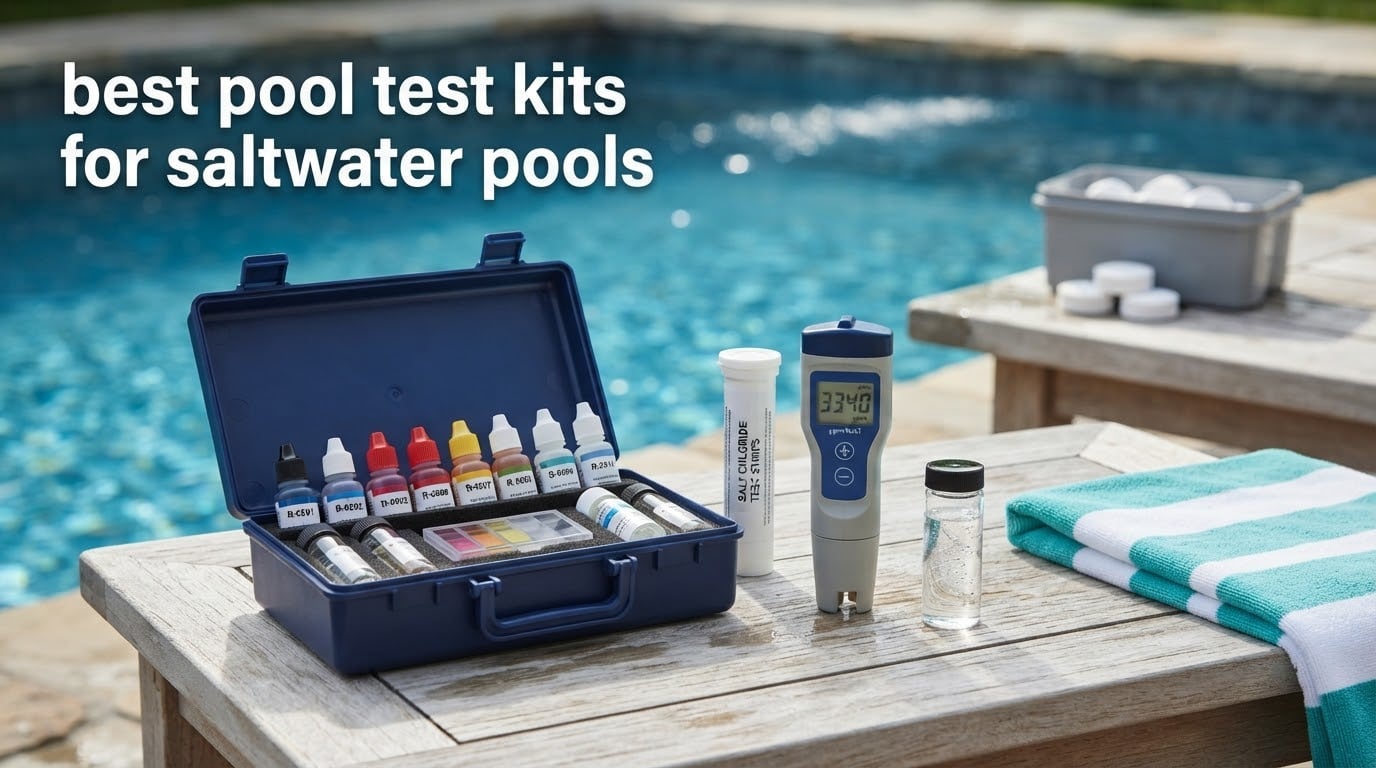
Our pick for the best pool test kit for saltwater pools is the Taylor Technologies K-2006-SALT, a FAS-DPD liquid kit that measures sodium chloride alongside free and combined chlorine, pH, total alkalinity, calcium hardness and cyanuric acid in one case. It is the only full chemistry kit in our lineup that actually tests salt, which is the parameter most standard kits quietly skip.
That last point is where most buying guides go wrong. A generic pool test kit will happily give you a chlorine number while telling you nothing about the sodium chloride level your generator runs on. Saltwater pools behave differently from chlorine pools in ways that punish guesswork: pH drifts upward, calcium hardness scale builds inside the salt cell, and a generator running in dirty water quietly under-produces chlorine while its display still reads normal.
We put eight of the most widely owned saltwater testing tools through the same routine over one season: a sample drawn at elbow depth, read twice, cross-checked against a pool store result. What follows is what held up and what did not, plus the target ranges and testing cadence that make the numbers mean something. Last reviewed and updated for 2026.
If you are also planning the rest of the setup, our picks for 10 Best Pool Heaters for Inground Pools and 12 Best Solar Pool Covers for Inground Pools cover the equipment that matters most in the first season.
Table of Contents
Top 3 Saltwater Pool Test Kits (October 2026)

Taylor K-2006-SALT
- FAS-DPD chlorine drop count
- Tests sodium chloride
- Full 9-parameter case

Best Pool Test Kits for Saltwater Pools at a Glance in 2026
The table below lists all eight tools in this roundup with the parameters each one actually measures. Read the test type column carefully: five of these eight do not test your balance chemistry at all, which is why the two-kit setup later in this article matters.
| Product | Specifications | Action |
|---|---|---|
| Taylor Technologies K-2006-SALT |
|
Check Latest Price |
| AquaChek Salt Titration Strips |
|
Check Latest Price |
| Taylor Technologies K-1766 |
|
Check Latest Price |
 AquaChek Salt System Test Kit AquaChek Salt System Test Kit |
|
Check Latest Price |
 Hofun 5-in-1 Digital Salinity and pH Meter Hofun 5-in-1 Digital Salinity and pH Meter |
|
Check Latest Price |
 SaySummer 8-in-1 Salt Water Strips SaySummer 8-in-1 Salt Water Strips |
|
Check Latest Price |
 T TESTRUST 5-in-1 Digital Salinity Meter T TESTRUST 5-in-1 Digital Salinity Meter |
|
Check Latest Price |
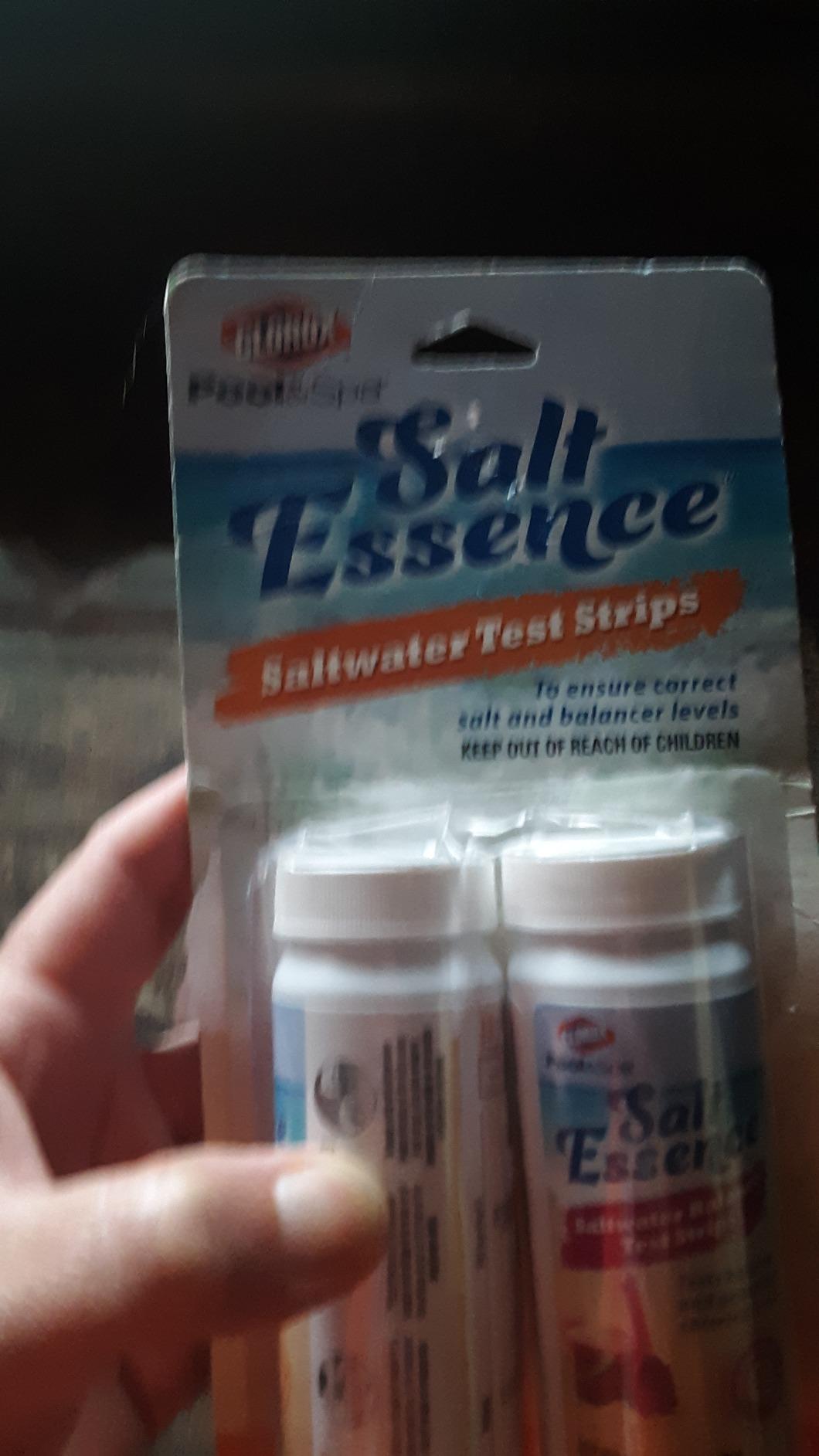
 CLOROX Pool and Spa Saltwater Strips CLOROX Pool and Spa Saltwater Strips |
|
Check Latest Price |
1. Taylor Technologies K-2006-SALT – Best Overall Full Kit
Taylor Technologies K-2006-SALT FAS-DPD, 9-in-1 Saltwater Pool Test Kit
- Only kit here that measures salt and full balance chemistry together
- FAS-DPD drop count gives fine resolution on free chlorine
- Non-technical pictogram instructions printed inside the lid
- Replacement reagents sold separately and widely stocked
- Included CYA reagent covers only about six tests
- Silver nitrate salt reagent leaves residue so a dedicated tube helps
- Real learning curve for first-time liquid kit users
The K-2006-SALT is the kit we kept reaching for during our testing. You fill the vial, add FAS-DPD reagent powder, swirl, and then count drops of liquid reagent one at a time until the sample turns a faint pink. Each drop equals 0.2 ppm of free chlorine, so you get a number rather than a color guess, and because FAS-DPD also reacts to combined chlorine, the difference between the two readings tells you whether chloramines are building up.
Then the same kit handles salt. The sodium chloride side is an argentometric titration using silver nitrate reagent with a chromate indicator, where you count drops until the sample turns from cloudy white to a fixed salmon pink. Several buyers describe matching this result against handheld meters within a couple hundred ppm, which is good enough to trust for cell decisions.
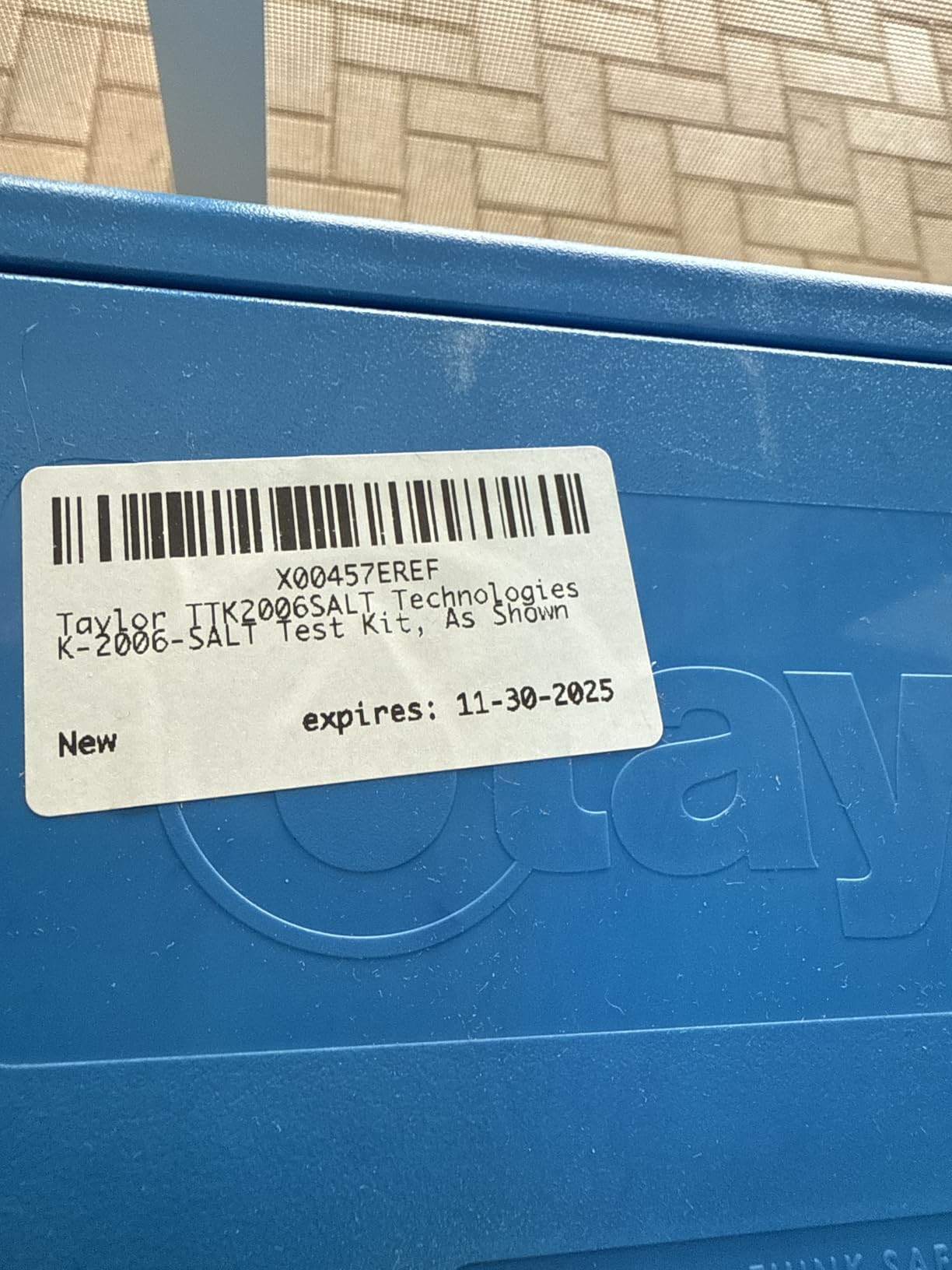
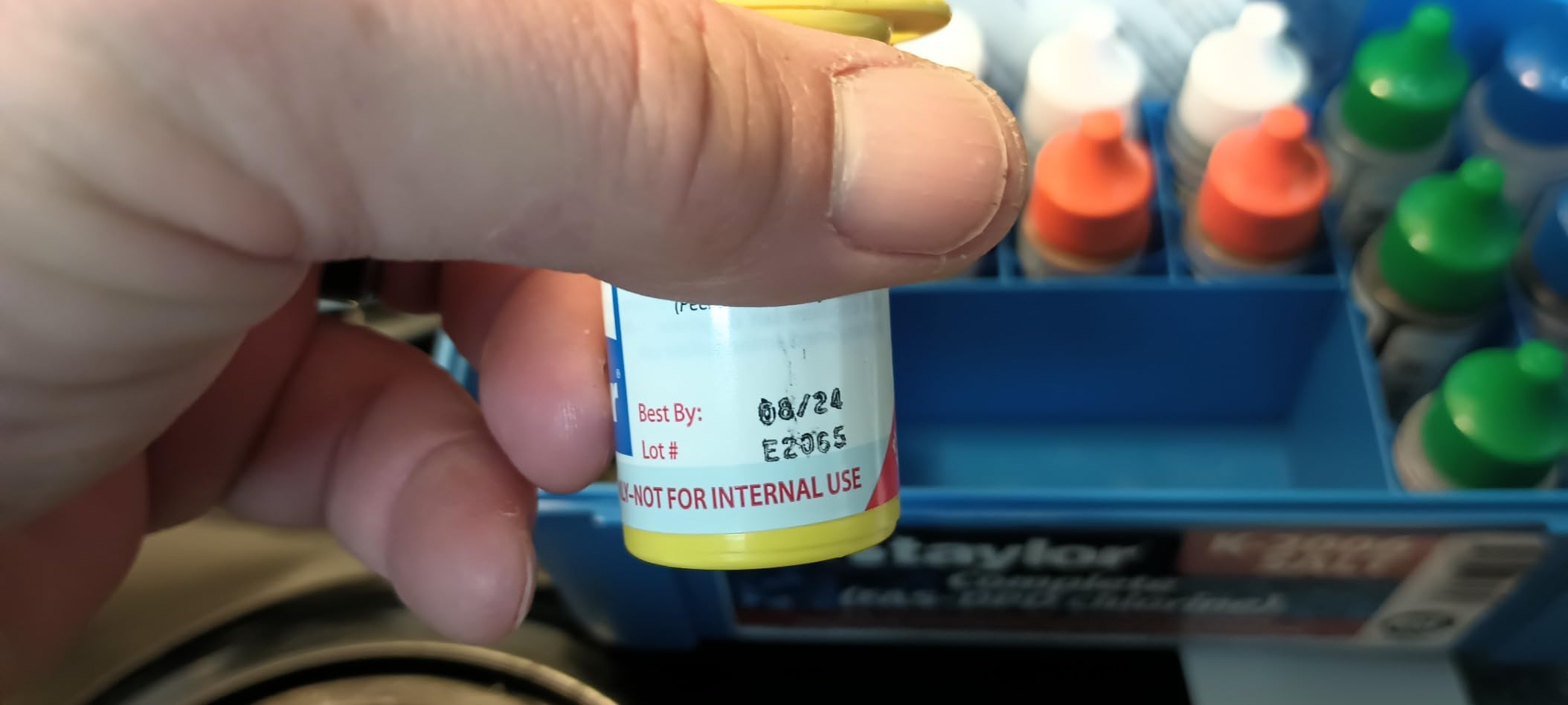
One thing to plan for is reagent volume. The cyanuric acid reagent in the box is a small bottle that covers roughly six tests before you need a refill, and salt reagent is consumed at the same rate as any other. Replacement reagents are sold individually, which is the right way to buy this kit. You do not need a second full kit.
The instructions matter more than they look like they should. The lid carries pictogram walkthroughs in plain language, and the testing sequence is printed in order rather than making the reader work it out. For a first-time liquid kit owner this is the difference between a test and a guessing game.
What the FAS-DPD reading tells you that strips will not
Standard DPD strips only see free chlorine, which is why a pool can read fine on strips while combined chlorine quietly climbs and eats your swimsuits. FAS-DPD reads both, so the gap between them is visible. When the two numbers separate, the fix is usually sunlight and time rather than more shock.
Where this kit is the wrong choice
If you have never used a drop-count kit before, the first session is genuinely fiddly, and clumped reagent drops can cost you a test. It is also overkill if your pool is small and you only want to check salt once a month before adding bags. In that case the K-1766 alone does the same salt job with less to learn.
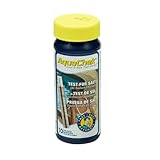
2. AquaChek Salt Titration Strips – Best Salt-Only Quick Check
- Dip and read with no reagent counting
- Highest rated and most reviewed pick in this group
- Users report readings that track pool store results
- Tiny tube is easy to carry for spot checks
- Only 10 strips per tube so frequent testing means frequent repurchase
- Time-sensitive read window
- Not precise enough to fine-tune a cell on its own
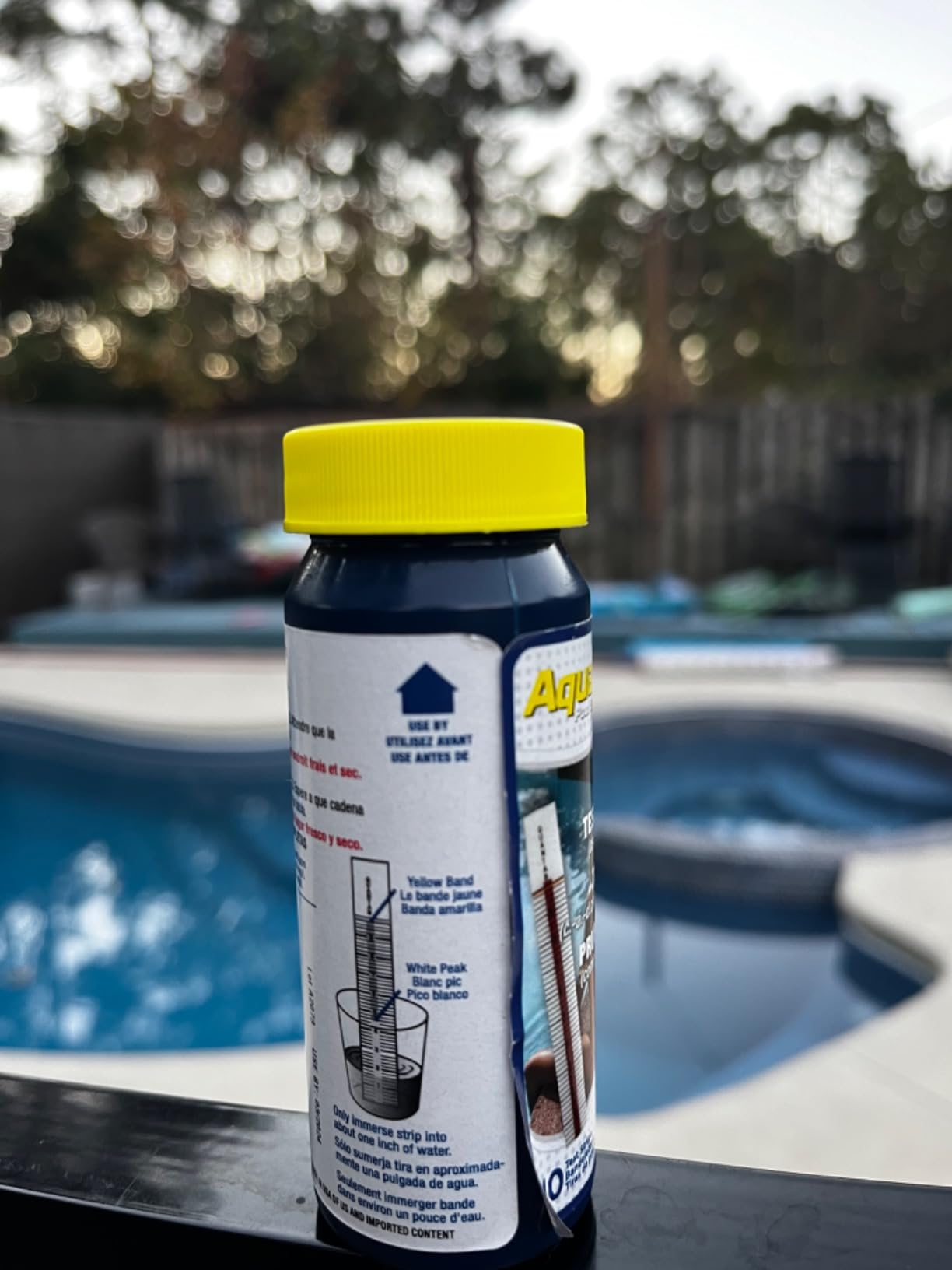
With 5458 reviews averaging 4.5 stars, this is the most proven tool in the lineup. The strip uses a reagent pad that shifts color across a 400 to 7000 ppm scale, so a healthy 3200 ppm pool lands mid-chart with room on both sides. Because there is no drop to miss and no endpoint color to argue about, it removes the single most common source of error in liquid testing.
The accuracy picture is genuinely good for a spot check. Users across thousands of reviews report that results line up with their own Taylor drop tests and with pool store numbers closely enough to trust. Several mention using it as a pre-check before adding salt bags, so you know whether you need one, half a bag, or nothing at all this week.
The limitations are practical rather than fundamental. Ten strips is a short tube, so if you test weekly you will replace it constantly, and the chart has to be matched to a specific read time or the number drifts. A few users also flag that the cross-reference chart on the tube label and the one on the manufacturer website do not always agree, so read the tube you actually have in your hand.
There is also a free companion app included that logs readings and suggests treatment steps. We found it useful as a history record, since the real value of tracking salt is watching the trend rather than any single afternoon number.
When a strip is enough and when it is not
A strip is enough for confirming the water is in range after a fill, a rain event, or a service visit, and for a monthly sanity check on a stable pool. It is not enough when you are deciding how much salt to add to a pool reading high, or when a cell is underscaling and you need a number you can trust to two hundred ppm.
What to watch for in the tube
Store the tube somewhere dry and closed. Moisture in the bottle is the leading cause of dead strips, and a hot garage does the same thing faster. If your readings suddenly stop making sense, an exhausted or damp strip looks exactly like a chemistry problem.
3. Taylor Technologies K-1766 – Best for Reference Salt Accuracy
Taylor Technologies K-1766, Pool and Spa Drop Test Kit for Sodium Chloride
- Drop-count titration has no drifting sensor or battery
- Broadly treated as the reference salt test
- Reads match handheld meters closely
- Case matches other Taylor kits
- Tests salt and nothing else
- Bottle two drops clump and need vigorous swirling
- Salmon color endpoint takes some judgment
This is the single-purpose answer to how do I test salt in a pool. You fill the glass tube with a pool sample, add the silver nitrate reagent in drops with swirling between each, and continue until the sample turns a distinct salmon color. The drop count converts directly to parts per million, and because the method is purely chemical, there is no probe to foul and no calibration to forget.
Buyers consistently call it the gold standard for salinity. Older forum threads on Whirlpool and Pool Spa Forum reached the same conclusion decades ago, and that consensus has not really moved: when a handheld meter and a K-1766 disagree, the titration is usually the one that is right.
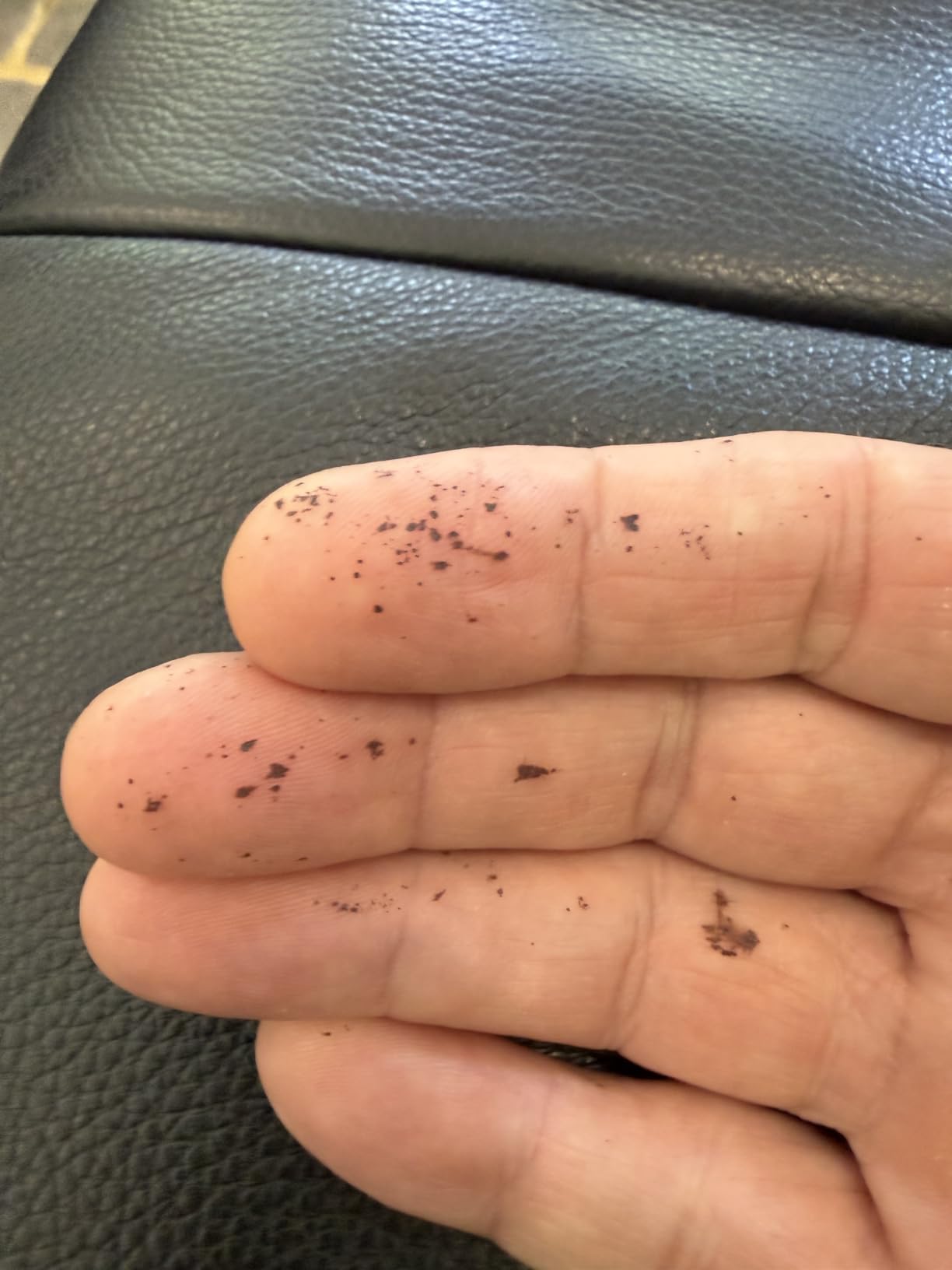
The criticism is about technique, not reliability. Drops from bottle two tend to clump on the vial wall, so each one needs a hard swirl to mix in properly, and the color endpoint takes a practiced eye. Bottle two also runs out long before bottle one because the chromate indicator is dosed differently, so budget for a refill of that specific bottle.
Frame this correctly when you buy it. The K-1766 is not a complete pool test kit and never was, even though it is often listed as one. Buyers who expected balance chemistry from it come back disappointed. Pair it with a chemistry kit and it is excellent.
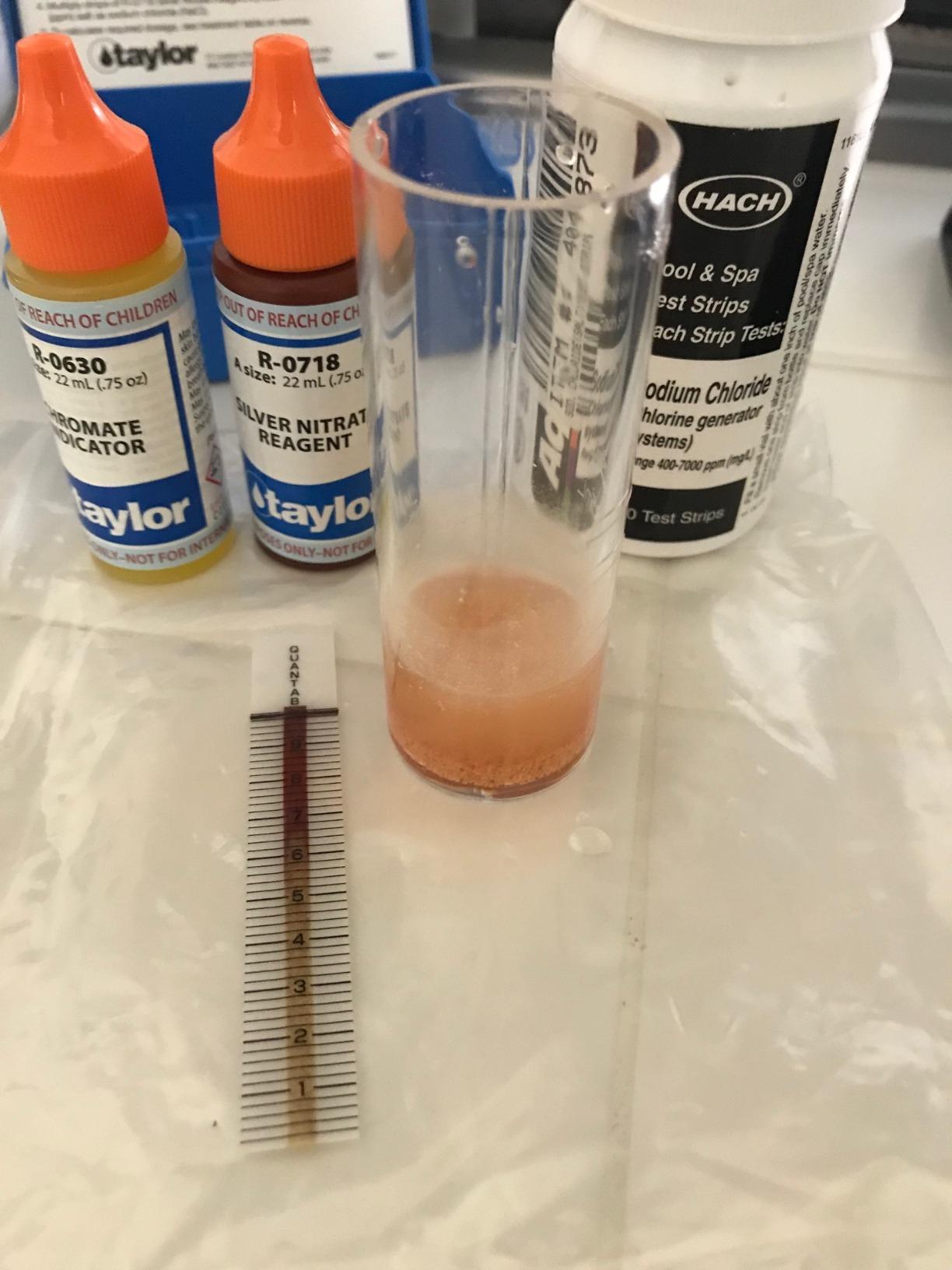
Why titration still beats a meter for salt
A conductivity-based meter infers salt from how the water conducts electricity, which is also pushed around by temperature, dissolved metals, and stabilizer. The titration reacts to chloride directly, so the number does not drift with conditions. When you are diagnosing a cell that is producing weak chlorine, that distinction matters.
Where it will frustrate you
It is one parameter in a small plastic case, so owning it means owning two kits and two routines. If your pool is small and stable and you only open it for part of the year, the ongoing reagent cost for one number is more than the strip alternative delivers.
4. AquaChek Salt System Test Kit – Salt Strips Plus 4-in-1 Balance Check
- Salt and the four core balance parameters from one kit
- Reliable salt readings that replace guesswork before a store visit
- Clear chart and simple dip and wait process
- Sensible for owners testing mainly at water changes
- No calcium hardness on the 4-in-1 strip
- Strips degrade if the bottle gets moisture
- Lower precision than a titration when fine adjustments are needed
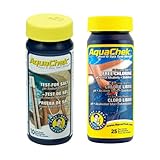
This kit bundles two strip types in one package: 25 yellow four-in-one strips covering free chlorine, pH, total alkalinity and cyanuric acid, plus 10 white salt strips reading 400 to 7000 ppm. For an owner who wants a complete weekly look without carrying two bottles around, that pairing is the whole point of the product.
Owners of this kit tend to describe the salt reading as trustworthy enough to act on before driving to the pool store, which is exactly the workflow it suits. Testing after a water change or a service visit takes under a minute and tells you whether anything needs correcting.
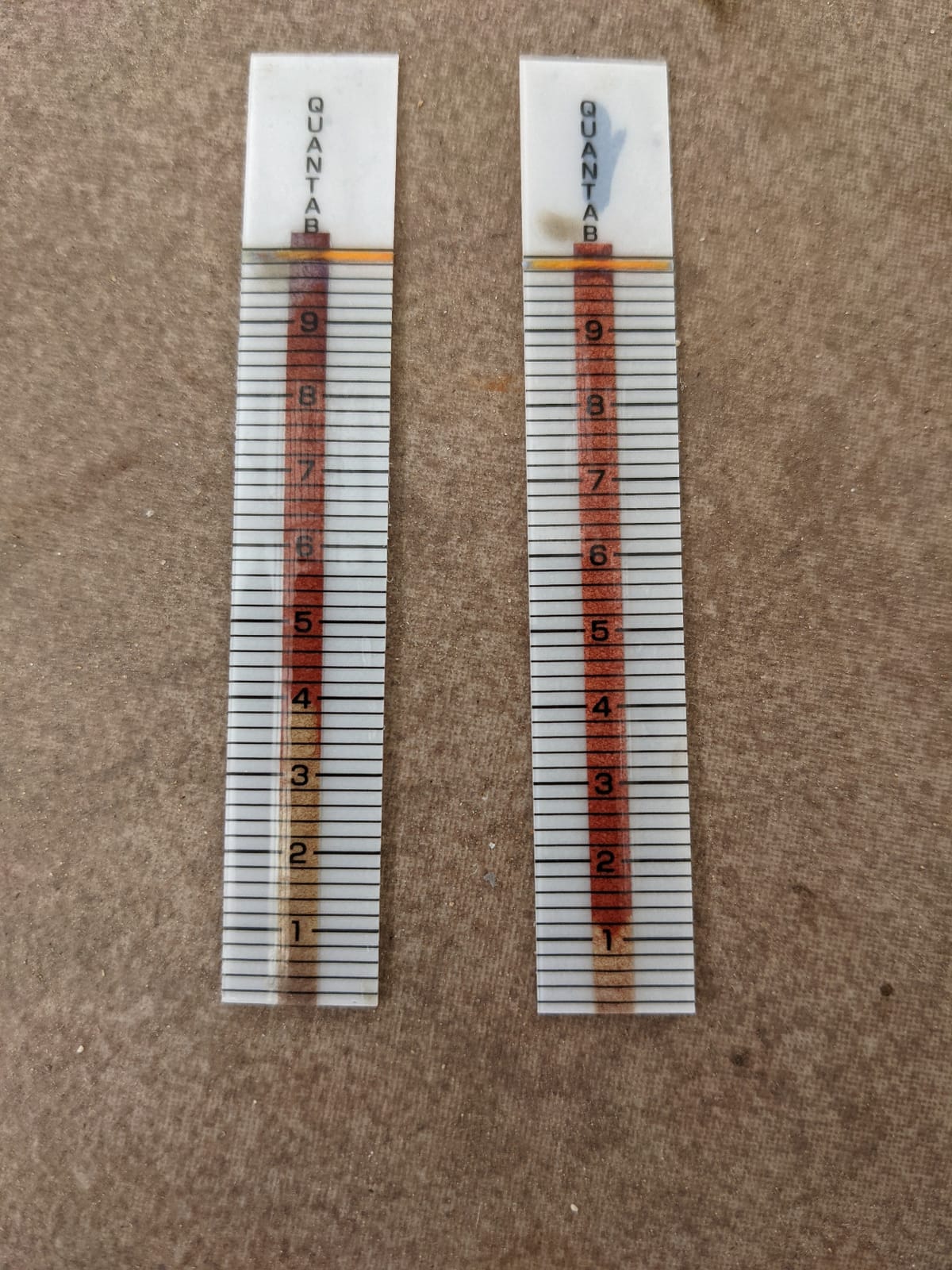
What is missing is calcium hardness, which matters more than most people expect in a salt pool because high CH is what scales the cell from the inside. Cyanuric acid is covered, pH is covered, and chlorine is covered, so you will still need one other method for CH if you care about cell life.
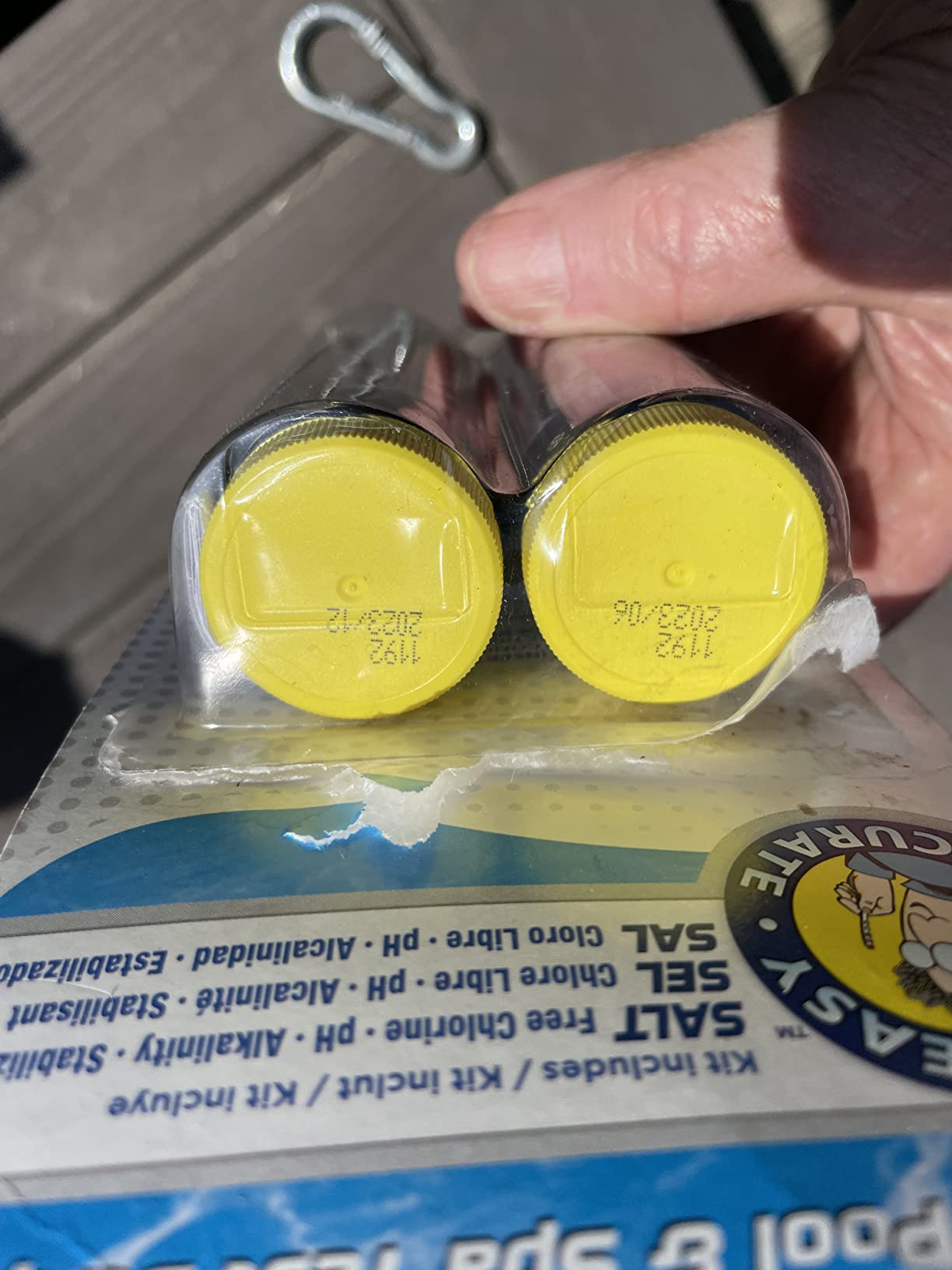
Keep the bottle sealed and dry. Several owners trace bad readings back to moisture that crept in during a humid storage area, and a strip that has absorbed water gives you a confidently wrong number rather than a blank.
Which parameters this kit does not cover
Calcium hardness and total chlorine are the gaps. Total chlorine matters if you care about combined chlorine building up, and CH is the number that predicts whether your salt cell scales in one season or three. Everything else on your weekly list is handled here.
Where it fits in a two-kit setup
Use this as the frequency tool: strips three times a week for chlorine and pH, with salt checked whenever the water has been diluted. Keep a drop-count kit for the monthly accuracy pass and for any question that needs a defensible number.
5. Hofun 5-in-1 Digital Salinity and pH Meter – Best Digital Multi-Readout
Pool Salt Tester & PH Meter, Hofun Digital Salinity Meter and PH Tester for Aquarium and Pool Saltwater Water, 5 in 1 Salinity PH Temp EC and TDS Meter, Aquarium Swimming Pool Hot Tub, Multiparameter
- Five measurements from a single dip speeds up routine checks
- Salt range covers the full 3200 ppm target comfortably
- Handy pocket-sized body with simple power on and MODE operation
- Reads in ppm
- ppt and percent without manual conversion
- Multiparameter meters of this type need periodic calibration and probe care
- Temperature readings can run a little off
- Less precise than a lab titration for critical salt adjustments
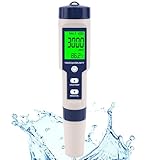
This is the meter we reached for most often during quick checks. It covers salinity, total dissolved solids, electrical conductivity, pH and temperature in one handheld body, and salinity reads 0 to 9999 ppm with an automatic switch to ppt above that. A healthy saltwater pool sits comfortably inside the range rather than at the edge.
The pH channel is the sleeper feature here. Because a saltwater generator steadily pushes pH upward, having pH on the same screen as salt lets you see the two problems together in a single dip, which is far more useful than two unrelated tools on the patio table.
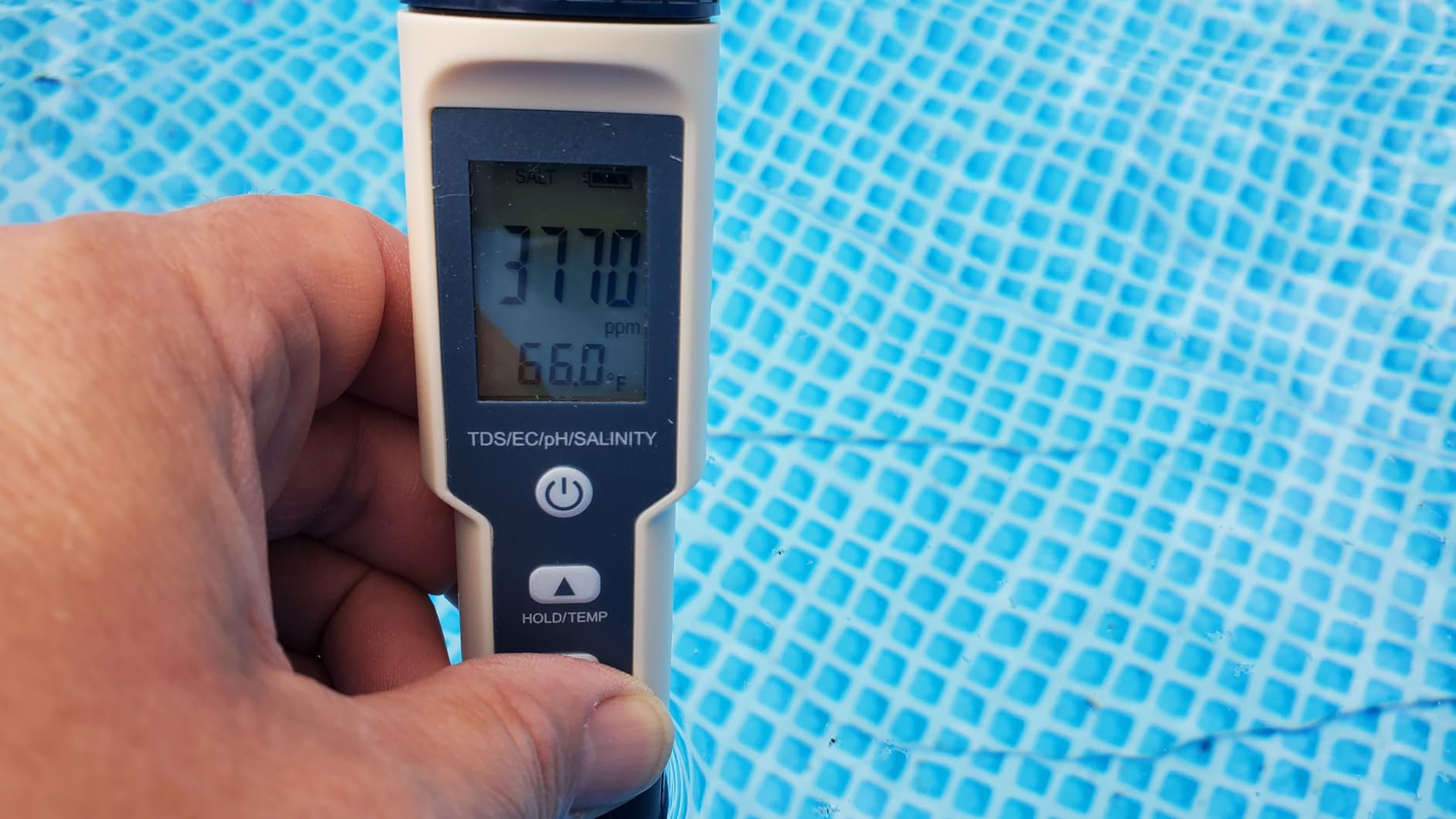
The honest weakness is calibration. Reviewers are consistent that this class of meter needs periodic calibration and reasonable probe care, and that skipping either produces worse numbers than a cheap strip would have. Temperature readings run slightly off, so do not use the on-screen temperature as a reference for anything chemistry-related.
Treat it as the fast read and the trend line, not the final word. When the meter and your titration disagree by more than a couple hundred ppm, trust the titration and use the meter for spotting drift between tests.
Why TDS and salinity are not the same number
Total dissolved solids counts everything dissolved in the water, including stabilizer, calcium, and metals. Salinity on this meter is derived from conductivity, which moves with all of those. When stabilizer is high after a season of trichlor tablets, a TDS-based salt estimate drifts upward even though the salt itself has not changed.
What this meter is genuinely bad at
It does not test chlorine, alkalinity, calcium hardness or cyanuric acid at all. It is a salt and pH instrument with three extra readouts, so it cannot stand in for a chemistry kit no matter how many functions the box claims.
6. SaySummer 8-in-1 Salt Water Strips – Salt and Balance on One Strip
Salt-Water Pool Test Strips Kit: 125 Counts 8-in-1 for Salt Water Pool Testing Kit, Salt Pool Test Strips for Hot Tub Spa Testing Salt Chlorine pH and More
- Salt and seven balance parameters in a single dip
- 125 count bottle covers a full testing season
- Two second dip and 30 second hold is easy to time
- Chart highlights the 2700 to 3400 ppm ideal band
- Salt pad is the weak point and several users report it failing to register
- Chlorine and pH readings drift versus a Taylor kit
- Bottle label colors do not match the box chart colors
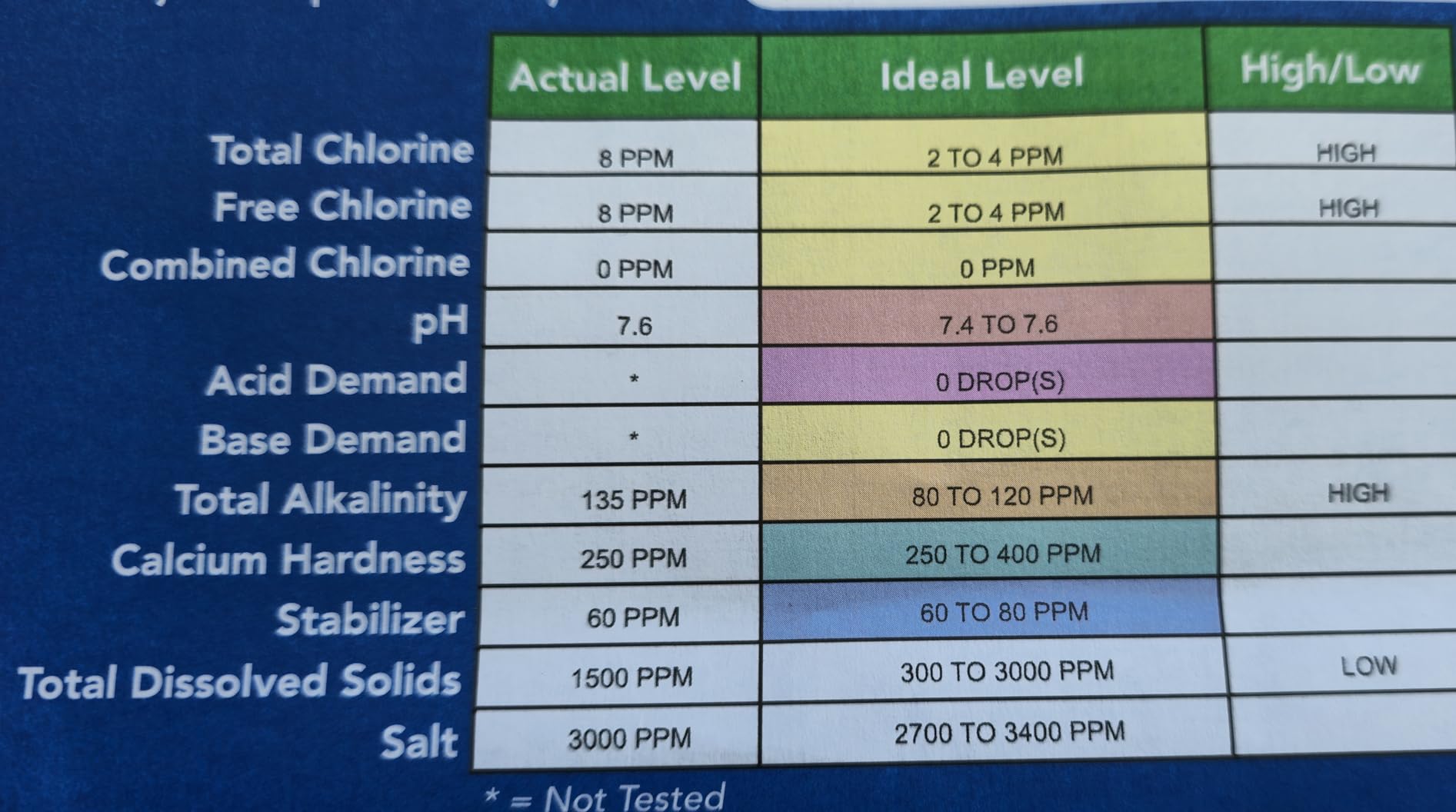
On paper this is the most complete strip in the roundup. One strip tests total hardness, free chlorine, bromine, total chlorine, cyanuric acid, total alkalinity, pH and salt, and the chart even prints the 2700 to 3400 ppm ideal band so you can see at a glance whether the pool is in range. At 125 strips it also outlasts every competitor here by a wide margin.
Here is the problem. A meaningful group of reviewers reports that the salt pad itself is unreliable, describing readings that go dark brown and fail to register actual salt at all, and one detailed cross-check found a salt reading far below a verified laboratory result. Owners who already own a separate salt reader tend to treat this strip as a backup for the other seven parameters.
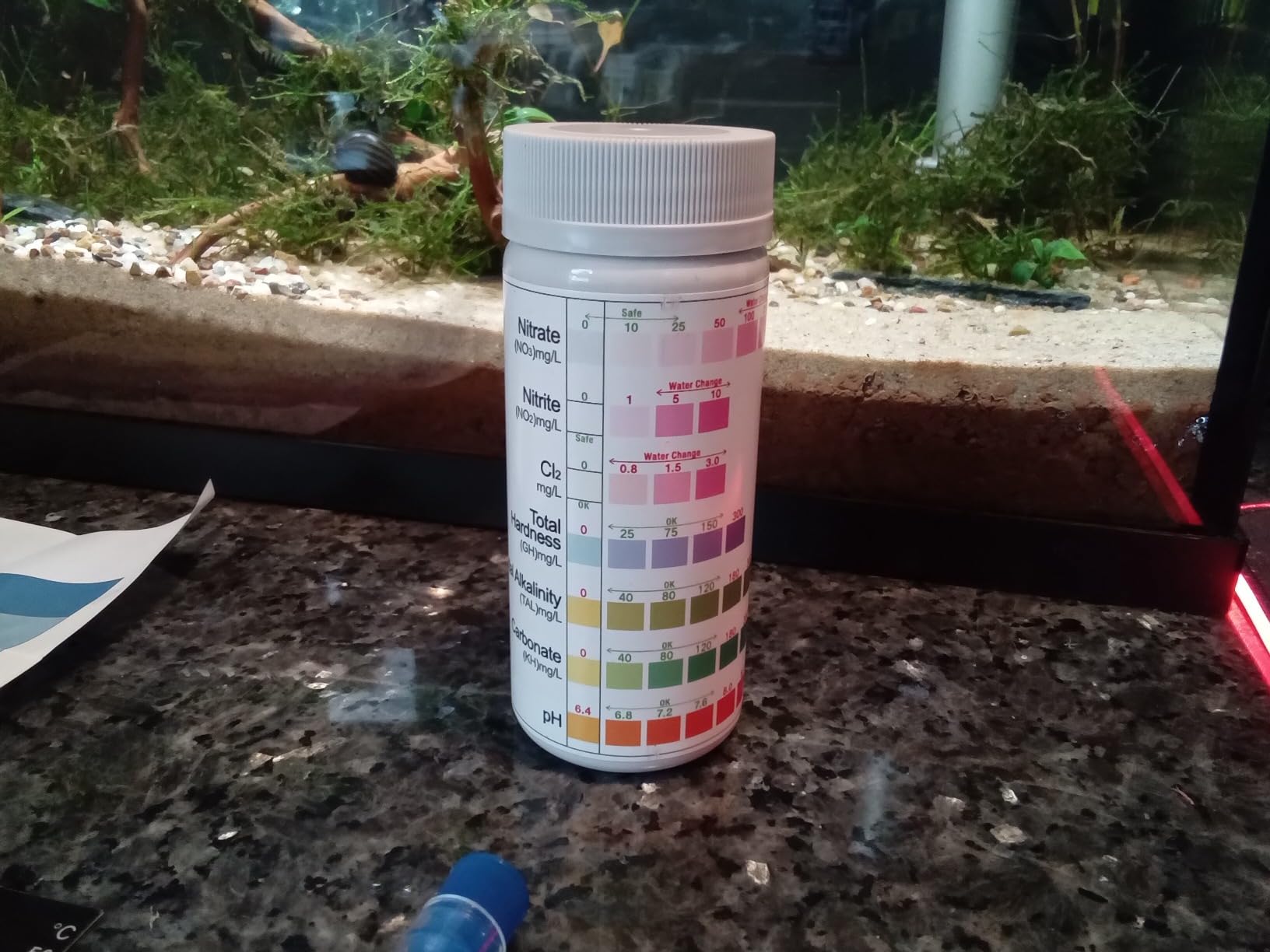
Chlorine and pH readings also drift outside acceptable range compared with a drop-count kit, which is expected for strips but worth knowing before you dose off a number. The label color mismatch between bottle and outer box is a smaller but real source of misreads, so match the pad to the chart printed on the tube rather than the carton.
Our honest read is that this is a strong multi-parameter strip for everything except salt, and salt is the one thing you cannot afford to be casual about in a saltwater pool. If you buy it, buy it for chlorine, pH, alkalinity, CYA and hardness, and get your salt number elsewhere.
When the convenience is worth the accuracy gap
If you test on a schedule where one dip beats five separate tests, the single-strip format is genuinely appealing. Just make sure your salt readings are independently confirmed at least monthly before you add bags or adjust the generator.
Timing mistakes that skew the result
The instructions are specific: two second dip, then hold horizontally for 30 seconds without shaking. Shaking or over-dipping wets the pads beyond their intended reaction window, and holding instead of shaking keeps the color from smearing across the chart. Get those two details right and most readings tighten up noticeably.
7. T TESTRUST 5-in-1 Digital Salinity Meter – Best for Cell Troubleshooting
- Salt readings reported as matching pool store results and generator displays
- Dip and read with no complicated setup routine
- Several readings from one dip speeds up routine checks
- Useful when diagnosing a cell that reads incorrectly
- Temperature reading runs a bit off
- Salt channel may need calibration before it is trustworthy
- Digital probe accuracy depends on routine care
Where the Hofun covers a lot of water types, this meter is aimed squarely at pools, spas and hot tubs, and buyers report salt numbers that line up with both local pool shop results and their own generator displays. That agreement is the metric that matters, because the whole point of testing is knowing whether your generator is running in its window.
It shares the pH, TDS, EC and temperature channels with the Hofun, so the same caveat applies: this is a salt and pH instrument, not a chemistry kit. Pair the pH reading with a balance kit and you cover the two numbers that move together in a salt pool.
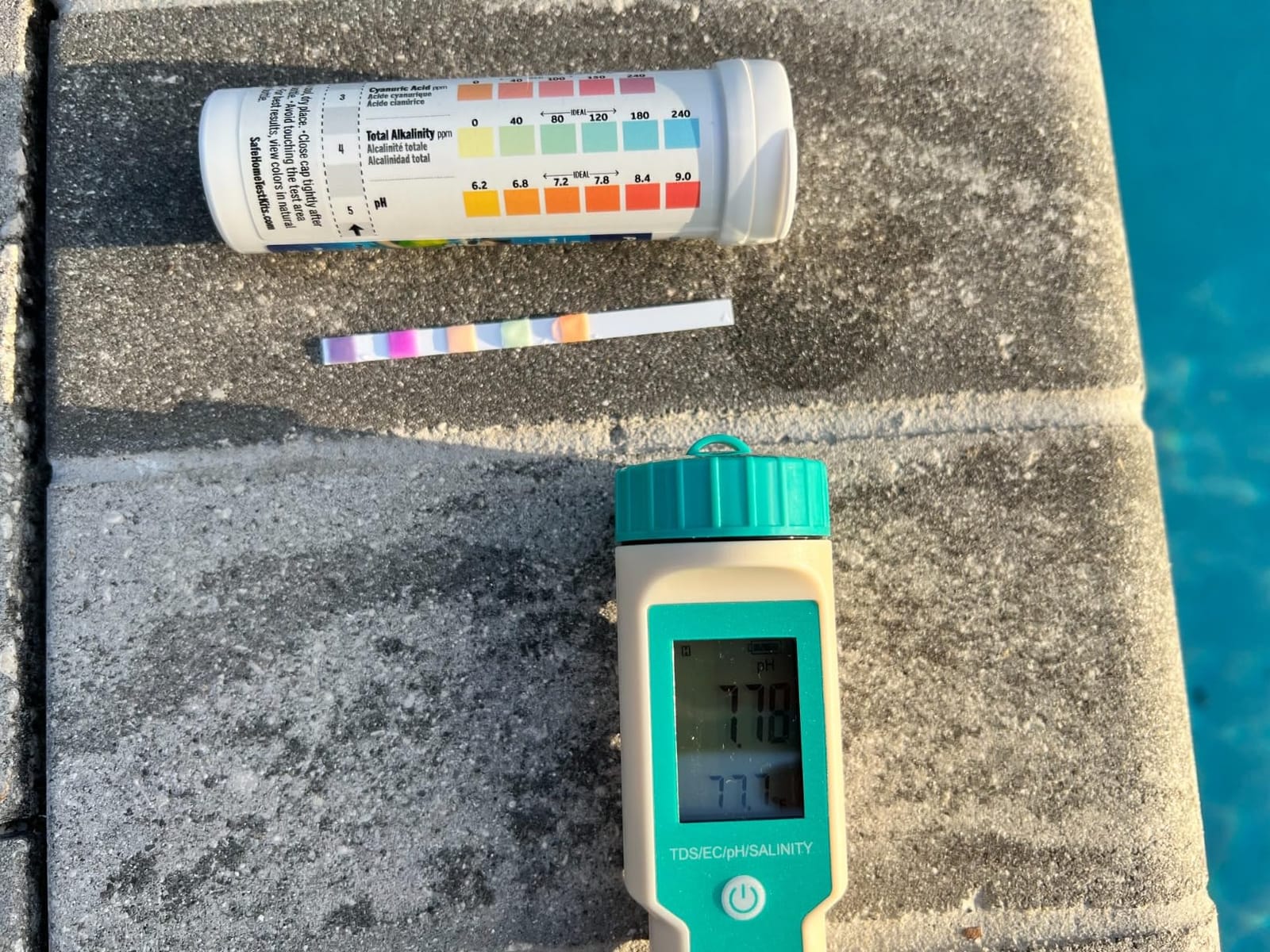
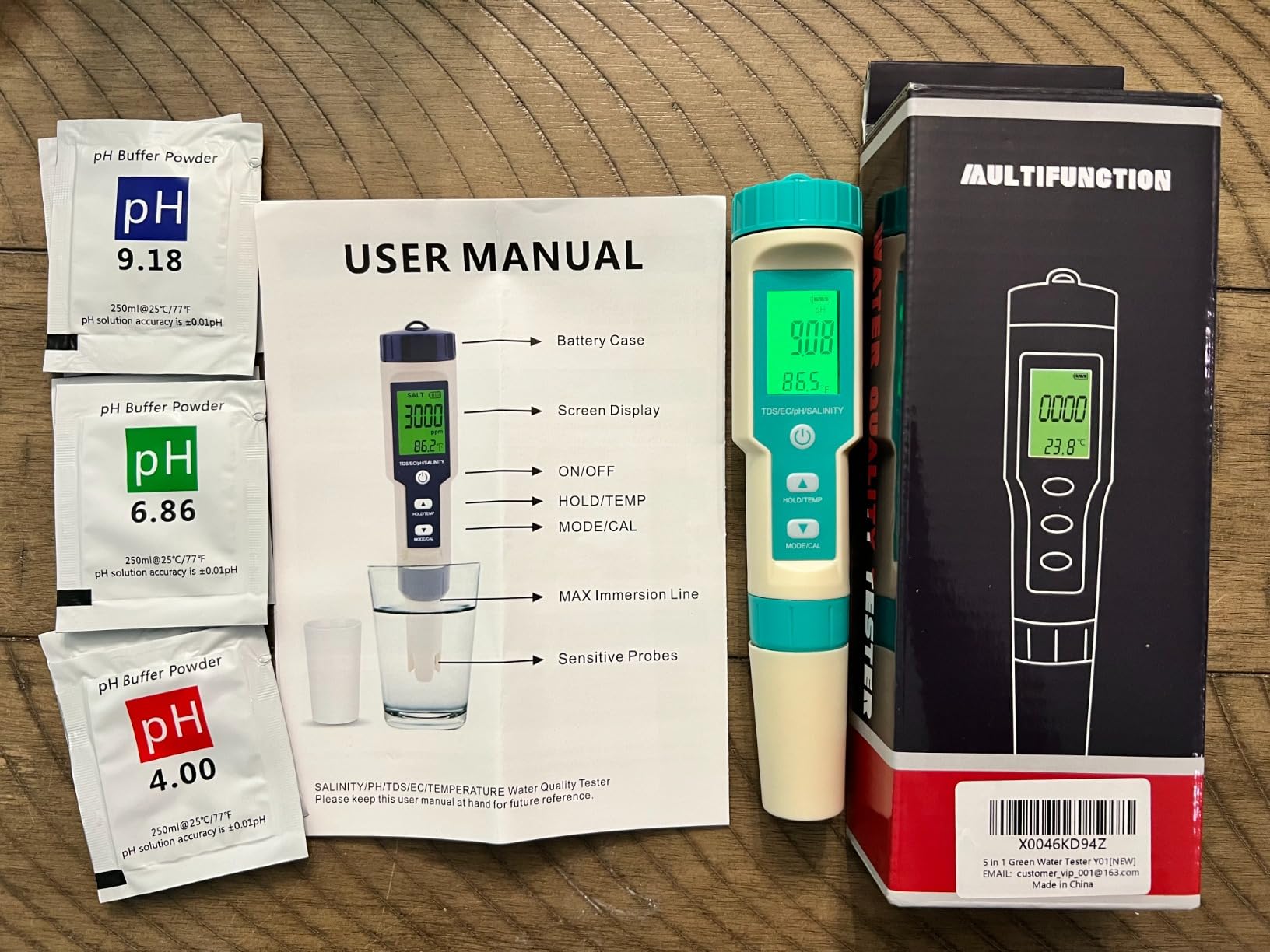
The main practical note is calibration. The package includes a pH calibration solution, and some units arrive needing that step before the salt channel gives numbers you would defend to a pool store. Run the calibration once out of the box, then again if you ever see a reading that does not make sense.
Where it earns its place is diagnostics. When a cell is not producing and the generator display and your test kit disagree, a meter this quick gives you a third data point in seconds, which usually points at either water chemistry or the cell sensor itself rather than your technique.
The three-way disagreement test
Compare the generator display, this meter, and a Taylor titration on the same sample. If the meter and the titration agree, trust them and suspect the cell sensor or water chemistry. If the meter alone disagrees, calibrate it. If the titration alone disagrees, suspect the sample you drew.
Where it falls short
It gives you no chlorine, alkalinity, calcium hardness or CYA data, and the temperature channel runs slightly off. Owners expecting a complete pool panel in one device end up needing a second kit regardless, so plan for that from the start.
8. CLOROX Pool and Spa Saltwater Strips – Best Routine Balance Check
- One bottle covers six balance parameters and salt
- Easy to read for alkalinity and chlorine checks
- Familiar brand name pool owners already know
- App photo upload helps track results over time
- Weakest average rating in this group at 4.1
- Moisture in the bottle degrades the strips
- Less precise than a titration test for salt
The six-way strip here tests total hardness, total chlorine, free chlorine, pH, total alkalinity and stabilizer, and the bottle also includes 10 salt level strips. That combination makes it a one-bottle weekly driver for owners who want the full balance picture without running two separate strip types.
Owners like the readability of the chlorine and alkalinity pads, and having total and free chlorine on the same strip is useful because the gap between them is a rough combined chlorine signal. The app photo upload feature is a nice way to keep a log without typing anything in.
This is the weakest-rated product in our lineup at 4.1, with about 15 percent of reviews at one star. Most of that frustration lands on packaging rather than chemistry: moisture getting into the bottle, and at least one report of strips arriving close to or past the printed expiration date. Buy a fresh bottle and check the date before you trust it.
For salt, treat the reading as directional. It will tell you clearly whether the pool is in the neighborhood or badly off, which is enough to decide whether to add salt. It is not the instrument you use when deciding to add 40 pounds rather than 80.
Why one bottle covering six parameters is convenient
A single dip for the whole balance set means one sample, one timer and one comparison against the chart. For owners doing three checks a week, that removes enough friction that testing actually happens rather than getting skipped until something looks wrong.
How to store it so the strips survive
Keep the bottle sealed, dry, and out of a hot garage or vehicle interior. Moisture and heat both attack the pads, and degraded strips still give a color, just an untrustworthy one. Buy in smaller quantities if you cannot store them properly.
What to Look for in a Saltwater Pool Test Kit?
Start with the one requirement that decides everything: does it measure sodium chloride. Most standard pool kits do not, and buying one means guessing at the single number your generator runs on. Target salt is 2700 to 3400 ppm with 3200 ppm as the usual ideal, though generator manufacturers vary, so check the manual for yours.
Beyond salt, look for FAS-DPD rather than plain DPD. FAS-DPD reads free and combined chlorine together, and the difference between the two numbers is the only practical warning you get for chloramines. On the balance side, you want pH, total alkalinity, calcium hardness and cyanuric acid in the same kit.
Then check the boring things that decide whether you will actually use it. Does the case keep reagents upright and dark? Are replacement reagents sold individually rather than only as a full kit? Are the instructions in plain language with pictures? A kit that gets used wins over a kit that is technically better and sits in a garage.
Digital meters deserve their own check. Ask whether calibration solution is included, because a meter that needs calibration you do not have will drift quietly and give you false confidence. Strip products deserve a check on storage: dry, sealed, and away from heat.
Liquid Titration vs Test Strips vs Digital Meters
These three methods answer the same question with different tradeoffs, and the honest answer is that they are not substitutes. Liquid titration is the most accurate because it reacts directly to the chemical you care about and has nothing to drift. Test strips are the fastest and the cheapest per test but trade resolution for convenience. Digital meters sit in between, giving a clean numeric readout with a dependency on probe care and calibration.
For salt specifically, the ranking is clearer than it is for chlorine. Argentometric titration gives you a number you would stake a decision on, salt strips give you a number that is close enough for a monthly check, and a conductivity-based meter gives you a number that is influenced by everything else dissolved in the water.
What strips genuinely cannot do is combined chlorine, because they only react to the free fraction. What digital meters generally cannot do is alkalinity, calcium hardness, or CYA, and most of the budget meters in this roundup also skip chlorine entirely. That is why a single-tool saltwater setup tends to leave a real gap.
On cost per full test, strips stay cheapest because a bottle covers many tests, liquid kits sit in the middle with reagent refills, and digital meters have the lowest consumable cost but the highest depreciation if a probe fails.
The Two-Kit Strategy: Chemistry Kit Plus Digital Salinity Meter
The setup we recommend, and the one r/pools owners keep landing on, is one full liquid chemistry kit for the balance parameters plus one salt measurement tool used monthly. It costs more than a single purchase up front and it is the configuration that leaves no blind spots.
The logic is frequency. Chlorine and pH move daily in a salt pool and need checking several times a week, which is a job for a kit that covers those parameters. Salt moves slowly and only changes when water is added or lost, so a once-a-month check with a titration or a meter is entirely sufficient.
Against weekly service, the maths is easy. Forum owners who took over from a pool company describe service bills running 60 to 80 dollars a week, and one kit plus annual reagents is a fraction of a single year of that. If you also need equipment help, our guides to 8 Best Robotic Pool Cleaners for Inground Pools and 12 Best Pool Ladders for Above Ground Pools cover the hardware side of the same project.
Why Your Salt Generator Reading Can Disagree With Your Test Kit
The most common reason is a dirty cell sensor. The generator measures conductivity through probes that sit in the flow path, and scale, biofilm, or even a partially closed valve will skew the reading. Cleaning the cell and the sensor is usually the whole fix, and it is worth doing before assuming the water is wrong.
Cold water is the second cause. Conductivity-based readings shift with temperature, and a salt generator mounted on a pool that is not circulating warm water can read several hundred ppm off from the true value. Generators are designed for warm-season operating temperature, so a winter reading is not a chemistry reading.
Third, sampling technique. A sample drawn near a return jet, right after adding salt, or from a shallow step reads differently than one taken elbow deep in still water. Finally, some meters derive salt from total dissolved solids, which rises with stabilizer, so a pool that has had heavy trichlor use can look saltier than it is on that particular display.
Over-Salting: Symptoms and What High Salt Does to Your Heater and Cell
Rising sodium chloride beyond roughly 3400 ppm shows up as persistent water softness and eye irritation, and it drives salinity above what corrosion-resistant equipment is rated for. The damage is rarely sudden and usually shows up as premature failure rather than an obvious breakdown.
The main casualty is a steel heat exchanger. Above 3400 ppm, manufacturers specify stainless steel or titanium for pool heaters, because mild steel in salty water corrodes from the inside out and eventually leaks into the pool. If your heater is a steel model and your salt reading has crept up, that is a replacement decision rather than a balance adjustment.
High salt also changes how a cell behaves and how the generator interprets its own sensor, so an over-salted pool can produce a cell that looks fine while chlorine output drops. Finally, extremely high readings on salt strips should be confirmed with a titration before you act, since strips run out of scale above their upper range.
Signs it is time to act: your swimmers complain about stinging eyes, the water feels noticeably slippery, the heater shows early corrosion, or your salt strip pegs at the top of its range. Adding fresh water to dilute is the fix, then re-test after the pump has circulated for several hours.
How to Collect a Water Sample Correctly
Take the sample elbow deep, roughly 18 inches or 45 cm below the surface, from a spot away from the skimmer and away from any return jet. Both extremes corrupt the reading: skimmer water can carry chlorine demand from debris, and return jet water carries the chemistry of whatever it just mixed.
Rinse the vial with pool water first, then take the sample. Do not collect from the surface, where salt and chemistry readings are least representative, and never sample within a few hours of adding salt or shock.
Read the sample at room temperature if you can. Cold water skews both reagent reactions and digital meters, and a sample left sitting in the sun changes pH in minutes. Test promptly, rinse the vial afterward, and close the case so reagent does not sit open in humid air.
How Often to Test a Saltwater Pool
Free chlorine and pH warrant two to three checks per week during swimming season, since the generator raises pH steadily and chlorine demand climbs in heat. Strips handle this frequency well, which is why they pair naturally with a liquid kit.
Total alkalinity, calcium hardness and cyanuric acid need attention monthly, or immediately after heavy rain, a large fresh-water top-off, or a season with heavy trichlor use. Salt needs a monthly check, plus a retest after any rain-heavy week, any fill water, or before and after adding salt bags.
In the closed season, monthly is enough for all of it if you are not running the generator. If you are overwintering an SWG pool with the cell running, keep at least a monthly salt and pH check so you catch drift early rather than at spring startup. A full accuracy pass with the titration tool is worth doing before you close and again when you open.
Frequently Asked Questions
What is the best pool chemical tester?
For most saltwater pool owners the best pool chemical tester is the Taylor K-2006-SALT, because it measures sodium chloride alongside FAS-DPD free and combined chlorine, pH, total alkalinity, calcium hardness and cyanuric acid in one case. If you want the fastest option for routine checks, a multi-parameter strip handles chlorine and pH several times a week at a fraction of the effort.
How do I test a saltwater pool?
Draw a sample elbow deep, about 18 inches or 45 cm down, away from the skimmer and return jets. Test free chlorine, pH, total alkalinity, calcium hardness and cyanuric acid with a liquid kit or strip, then test sodium chloride separately using either an argentometric titration or salt strips. Target 2700 to 3400 ppm salt with 3200 ppm ideal.
How accurate are test strips for pools?
Pool test strips are accurate enough for routine chlorine and pH tracking but lose resolution on fine adjustments. Salt strips reading 400 to 7000 ppm correlate well with drop tests for a monthly range check, yet they run out of scale at the top of the range and cannot detect combined chlorine.
Are water test kits accurate?
Liquid drop-count kits using FAS-DPD are the most accurate for chlorine, and argentometric titration is the reference method for salt because it reacts directly to chloride. Accuracy falls with plain DPD strips and with uncalibrated digital meters. Cross-checking your own result against a pool store test once a season is the simplest way to confirm your technique.
Do I need a separate salt test for my saltwater pool?
Yes, because most standard pool test kits do not measure sodium chloride at all. Either choose a kit that includes salt, or add a dedicated salt test such as a Taylor K-1766 titration or a white salt titration strip. Your generator runs on salt level, so guessing at it means guessing at chlorine output.
How long do pool test strips typically last?
Sealed in a dry bottle away from heat, most pool test strips stay usable for well over a year, and an opened bottle loses accuracy within a few months. Moisture in the bottle is the main killer, along with hot garage storage. Check the printed expiration date on new bottles and replace damp or discolored strips rather than trusting them.
How long do pool test kits typically last?
The case lasts indefinitely if kept dry, but reagents are the consumable. Testing chlorine, pH, alkalinity, calcium hardness and salt weekly uses reagents steadily, and the small cyanuric acid bottles in full kits run out first. Replacement reagents are sold individually for every Taylor kit, so you never need to buy a second full kit.
What are the symptoms of too much salt in a pool?
Common signs are stinging eyes, water that feels slippery or soapy, and persistent difficulty holding chlorine steady. Above roughly 3400 ppm, steel heat exchangers corrode from the inside out and manufacturers require stainless steel or titanium. Also confirm an over-range strip reading with a titration before diluting.
Final Verdict for Saltwater Pool Owners
Our best pool test kit for saltwater pools is the Taylor Technologies K-2006-SALT. It is the only product here that measures sodium chloride next to the full balance chemistry set, and FAS-DPD free and combined chlorine is what lets you see chloramines building up before they bleach swimwear.
Add one salt-specific tool for the monthly check: the AquaChek titration strips for speed, or the Taylor K-1766 when you need a number you would stake a cell decision on. That pairing closes every gap without buying anything that does not test what its box implies.
Test chlorine and pH two or three times a week, the balance parameters monthly, and salt monthly plus after heavy rain or fresh-water top-off. Get the kit, take the sample elbow deep, and stop trusting the generator display on its own. Updated for 2026.