
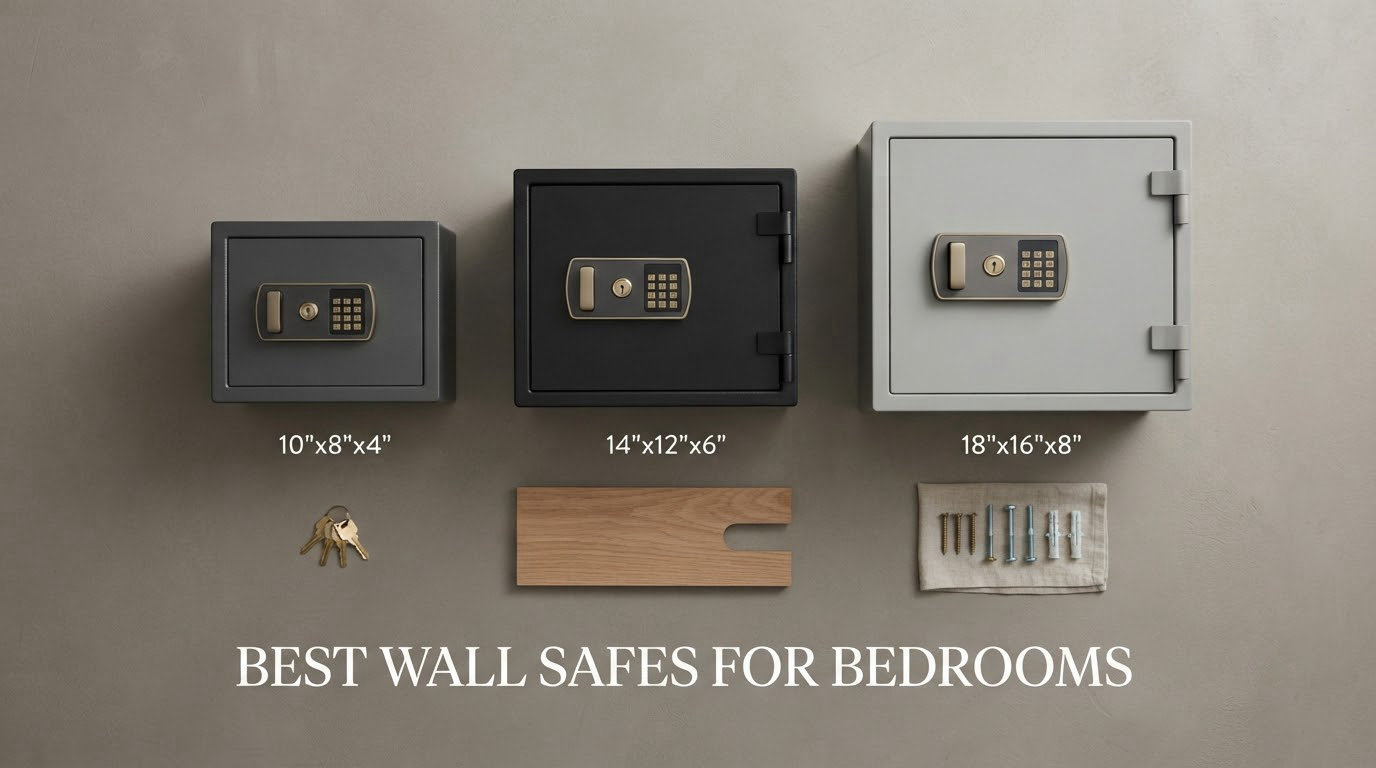
A bedroom is the one room in a house where hiding something badly can cost you more than the thing itself. Valuables sit in an open jewelry box on the dresser, passports live in a desk drawer, and the spare key to the front door hangs ten feet from where you sleep. The best wall safes for bedrooms solve that by cutting a steel box into the wall cavity itself, so nothing is visible and nothing depends on a drawer with a latch that a nine-year-old can work out.
We spent weeks going through owner reviews, spec sheets, and the recurring complaints on home security forums to put this list together. What matters in a bedroom is narrower than the general safe category, and it is worth saying up front. A safe in a garage can be loud, deep, and slow. A safe in a bedroom has to be quiet at two in the morning, reachable without turning on a ceiling light, and shallow enough to fit inside a standard framed wall.
That leads to a different shortlist. Below you will find in-wall safes that mount between 16 inch on-center studs, several with silent keypads and interior lights, and options that work for a master bedroom closet, a kid’s room, or a rental where cutting drywall is not an option. If you are also rebuilding the room itself, our picks for smart light bulbs for bedrooms matter more than most people expect, because the single biggest practical complaint about a wall safe in a bedroom is not the lock, it is fumbling around in the dark to find it.
Table of Contents
Top 3 Picks for Bedroom Wall Safes (October 2026)
Viking VS-52BLX Biometric
- 500 DPI fingerprint sensor
- Fingerprint PIN and key entry
- Silent mode with interior LED
- 970 cubic inch interior
Paragon In-Wall Keypad Safe
- 0.83 cubic feet of storage
- Fits 16 inch on-center studs
- Two programmable codes
- Two manual override keys

Grimtron Electronic Wall Safe
- Silent keypad entry
- Auto-open door with LED light
- Spacer kit for 24 inch studs
- 0.76 cubic feet
The Viking VS-52BLX takes the top spot because it is the only safe here that solves the three bedroom problems at once. It has genuine silent mode, a built-in interior light, and three redundant ways in, so a fingerprint failure at midnight does not strand you. The Paragon 7725 series body earns the value slot on the back of the largest review base in the group by a wide margin, and the Grimtron is the one to buy if nighttime access is your only priority.
All 10 Bedroom Wall Safes Compared Side by Side in 2026
| Product | Specifications | Action |
|---|---|---|
| Viking VS-52BLX Biometric |
|
Check Latest Price |
| Paragon In-Wall Keypad Safe |
|
Check Latest Price |
| Grimtron Electronic Wall Safe |
|
Check Latest Price |
 Nebakne 25.6 Inch Tall Safe Nebakne 25.6 Inch Tall Safe |
|
Check Latest Price |
 GUVELI Tall In-Wall Safe GUVELI Tall In-Wall Safe |
|
Check Latest Price |
 XDeer Biometric Gun Safe XDeer Biometric Gun Safe |
|
Check Latest Price |
 Elder Welder Vent Cover Safe Elder Welder Vent Cover Safe |
|
Check Latest Price |
 PJJSZST Biometric Pistol Safe PJJSZST Biometric Pistol Safe |
|
Check Latest Price |
 KornerBatl Small In-Wall Safe KornerBatl Small In-Wall Safe |
|
Check Latest Price |
 LANGGER V Biometric Wall Safe LANGGER V Biometric Wall Safe |
|
Check Latest Price |
1. Viking VS-52BLX Hidden Biometric Wall Safe
- 500 DPI sensor reads worn fingerprints reliably
- Fingerprint memory survives battery removal
- Fingerprint PIN and key entry
- Carpeted interior with LED and 3 shelves
- Silent mode for night access
- Central lock box reduces usable middle space
- Shelf tabs are thin and bend easily
- 24 inch stud framing needs extra work
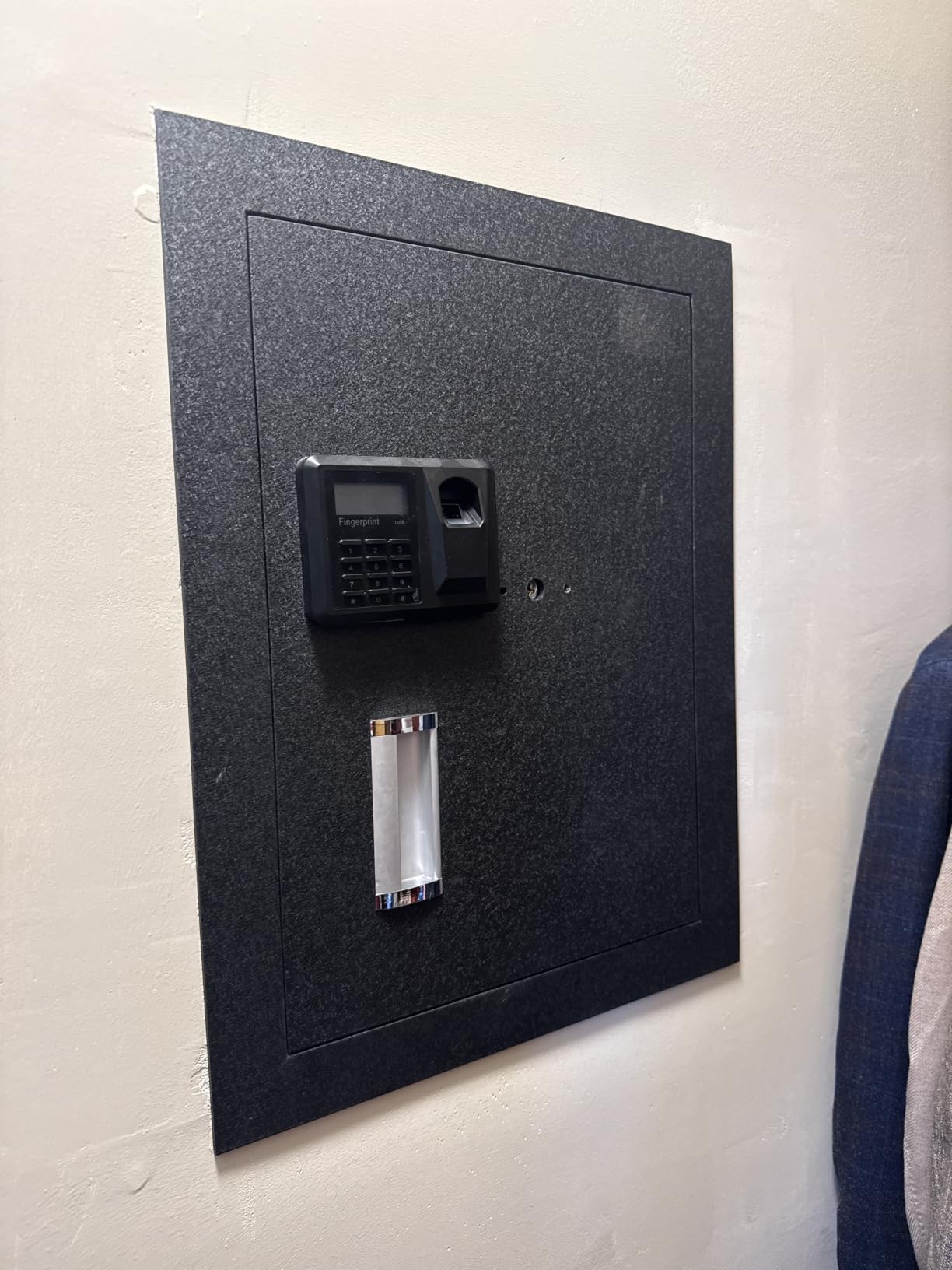
This is the safe I would put in a master bedroom. It weighs 39 pounds, has a 5mm laser-cut steel door, and runs a motor-driven 20mm deadbolt rather than a solenoid, which is the difference between a safe that pushes a pin and a safe that throws hardware into the strike plate. Owners who have had theirs for years describe the fingerprint reader as the best they have used, and the 500 DPI optical sensor handles worn or partial prints far better than the cheaper capacitive scanners.
Two details matter more in a bedroom than anywhere else. The first is the sound on/off mode, which owners on home security forums specifically call out as the difference between a safe you use and a safe you avoid using because it wakes the person sleeping next to you. The second is redundancy: fingerprint, PIN code, and a four-prong cross key. If your hand is cold and the reader will not cooperate, you still have two ways in.
Mechanically it is a properly welded unit, and the fingerprint memory survives battery removal, so a dead battery does not mean re-enrolling everyone in the house. The carpeted interior comes with three fully adjustable shelves plus key hooks, which is enough to organize documents, a spare watch, cash, and a handgun in a holster without everything sliding into one pile.
The honest complaint is the lock box. It sits in the middle of the cavity and takes a real share of the usable volume, so the advertised interior is not the interior you get with rigid items in hand. Shelf retaining tabs are thin and bend under load, and if your studs are 24 inch on center you will be doing framing work before the safe even enters the wall.
How it performs at night in a dark bedroom
Press the sensor, the deadbolt retracts, and the interior LED comes on. There is no separate light switch to find, which matters when the safe is behind a mirror or at the back of a closet with the door already shut. The beep is genuinely off in silent mode, though you still get the warning tone if you leave the door open.
Owners note that a few seconds of practice is needed, and registering fingers from both hands is the single most useful habit. Forum advice from biometric owners is consistent on this: one thumb is not a backup.
Where it falls short
This is the most expensive safe in the group, and that is the first thing a buyer notices. The second is that the middle shelf is compromised by the lock housing, so plan storage around the top and bottom thirds. The third is 24 inch on-center framing, which turns a weekend job into a longer one.
2. Paragon In-Wall Safe with Keypad and Two Override Keys
Paragon Safes In Wall Safe with Keypad and 2 Manual Override Keys, White
- Fits standard studs without trimming
- 39 lb steel body feels solid
- Flange hides drywall cut errors
- Two codes plus 2 manual keys
- Holds documents watches cash jewelry
- Center lock eats interior space
- Keypad beeps on every press
- No installation instructions included
With more than four thousand reviews, this is the most battle-tested safe in the group, and the pattern in the feedback is remarkably consistent. People like the weight, the fit between standard studs, and the way the wide front flange covers up small drywall cut mistakes so the door ends up sitting flush with the wall. Then they hang a picture over it and it is gone.
The keypad takes two separate codes of three to eight digits, so a guest code is easy without handing over your master code. Failed-entry logic escalates: a 20-second alarm after three wrong tries, and a five-minute lockout after six. That is a real deterrent for the bored teenager, though it is not the same as a biometric gate.
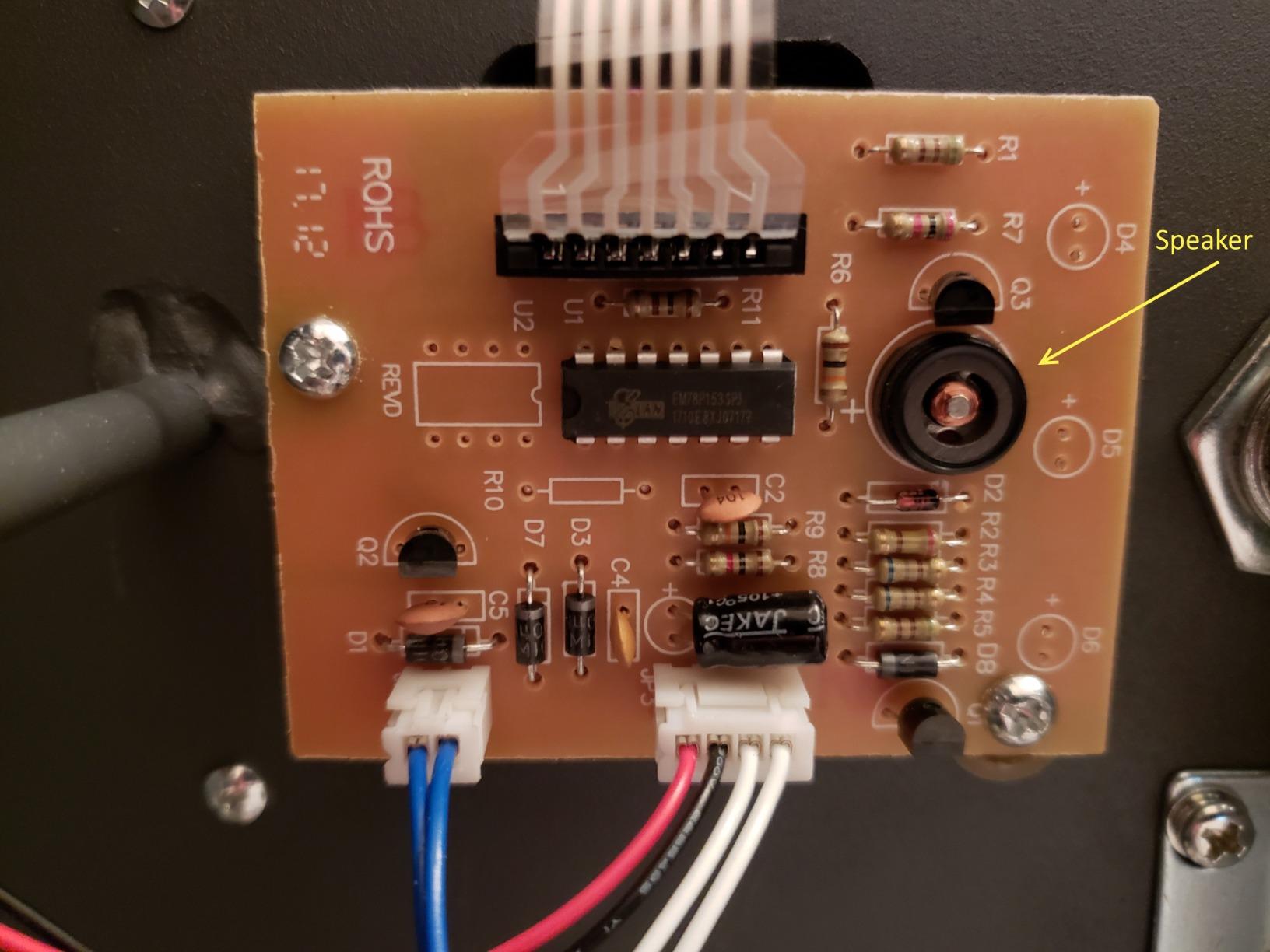
Capacity is 0.83 cubic feet with a 3.8 inch interior width, which is enough for a folder of documents, a couple of passports, a set of car keys, a wallet, and a jewelry roll. Batteries are four AA cells and last roughly four to five months with daily use, which is a reminder to check twice a year rather than never.
The central locking mechanism is the recurring complaint, and it is a fair one. It occupies more of the center than the exterior dimensions suggest, so a folder of letter-size documents fits better than anything bulky. Owners also report that the keypad emits a beep with each button press that cannot be fully disabled, which is a real drawback at 2am in a shared room.
Whether it actually fits your bedroom wall
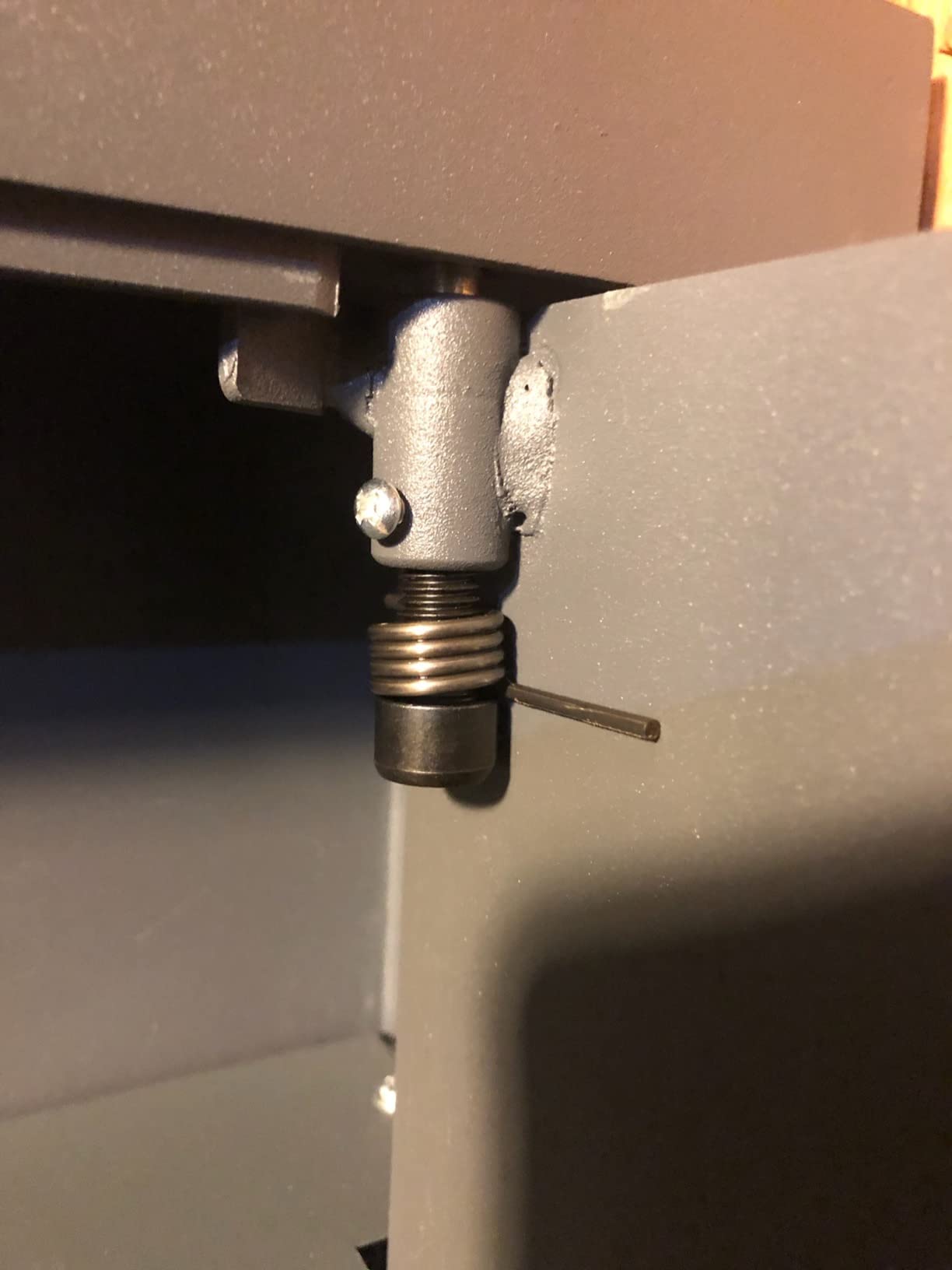
Exterior is 16.25 inches wide by 4 inches deep by 22 inches tall, and it is built for 16 inch on-center studs without trimming. Measure the bay before you buy, because a few units have needed stud modification where the framing was off standard size. Plan drywall cutting with a template and cover the raw cut with the flange.
The white finish suits a bedroom better than black or bare metal, since it takes paint easily and disappears into a light wall.
Where it falls short
There are no instructions in the box, so you are working from a diagram or a video, and the interior lock housing wastes usable space on the middle shelf. There are also isolated reports of keypads failing after a battery change, so keep one of the two manual override keys somewhere sensible rather than in the same drawer as the spare house key.
3. Grimtron Electronic Wall Safe for 16 Inch and 24 Inch Studs
Grimtron Electronic Wall Safe Between 16″ & 24″ Studs with Shelves & Hooks
- Lock does not consume center shelf space
- Silent mode actually works
- Auto-open door with interior LED
- Spacer kit bridges 24 inch studs
- Responsive customer service
- Included screws strip easily
- Over half inch gap each side in a 16 inch bay
- Thin welded door latch steel
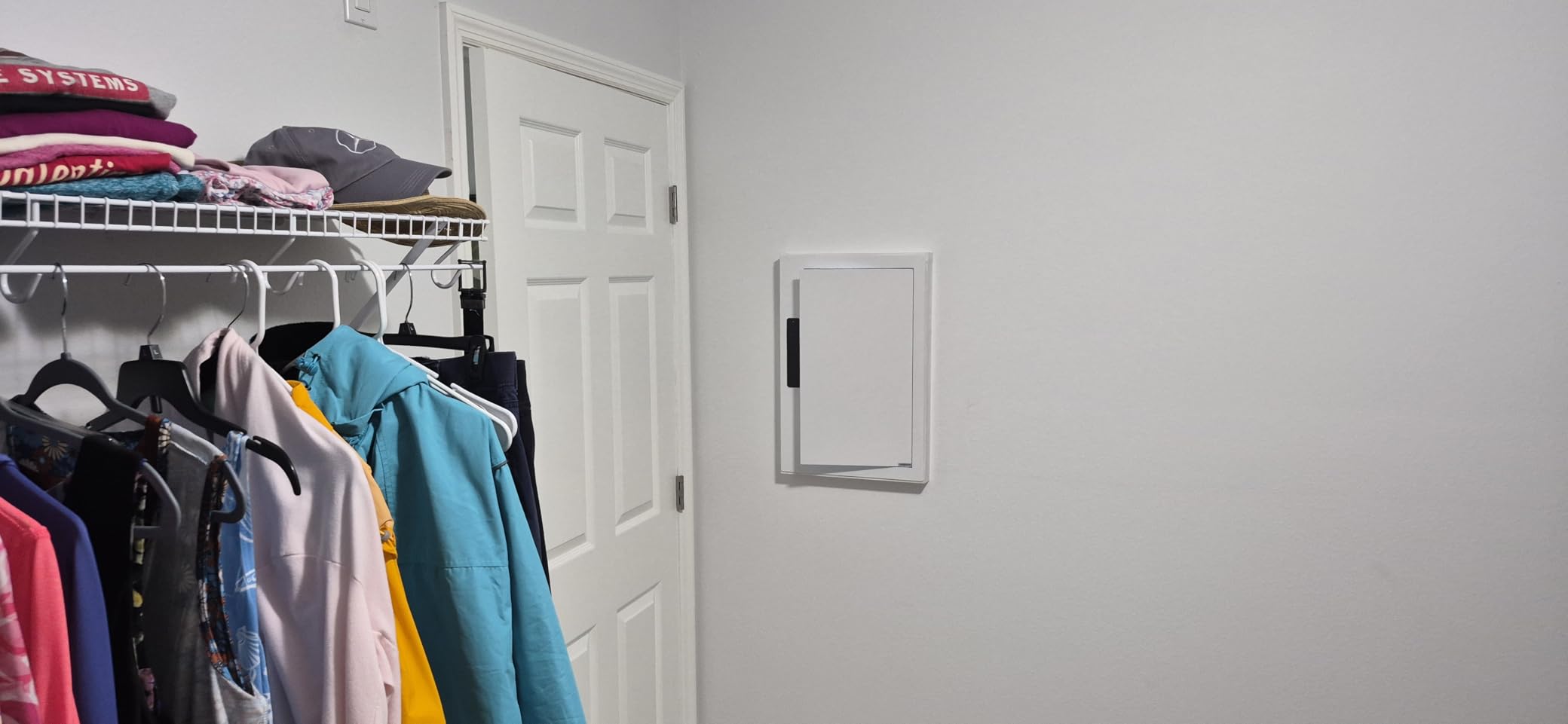
This is the one we recommend if nighttime access is the deciding factor. Multiple owners confirm that the silent mode genuinely silences the keypad rather than just muting it, which almost nobody can say about the competing units in this price range. The auto-opening door and interior LED mean you do not need to touch anything in the dark to find the interior light button.
The other thing that separates it is interior geometry. The lock is positioned so it does not eat the whole center shelf, and several owners call that out as the reason they can actually use the space for more than a single folder. Inside you get two removable shelves and adjustable pegboard hooks, which makes it a reasonable spot for jewelry and small electronics as well as documents.
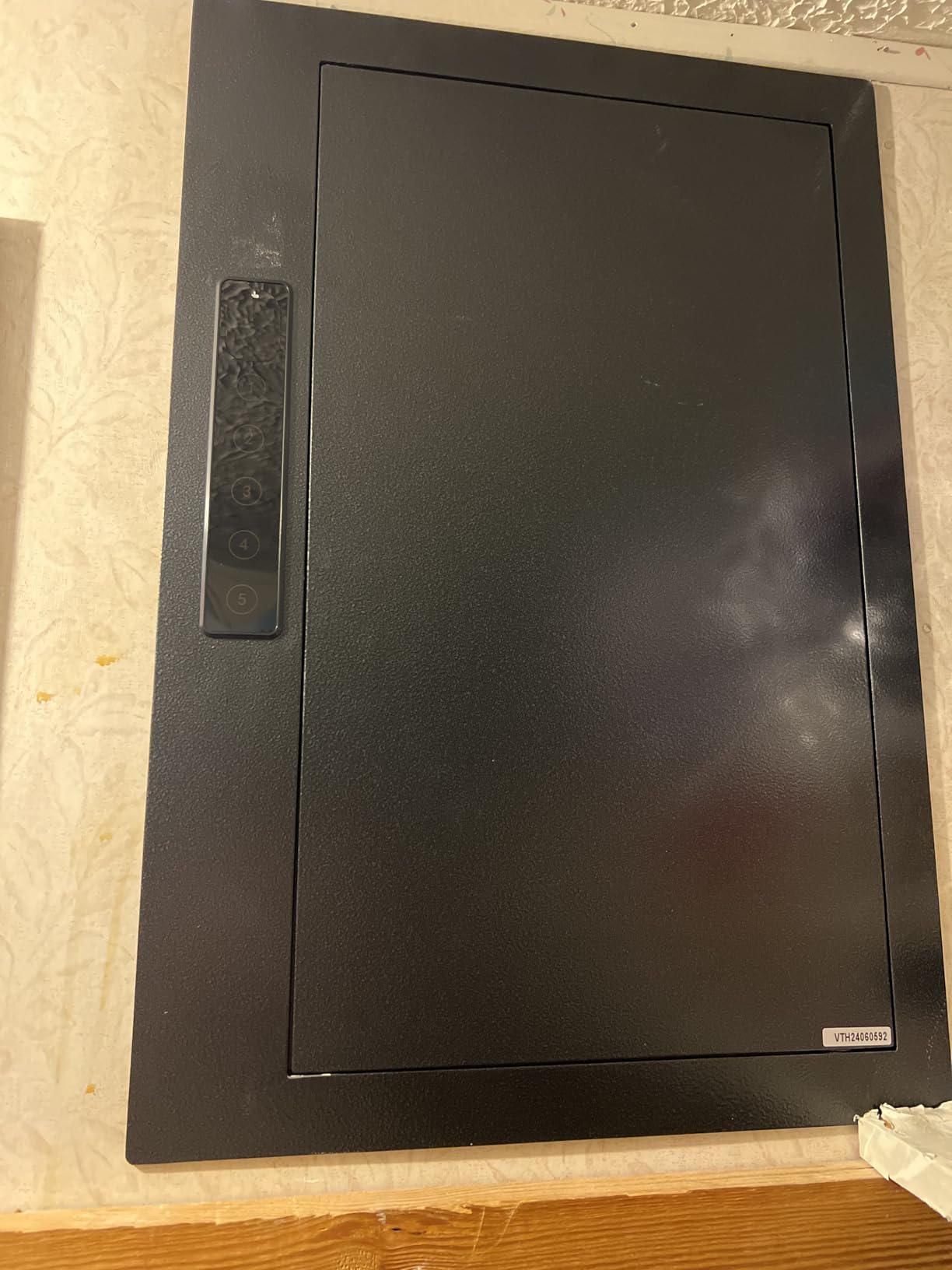
Framing flexibility is unusual. It fits 16 inch on-center studs directly, and the included spacer kit bridges 24 inch centers without you having to reframe. An installation template is in the box, two emergency keys and a USB emergency port cover the dead-battery scenario, and at 25.8 pounds it is manageable for one person.
The negatives are about hardware rather than design. The supplied screws are poor quality and strip easily, and installers consistently recommend substituting lag bolts with large washers. The door latch is thin welded steel that would not survive a crowbar, and the body leaves a little over half an inch of gap on each side in a standard bay.
Whether it is quiet enough for a shared bedroom
Silent mode is the headline here, and it holds up in owner reports. Be aware that the keypad still beeps unless silent mode is switched on, so set it during installation rather than discovering it at midnight. The auto-open door means no lever to hunt for in the dark, and the interior LED handles the rest.
It is also not fireproof, which matters if documents are the main contents. For a bedroom closet in a rental, though, where drilling permission may be limited, it is one of the more practical options here.
Where it falls short
Do not use the included screws. Thin latch steel and strip-prone fasteners are the two consistent complaints, and the pegboard hooks are fixed in place and cannot be repositioned without removing the board. Customer service, though, gets real credit from owners for replacement keys and shelf help.
4. Nebakne 25.6 Inch Tall Fireproof-Style Wall Safe
25.6″ Tall Fireproof Wall Safe Between Studs 16″ Centers | Hidden Wall Safe
- Tall body gives more vertical space
- Flush mount hides behind framed artwork
- Thick steel door with solid bolts
- Hidden lower compartment
- Mounting screws and 2 keys included
- Fire claims not independently verifiable
- Interior depth under 4 inch
- Requires cutting an opening between studs
Height is the story here. At 25.6 inches tall this is one of the tallest in-wall safes in the group, and owners consistently note that the extra vertical room makes it far more usable than shorter units of similar width. Documents, a folder, a small first aid kit, or several small cases all stack where they would not in a 19 inch body.
The build is heavier than the price suggests. A 4cm thick steel door with 2 by 2.2cm solid locking bolts and an all-metal integrated door panel reads as genuinely robust in hand, and the fit between 16 inch on-center studs is flush enough that framed artwork hangs directly over the door with no visible outline.
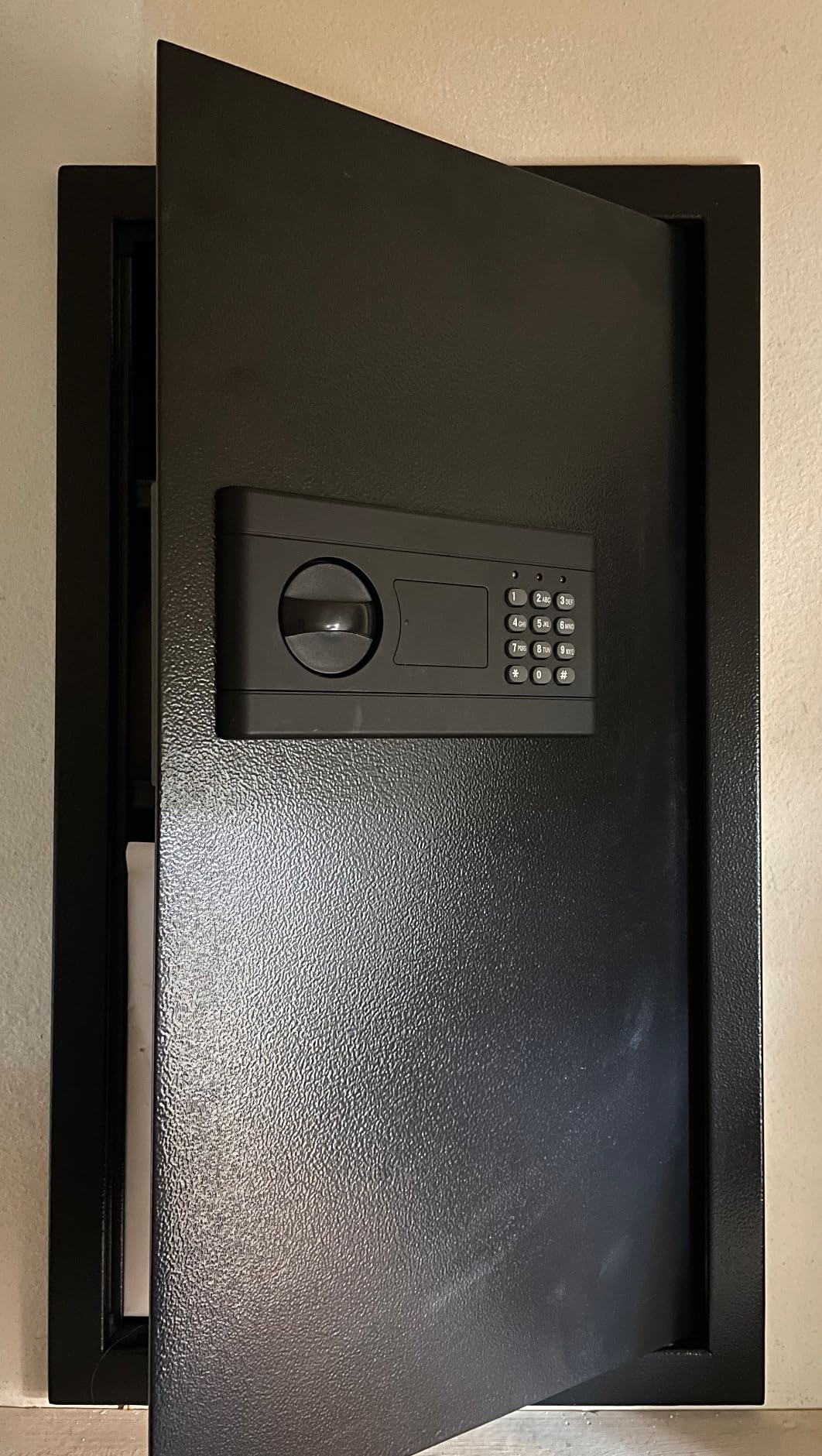
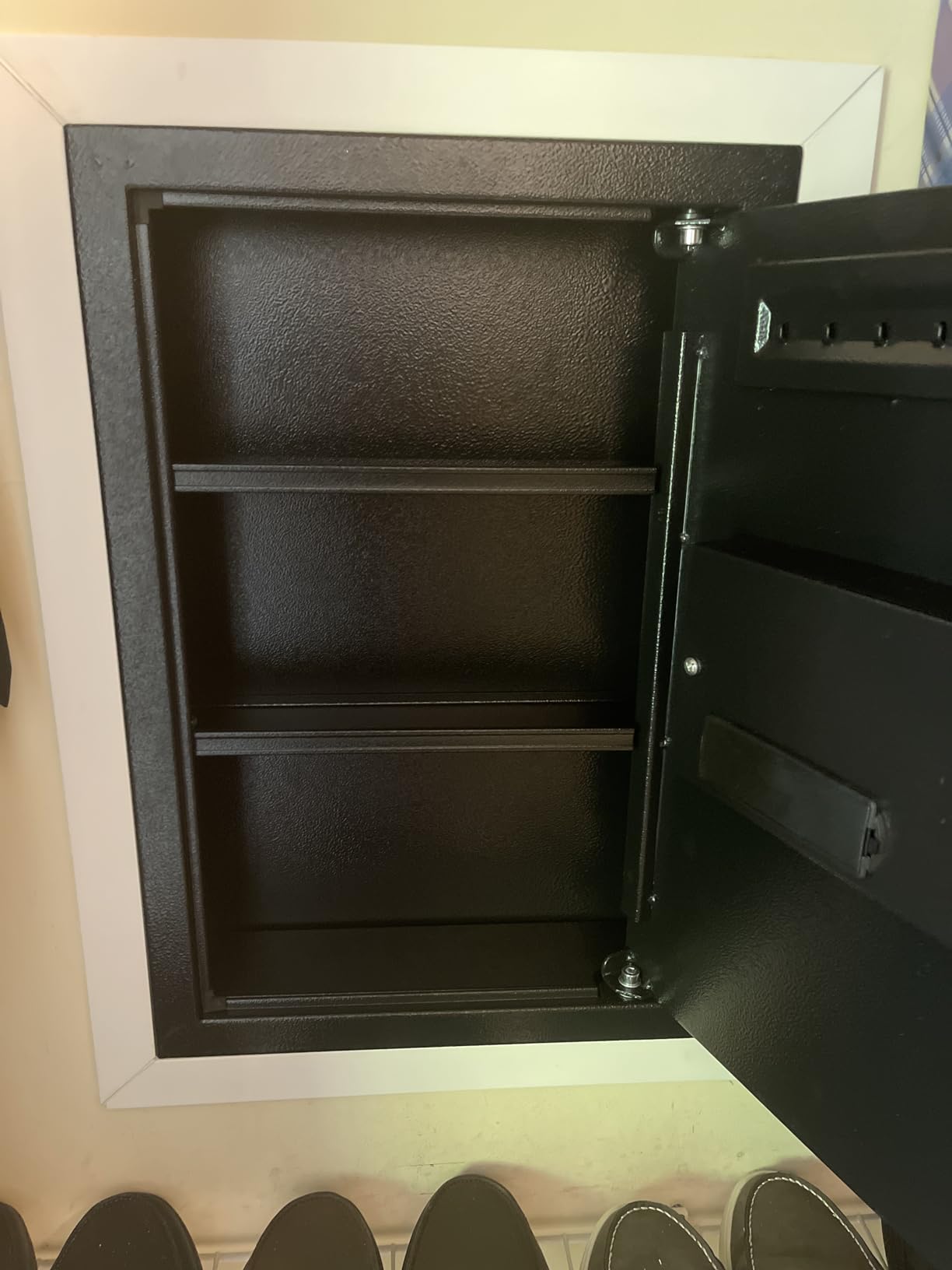
Access is a programmable three to eight digit code with two emergency keys in the box, and over 100 million possible combinations. Inside there is a removable shelf plus a hidden lower compartment, which owners single out as the best part for keeping small valuables away from children without putting them in a locked drawer.
The main caution is the fire claim. The product is marketed as fireproof, but the marketing is not independently verifiable, and it is not a UL-certified label. If your documents are truly irreplaceable, treat it as a theft deterrent rather than a fire container. Interior depth under 4 inches also means nothing large and flat fits comfortably.
Whether the height is worth the shallow depth
For upright items, absolutely. Long jewelry boxes, a rolled document tube, small electronics cases, and stacked pouches all work in a tall narrow box where they would not in a shallow wide one. If you store a laptop flat or a large portfolio, this is the wrong geometry no matter how good the lock is.
At 28.7 pounds it installs solo, but it is a between-studs unit with no surface-mount option, so the cutout is real work.
Where it falls short
Shallow interior depth, unverifiable fire resistance claims, and a small number of units arriving with missing keys or packaging damage. The hidden compartment is also only useful if you set the code differently from anyone who might be in the room.
5. GUVELI 25.6 Inch Tall In-Wall Safe with False Bottom
Fireproof In Wall Safe Between Studs 16″ Centers, 25.6″ Tall Hidden
- Flush mount takes artwork directly
- Installs between studs in about 30 minutes
- False bottom hidden cache
- Two removable shelves and key hooks
- Interior light and key hooks
- Lock box cuts usable depth to 2.5 inch
- Long items will not fit with door closed
- Screws do not match side wall holes
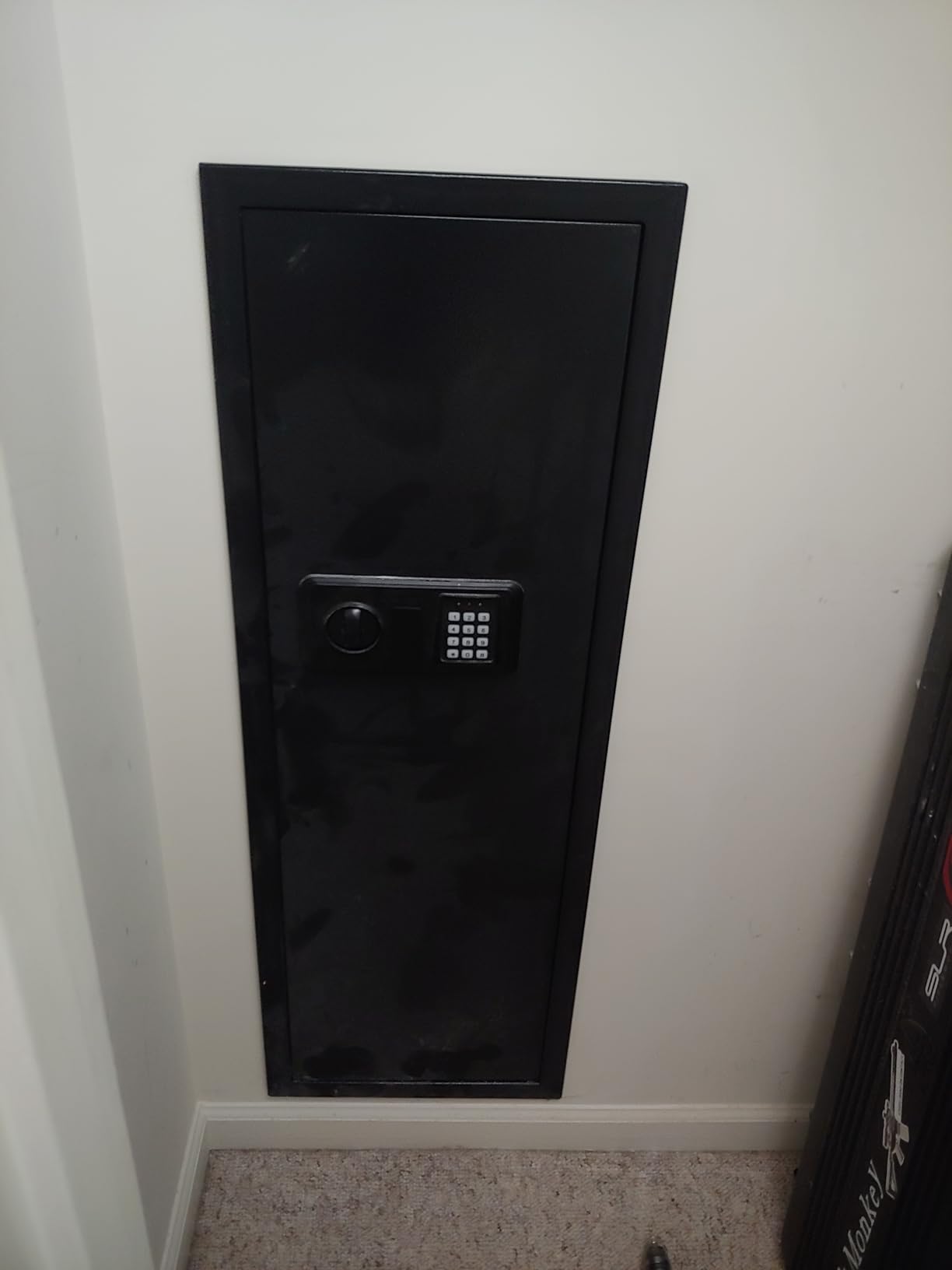
At roughly 50 pounds this is the heaviest safe in the group that still fits a 16 inch stud bay, and that mass is the first thing you notice handling it. The double motorized deadbolt setup is intended to resist both hand and power tool attack, and the powder-coated black finish is scratch resistant enough to disappear behind a frame.
Owners report installing it between studs in about half an hour with the supplied lag bolts, and several mention that it fits a 3.5 inch deep stud cavity with standard drywall. That installation speed matters in a bedroom, because a project that finishes in one evening is a project that actually gets done.
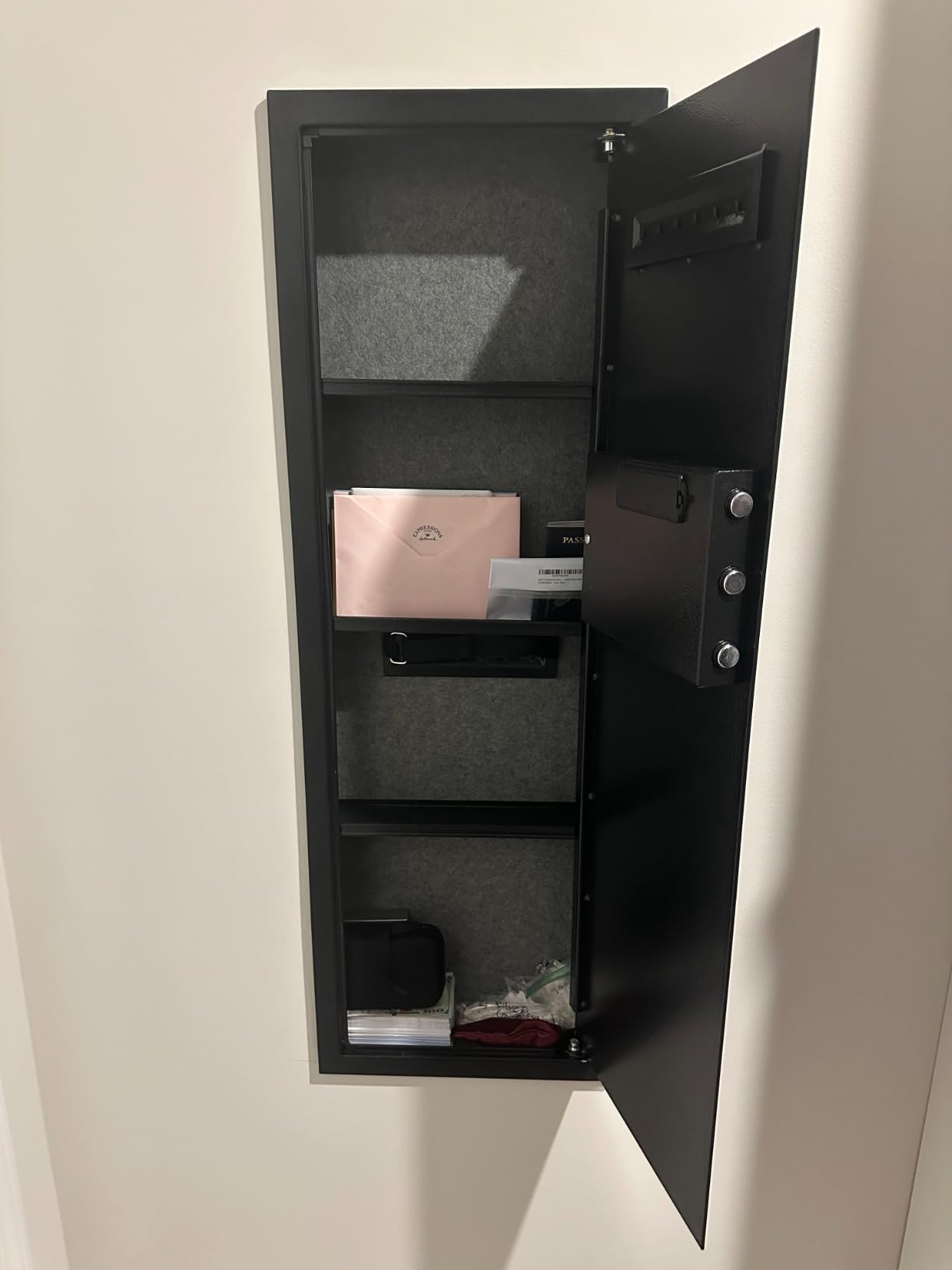
The false bottom compartment is a genuinely clever addition for a bedroom. It is a second layer of concealment for cash and small jewelry that even someone who knows the main code would not immediately find, which is exactly the gap you want in a room where family members have access.
The real problem is depth. The lock mechanism intrudes into the 4 inch wide interior and leaves about 2.5 inches of usable depth, so anything long or rigid simply will not fit with the door fully closed. Removing the shelves helps, but it does not change the geometry.
Whether the false bottom is a real security layer
It is a second layer against casual searching, not against a determined attacker with time and tools. For the realistic bedroom threat, a curious housemate or guest, it is worth real money because it costs nothing at the point of purchase and adds a step nobody thinks to check.
Two removable shelves and door-mounted key hooks add everyday usefulness, and the interior light helps in a dark closet.
Where it falls short
Usable depth after the lock box, poor installation instructions, and included expansion screws that do not match the holes on the side walls. Quality control accounts for most of the low-star reviews, including units arriving repacked with hardware missing.
6. XDeer Biometric Wall Safe with Gas Strut Door
- Reader scans in 0.1 seconds
- Uses standard AAA batteries
- Gas strut door opens quietly
- LED light and silent mode
- Padded interior and clean finish
- Tiny interior fits only a pistol
- Adhesive magazine pouch detaches
- Mounting holes miss 16 inch spacing
This is the fastest fingerprint reader we came across in this group, and in a bedroom that is not a small thing. The module reads in 0.1 seconds at up to 508 DPI, with a false acceptance and false rejection rate under one in ten thousand. The gas strut door then swings open on its own, one-handed, quietly, with no lever to grab in the dark.
It also runs on standard AAA batteries rather than a proprietary lithium-ion pack, which removes the most common long-term complaint about electronic safes. A USB emergency port gives temporary power if the cells die completely, and two spare keys are included for the same scenario.
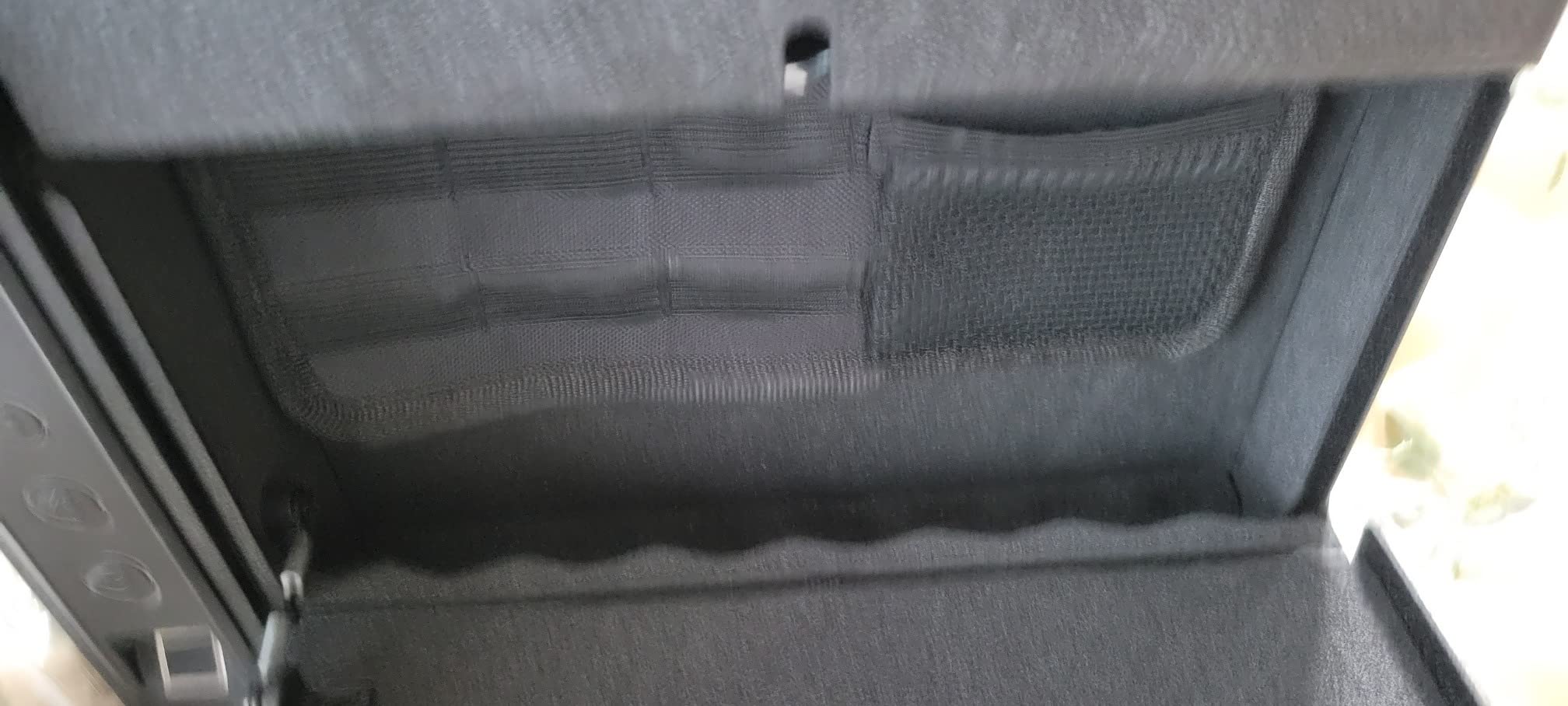
Construction is hardened carbon steel with a 10-gauge layer, a pry-resistant door, and a welded pry-proof body. The padded interior protects a firearm’s finish, the backlit keypad is readable in a dark closet, and both the interior LED and silent mode are standard rather than optional.
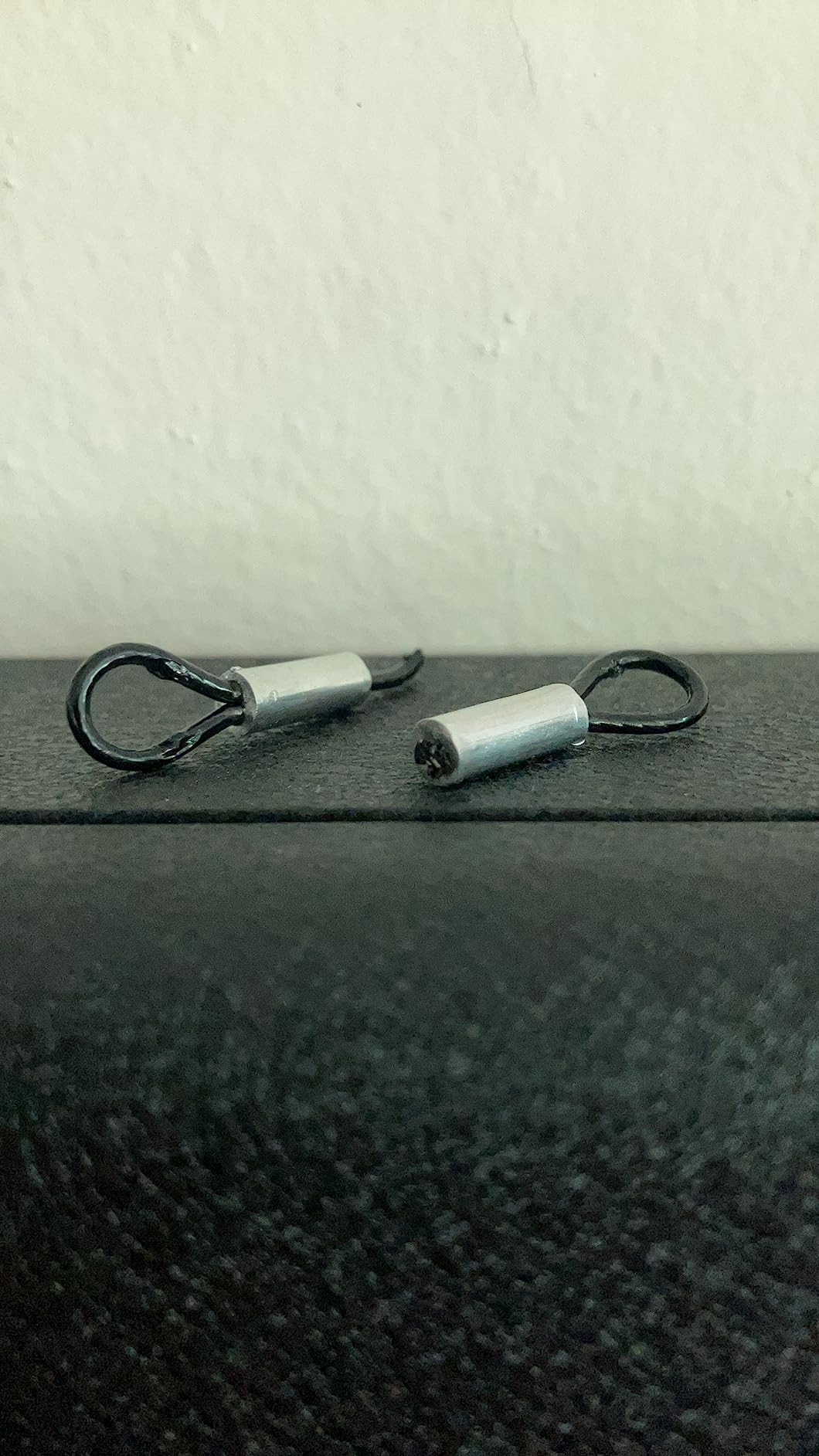
Capacity is the limit. At 0.09 cubic feet, roughly a pistol plus minimal extra magazines fit comfortably, and the adhesive magazine pouch on the back wall repeatedly detaches in owner reports. It is a storage box, not a certified gun safe, and buyers who need certified storage should look elsewhere.
Whether the scan speed changes anything at 3am
It does. The 0.1 second read is the difference between grabbing the safe and giving up and doing something else about the problem. Combine it with the gas strut door and the LED, and you have a safe you will actually use during an emergency rather than one you leave closed.
The caveat is that fingerprint reliability varies by unit, and owners report needing repeated registration and practice. Standard home security forum advice applies: register fingers from both hands, and keep a key nearby.
Where it falls short
The interior is very small, the adhesive pouch is a persistent annoyance, and the mounting hole spacing does not line up with 16 inch stud centers, so drywall anchors alone are not enough. Reinforce the bay before mounting if you care about keeping it in place.
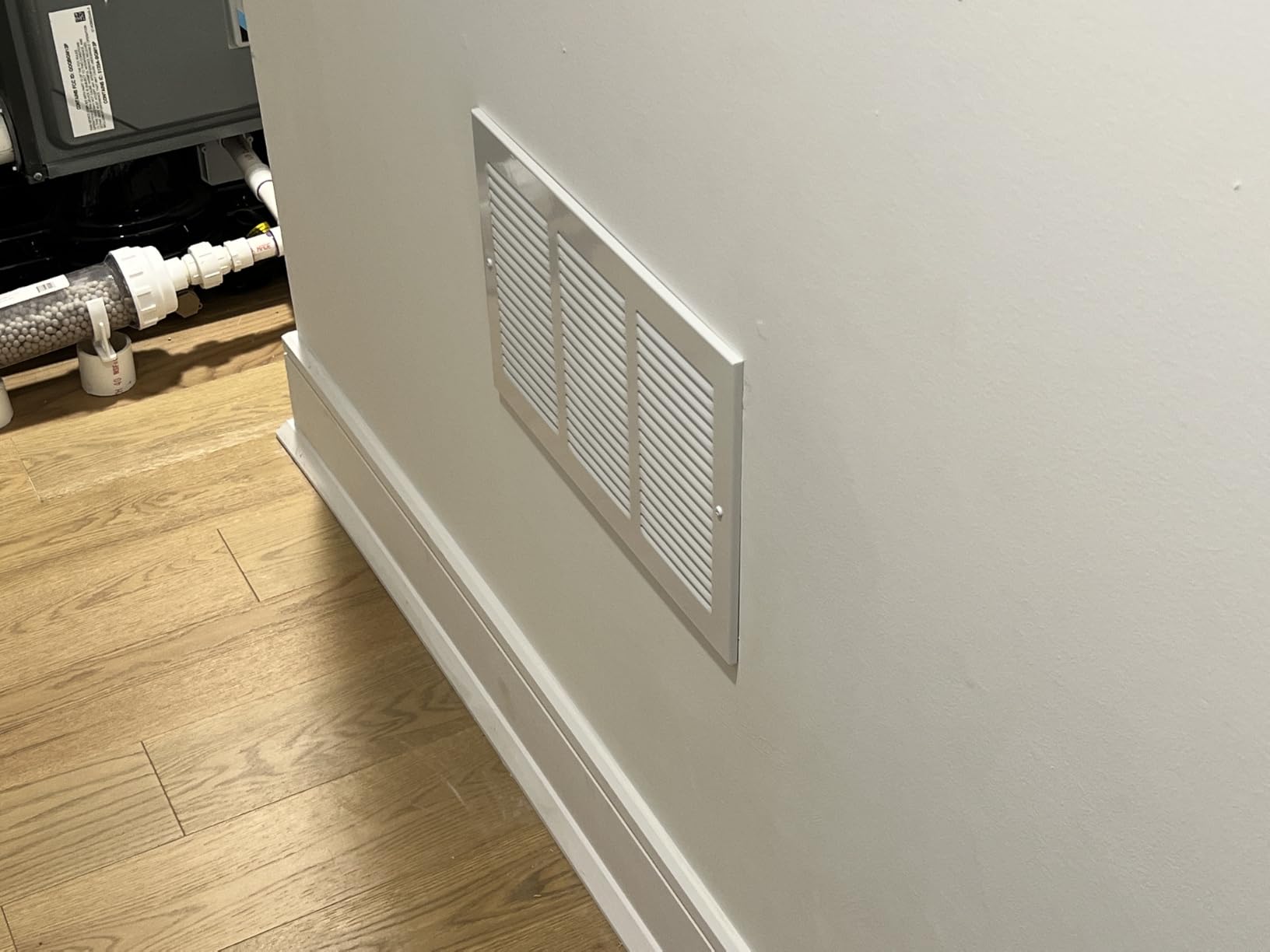
7. Elder Welder Hidden Wall Safe with Air Vent Cover
Elder Welder® Hidden Wall Safe with Air Vent Cover, Combination Lock
- Real vent cover reads as a normal register
- Mechanical lock needs no batteries
- Light enough for solo installation
- Discreet unmarked packaging
- Written and video install guides
- Only 9 inch tall interior
- Not fireproof
- Low mass gives less pry resistance
Concealment is the entire idea here. The face is a real vent register, not a rectangle with a lock on it, so it reads as part of the room. Apartment dwellers in particular like this approach, and the light weight means it can go into a wall without framing help or a second person holding the panel.
The mechanical combination lock removes every failure mode that electronics introduce. There are no batteries to replace, no codes to forget in the morning, and no fingerprint sensor to fail in cold weather or with a dry hand. If it opens, it opens, and the combination can be reset when needed.
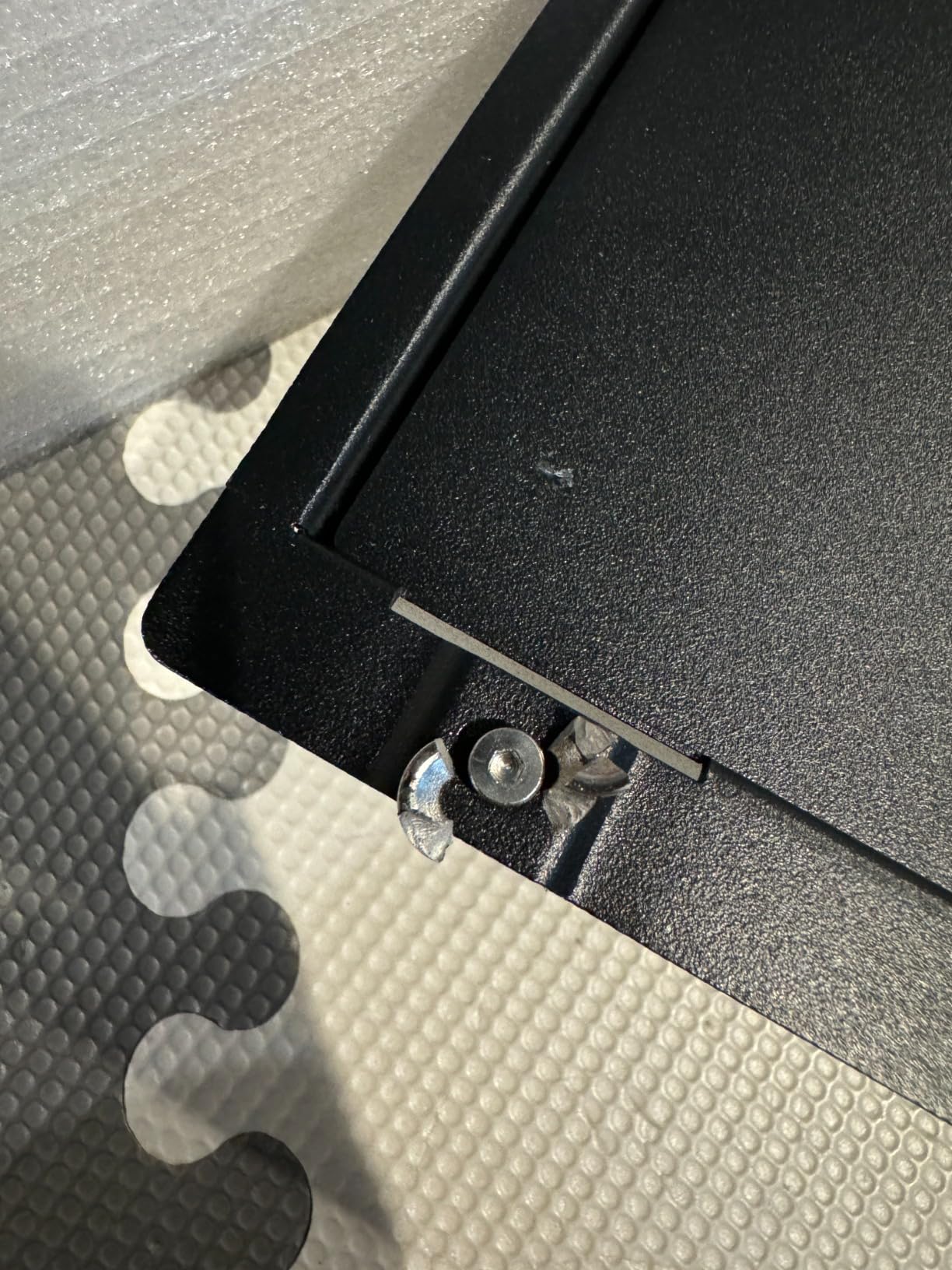
Capacity is over 300 cubic inches, or about 5 liters, which fits documents, passports, cash, or a handgun. The box includes a mounting template, screws for stud fixing, backup keys, and both written and video installation guides. Packaging is discreet and unmarked, which is the point of a diversion safe.
What you give up is size and deterrence. The 9 inch height is the shortest interior in the group, the unit is not fireproof, and at roughly 6 pounds it has the least resistance to prying of anything here. It deters a casual thief and a guest. It is not built to withstand an attack.
Whether vent disguise works in a bedroom
It works best in a room where a wall register is already expected. In a bedroom wall with no other vent nearby, a perfectly installed register is its own kind of oddity, so pairing it with an existing return air grille in a closet wall is the smarter placement. Anywhere it sits, keep the airflow clear so it still reads as a working vent.
For a rental, a surface-mounted diversion safe like this avoids the drywall work entirely. Just remember that surface mounting is visible to anyone who knows what to look for.
Where it falls short
The low height limits what you can store, resetting the combination takes care, and the light mass means less resistance to prying than a full steel wall safe. Treat it as a very good hiding place rather than a very strong box.
8. PJJSZST Biometric Hidden Gun Safe for Two Pistols
Biometric Hidden Gun Safe fits 2 pistols,Quick Access Wall Gun Safe
- Decorative front reads as wall art
- Holds two full size pistols and magazines
- Unlimited fingerprint storage
- Solid metal and glass at 13.7 lbs
- Bubble level and hardware included
- Fingerprint reads take 3 to 5 seconds
- Glass front shows fingerprints
- One side screw can be stuck in place
This is the lowest-rated product here, and the reason is speed rather than security. The fingerprint lock works most of the time, but owner reports put read times at three to five seconds. In a bedroom at night, that is long enough that you would learn to avoid reaching for it in a hurry, which defeats a large part of the point.
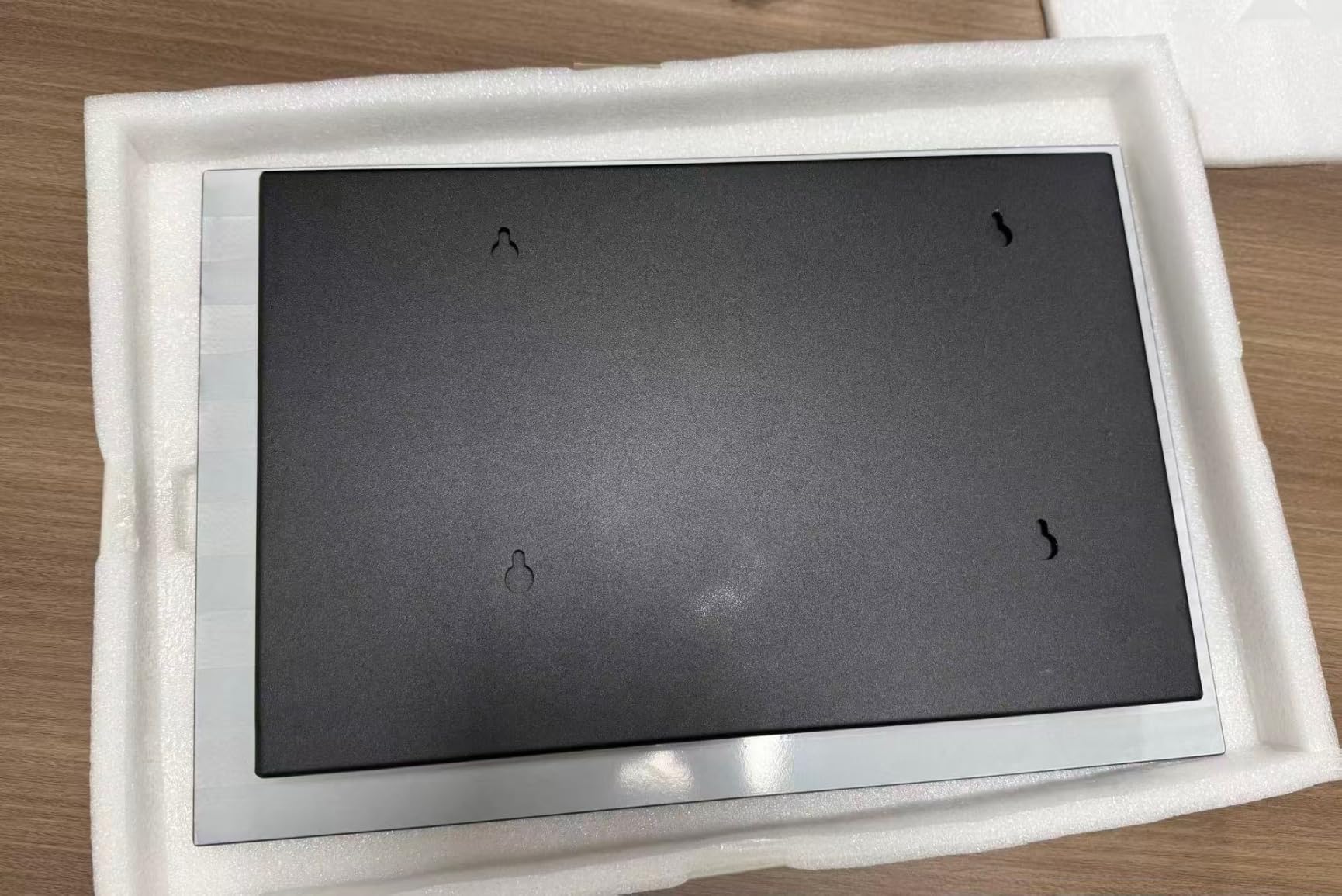
What it does offer is capacity. It holds two standard-size handguns plus two additional magazines up to 13.8 inches long and 8.7 inches wide, with a movable pistol bracket and a side-opening door. The decorative front reads as wall art rather than as a safe, and there are several front options including a custom photo version.
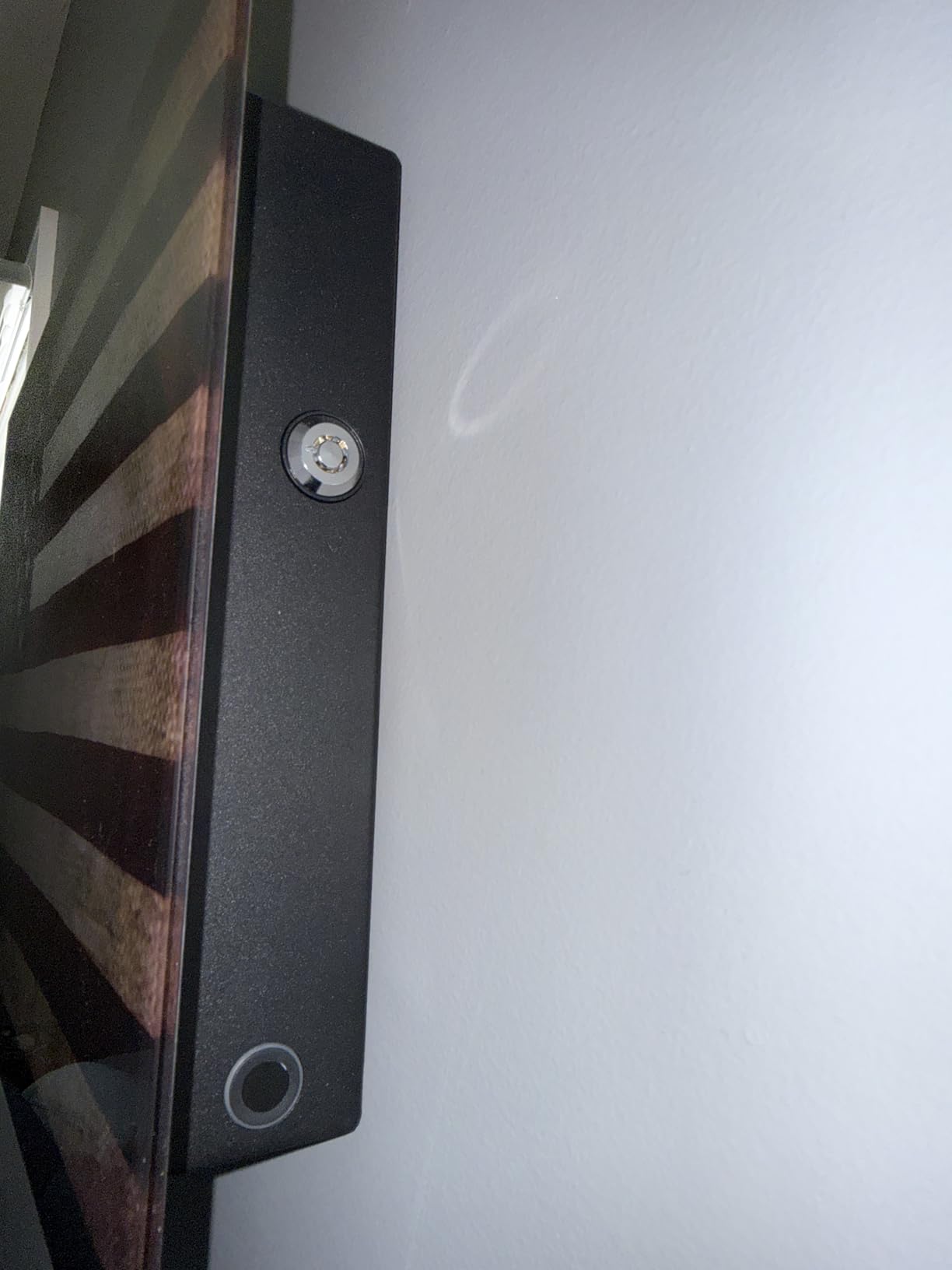
Fingerprint enrollment is unlimited rather than capped, and two keys are included as backup, so you are not locked out when the reader is slow. The tempered glass front over a solid metal frame feels heavier than 13.7 pounds suggests, and a bubble level is included for alignment, which is more thought than most safe makers give you.
Real drawbacks: the glass shows fingerprints every time it closes, one side screw has a reputation for being stuck or glued in place and resisting removal, and the internal magazine holder and bracket can be awkward to mount. The door also needs extra force to close fully.
Whether slow biometrics matter for a bedside safe
For anything except genuine emergency use, three to five seconds is tolerable. If this is a primary defense safe, it is not fast enough, and a key is going to become your normal entry method anyway. Fingerprint marks on the front glass are also a subtle tell for anyone who looks closely at your decor.
The moveable bracket is worth adjusting during installation so the muzzle points down and the grip clears the door frame, which is a detail that matters more than it sounds.
Where it falls short
Slow reads, visible fingerprints on glass, and small assembly defects including a stuck side screw and springs falling out of the magazine holder. There is also a noticeable share of one-star reports, which is why this sits near the bottom of the list despite decent capacity.
9. KornerBatl Small Hidden In-Wall Safe with Key Lock
KornerBatl Small Hidden In Wall Safe Between 16″ & 24″ Studs, White
- No batteries or codes to maintain
- Thick steel like a hotel room safe
- 12.8 lbs installs solo in under 30 minutes
- Spacer kit for 24 inch studs
- Built-in pegboard with hooks
- Key turns in one direction only
- Lock body reduces space for rigid items
- Not fireproof
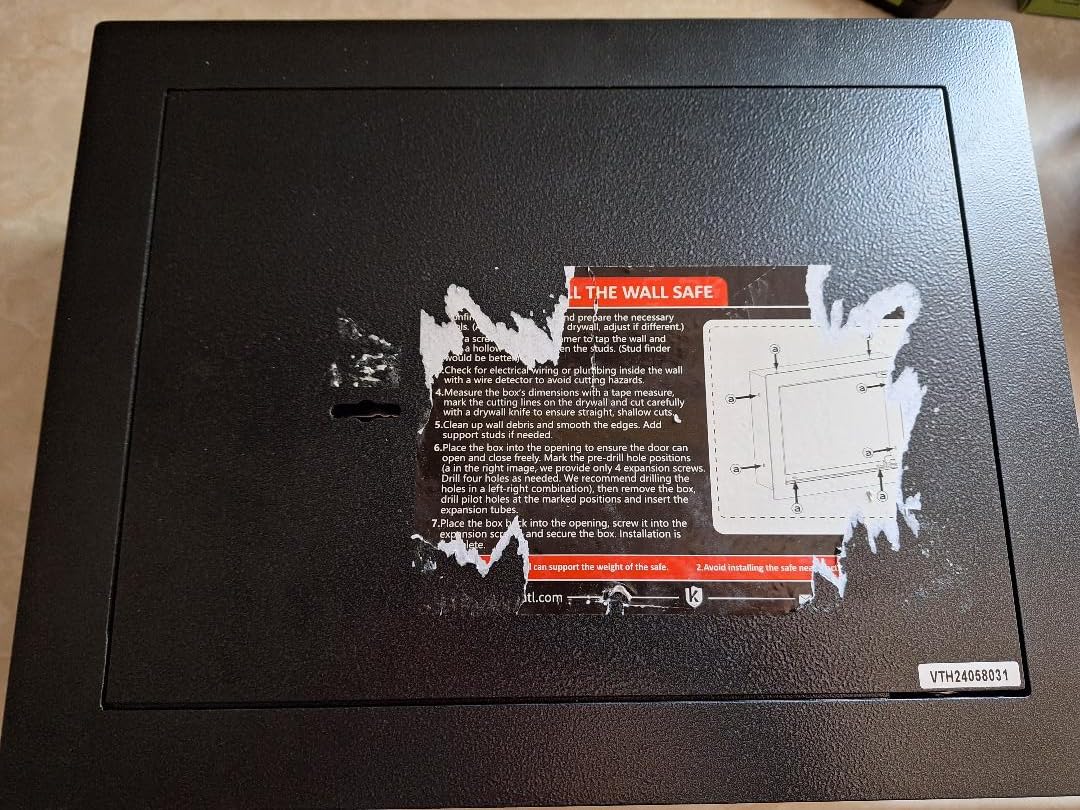
The simplest reliable answer in the group. It has a mechanical key lock, pry-resistant locking bolts and a double-bar lock, and no electronics whatsoever. Owners frequently compare the feel to a hotel room safe, which is a reasonable benchmark for something at this weight with this much solid steel.
At 12.8 pounds with pre-drilled mounting holes, it is a genuine one-person job, and owners report finishing in under half an hour. A spacer kit is included so it works at 24 inch on-center studs as well as 16 inch, and inside there is a built-in pegboard with removable hooks for jewelry, passports, cards, and medication.
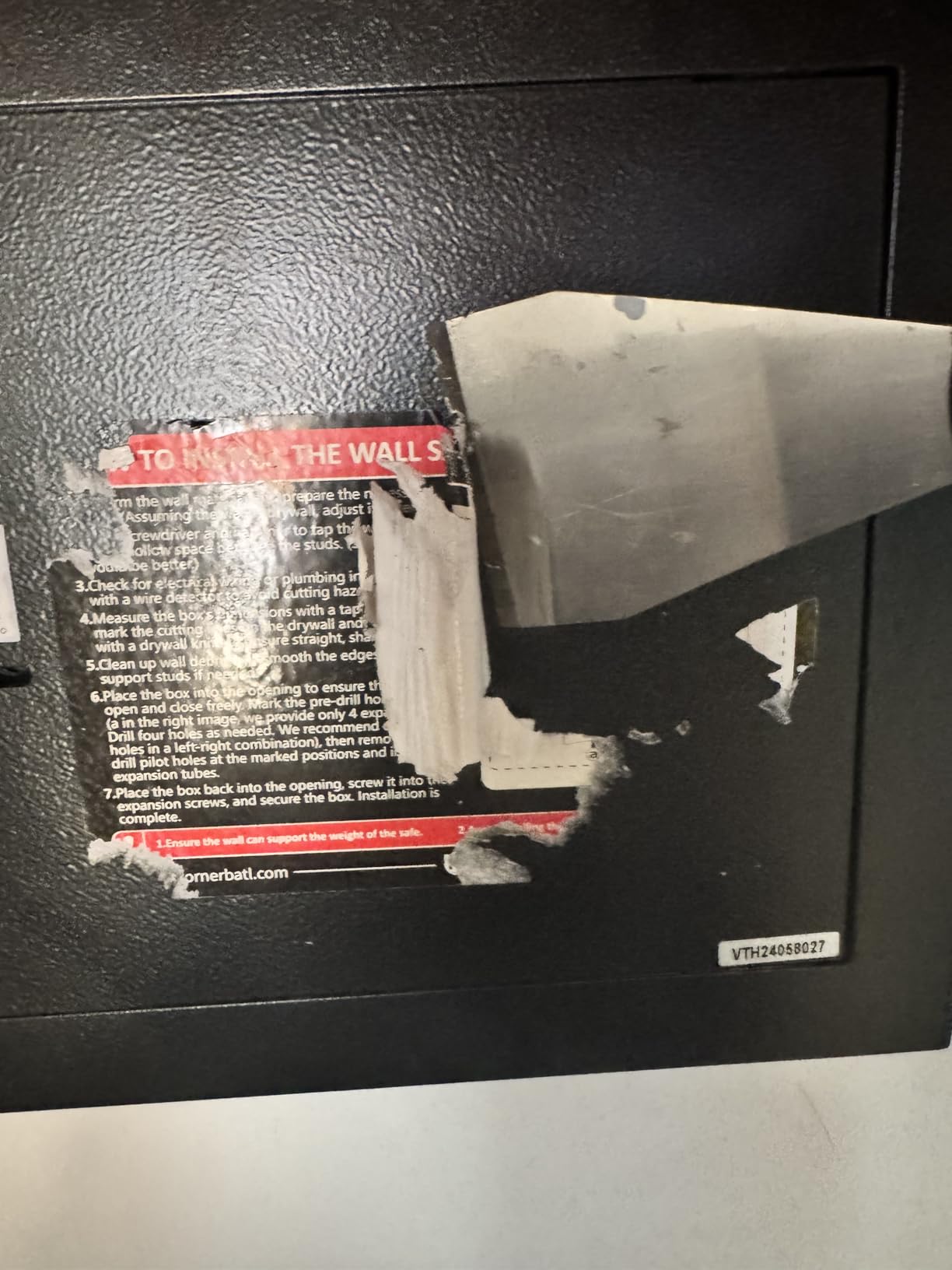
Interior measures 13.29 by 10.14 by 3.87 inches, or 580 cubic inches, which is a sensible amount for a bedroom nightstand equivalent. The front frame is 14.96 by 11.42 inches and the body recesses behind it, so a frame or mirror hung over the door hides it completely once the wall is painted.
The limitations are honest but minor. The key turns in one direction only, which some owners find awkward, the lock body reduces space for rigid items, and the door swing is fixed to one side, which a few buyers work around by mounting the unit inverted.
Whether a key lock is the right call in a bedroom
For many people, yes. There is no battery to forget, no code to fail at midnight, and nothing to stop working while the safe sits unused for a year. The failure mode is losing the key, and the answer is a second key kept somewhere other than the bedroom, or in a lockbox on your phone.
It is also the easiest safe in the group to install quietly, which means less dust, less noise, and fewer people in the bedroom during the project.
Where it falls short
Not fireproof, no electronic or fingerprint access on this variant, and the lock body eats into interior space for anything rigid. If you need fast fingerprint entry, this is the wrong pick. If you need something that works in five years without attention, it is hard to beat.
10. LANGGER V Biometric In-Wall Safe with Keypad and Key Access
- Three redundant access methods
- 6-button backlit keypad
- Welded carbon steel body with thick hinges
- Two removable shelves plus USB port
- Silent mode for discreet access
- Right-side door swing only
- Biometric and keypad performance varies
- Needs a precise 20.9 by 13.8 by 4 inch cutout
The specification sheet here is the most security-focused of the group. An 11-gauge steel pry-resistant door, a double-layer carbon steel wall, thick metal hinges, and a seamlessly welded pry-proof body at 23.8 pounds is a real construction description, not marketing language.
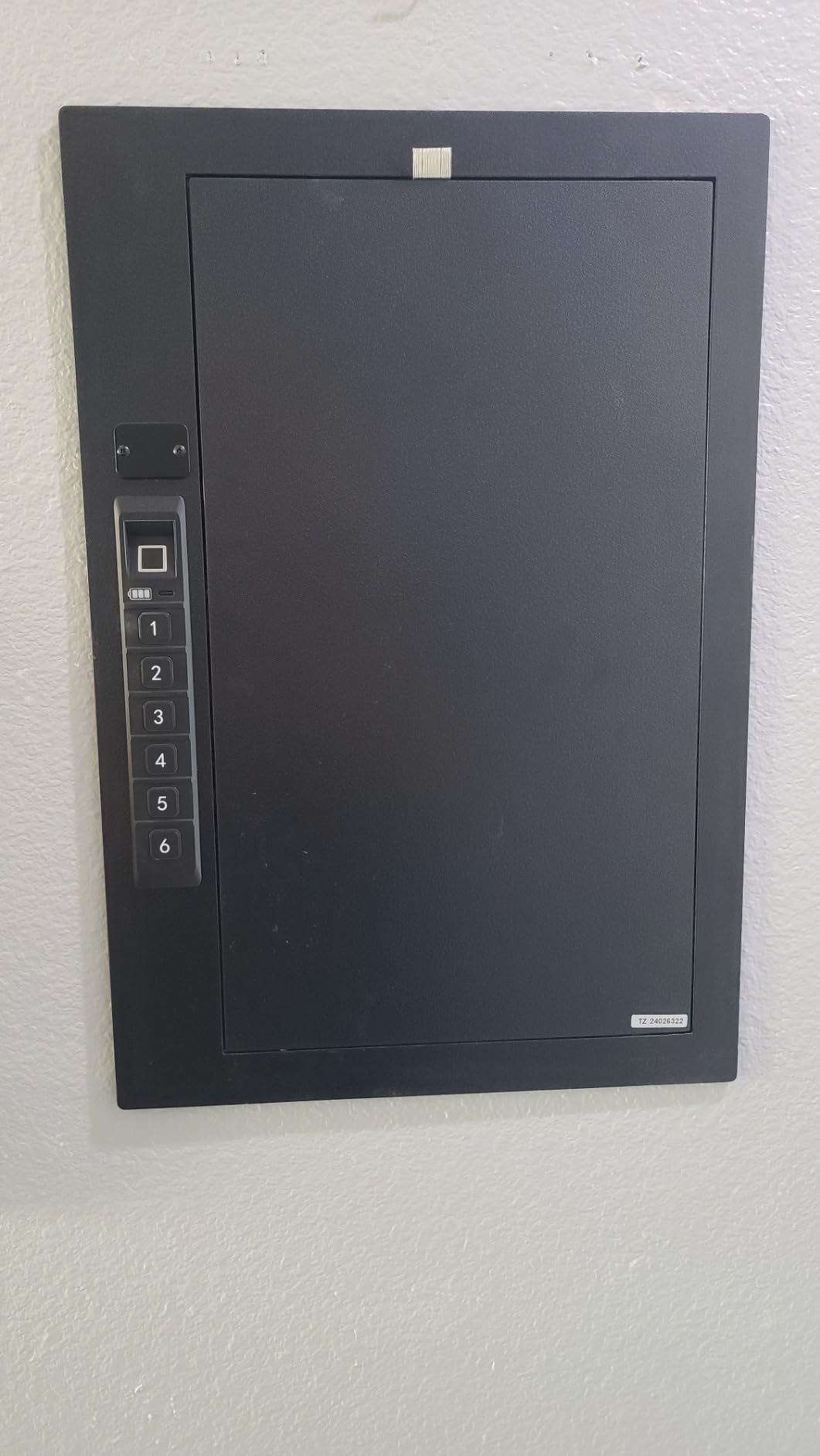
Access is triple redundant: a semiconductor biometric scanner, a backlit six-button keypad, and two emergency keys. The six-button keypad is harder to work through than the four-button layout common on cheaper models, and a USB emergency port covers the dead-battery case without needing the keys.
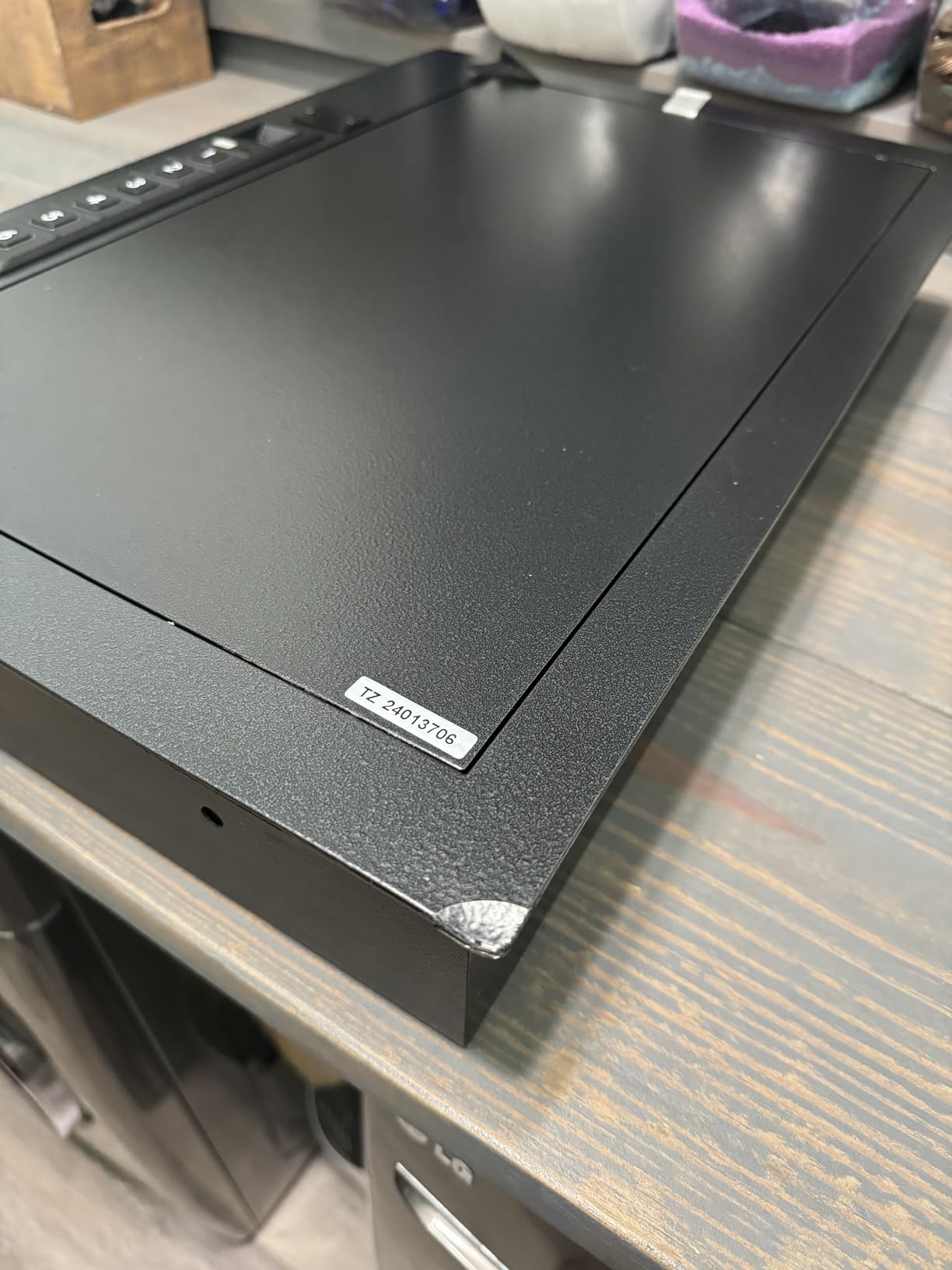
Two shelves can be removed to make room for larger items, and a silent or beep-off mode keeps entry discreet. Owners who have installed it report simple setup with pre-drilled holes, and the first-person impression of the unit is solid rather than tinny.
The biggest practical issue is the required wall opening of 20.9 by 13.8 by 4 inches. It has to be measured precisely before you cut, because this is not a forgiving tolerance. Review volume is also modest for the price, which limits the long-term reliability evidence you get from owner reports.
Whether redundant access solves the lockout problem
It mostly does. Three independent methods means a failed fingerprint, a forgotten PIN, or dead batteries each have a fallback, and none of the three depend on the others. That is the single most common reason owners recommend fingerprint safes with caution in the first place.
Between units, biometric and keypad performance varies, so treat the fingerprint as a convenience rather than the primary method for the first few weeks.
Where it falls short
The door swings one way only, the cutout must be exact, and the limited review base means you are trusting the spec sheet more than the long-term owner record. For a bedroom closet where a precise cut is easy, it is a strong pick.
How to Install a Wall Safe in a Bedroom?
Every safe on this list is a between-studs unit, which means the job is the same each time. The only variable is whether your framing gives you enough depth, and that is a ten-minute check you should do before you buy anything.
Start by locating the studs with a stud finder and confirming spacing. Standard framing is 16 inch on center, and that gives a roughly 14.5 inch clear bay once stud widths are accounted for. If your studs are 24 inches on center, you need either a spacer kit or new framing, and the Grimtron and KornerBatl both include a kit for it.
Next, check depth. A 4 inch deep safe needs a wall built with at least 2×6 framing or a furring strip added. In a 2×4 wall, a 4 inch unit is tight to impossible, and this is the single most common reason bedroom installations fail.
Then check the location itself. A closet wall is usually deeper, further from foot traffic, and often already partially finished, which makes it the best bedroom location. Hallway walls carry more foot traffic and are the first place a burglar looks. Bedside walls are convenient but exposed to anyone who enters the room.
Cut the opening from the template, keep the cut square to the studs, and secure the safe with lag screws into the studs and large washers to resist shear, not just screws into drywall. Anything drywall-anchored can eventually be pulled out of the wall. If you are working around electrical wiring or a shared wall, shut off the circuit and check before you cut.
Finally, consider humidity. Bedroom closets in older homes can hold moisture that will damage paper and tarnish metal. A desiccant packet inside, checked every month or two, costs almost nothing and prevents the problem. The same care applies to any wall cavity in a home where you run the safe for firearms rather than paper.
If you are doing a broader bedroom upgrade, the same wall cavity work is a good moment to consider the rest of the room’s electrical planning, and our guide on powering a device safely from a wall adapter covers the electrical details that people usually skip.
What to Look for in a Wall Safe for Bedrooms
The buying decision for a bedroom comes down to four questions: does it fit the bay, can you open it quietly in the dark, is there a way in when the primary method fails, and is it mounted well enough to survive someone pulling on the door.
Stud fit and mounting depth
This is the first filter and the one that ends most projects. Measure the clear width between studs and the cavity depth before ordering, not after. Units listed for 16 inch on-center studs are the safe default, and anything described as fitting 24 inch centers either includes a spacer or expects you to frame. A unit with pre-drilled mounting holes and lag bolts included will save an evening.
Lock type and what happens when it fails
Mechanical key locks never fail. Electronic keypads add convenience and a guest code option, and add a battery to maintain. Biometric scanners add genuine speed, particularly the 0.1 second readers, but introduce the failure mode of a dirty or cold finger. The practical answer for a bedroom is redundancy: a fingerprint or keypad primary, a PIN secondary, and a mechanical key as the final fallback. Never pick a biometric unit with no key override unless you accept a lockout.
Noise, interior light, and sleep disruption
A beeping keypad in a shared bedroom is a genuine problem, and owners call it out repeatedly. Silent mode that actually works is rarer than the spec sheets imply, so look for confirmation in reviews rather than in the feature list. A built-in interior LED removes the need to find a separate light, and an auto-opening door avoids fumbling for a handle in the dark. Both matter more in a bedroom than in any other room.
Fire rating and whether the claim is real
Most inexpensive in-wall safes in this category are not UL certified for fire, and the marketing language often blurs fire-resistant with fireproof. A genuine UL listing, tested at 350 degrees for a stated duration, is the only version of the claim that means anything. Several products here describe themselves as fireproof without a verifiable certification, and owners rightly question it. If your contents are paper documents or heirlooms you cannot replace, treat that gap seriously.
Child safety and household access
In a bedroom with kids, the safe is often holding the items you least want discovered. Two things help. A penalty lockout after failed attempts stops a child from cycling through codes, and a hidden compartment or false bottom keeps small valuables out of the main cavity. Biometric-only access with no key override is the strongest option against a determined child, since there is nothing to guess.
Capacity that matches the contents
Exterior dimensions overstate interior space because the lock housing eats into it, sometimes significantly. Check the interior dimensions, not the exterior, and remember the constraint is depth as much as width. A tall narrow unit like the Nebakne holds upright documents well and flat objects badly. If you are storing a laptop, a portfolio, or a large folder, prioritize interior depth over height.
Where the room itself helps
A bedroom safe is only part of a larger picture, and lighting and layout affect how usable it is. Our guide to lift chairs with USB ports for bedrooms covers the same overlap between comfort and connectivity that makes a bedroom function better. The point for safes is simple: a safe you cannot comfortably reach at night is a safe you will not use, and the one you will not use is the one that fails you.
Frequently Asked Questions
What are the best safes for bedrooms?
The best wall safes for bedrooms combine a flush between-studs fit, quiet entry, and interior lighting. The Viking VS-52BLX leads for fingerprint speed, silent mode, and a built-in LED. The Grimtron is a strong alternative when silent keypad entry and an auto-open door matter most. The Paragon model is the most proven option by review volume, and the KornerBatl is the simplest if you want a key lock with no electronics to maintain.
Which wall safe is the most secure?
Security comes from steel thickness, door construction, and the locking hardware rather than the access method. In this group the LANGGER V offers an 11-gauge pry-resistant door over a welded carbon steel body, and the Viking VS-52BLX pairs a 5mm steel door with a motor-driven 20mm deadbolt. Mounting matters as much as the safe: lag screws into the studs with large washers, never drywall anchors alone.
What are the disadvantages of wall safes?
The main drawbacks are installation effort, depth limits, and access risk. Cutting a proper opening between studs is real work, and 2×4 walls may not have the depth for deeper units. Interior space is smaller than exterior dimensions suggest because the lock housing intrudes. Electronic and biometric models add batteries and the risk of a lockout, and most units in this category carry no verifiable fire certification.
Can a wall safe be installed in an apartment bedroom?
Yes, with permission. An in-wall safe requires cutting drywall, so you need the landlord or property manager’s approval and the work should be done by a licensed contractor where required. For a rental where modification is not allowed, a surface-mounted diversion safe disguised as an air vent register is the most discreet option, and it needs no cutting at all.
Are wall safes fireproof?
Most in-wall safes in this price range are not, despite marketing language. A real fire rating means a UL certification tested at 350 degrees for a stated duration, and none of the products here carry that listing. Treat them as theft protection. For documents that cannot be replaced, keep a separate fireproof document bag or an insured storage option as a second layer.
Final Verdict for Bedroom Wall Safes in 2026
After working through ten options, the Viking VS-52BLX is the one we would put in a bedroom. It is the only safe in the group that combines a genuinely fast 500 DPI fingerprint reader, a silent mode that owners confirm works, a built-in interior LED, and three independent ways in. The 5mm steel door and motor-driven 20mm deadbolt back up the access side, and fingerprint memory survives battery changes so a dead cell is not a lockout.
The right alternatives are specific rather than vague. Choose the Grimtron when quiet entry matters more than lock strength. Choose the Paragon when you want the most proven design and can live with a beeping keypad. Choose the KornerBatl when you want a key, no batteries, and an install you can finish in half an hour.
Whichever you pick, measure the bay first, mount it into studs rather than drywall, and hang something over the door. That last step is what turns a safe into a hidden wall safe, and it costs the least of anything on this list.