
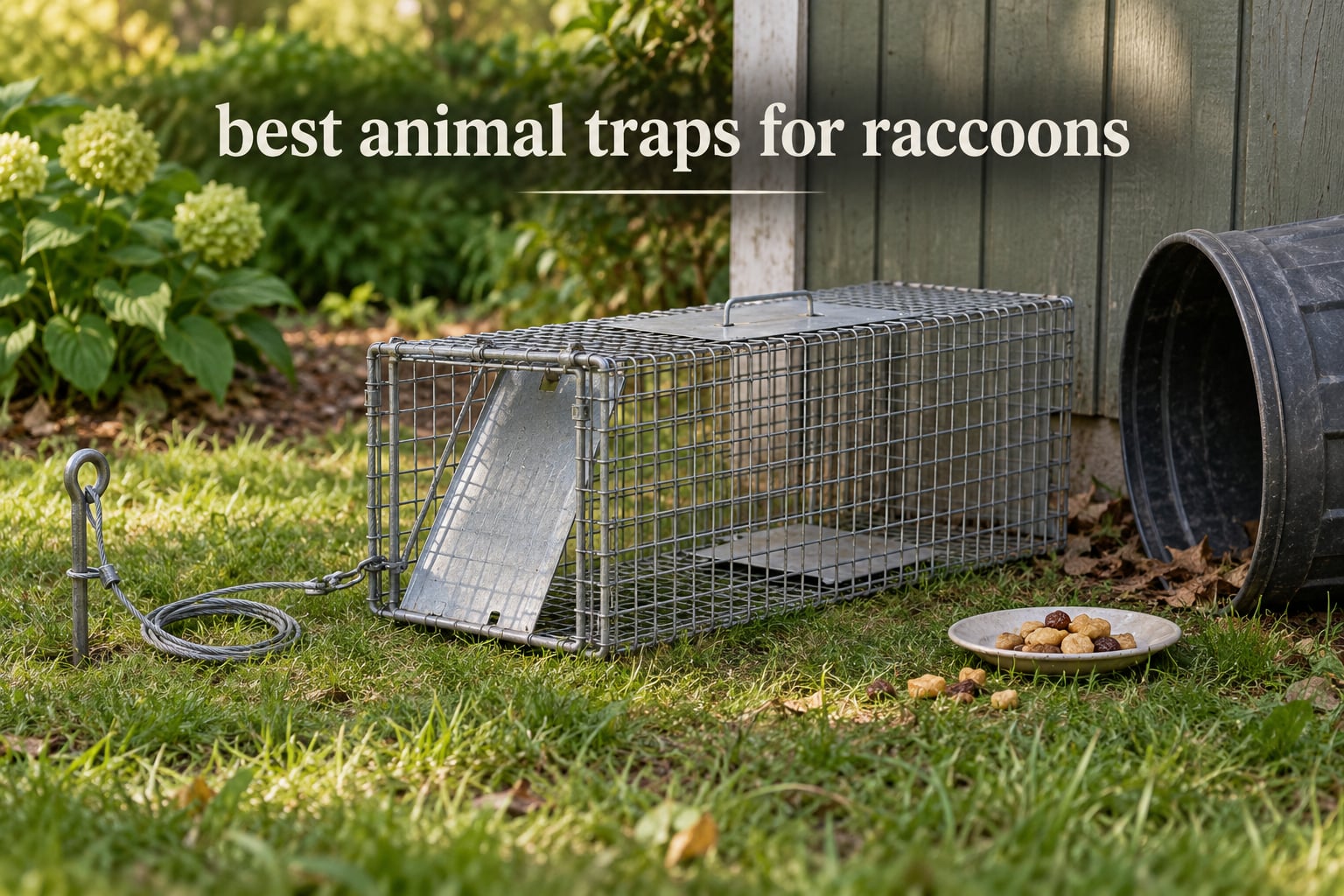
The best animal traps for raccoons are humane live cage traps in the 32 to 36 inch class, built from galvanized steel mesh with a spring or gravity door that closes behind a raccoon and holds it for catch-and-release removal. For most homeowners dealing with trash raiding, roof entry or garden damage, a single-door Havahart-style cage is the proven default.
That answer matters because a raccoon problem rarely solves itself. One pair of adults can open a trash lid, den in an attic or crawlspace, and take poultry, koi and pet food along the way. Raccoons also carry rabies and roundworm, so removal is a public-health question as much as a property question.
We spent weeks going through owner feedback on ten widely used traps, comparing cage dimensions, wire construction, trigger sensitivity, non-target catch risk and how each one handles a furious 20-pound animal. What follows covers the ten traps we would actually consider buying in 2026, plus the baiting, anchoring and legal details that decide whether a catch actually happens.
Two rules come before the picks. Check the trap every single day, without exception, because an animal left in a cage in warm weather can dehydrate fast. And confirm your local trapping and relocation rules before you set anything, since permit requirements and legal release distances vary widely by state, county and municipality.
Table of Contents
Top 3 Picks for the Best Animal Traps for Raccoons (October 2026)

Best Animal Traps for Raccoons at a Glance in 2026
| Product | Specifications | Action |
|---|---|---|
| Havahart Large 1-Door Live Trap |
|
Check Latest Price |
 Faicuk Large Collapsible 32 Inch Trap Faicuk Large Collapsible 32 Inch Trap |
|
Check Latest Price |
 Havahart Large 2-Door Live Trap Havahart Large 2-Door Live Trap |
|
Check Latest Price |
 SZHLUX 32 Inch Folding Trap SZHLUX 32 Inch Folding Trap |
|
Check Latest Price |
 Humane Way Folding 32 Inch Trap Humane Way Folding 32 Inch Trap |
|
Check Latest Price |
 HomGarden 32 Inch Steel Cage Trap HomGarden 32 Inch Steel Cage Trap |
|
Check Latest Price |
 HOMESTEAD 32 Inch Live Animal Trap HOMESTEAD 32 Inch Live Animal Trap |
|
Check Latest Price |
 ZENY 32 Inch Folding Cage Trap ZENY 32 Inch Folding Cage Trap |
|
Check Latest Price |
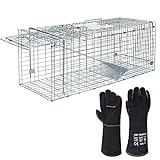 ANT MARCH 32 Inch Trap with Gloves ANT MARCH 32 Inch Trap with Gloves |
|
Check Latest Price |
 Duke Traps Heavy Duty Large Cage Trap Duke Traps Heavy Duty Large Cage Trap |
|
Check Latest Price |
1. Havahart Large 1-Door Live Trap – The One Most Owners Keep
Havahart Large 1-Door Live Animal Trap for Raccoons, Cats, Bobcats, Beavers
- Galvanized mesh and solid steel door resist rust and animal damage
- Smooth internal edges and handle guards protect animal and handler
- Trip mechanism calibrated for heavier animals to reduce false triggers
- One-door design lets the raccoon fully enter before the door shuts
- Does not fold flat so it needs dedicated storage
- Some owners report thinner wire than on older models
- Detailed multi-model manual takes patience to read
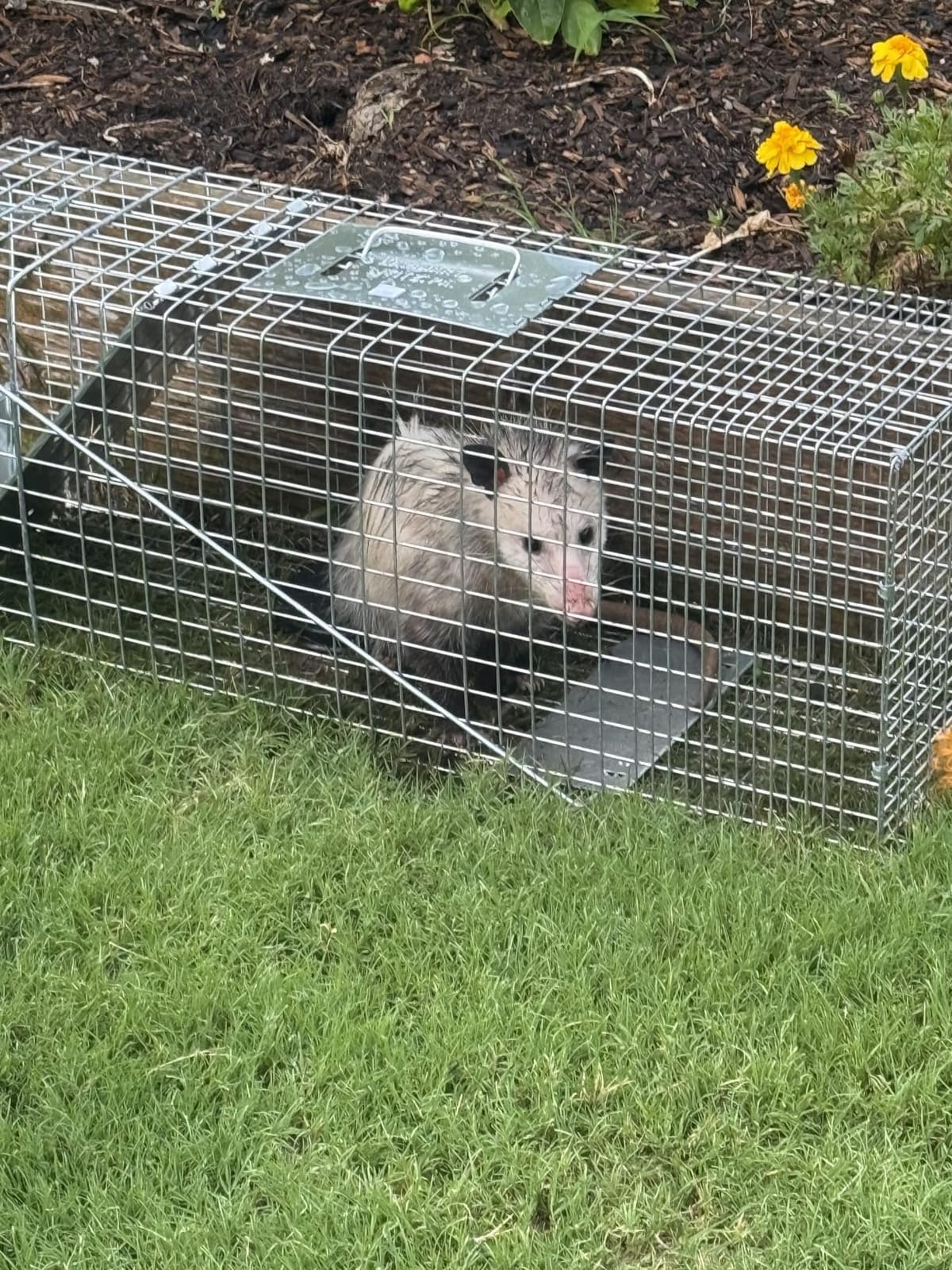
This is the trap most people end up buying after asking around, and the owner feedback base behind it is enormous. At 32.29 by 13.1 by 11.1 inches it sits in the size band that comfortably holds a raccoon while staying light enough at 4.51 kg for one person to carry to a garage or shed.
The single-door design is doing the important work here. Because the raccoon has to walk all the way in before the door can drop, the trap avoids the half-caught escapes that plague small designs, and the refined trip mechanism is set for heavier animals rather than triggering on a stray squirrel.
Users consistently report reliable repeated catches on raccoons and feral cats, with the galvanized wire mesh and solid steel door standing up to outdoor use across seasons. Smooth internal edges and protective handle guards take the sharp edges and bite risk out of handling.

The honest drawbacks are practical rather than performance-related. This cage does not fold, so it claims a permanent footprint in a garage or utility closet, and a few owners note that newer production uses a thinner wire gauge than earlier runs of the same model.
Releasing a large, aggressive raccoon is also the least glamorous part. Owners using the later release redesign sometimes find safe release awkward without the original door loop accessory, so plan on a transfer cage and gloves rather than reaching in.
Who this trap suits best
It suits the majority of homeowners who need one reliable humane cage for raccoons, opossums, groundhogs, skunks and stray cats. The trigger calibration means you are not fighting nuisance trips from smaller animals, which matters if the same cage handles squirrels too.
It also suits anyone who would rather set the same trap on a chicken coop run, a garage edge and a crawlspace entry over several weeks than buy a different device for each job.
Where it falls short
It falls short for anyone short on storage space, since a rigid 32-inch cage is awkward in a small vehicle or a crowded closet. It is also not the right tool if you need to avoid catching neighborhood cats entirely.
If your raccoons are large, repeat offenders testing the wire, a heavier gauge gravity-door trap may outlast it over a long season.
2. Faicuk Large Collapsible 32 Inch Trap – Best Storage-Aware Pick
- Folds flat and cuts storage space by roughly 75 percent
- Generous 32 inch interior sized for raccoons opossums and stray cats
- Sensitive trigger snaps the single door shut quickly
- Large handle guard and smoothed internal edges
- Average 4.0 rating with a higher share of one-star reviews than leaders
- Some buyers report the trigger sensitivity needs adjusting out of the box
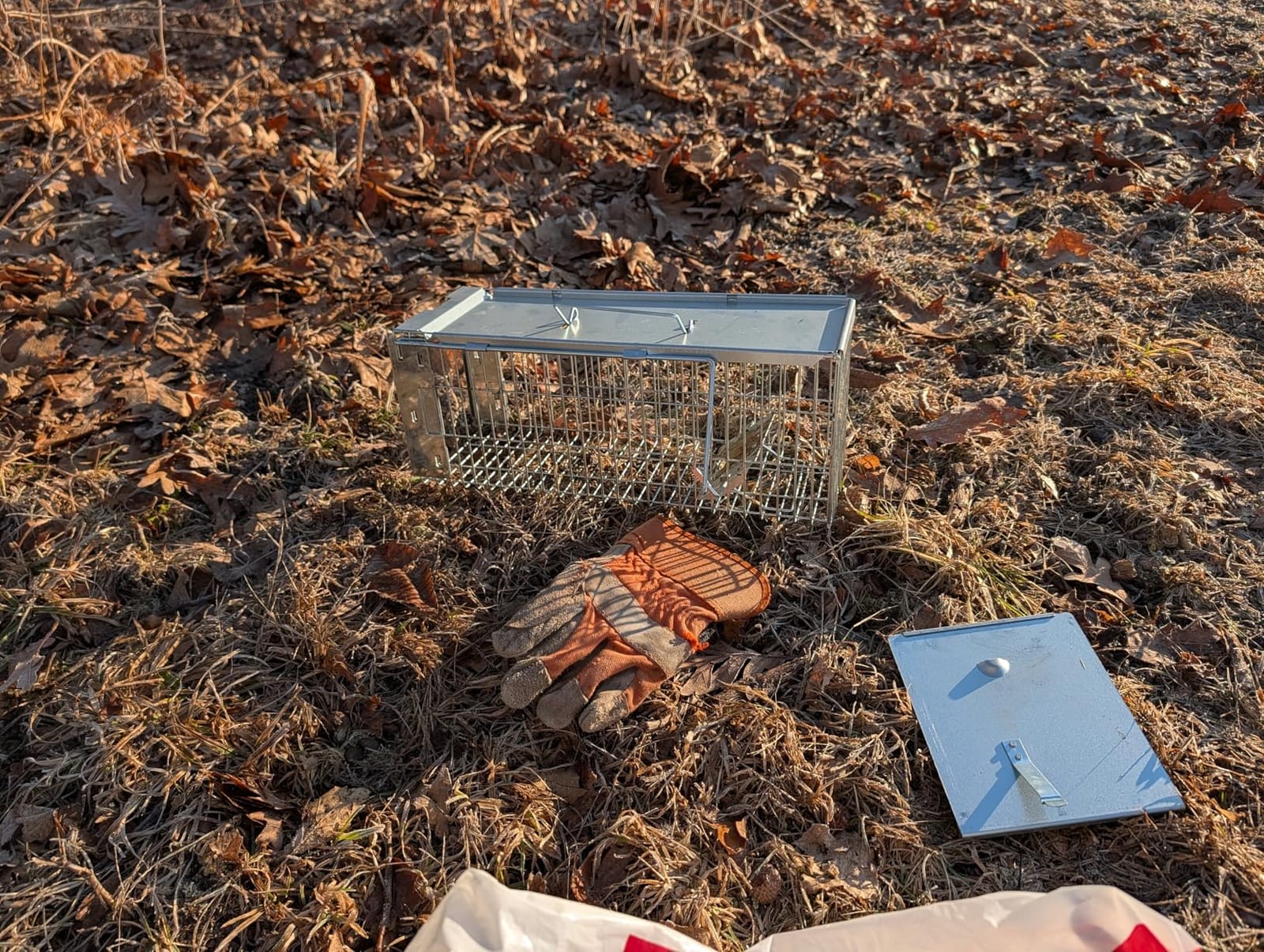
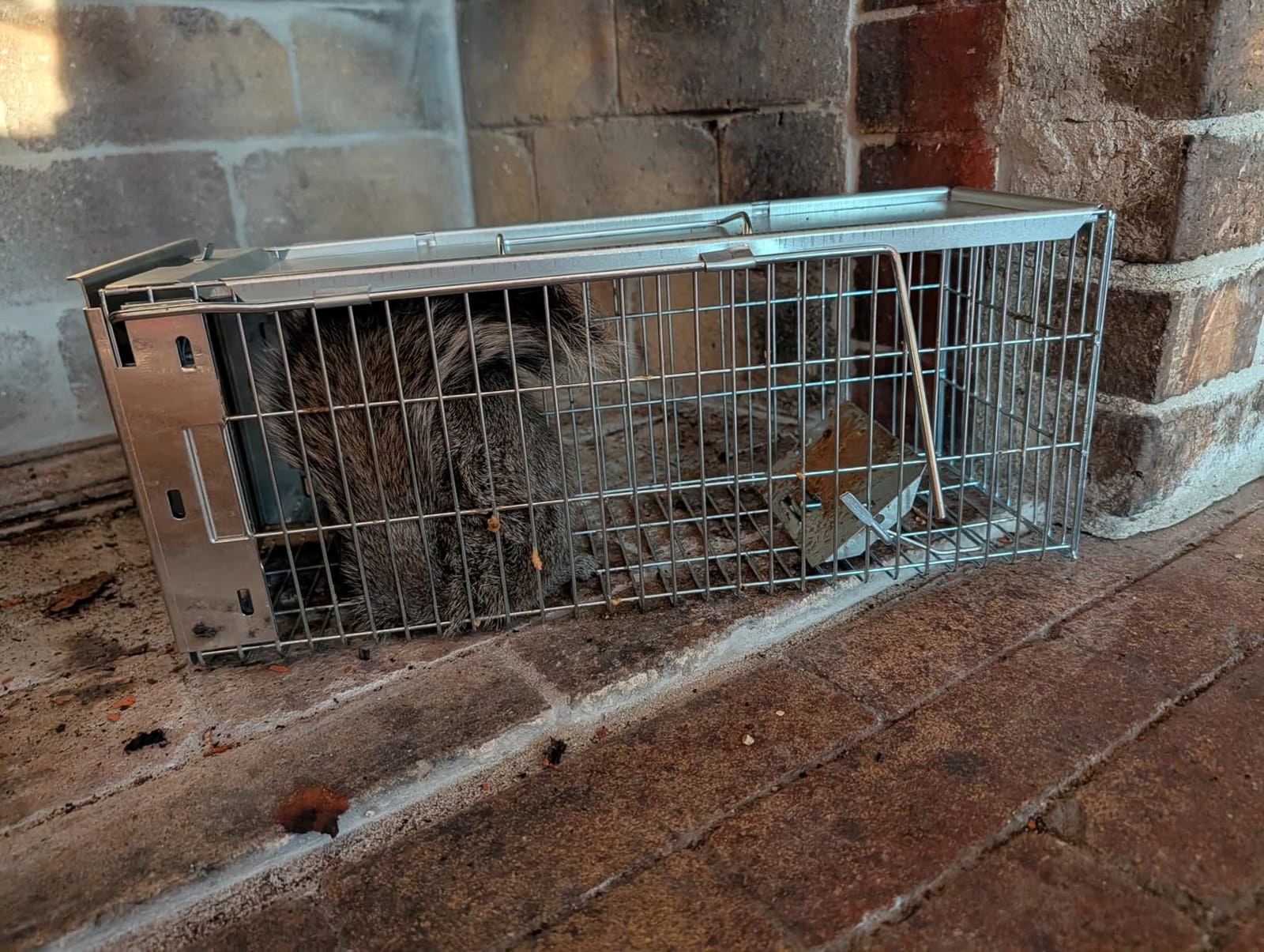
This one solves a problem rigid cages create for a lot of people: where do you keep a 32-inch cage when you are not actively trapping? The frame folds flat and saves roughly three quarters of its storage volume, so it lives in a closet or car trunk between seasons.
The 32 by 11 by 13 inch interior is the raccoon-appropriate size, and the sensitive trigger is designed to snap the single door shut in micro-seconds, which limits the escape window that matters most on a strong animal.
Owners like the galvanized steel construction for rust resistance and the large handle guard that makes transport safer when something is inside. It arrives as one piece with no assembly step.
What gives me pause is the rating profile. At 4.0 with 3483 reviews, this trap carries a visibly higher share of one-star feedback than the leaders in this roundup, and the recurring theme is trigger behavior that needs adjustment before first use.
Set aside twenty minutes to test the trip sensitivity with something heavy rather than bait before you commit a full trapping rotation to it. That single step removes most of the complaints we saw.
Who this trap suits best
It suits renters, apartment-adjacent homeowners and anyone who sets traps seasonally and cannot dedicate shelf space to a rigid cage. If you move the trap between a garage, a shed and a porch, the fold-flat design is the reason to pick this one.
It also works well as a first live trap for someone who expects to catch opossums and stray cats alongside raccoons, since the interior dimensions comfortably cover all three.
Where it falls short
It falls short for anyone expecting the tightest, most consistent factory setup. Owners report trigger adjustments being needed, and the collapsible frame offers less rigidity than a welded rigid cage under sustained thrashing.
If your raccoons are aggressive and large, weigh it against a heavy-duty rigid model instead of choosing on price alone.
3. Havahart Large 2-Door Live Trap – Best for Walk-Through Design
- Two spring-loaded doors create a walk-through path that helps with wary animals
- Galvanized one-piece mesh and solid steel door resist rust and abuse
- Fine-tuned trip mechanism reduces false triggers
- Owners report it withstood hours of thrashing from a furious raccoon
- Trigger mechanism needs periodic re-assembly on some units
- Bait is hard to place deep inside the narrow 36 inch body
- Door frame can bow if an armadillo roots underneath
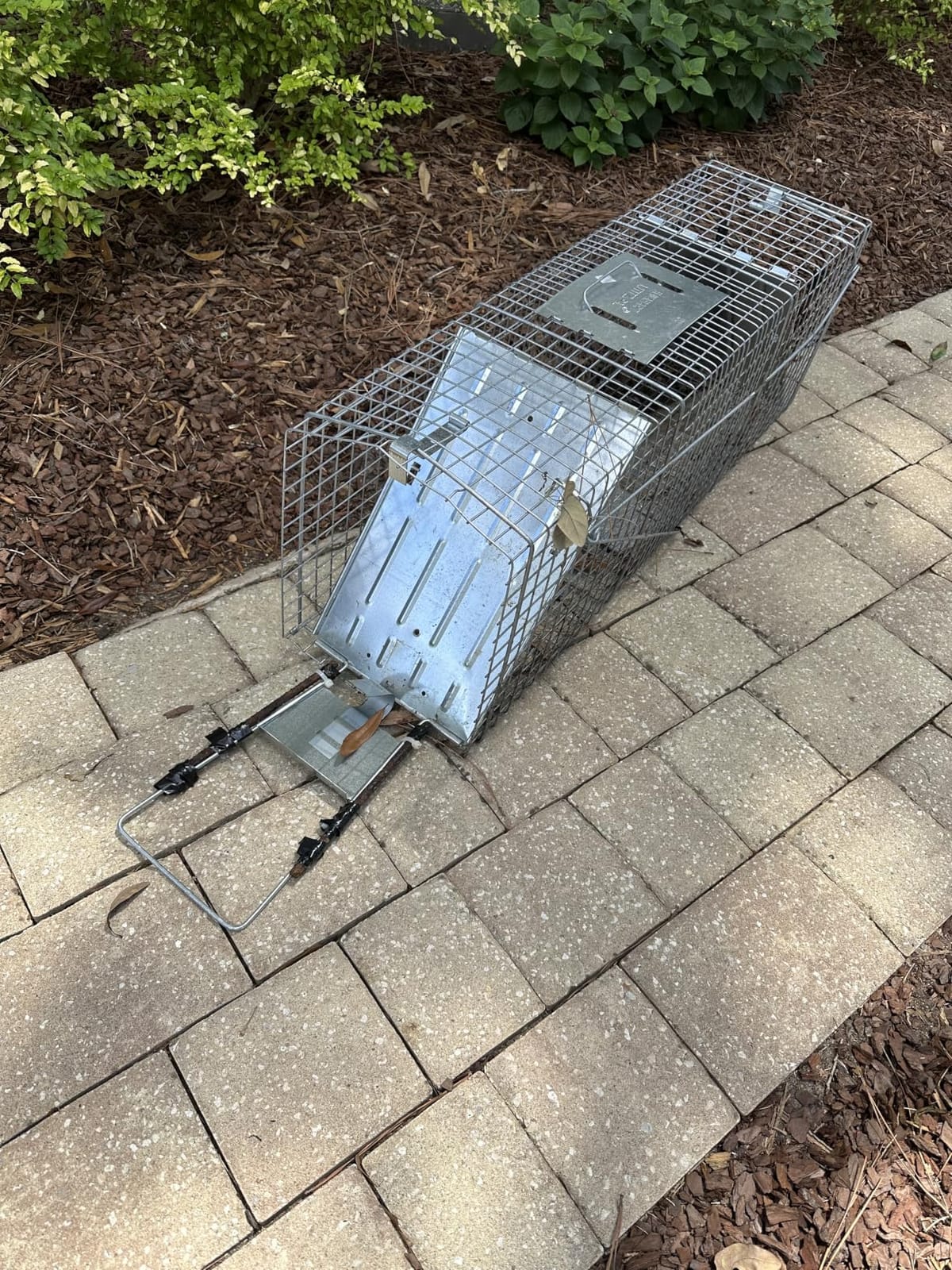
The two-door argument is straightforward: a raccoon sees a path through the cage rather than a dead end, and that walk-through design improves catch rates on animals that have been worked by other trappers or that have learned to avoid open boxes.
At 36 by 10 by 12 inches this is the longer, narrower body in the roundup. That extra length helps with a full-body entry but makes the back of the cage harder to reach, which matters for bait placement.
Owners with long track records on this model talk about dozens of raccoons and opossums and describe the one-piece galvanized mesh and solid steel door surviving hours of thrashing without bending or tearing. The trigger is fine-tuned for heavier critters, so you get fewer wasted springs on squirrels.
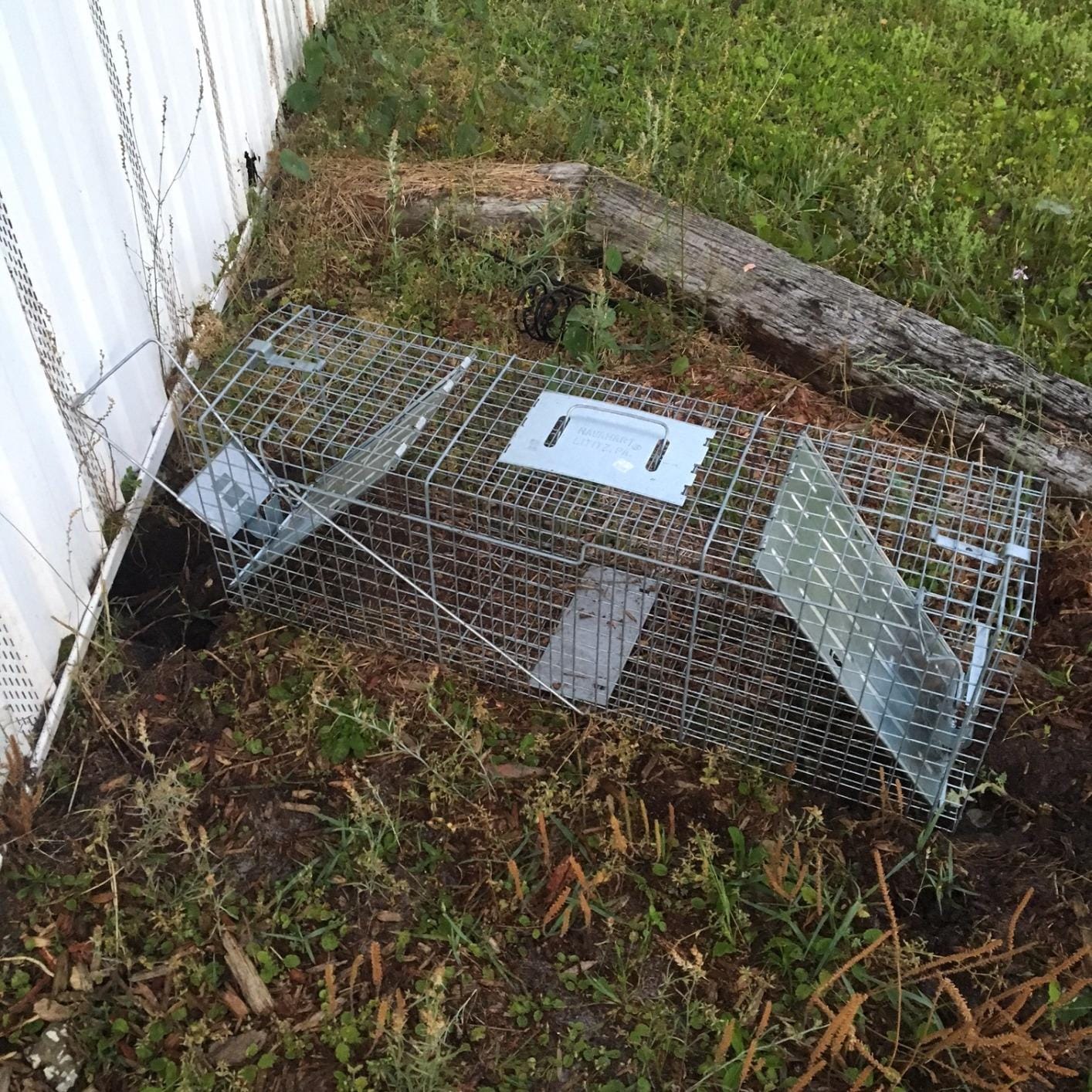
It arrives functional with no assembly, which is genuinely convenient, but a subset of owners report the trigger linkage needing periodic re-assembly after heavy use. Keep a pair of pliers nearby.
The narrow profile is the other recurring complaint. Baiting the rear of a 36-inch body means reaching past a raccoon-shaped void, and if you can only place bait at the mouth, the two-door advantage largely disappears.
Who this trap suits best
It suits anyone on ground that has already been trapped and is now trap-shy. Where a single-door cage might get ignored, the two-door walk-through path gives a wary raccoon a reason to continue forward.
It also suits people targeting mixed catches across a larger yard, since owners rate it well for opossums, groundhogs, armadillos, nutria and stray cats in the same rotation.
Where it falls short
It falls short when bait access is your weak point, because the 36-inch length works against you. If your only option is a shallow bait cup at the entrance, pick a shorter cage.
It also falls short as an armadillo trap, since rooting under the door can bow the frame. Those animals need a heavier or differently shaped trap.
4. SZHLUX 32 Inch Folding Trap – Best Budget Folding Pick
- Assembles from nearly flat in four steps with no tools
- Low-carbon steel wire with medium-frequency welding gives firm welds and rust resistance
- Owners report successful raccoon stray cat opossum and squirrel captures
- Top cover guard board and included release tool add handling safety
- Rear fixing clip is reported to break and let an animal walk out
- Trigger rod and hook are two pieces that align poorly
- Wire gauge is lighter than premium pro-grade traps
This is the trap that makes no-tool setup a reality. It goes from a flat panel to a set 32 by 10 by 12 inch cage in four steps, which is a real advantage when you are baiting at dusk after work rather than in good daylight.
The build is worth noting: low-carbon steel wire with medium-frequency welding produces a flat surface and firm welds that resist rust better than the cheapest folding traps in this category. It has been capturing raccoons, stray cats, opossums and squirrels consistently enough to hold a top position in its category.
A top cover guard board keeps the animal from injuring itself on the roof, and the included release tool extends your reach so you are not putting a hand near the door.
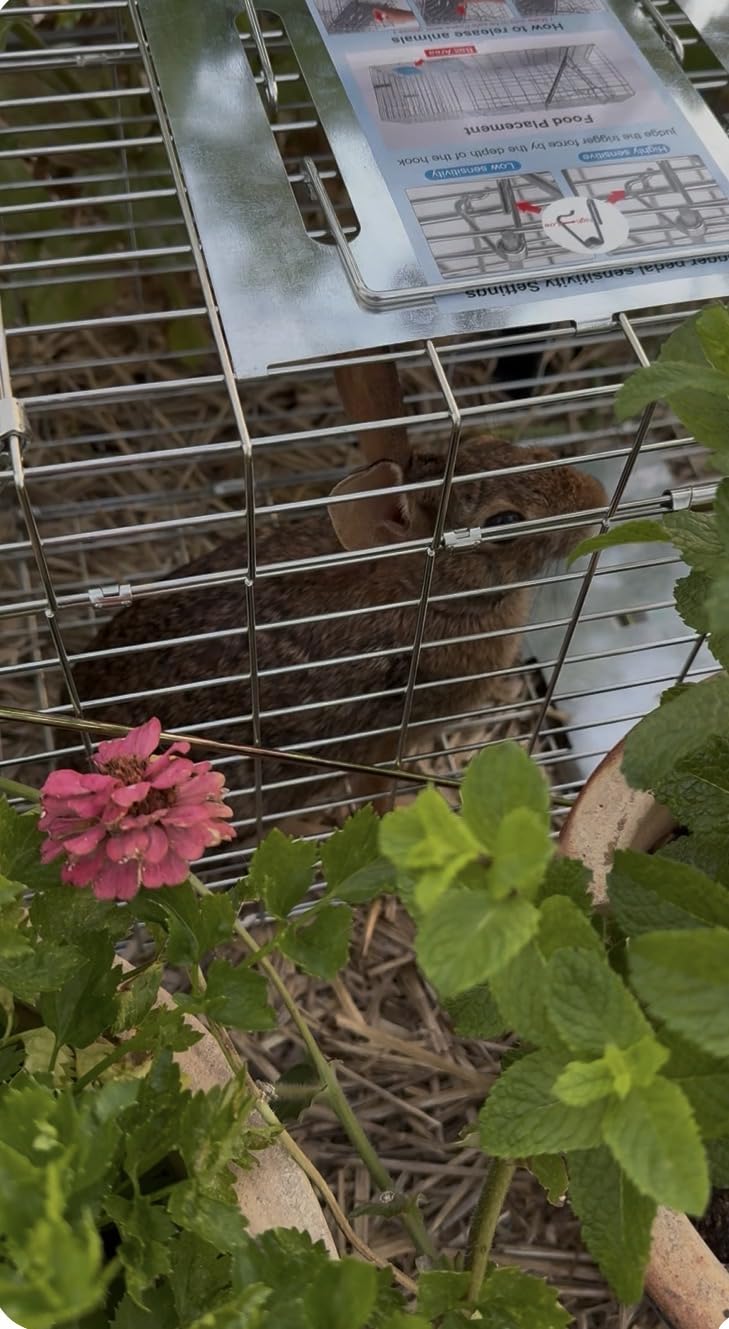
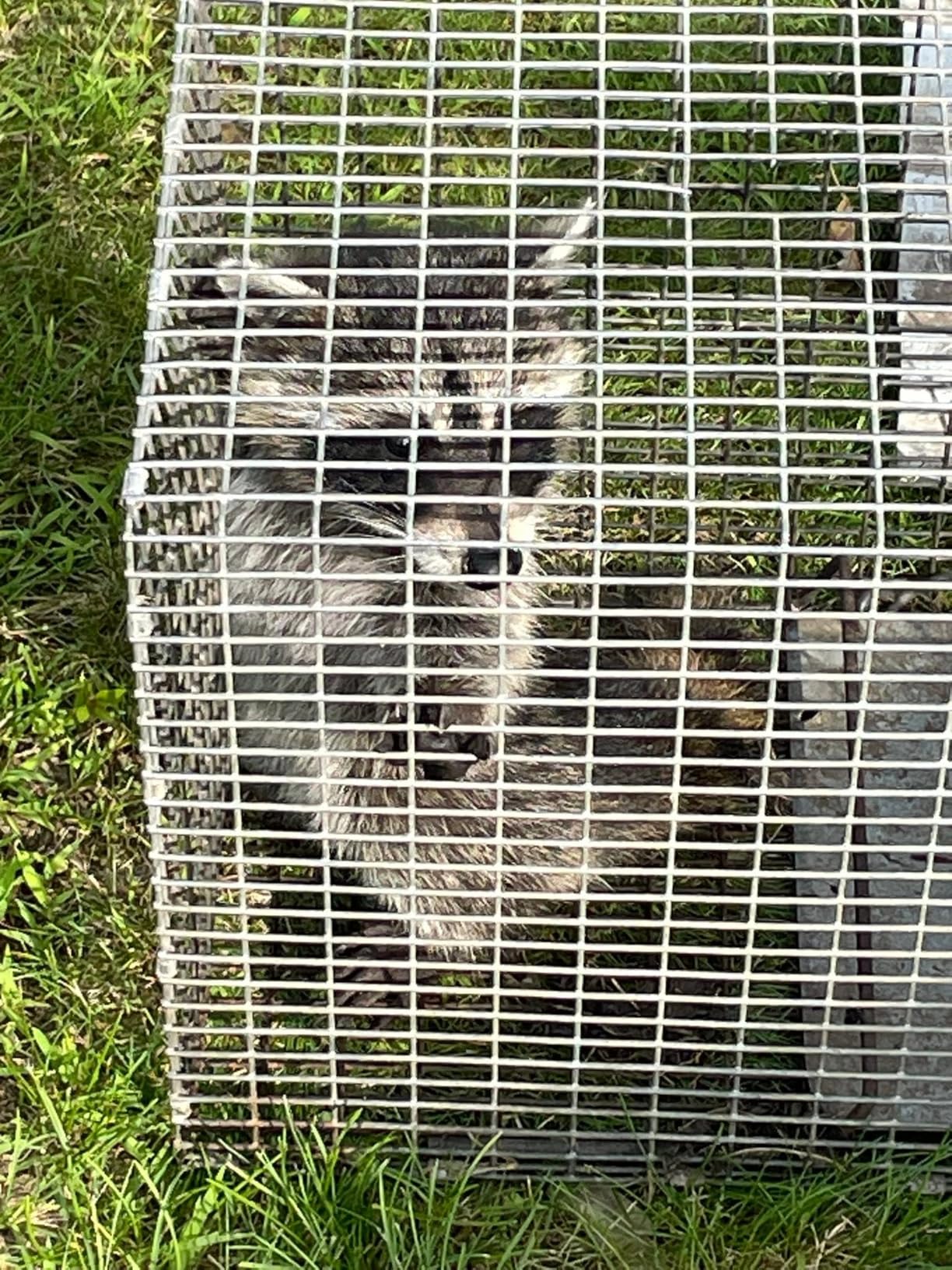
Here is the honest weakness list. The rear fixing clip is the part owners flag most: it is reported to break and let an animal walk out the back. The trigger rod and hook are also two separate pieces that align poorly, which makes arming the trap harder than it should be.
The wire gauge is lighter than premium professional-grade traps, and the collapsible frame does not carry as many metal bands as it needs to feel rigid. Inspect the rear clip every time you re-arm.
Who this trap suits best
It suits first-time trappers and anyone working around dusk or dark who does not want tools or good light to set the trap correctly. The four-step no-tool assembly is the single biggest reason to pick it.
It also suits owners managing several smaller problems, since the same cage handles stray cats, opossums, squirrels and groundhogs alongside raccoons.
Where it falls short
It falls short on trap-shy or very aggressive raccoons, because lighter wire and a collapsible frame give a determined animal something to work against. The reported rear-clip failure makes that risk concrete.
If your property is next to a road or a neighbor’s dog runs loose, consider a trap with more containment rather than the lightest option that works.
5. Humane Way Folding 32 Inch Trap – Best All-Weather Set-Up
Humane Way Folding 32 Inch Live Humane Animal Trap – Safe Traps for All Animals – Raccoons, Cats, Groundhogs, Opossums – 32″ L x 10.2″ W x 12.2″ H
- High-strength galvanized steel holds up across seasons
- Highly sensitive trip plate with spring-loaded door gives fast secure captures
- Folds flat and assembles with no tools
- Sized for raccoons groundhogs armadillos and stray cats
- Rear release door folds inward making baiting and retrieval awkward
- Locking mechanism can seize in moisture and stop latching
- Some owners report sharp edges and wire that bends under load
Durability is the story here. Owners report using this trap through long seasons with raccoons that were actively trying to tear it apart, and the cage staying in good condition. One owner documented 31 captures, 18 raccoons and 13 skunks, with the trap still in original condition afterward.
Mechanically it is straightforward: a highly sensitive trip plate and a spring-loaded door produce a fast, secure capture, and the high-strength galvanized steel is built for all-weather outdoor use rather than a single season.
At 32 by 10.2 by 12.2 inches it folds flat for storage and assembles without tools, which makes it easy to rotate between the yard, the garage and a porch run.
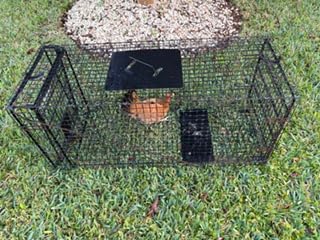
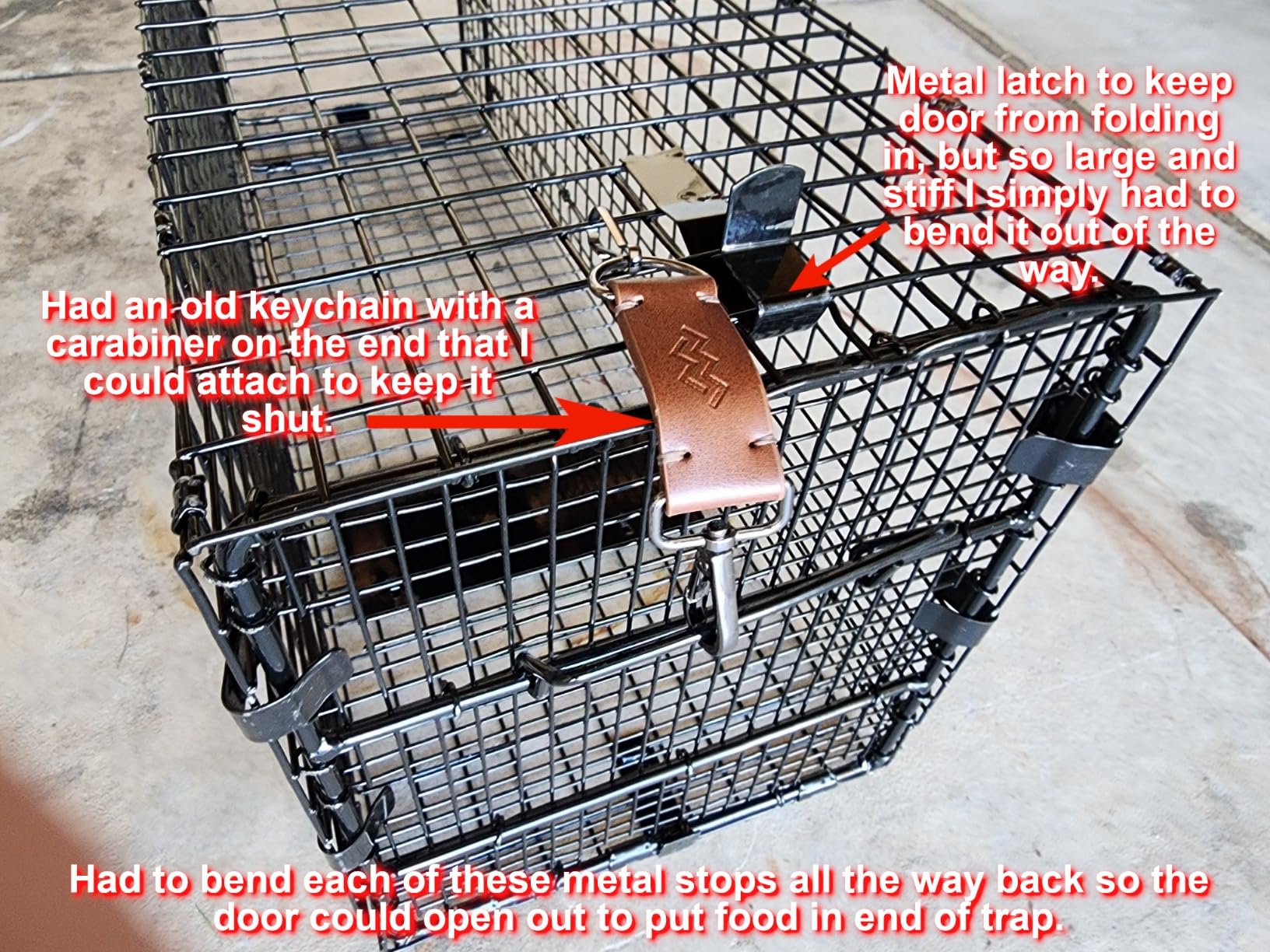
The most repeated complaint is the rear release door, which folds inward. That makes it harder to place bait at the back and harder to retrieve leftover bait, and it pushes your hand closer to the animal during release.
Moisture is the second issue. Owners report the locking mechanism seizing in wet conditions and stopping latching reliably, which matters in a wet spring. A few also mention sharp edges and wire that bends during heavy use.
Who this trap suits best
It suits anyone trapping through a full season rather than a few nights. The reported longevity across many captures makes it a good choice for repeat offenders, multiple entry points or an ongoing attic problem.
It also suits people who need multi-species coverage, since the stated target range includes groundhogs, armadillos and stray cats alongside raccoons and skunks.
Where it falls short
It falls short for people who want a fast, wide-opening access door for baiting and release, since the inward-folding rear door works against both. It is also worth inspecting after wet spells because the latch can seize.
If you need to release animals in the field quickly, keep a transfer cage rather than relying on the rear door.
6. HomGarden 32 Inch Steel Cage Trap – Best for Smaller Prey and Bait Theft
- Mesh openings are tighter than most comparable traps limiting escapes and stolen bait
- Trigger rod sits outside the cage so a trapped animal cannot disable it
- Smoothed internal edges and handle guards protect animal and handler
- Works without chemicals or glues indoors or outdoors
- Thin wire is not rated to hold a determined raccoon
- Trigger is described as easy to trip accidentally
This trap wins on one specific feature that matters more than people expect: tight mesh. Narrow openings reduce the two failures that ruin most baited traps, which are escapes and bait theft through the wire without ever tripping the trigger.
The 31 by 12.5 by 12 inch cage is a broad rather than a long box, which gives a raccoon room to turn without feeling cornered. Galvanized rust-resistant mesh with steel reinforcements handles wet ground better than bare steel.
Mounting the trigger rod outside the cage is a smart safety move, since a trapped raccoon cannot reach it and disable the mechanism the way it might with an interior rod.
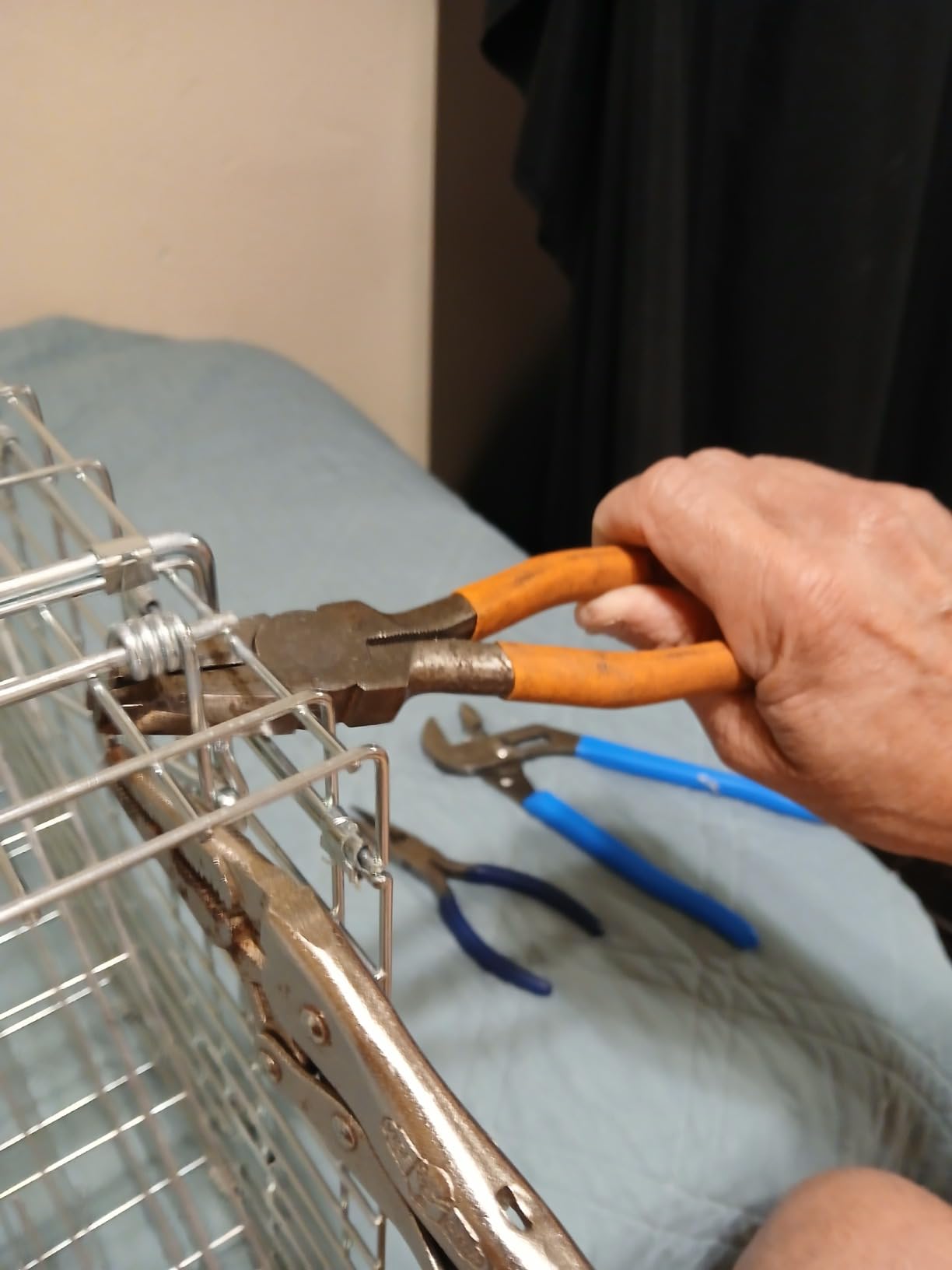
Be clear-eyed about the limitation: owners specifically report that the thin wire is not rated to hold a determined raccoon. This is the trap in the roundup most often described as fine for cats, squirrels, opossums and other smaller targets rather than for a full-grown coon.
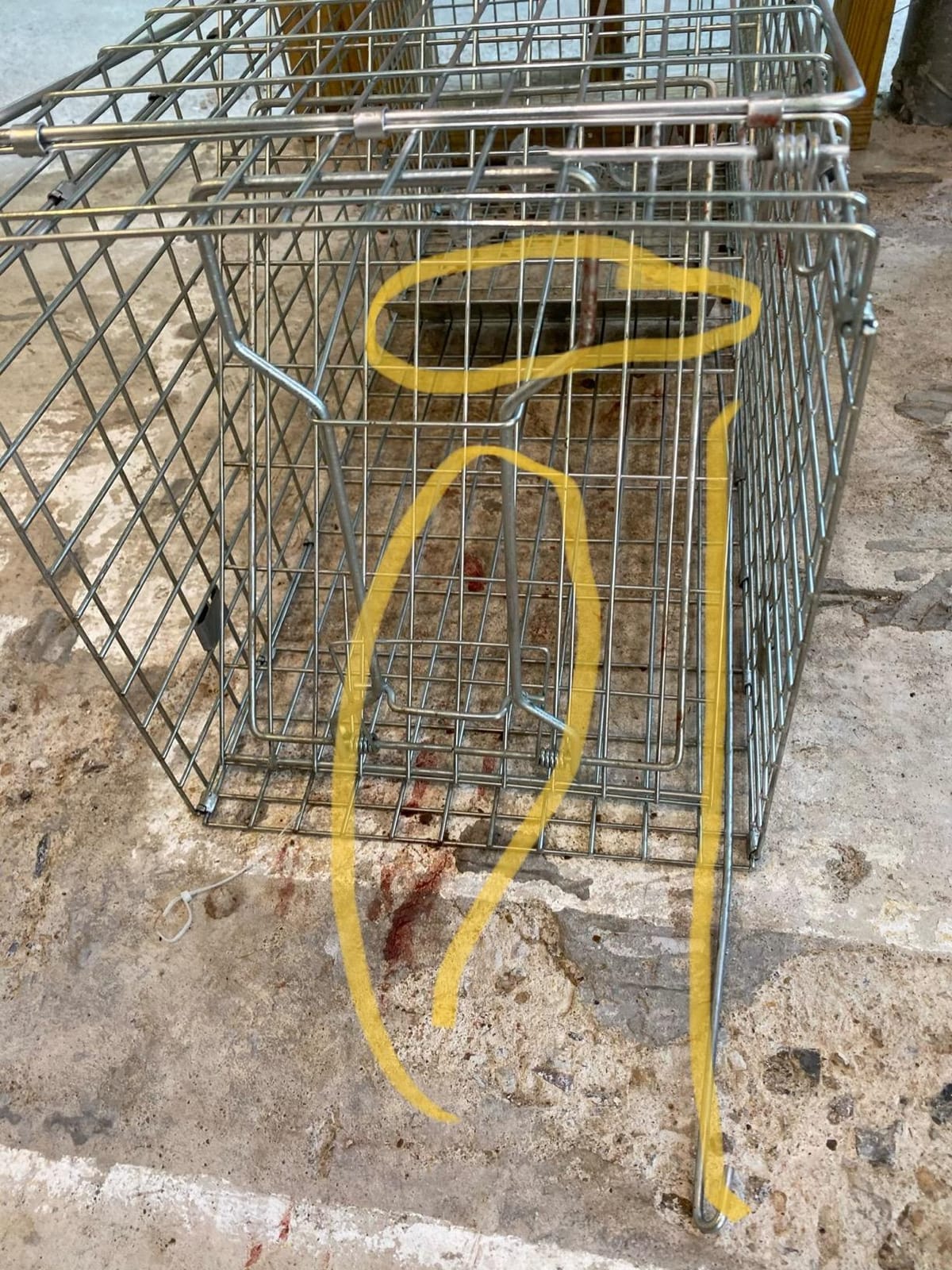
The trigger is also described as easy to trip accidentally, so an accidental trip does not mean an animal is inside. Test it before committing an evening to it.
Who this trap suits best
It suits homeowners whose real problem is bait theft and escapes rather than giant raccoons. If you have tried baits that disappeared through the mesh without springing anything, a tighter cage solves that specific problem.
It also suits anyone trapping squirrels, opossums, groundhogs, skunks and stray cats who wants one inexpensive cage to cover several jobs.
Where it falls short
It falls short on the core requirement of this roundup. If the target is a large adult raccoon, light wire is a containment risk, not just a durability trade-off.
It also falls short on trigger precision, since easy accidental tripping wastes nights. Pick a heavier cage for raccoons and keep this one for smaller prey.
7. HOMESTEAD 32 Inch Live Animal Trap – Best Multi-Species All-Metal Pick
HOMESTEAD 32 Inch Live Animal Trap – Specialized for Raccoons, Opossums, Groundhogs, Skunks, Feral Cats, Squirrels – Humane Way Catch & Release Animal Trap
- All-metal build resists gnawing unlike plastic-topped competitors
- Heavy-duty closure lock keeps the door shut even with a squirrel inside
- Works effectively on squirrels chipmunks opossums and feral cats
- Available in 18 24 and 32 inch sizes
- Some units arrive needing adjustment with latch holes crimped by hand
- Trigger-to-door linkage is short which makes the trap harder to arm
- Mesh is too wide for house mice which can squeeze out
The all-metal construction is the differentiator. No plastic top means nothing for a chewing animal to get a grip on, and owners with squirrel problems in particular report that the heavy-duty closure lock keeps the door shut even with a squirrel inside.
At 32 by 10 by 12 inches and 7.9 pounds it is a manageable weight for one person to carry, and the stated target range covers raccoons, opossums, groundhogs, skunks, feral cats, squirrels and rabbits.
Because it comes in 18 and 24 inch sizes as well, you can build a matched set for mixed catches rather than one oversized cage for everything.
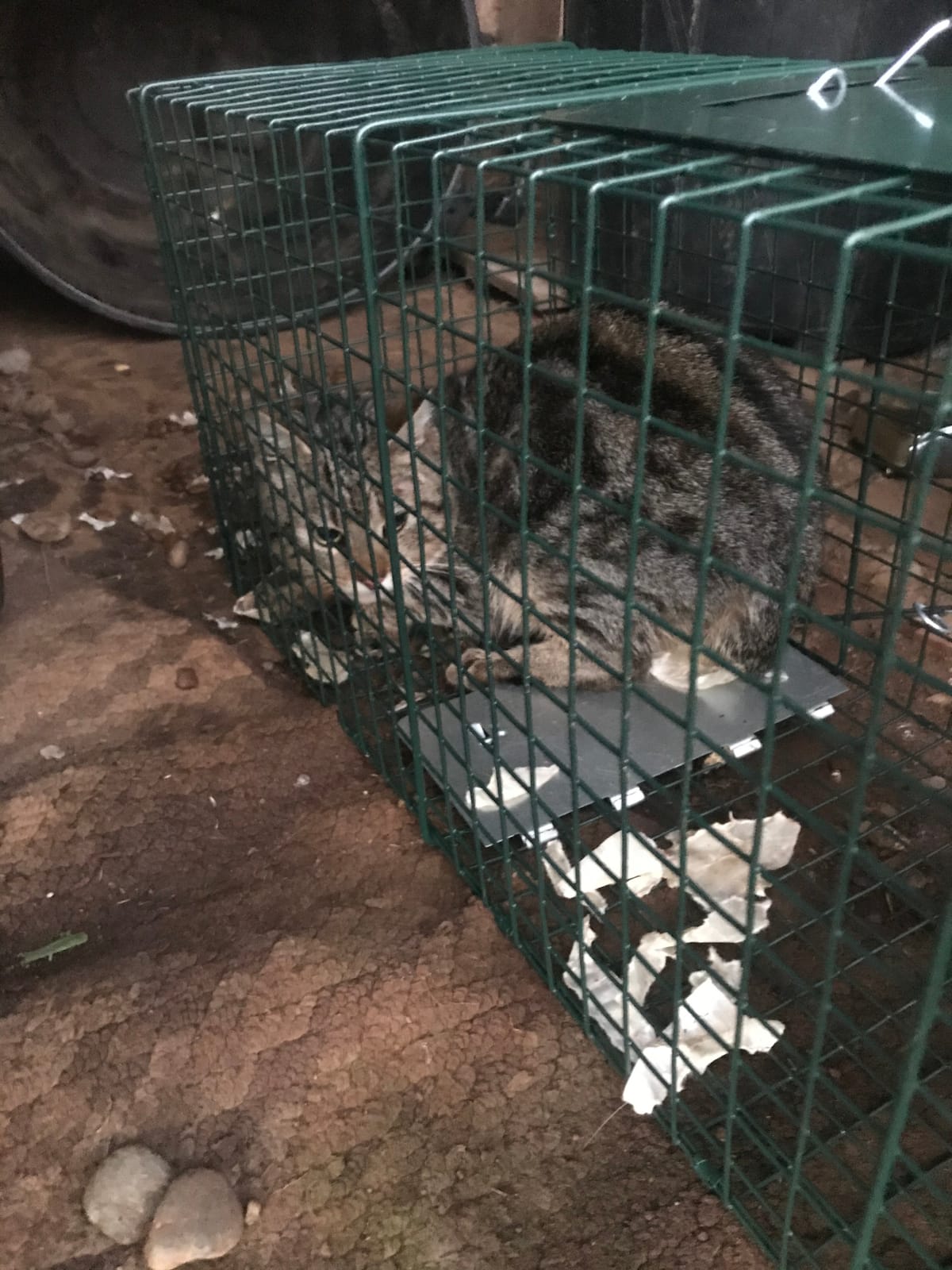
The recurring complaint is factory setup consistency. Some units arrive needing adjustment, with latch holes that have to be crimped shut with pliers before the trap will hold properly. Budget ten minutes per trap on arrival.
The short trigger-to-door linkage makes arming harder than it should be, and the long body again makes baiting the back of the cage awkward. The mesh is also too wide to hold house mice, which is a limitation if that is on your list.
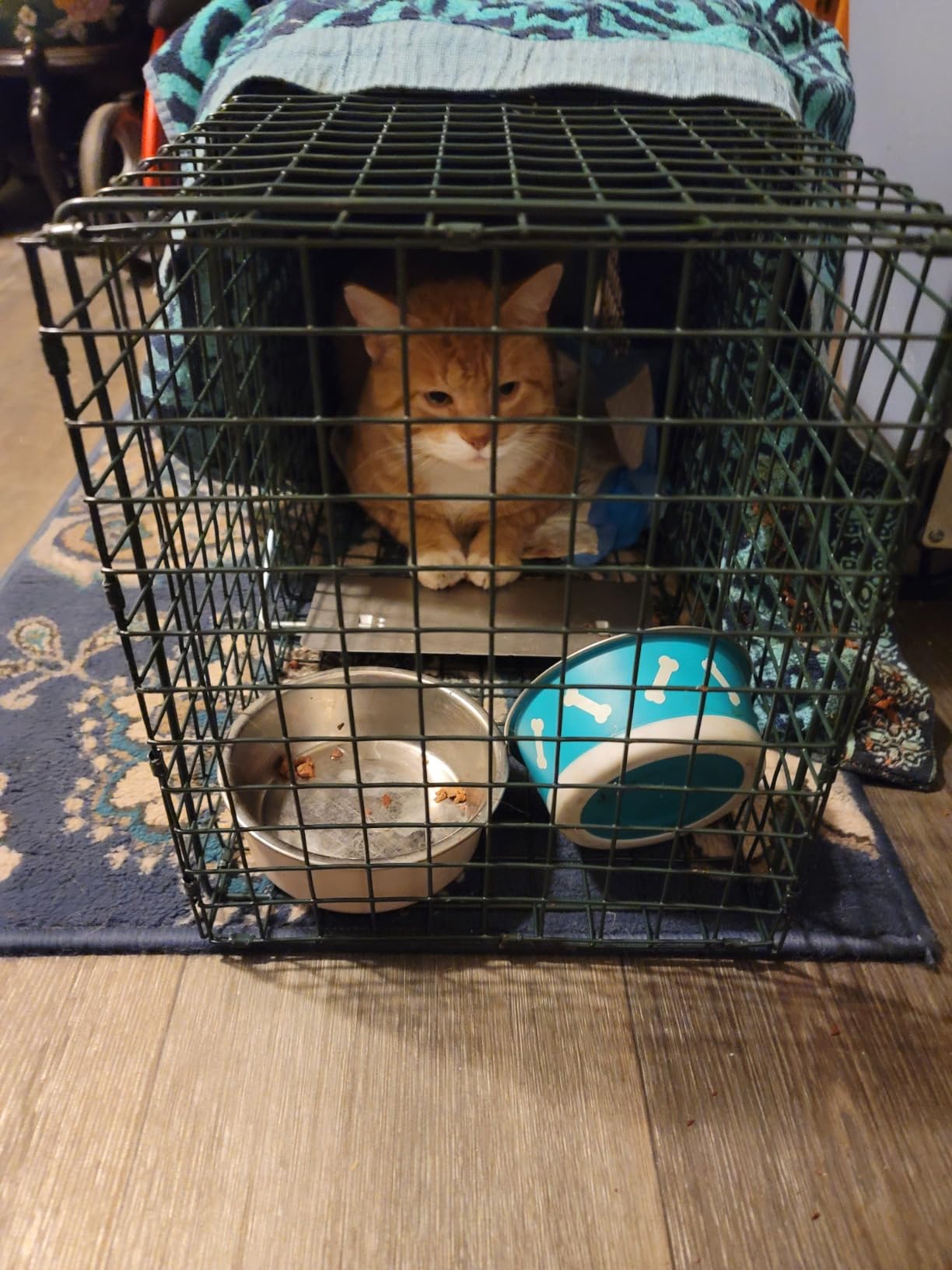
Who this trap suits best
It suits households dealing with squirrels and opossums alongside raccoons, especially where chewing damage is a recurring theme. An all-metal cage simply removes the failure mode that plastic-topped traps have.
It also suits anyone who wants a size-matched family of traps for a property with denning squirrels and a raccoon problem, since 18, 24 and 32 inch versions share the same design.
Where it falls short
It falls short on out-of-box readiness, because units needing hand crimping before first use are a real inconvenience if you planned to bait that evening.
For serious raccoon work, the short linkage and awkward bait access are drawbacks compared with a wider cage that lets you reach the trigger pan from outside.
8. ZENY 32 Inch Folding Cage Trap – Best for Fast No-Tool Setup
ZENY Live Animal Cage Trap, 32″ X 12.5″ X 12″ Folding Animal Trap
- Gravity-action trigger shuts the door immediately on light pedal contact
- Assembles in minutes and folds flat for storage
- Rust-resistant wire mesh with high tensile strength
- Solid door and large handle guard protect the user during transport
- Light-gauge wire is not built to hold a strong raccoon
- Gravity-action door relies on rod friction which can slip if rods are misaligned
The gravity-action trigger is the defining feature. The door shuts immediately the moment the pedal is touched, with no spring tension to tune and no linkage to align, which is why setup takes minutes and needs no tools.
At 32 by 12.5 by 12 inches and 9 pounds, this is a broad, stable box. Owners like it for cats, squirrels, opossums and groundhogs, and the rust-resistant wire mesh with high tensile strength holds up through repeated seasons.
Transport safety is handled by a solid door and large handle guard, and the smoothed internal edges reduce the chance of injuring a captured animal while you move it.
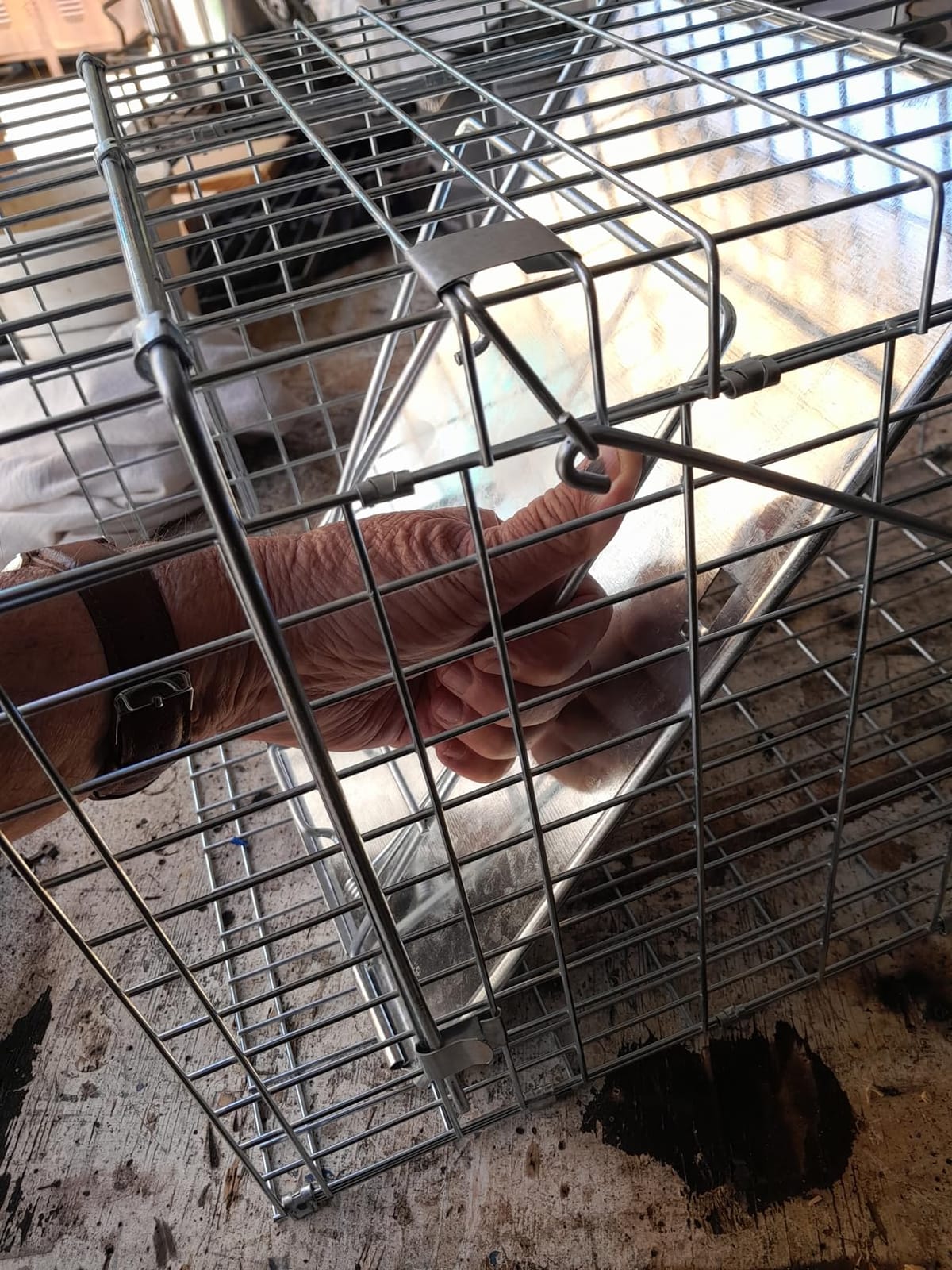
Two limitations are clear in the feedback. The light-gauge wire is not built to hold a strong raccoon, which is the honest dividing line between this trap and the heavy-duty options. And the gravity door depends on rod friction, so misaligned rods let it slip and fail to latch.
Check rod alignment every time you set it. That habit is the difference between a trap that works and one that quietly fails open.
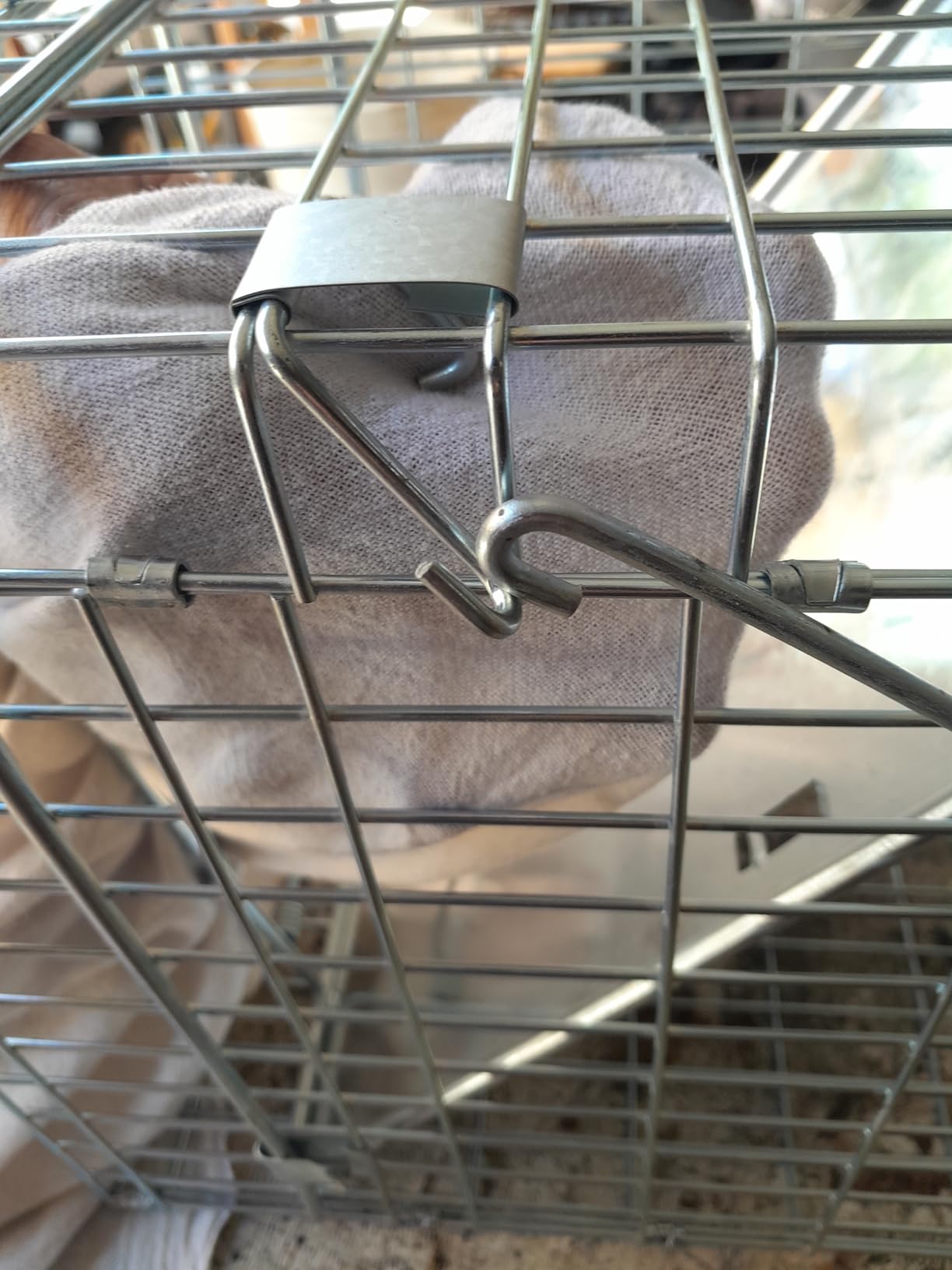
Who this trap suits best
It suits beginners and anyone who wants a trap they can set correctly in poor light without tools. Gravity action removes the single most common setup mistake, which is an improperly seated spring.
It also suits properties where the main pressure is cats, squirrels, opossums and groundhogs, and raccoons are a secondary concern rather than the main target.
Where it falls short
It falls short as a dedicated raccoon trap, because light wire is exactly the spec a determined raccoon tests first. Any containment claim past that point is optimistic.
It also falls short for users who will not re-check rod alignment between sets, since the friction-based door has no second safety net.
9. ANT MARCH 32 Inch Trap with Gloves – Best for the Complete Kit
ANT MARCH 32” Live Animal Cage Trap with Gloves Steel Humane Release
- Bundled gloves are widely praised and useful well beyond trapping
- Galvanized mesh with steel reinforcements holds up over months of use
- Mesh opening size is tuned to prevent escapes and stolen bait
- Folds flat for transport and hoses off easily after a catch
- Rear release door is awkward to open and puts your hand near the animal
- Metal clips and front door attachment can arrive loose or detached
- Trigger plate can bend under heavy animals
Everything a first trap needs is in the box, including gloves. Owners single out the gloves as genuinely good quality, and they end up doing double duty for handling, carcass cleanup and general garden work.
The cage itself is 32 by 11.8 by 12.7 inches of galvanized rust-resistant mesh with steel reinforcements, and the mesh opening size is tuned to prevent both escapes and bait theft, which is the failure mode that wastes the most trapping nights.
It folds flat for transport and is easy to hose off after a catch, and the trigger rod sits outside the cage where a trapped animal cannot reach it.
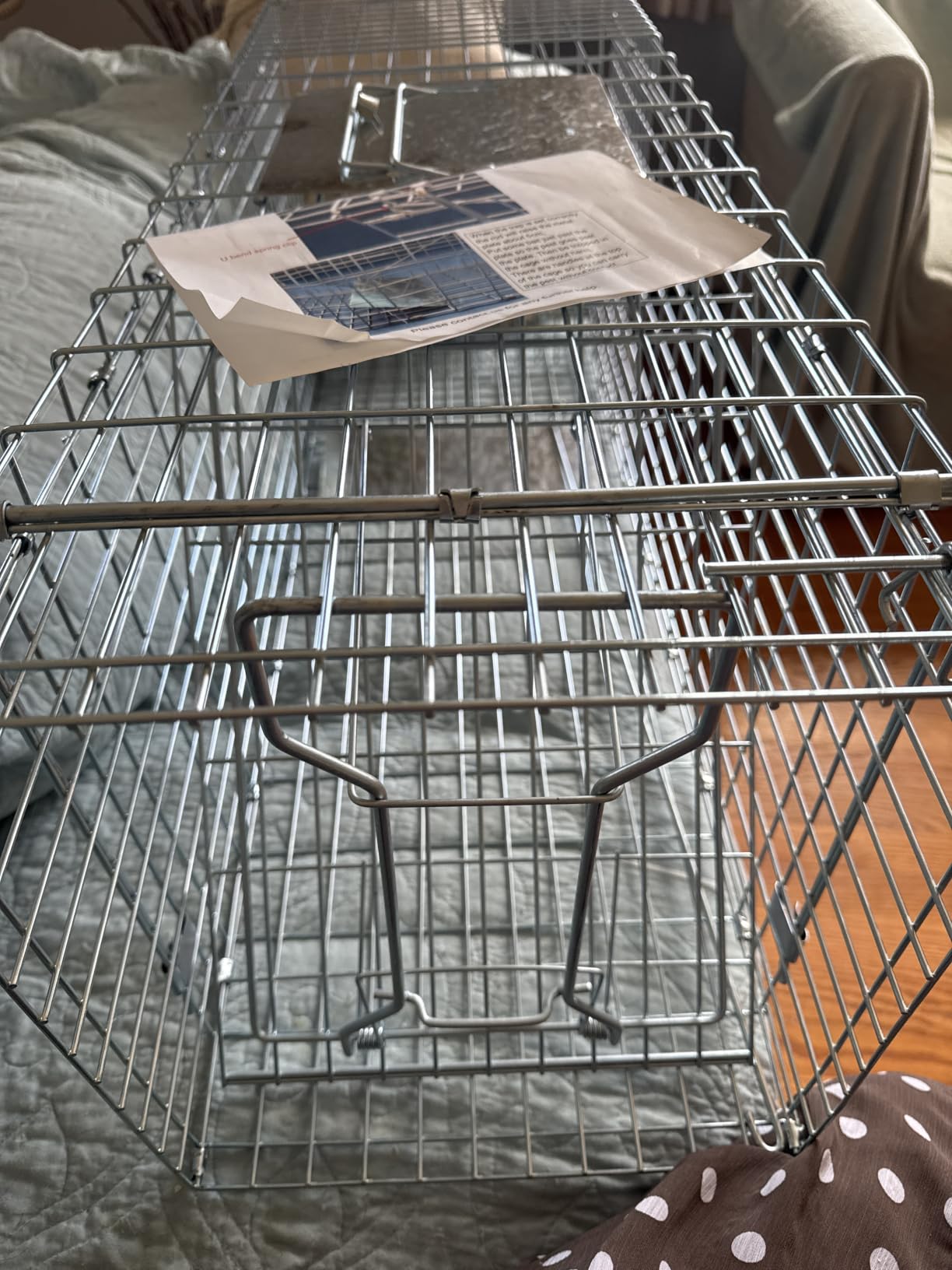
The complaints cluster around assembly quality and the rear door. Metal clips and the front door attachment can arrive loose or fully detached, and the rear release door is awkward to open while putting your hand near the animal.
The trigger plate can also bend under heavy animals, which is a problem on raccoon-heavy properties. Check the clips and the plate before every set.
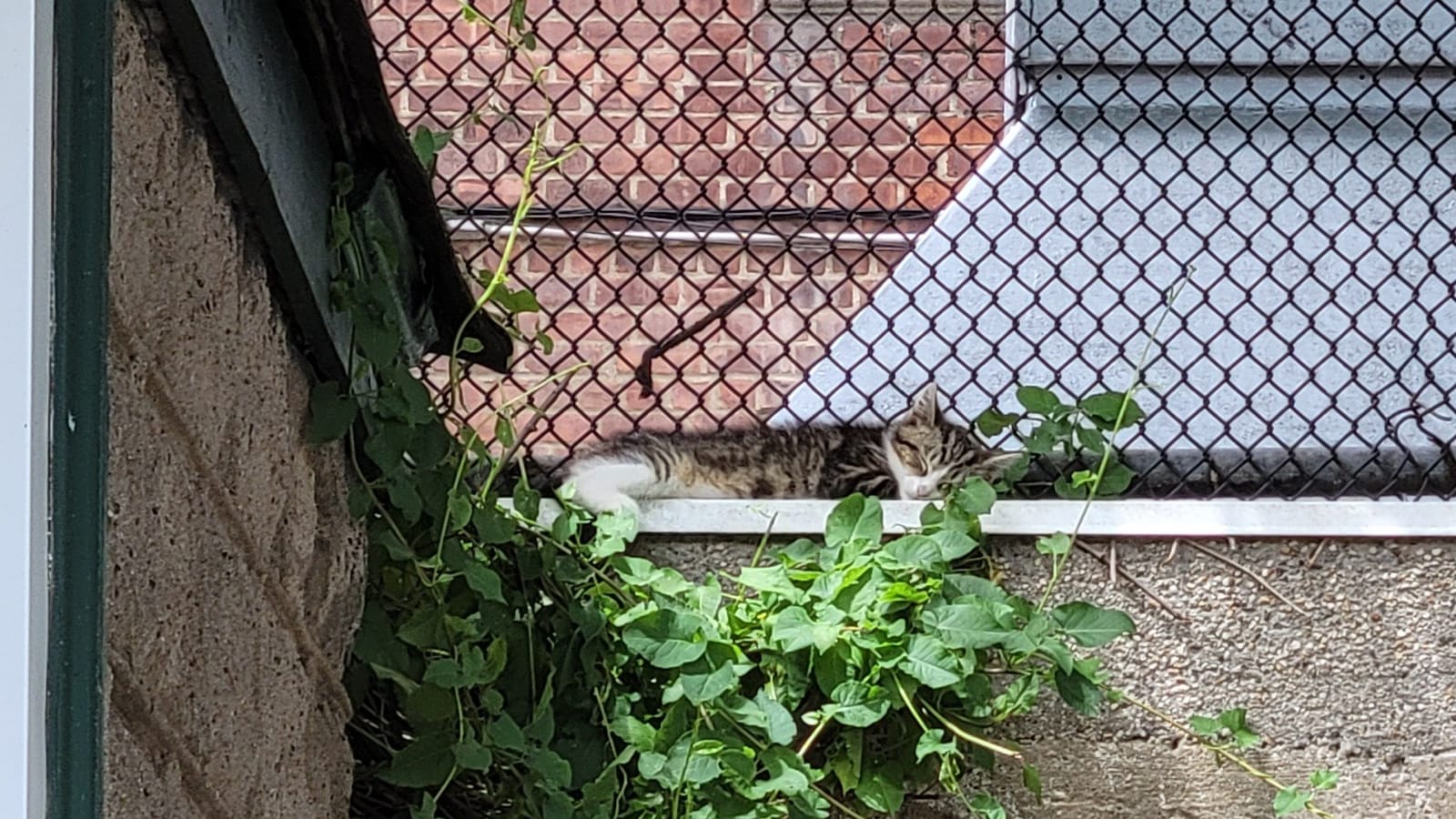
Who this trap suits best
It suits first-time trappers who do not yet own gloves or a transfer cage. Having protective gloves included removes the excuse most people use to handle a trapped animal bare-handed, which is how bites and scratches happen.
It also suits anyone trapping a mixed population, since the listed target species run from armadillos, groundhogs and skunks through opossums, cats and raccoons down to voles and weasels.
Where it falls short
It falls short for buyers who need factory-fitted hardware, because loose or detached clips on arrival mean extra setup and extra failure points.
For large, aggressive raccoons, the trigger plate bending under load is the concern. Verify the plate is straight before you trust the catch.
10. Duke Traps Heavy Duty Large Cage Trap – Best for Aggressive Raccoons
- Gravity-action door is foolproof and needs no spring mechanism to set
- Owners report it holds armadillos and raccoons that wreck lighter traps
- Release is as simple as rolling the cage over with a boot
- Thicker bars keep captured animals from injuring themselves
- Space behind the trip lever is narrow so baiting is awkward
- Large single-handle cage is hard to balance when carrying a live animal
- Coating can be scratched off by chewing and may need touch-up
This is the one to buy when the raccoons on your property are large, angry and have already wrecked lighter traps. At 4.5 stars it carries the highest average rating in this roundup, and owners with armadillo and raccoon problems describe it as stronger than spring-loaded cage designs.
The gravity-action door is the engineering point. There is no spring to set and no linkage to align, so the trap cannot be armed incorrectly, which removes the most common reason a good cage catches nothing.
Release is unusually safe by design. Because the animal enters from one end, you can roll the cage over with a boot and let it walk out at a distance, keeping your hands well clear. Thicker bars also reduce self-injury for a captured animal.
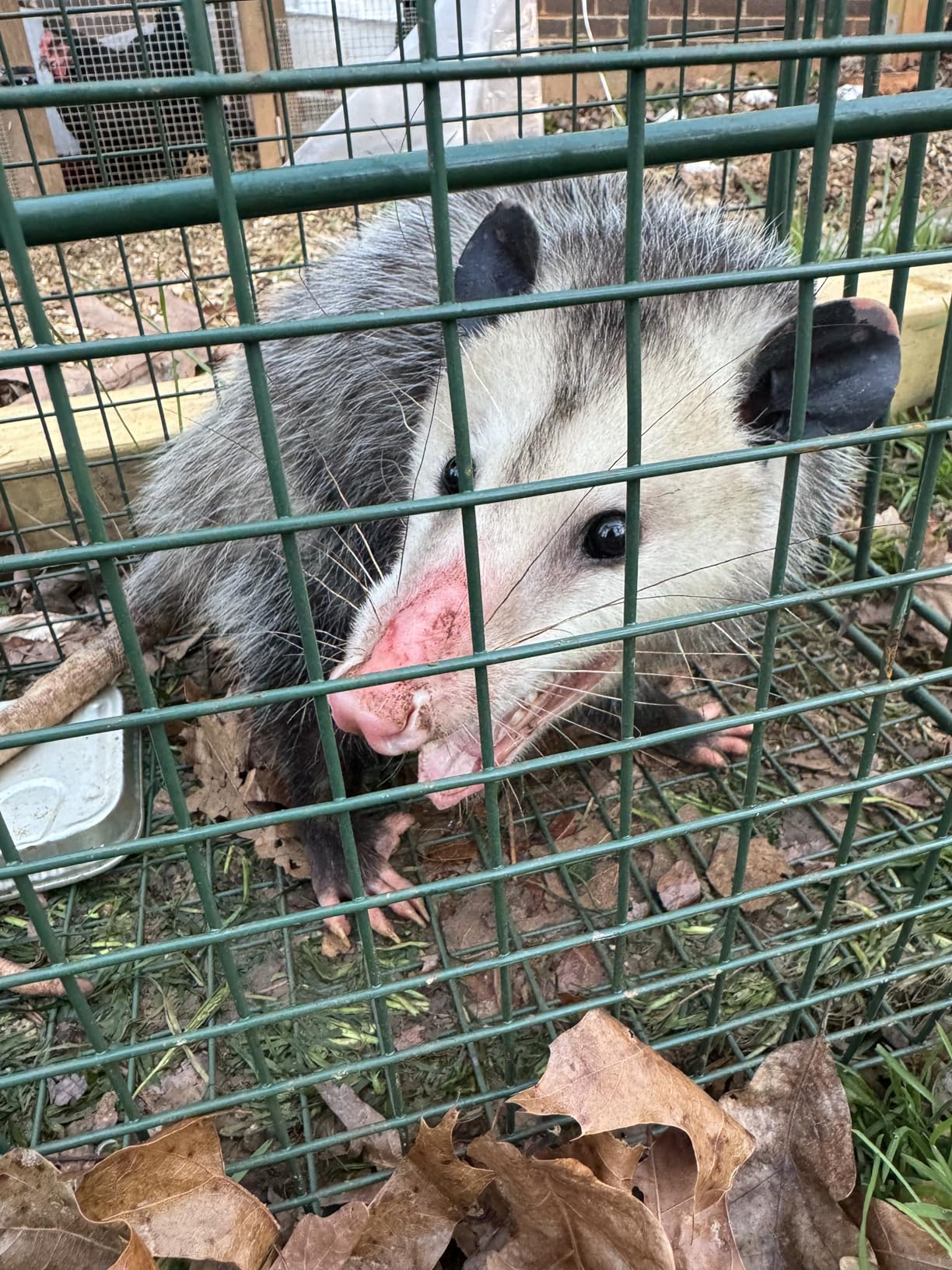
The trade-offs are real. The space behind the trip lever is narrow, which makes baiting awkward, and the large single-handle cage is hard to balance while carrying a live raccoon across uneven ground.
The green coating is less conspicuous in a yard and resists corrosion, but owners report it can be scratched off by chewing or clawing and may need touch-up over time. Check the coating each season.
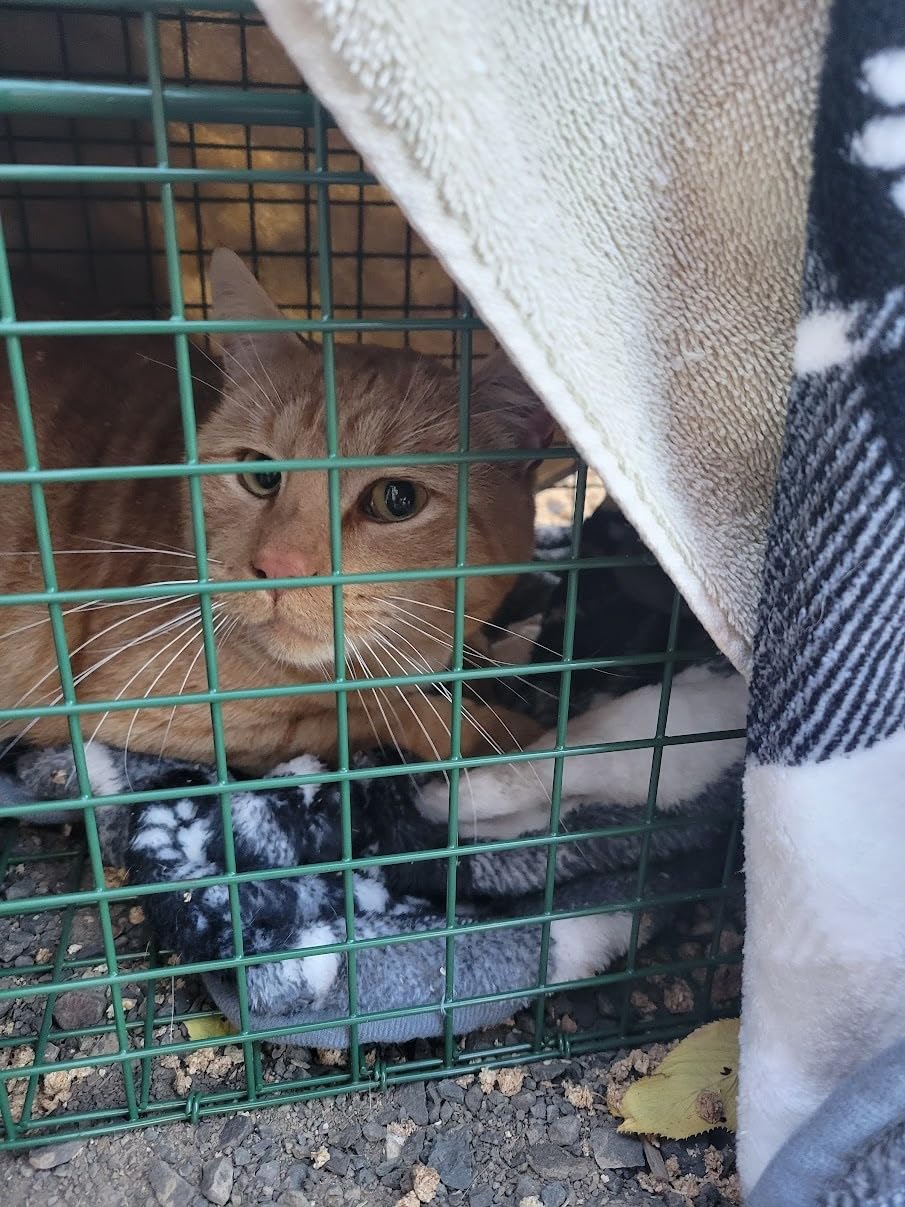
Who this trap suits best
It suits households dealing with big, aggressive raccoons or armadillos, where containment is the priority and light wire is a liability. It is the pick when you have already tried and failed with a spring cage.
It also suits anyone nervous about handling a live raccoon. The boot-kick release keeps your entire body outside the cage, which is a meaningful safety margin when the animal is thrashing.
Where it falls short
It falls short on baiting convenience, since the narrow space behind the lever forces you to work carefully rather than quickly. Expect to take longer placing bait than with an open single-door cage.
It also falls short on portability with a live catch. Balance matters more here than in lighter folding traps, so plan how you will carry it before you set it.
How to Choose an Animal Trap for Raccoons?
Pick the trap type before the brand
Four trap families cover almost all raccoon work. The single-door cage is the general-purpose default: one entry, one spring-loaded door, cheapest to reason about. The double-door cage adds a second spring door so the animal sees a path through, which helps on trap-shy ground.
The gravity-action cage uses a loaded door held by friction rather than a spring, so it cannot be armed wrong and typically releases by rolling the cage over. The dog-proof body trap is a different category entirely: a steel cylinder that grips a raccoon’s neck behind the jaw without breaking skin, and the design most often recommended in trapping forums specifically because cats and dogs are far less likely to end up in one.
For most homeowners with no trapping experience, a 32-inch single-door cage is the right starting point. Move up to a double-door or gravity design when animals are wary or large.
Match cage dimensions to the target animal
Raccoons need enough length for the animal to enter fully and enough height to stand. The 30 to 36 inch length range in this roundup covers them; anything under 24 inches is built for squirrels and small cats, not a coon.
Opossums and feral cats are comfortably handled by the same 31 to 32 inch cages. Skunks work in the same size but need slow, quiet handling and ventilation awareness. Groundhogs prefer wider, shorter boxes. House mice and rats need far finer mesh than anything rated for a raccoon.
A rough guide: 24 inch and under for squirrels and rabbits, 30 to 32 inch for raccoons, opossums, cats and skunks, 36 inch and up when animals are large or you want a full walk-through path.
Wire gauge decides whether a catch is a success
Galvanized steel mesh is the baseline, and all ten traps here use it or an equivalent rust-resistant coated wire. What separates them is gauge and reinforcement. Traps with steel reinforcements, one-piece welded mesh or thicker bars survive thrashing; light-gauge folding cages do not.
Owner reports are consistent here: thinner traps hold squirrels, opossums and cats without trouble, and thinner traps eventually fail against a determined adult raccoon. If raccoons are your target, buy for containment rather than for weight or storage convenience.
Wire gauge also drives weight. Heavier cages are harder to carry across a yard with a live animal inside, so balance containment against your own handling ability and your terrain.
Understand non-target catch risk
A 32-inch cage with wide openings will catch neighborhood cats, and that is the most common complaint in owner reviews across this category. Tighter mesh reduces it. A dog-proof body trap reduces it more, because the cylinder opening is sized for a raccoon’s head.
Never set a trap without checking it twice daily in the first week, keep pets indoors while a trap is armed, and tell neighbors if you are trapping near a shared property line. A trapped family pet is an outcome worth designing against from the start.
How to Bait a Raccoon Trap
Ranked from most to least reliable, raccoons respond best to wet, oily, strong-smelling bait placed deep inside the trap rather than at the mouth.
Wet canned cat food, placed in a cup or pile at the back of the cage
Mashed banana, which stays put and does not spoil quickly in warm weather
Marshmallows, which hold well in rain and are easy to see
Canned sardines or mackerel, very strong odor that carries in cold air
Peanut butter smeared on the trigger plate or back wall
Shelled corn or peanuts, best used as a secondary bait along a trap line
Place the bait beyond the trigger, not in front of it. A raccoon that reaches through the mesh and takes bait without entering is the single most common reason a good trap catches nothing, and putting bait at the back of the cage forces full entry.
Trappers running multiple traps along one line commonly use several baits rather than a single one, and the general advice is to mix several baits along a trap line rather than one bait only. Expect to change bait every two or three days in warm weather, and expect to try two or three options before one clicks on your property.
One thing to avoid is bait handling. Scent from human hands and from other trapped animals repels raccoons from a trap line, so use the included release tool or gloves and avoid touching the bait with bare fingers.
How to Set, Anchor and Check a Trap
Anchoring is where most trapping attempts fail. A raccoon is strong enough to drag a light cage or a light anchor, and trap theft is a routine complaint in the field. Use coated steel cable rated around 480 pounds with crimps, attach it to the cage frame, and stake the free end well into the ground or to a solid fixed object.
Bed the trap by running it into the ground at a slight angle so the back sits lower, then cover the cable with leaves or limbs. The angle keeps bedding inside and prevents the cage from rocking, while concealed cable removes the visual cue that tempts a raccoon to grab and pull.
Set traps along a patrol line rather than at a single point, bait several in sequence, and check every one of them at least once a day. That daily check is both a legal expectation in many areas and the only way to avoid an animal suffering in a cage in summer heat.
Trap-shyness is the other common complaint. If animals take bait without entering, you have three likely causes: bait theft through the mesh, human scent on the cage, or a location that has been worked by another trapper. Address them by tightening mesh spacing, handling bait with a tool, and moving the trap line to fresh ground rather than working the same spot harder.
Expect a realistic timeline of roughly a week to ten nights of consistent effort on active ground. If you get nothing after that, the location is usually the problem, not the bait.
Humane Handling, Legal Rules and When to Call Animal Control
Check your local rules before you set a trap. Trapping permits, licensed-operator requirements, legal release distances and nuisance animal ordinances vary by state, county and municipality, and relocation rules are the part people most often get wrong. Relocation is not universally legal, and where it is, the required distance can be substantial.
Handle every capture with gloves, keep the trap shaded and ventilated, and never open the door by hand. Raccoons are rabies vectors, and bite and scratch risk is real. For release, use a transfer cage and drive the animal to a legal release point rather than opening a cage in the yard, which almost always ends with the raccoon back on your property or dead on the road.
Call a licensed wildlife control operator or animal control instead of doing it yourself when any of four conditions apply: you suspect babies are present, since a trapped female may be followed by dependent kits; the animal appears ill or aggressive; rabies is confirmed or suspected in the area; or your locality requires a permit or licensed handler that you do not hold.
Kit season deserves its own caution. Forum discussions on wildlife rescue and rehabilitation consistently advise contacting a licensed wildlife rescue or animal control rather than relocating an adult female away from dependent young. Relocation also frequently fails for young animals that cannot survive after being moved.
Finally, plan exclusion. Trapping without closing entry points means new raccoons arrive within weeks. Attic and roof-entry screening, secured trash cans, and closed pet food storage do more long-term work than any trap.
Frequently Asked Questions
What is the most effective bait to trap raccoons?
Wet canned cat food is the most reliable bait, placed deep inside the trap beyond the trigger. Mashed banana and marshmallows are strong runners-up because they hold together in rain, while sardines and peanut butter add odor that carries in cold weather. Run two or three baits along a trap line rather than relying on one, and change bait every two or three days in warm weather.
What is the best animal trap for raccoons?
A 32 to 36 inch humane live cage trap made from galvanized steel mesh is the best animal trap for raccoons in most situations. A single-door cage such as the Havahart Large 1-Door is the proven general-purpose choice, while a double-door or gravity-action design performs better against trap-shy or aggressive animals. Check the trap every day and confirm local trapping rules first.
Will a raccoon trap hurt my dog or cat?
A wide-mesh cage trap can catch a cat or small dog, so choose a trap with tight mesh, keep pets indoors while a trap is armed, and check traps more than once a day for the first week. A dog-proof body trap is far less likely to catch pets because its opening is sized for a raccoon’s head. Never set a trap on a path a pet uses daily.
How often should I check a raccoon trap?
At least once every day, and more often in warm weather, because a trapped raccoon can suffer heat stress and dehydration quickly. Many localities also require daily checks as a condition of legal trapping. Treat a daily check as both a legal and an ethical requirement, and handle every catch with gloves using a transfer cage.
How big should a raccoon cage trap be?
Aim for 30 to 36 inches long by roughly 10 to 13 inches wide and 12 inches tall. That gives a raccoon room to enter fully and stand without feeling cornered. Traps under 24 inches are built for squirrels and small cats, not raccoons. A 32-inch cage also covers opossums, feral cats and skunks, so it works well for mixed catches.
Do I need a permit to trap raccoons?
Requirements depend entirely on where you live. Some states and counties require a trapping permit or a licensed operator for nuisance wildlife removal, and many municipalities set their own rules on relocation distance and release points. Verify locally before setting a trap, since fines and liability apply to trapping without the required authorization.
The Best Animal Traps for Raccoons in 2026
After working through ten traps in 2026, the Havahart Large 1-Door Live Trap remains the best animal trap for raccoons overall. It combines the biggest owner feedback base in this roundup, a 32-inch galvanized mesh body and a trigger calibrated for heavy animals, and it is the pick we would set first on any property.
Choose the double-door or gravity-action models when raccoons are large, aggressive or already trap-shy, and choose a tight-mesh cage when cats are the bigger concern than containment. Anchor properly, bait beyond the trigger, check every day, and close the entry points once the property is clear.