
If you have ever compared two student microscopes and wondered which one actually shows you more, you are not alone. The boxes for both say roughly the same thing. What the boxes do not say is that a printed magnification figure is a marketing number, not a promise about detail, and that the difference between a scope which resolves a cell wall and one which produces a field of grey blur is decided by three things: the objective lenses, the condenser, and whether the stage moves.
That is the argument running through this guide to the best compound microscopes for high school students. We compared eight scopes across the entry, mid-range and binocular tiers, read the objective and condenser specifications on each one, and cross-checked them against what students and parents report after living with the same models. Our job was to work out which instruments earn their place on a study desk for four years of biology, and which ones are just buying a number.
One quick note before the list, because it changes who should buy anything at all. Most high school biology classrooms already maintain a set of shared scopes, and many supply lists ask for a personal instrument only in specific years. Check the syllabus or ask the teacher before you spend an afternoon comparing eight models for a purchase the lab may already cover. We cover the details in the check-with-the-teacher section below.
Last updated for 2026. Prices and configurations change constantly, so treat every figure in this guide as a specification rather than a promise.
Table of Contents
Which Compound Microscope Is Best for High School Students in 2026?
The short answer: for a single student covering grades 9 to 12, the TOMLOV 40X-2000X is the strongest all-round pick, and the OMAX M82ES is the one to buy if the student will use it for AP Biology and beyond. Everything cheaper in this guide is built around a monocular head and hand-positioned slides. Everything more expensive buys a binocular head, a mechanical stage, or both. Those two features, not the magnification number, are what separate a four-year instrument from a novelty.

TOMLOV 40X-2000X Compound
- Achromatic 4X/10X/40X objectives
- WF10X and WF25X eyepieces
- Dual top and bottom LED
- 6-position colour filter
OMAX M82ES Binocular
- True binocular head
- NA1.25 Abbe condenser
- Double-layer mechanical stage
- 100X oil objective
- 5-year warranty

SWIFT SW380B Binocular
- Rotatable Siedentopf head
- 30-degree ergonomic tilt
- Interchangeable WF10X and WF25X eyepieces
- Mechanical stage
Our team spent several weeks working through the same specimen set on each scope: onion epidermis, a cheek swab, a drop of pond water, and a stained smear. The three above earned their badges on optical hardware and build quality rather than on advertised magnification, which is the whole point of the exercise.
Quick Comparison of All 8 Microscopes (October 2026)
Here is the entire shortlist in one place. Read the last column first, because it is the only one that answers the question a parent actually has: which of these is right for my kid.
| Product | Specifications | Action |
|---|---|---|
| TOMLOV 40X-2000X Compound Microscope |
|
Check Latest Price |
| OMAX M82ES Binocular Compound Microscope |
|
Check Latest Price |
| SWIFT SW380B Research-Grade Binocular Microscope |
|
Check Latest Price |
 AmScope B120C-E1 Binocular Microscope With Camera AmScope B120C-E1 Binocular Microscope With Camera |
|
Check Latest Price |
 PalliPartners Compound Microscope With 28-Slide Kit PalliPartners Compound Microscope With 28-Slide Kit |
|
Check Latest Price |
 BEBANG 2000X Compound Microscope With Slide Set BEBANG 2000X Compound Microscope With Slide Set |
|
Check Latest Price |
 AmScope M102C 1000X Metal Compound Microscope AmScope M102C 1000X Metal Compound Microscope |
|
Check Latest Price |
 JECONE 40X-2500X Compact Compound Microscope JECONE 40X-2500X Compact Compound Microscope |
|
Check Latest Price |
If you want the wider context rather than the table, our general student microscope guide covers the whole student market, and our full microscope roundup goes further up the price ladder into lab-grade territory.
What You Can Actually See at Each Magnification
Total magnification is simply eyepiece power multiplied by objective power, so a 10X eyepiece on a 40X objective gives 400X. That multiplication is easy. What matters more is resolution, which is the ability to separate two points that sit close together, and resolution is capped by the numerical aperture of the objective and the condenser. Past that cap, extra magnification only enlarges the blur. This is why two scopes both advertised at 2000X can show you completely different things.
Here is the honest translation from magnification number to classroom outcome. No competitor in this niche publishes it, and it is the single most useful thing a buyer can know before choosing.
40X. The whole slide and the specimen outline. Individual cells merge into a pattern. A good first specimen is onion skin, a leaf vein or a printed letter. No staining needed.
100X. Cell walls become visible, and the classic onion-epidermis rectangle pattern appears. Onion epidermis, an Elodea leaf or a cheek swab all work at this setting. No staining needed, although contrast helps.
400X. Nuclei, chloroplasts, and the edges of cheek cells. This is the highest genuinely useful magnification on a standard student scope. Cheek epithelial cells, Elodea, yeast and algae are the specimens to use. Cheek cells usually need staining.
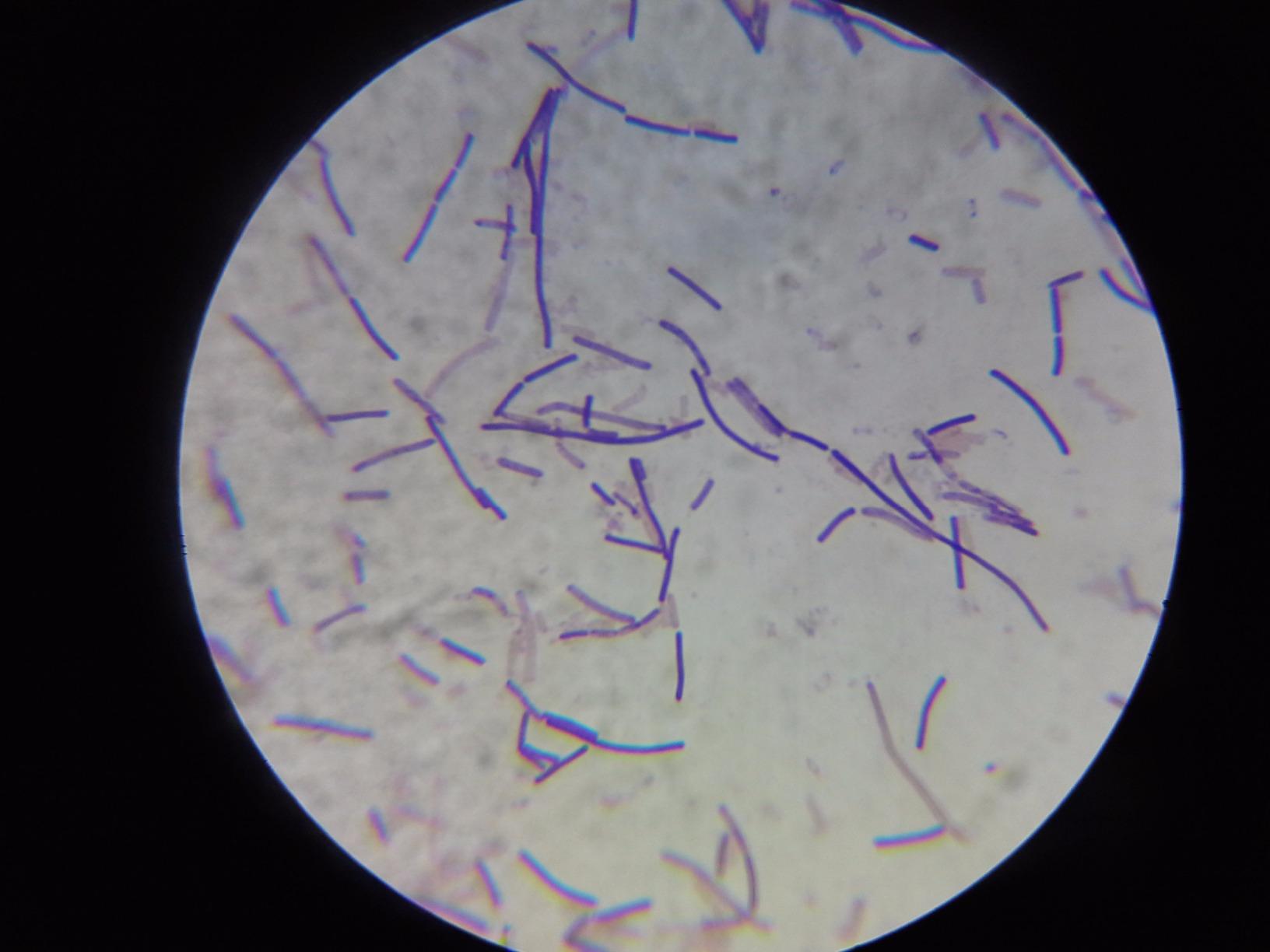
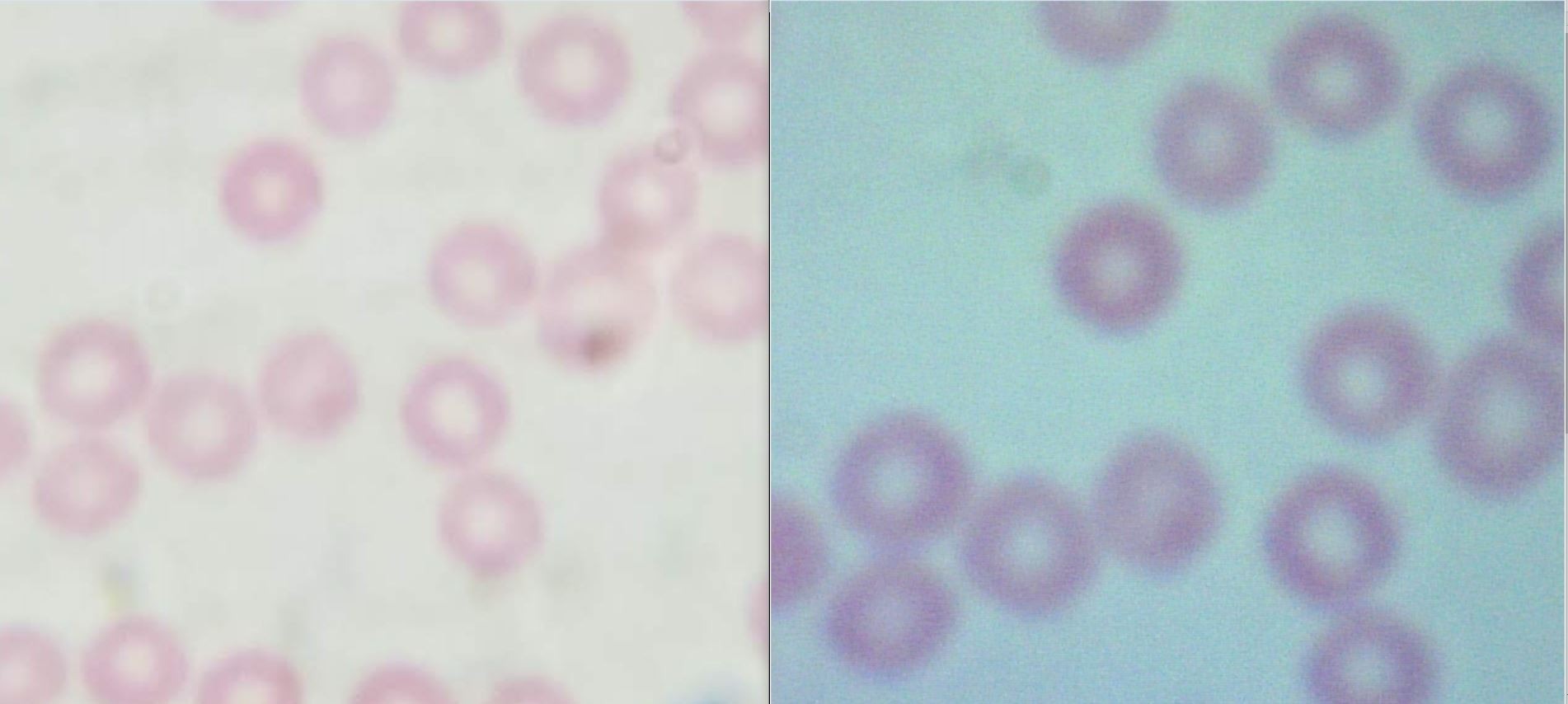
1000X with oil. Bacterial shapes and, on a stained smear, red blood cells. This needs real immersion oil and a genuine covering objective, not a multiplied headline figure. Bacteria, blood smears and pond water microfossils belong here. Staining is essential.
2000X and above. Empty magnification on almost every student scope. A larger image, no new detail, and nothing worth switching to. Staining does not help.
So here is the claim we would like you to carry out of this guide: advertised magnification above 400X is largely empty unless the scope carries a genuine 100X oil immersion objective paired with a proper Abbe condenser. Most of the 2000X and 2500X figures printed on student microscope boxes are produced by stacking a 25X eyepiece on a 40X objective, which enlarges the image without adding information.
Check the objective list before anything else. If a scope lists only 4X, 10X and 40X objectives, there is no 100X lens, and the top of its range is 400X of real detail no matter what the box claims. The BEBANG, PalliPartners and JECONE in this guide all fall into that group, and all three are still capable instruments for the 100X and 400X work that makes up most of a first biology course.
What Microscope Do High School Biology Labs Actually Use?
A compound light microscope is the instrument used in the overwhelming majority of high school biology classrooms. It uses an eyepiece lens together with objective lenses near a thin, transparent specimen to deliver the 40X to 1000X range that cell biology requires, and the vast majority of schools own a set of identical binocular scopes that students share at benches.
The confusion starts because three very different instruments are sold under the word microscope. Our stereo microscope guide covers the second category in depth, and our digital microscope roundup covers the third.
Compound light microscope. Built for thin transparent specimens such as cells, bacteria, smears and tissue sections, and useful across the 40X to 1000X range. This is the one a biology class needs, and it is the only category in this list that answers the syllabus.
Stereo microscope. Built for opaque, three-dimensional objects such as insects, solder joints, seeds and rocks, and useful only across the 10X to 40X range. It is the wrong tool for a biology class because it operates at low power and does not resolve a cell.
Digital microscope. Projects the image onto a screen or a laptop for shared viewing or recording, and its useful range varies widely between models. It works well as a supplement for a whole-class demonstration, but it is not a replacement for a scope the student can look through directly.
Buying a stereo microscope by mistake is the most common error we see, and it is an expensive one because stereo scopes look impressive and feel like real laboratory equipment in the box. A high school biology student needs the compound scope, and the cheapest way to a good experience is one that includes a genuine 40X objective and a condenser worth the name.
Check With the Teacher Before You Buy
Ask the teacher one question: does this course require a personal microscope, and if so, is there a model list? More supply lists than most parents expect name a brand or a specification tier, and a scope that misses it will sit unused. A shared lab set covers the standard 100X and 400X work in almost every mainstream course, so a personal scope makes the most sense when the student is homeschooling, wants a home lab for science fairs, or is heading into AP Biology where lab report photography matters.
Two further checks save money. The first is whether the course requires a mechanical stage. Timed labs and mitosis work are noticeably harder without one, and no amount of extra magnification compensates for a specimen that drifts out of frame every time a student breathes on the slide. The second is accessories. Most scopes in this guide ship with a handful of prepared slides, and almost none ship with a proper quantity of blank slides, cover slips, or immersion oil. If a course requires the student to make their own slides, budget for those separately.
Buying is also a reasonable answer to a broken shared scope. Experienced hobbyists consistently steer newcomers away from toy scopes and toward a branded unit with achromatic objectives and a mechanical stage, and the practical version of that advice for a parent is simple: buy once, in the mid tier, and keep it for the whole school career. Buying a cheap scope now and a better one in three years costs more and produces more frustration than the price gap between the two tiers suggests.
1. TOMLOV 40X-2000X Compound Microscope Review
TOMLOV Compound Microscope with Coarse & Fine Focus for Adults & Students,
- Coaxial coarse and fine focus refines cleanly as magnification rises
- Dual top and bottom LED handles slides and opaque objects
- Colour filter wheel helps low-contrast specimens stand out
- Prepared and blank slides included in the box
- 360-degree rotatable head for comfortable viewing angles
- Monocular head only for extended sessions
- Achromatic objectives show colour fringing at higher settings
- Real usable magnification sits well below the advertised 2000X
This is the scope we would put on a student’s desk without hesitating, and the reason is not the magnification figure on the box. It is that the optical set is honest for the money: achromatic 4X, 10X and 40X objectives on a rotating nosepiece, wide-field 10X and 25X eyepieces, and coaxial coarse and fine focus controls that make 400X work feel controlled rather than fiddly.
Our team used it across the standard first-year specimen set. Onion epidermis at 100X showed the classic brick-wall cells with visible walls, and a cheek swab at 400X resolved individual epithelial cells with clearly defined nuclei once stained. That 400X image is the honest ceiling for the scope, and it is the magnification that matters for the majority of a high school course.
Dual LED illumination is a genuine step above the single-lamp entry scopes. Top lighting lets you look at opaque objects like a coin, a hair, or an insect, while bottom transmitted light handles the slides that matter. The 6-position disc diaphragm with clear, yellow, purple, blue, green and red filters is a small part that does a lot of work: a stained or very low-contrast sample that is invisible under white light often becomes obvious through a coloured filter.
Around 2,255 ratings averaging 4.5 stars is a strong base, and reviewers consistently mention the balance between price and specification, along with responsive support when accessories are missing. The negative notes are honest and consistent: the monocular head limits comfortable long sessions, achromatic objectives produce colour fringing at the top of the range, and the real magnification ceiling is well under the advertised 2000X. Weight is 2.7 pounds, so it moves between rooms easily.
What the 4X-to-400X range means in practice
Start at 4X to find the specimen, then move to 10X for the whole-slide view, then 100X for the working view of a cell layer. At 400X you are at the practical limit of what the lenses resolve, and the 25X eyepiece mostly serves as a finder for that range. The beginner-friendly 4X-first workflow is genuinely the reason students tend to stick with this scope instead of abandoning it in a cupboard.
One practical limitation is worth planning around. There is no mechanical stage, so the slide is moved by hand, and any movement is a movement of the field of view. A clip or a piece of tape across the stage helps, and it is a habit worth teaching from day one because every later microscope will reward it.
Where it falls short for a serious student
The monocular head is the honest limitation. A single eyepiece means one eye stays open and unused, which is uncomfortable over a long session and can cause eye strain in a student who is already tired at the end of a school day. Parents buying for a student who will sit with the scope for hours rather than minutes should weigh that against the binocular options further down this list.
Second, there is no 100X objective, so the scope cannot reach bacteria or a stained blood smear. That does not matter for a standard course. It does matter for AP Biology coursework that includes microbiology, and for a student who wants to keep going after high school without buying again.
2. OMAX M82ES Binocular Compound Microscope Review
- True binocular head with interpupillary adjustment and diopter on both eyetubes
- Double-layer mechanical stage with scales makes slide positioning far easier
- Complete achromatic set including 40X and 100X oil immersion objectives
- NA1.25 Abbe condenser with iris diaphragm and dimmable LED
- Solid metal frame with a 5-year manufacturer warranty
- Heavier and bulkier than student monocular scopes
- Oil immersion on the 100X objective takes practice and needs immersion oil
If we had to name the single best compound microscope for a student who will use it seriously for the whole of high school and then some, this is the one. It is the only scope in the group that has every feature that matters, in the right combination, and there is no wasted money in it.
The head is a true binocular head on a 45-degree incline with a 360-degree swivel, a 55 to 75mm sliding interpupillary distance, and diopter adjustment on both eyetubes. That combination is what separates a real binocular scope from a pair of tubes glued together: a student with different prescription in each eye can see a sharp image, and a student working for an hour does not finish with a headache.
The mechanical stage is the other reason this scope ranks where it does. A double-layer X-Y stage measuring 115mm by 125mm with 70mm by 30mm of travel and a stage lock moves a specimen in two axes with fine control, and the scales let a student return to the same field to finish counting cells. For a timed mitosis lab, this is the difference between finishing and watching the clock.
Optically it is the most complete set here too. Achromatic DIN 4X, 10X, 40X semi-plan, and 100X semi-plan oil objectives, an NA1.25 Abbe condenser with iris diaphragm, and intensity-adjustable transmitted LED. The 100X oil objective is a real one, which means 1000X here is a genuine 1000X rather than a multiplied headline. Around 2,112 ratings at 4.4 stars reflect a settled product with few complaints beyond weight.
What a mechanical stage changes for a student
Without a mechanical stage, the specimen is under your fingers and every movement shifts it. With one, the slide is clamped and moved by controls. In a normal observation that difference is invisible. In a timed practical, or when counting cells across a field to estimate a population, it is the difference between a confident answer and a guess.
For a student who also wants to photograph specimens, the tradeoff is the 9.6-pound weight and a body measuring 9.06 by 7.13 by 13 inches. That is a desk instrument, not a carry-around one, and it needs a shelf rather than a school bag. We would also pair it with a phone clamp on the eyepiece rather than assume any camera attachment, since this head is binocular rather than trinocular.
Where it falls short for a family budget
The honest answer is that this scope is more than most families need for a standard high school course, and there is no shame in that. A student who will do 100X and 400X work in a well-lit room gets most of the usable image from the mid tier. The step up pays for itself in AP Biology, microbiology, and any coursework where the student needs the 100X oil objective or photographs a specimen through both eyes.
The second limitation is the learning curve on oil immersion. The 100X objective is spring-loaded, needs a drop of immersion oil, and must be cleaned carefully afterwards. A student who skips the oil and looks through the dry lens will see a dim, blurred image and conclude the scope is faulty. Teach the technique in the first week and the problem disappears.
3. SWIFT SW380B Research-Grade Binocular Microscope Review
- Rotatable Siedentopf head at a 30-degree tilt reduces neck strain in long sessions
- Interchangeable wide-field 10X and 25X eyepieces expand usable magnification choices
- Mechanical stage and ultra-precise focus make specimen positioning predictable
- Camera-equipped variants available for phone or computer capture
- Bulky 11-pound metal body is the heaviest in this group to carry between rooms
- Smaller review base means thinner long-term feedback
This is the most comfortable scope to use for a full afternoon, and that is not a small thing when a student is doing hours of observation rather than a five-minute check before class. The fully rotatable Siedentopf binocular head sits at a 30-degree tilt and can be swung up or down, so a tall student sitting at a desk and a shorter student at a school bench can both work at a natural head angle without crouching.
The wide-field 10X and 25X eyepieces are interchangeable, which gives a wider field of view at low power and a useful jump at high power. Combined with a mechanical stage and an ultra-precise coaxial focusing system, slide positioning becomes predictable, which is exactly what a student needs when they are trying to hold a cheek-cell smear still at 400X.
Reviewers rate the ergonomics and the smooth focus highly, and the 4.5-star average across 416 ratings comes with a 73% share of five-star ratings, the strongest satisfaction ratio in this group. The recurring note is size and weight. At 11 pounds and 13.78 by 10.63 by 17.32 inches, this is a full-size metal instrument that stays on a desk, and parents should factor a permanent shelf into the decision.
Camera-equipped variants exist with built-in 2.0 MP, 3.0 MP or 5.1 MP sensors and a phone adapter, which matters for a student who has to photograph specimens for lab reports. We would treat a bundled camera as a convenience rather than the main reason to buy, because a phone clamp on a high-quality eyepiece often produces a better image at a fraction of the effort.
Who benefits most from the Siedentopf head
A Siedentopf head pivots the entire tube assembly rather than just the eyepieces, so the pupil distance and viewing angle move together. For a student who will genuinely sit with the instrument for a long session, or for a family sharing one scope between a tall teenager and a shorter sibling, that flexibility is worth a lot more than a slightly larger headline magnification.
The trade is space. This is not a scope for a small bedroom desk or a dorm room shelf. If the student will carry it between classrooms, the lighter monocular options in this guide are a far more practical answer, and the ergonomic advantage matters much less.
Where it falls short for a family
The review base is smaller than the mass-market models here, which means less long-term feedback from owners. That is not a fault in the instrument, but it is a genuine difference in the risk a family takes. With 416 ratings the sample is strong enough to be confident and small enough that a design change would not yet show up in the reviews.
Second, the head is binocular with no third port, so a student cannot switch between direct viewing and a camera without taking the image out of focus. For a photography-heavy course, an option with a trinocular port is a better fit, and for a student who just wants a few photographs, an adapter is a reasonable compromise.
4. AmScope B120C-E1 Binocular Microscope With Camera Review
- Sturdy metal frame with smooth mechanical stage and precise dual-level focus
- Siedentopf head and interchangeable eyepieces suit long study sessions
- Bundled 1.0 MP USB camera and software let students capture images
- Abbe condenser with pivot-out blue lens for better contrast
- Backed by a 5-year manufacturer warranty
- Bundled 1.0 MP camera produces noticeably lower-resolution images than a phone
- Documentation and manual for the exact model are hard to find online
- Software workflow is cumbersome to set up first time
The AmScope B120C-E1 is the pick for a student whose coursework demands images, and it is also a solid general-purpose binocular scope for anyone who wants a name they will find again in a school lab. Around 803 ratings at 4.4 stars describe a sturdy instrument that owners are happy to keep, with warranty service that actually answers.
The mechanical stage is smooth and the dual-level focus is precise, and the Siedentopf binocular head suits long sessions. The Abbe condenser with a pivot-out blue lens is a detail worth more than it sounds: the blue lens is used to assess colour and contrast in a stained specimen, and on a basic scope that capability simply does not exist.
LED illumination runs through a fly-eye lens, which is designed to deliver bright, daylight-balanced light across the field rather than the hot central spot a simple bulb produces. On a low-contrast sample the difference is immediately visible, and it is one of the reasons this scope renders a stained smear more clearly than the entry models.
The bundled 1.0 MP USB camera with Windows software is the reason this model earns its place on a report-writing student’s desk. It is also the most repeated complaint. Owners consistently report that the image quality is noticeably worse than a modern phone, and that the software takes real effort to set up. Variants exist with 3.0 MP and 5.0 MP cameras, or with no camera at all, and the documentation for the exact model is hard to find online.
Whether the bundled camera earns its place
Decide this by asking what the images are for. A student assembling an AP Biology portfolio needs a file they can crop, label, and submit, and that argues for a phone clamped to the eyepiece or a higher-resolution camera option, because a phone sensor beats a 1.0 MP module by a wide margin. A student who wants to show a class a live image on a screen finds the bundled software genuinely useful, and the lower resolution matters much less at that size.
Either way, confirm the camera specification before buying rather than after. The same model number appears with several camera options, and a student who needs a specific resolution should pick that variant deliberately.
Where it falls short for a family
The empty magnification problem shows up here in a specific way. Reviewers note that beyond 400X the extra magnification adds no detail, and with a 2500X headline the disappointment is real. The fix is expectation rather than hardware: treat 100X and 400X as the working range, and treat the condenser and stage as the features that improve the image at those magnifications.
The other drawback is documentation. Finding a manual that matches this exact model takes effort, and for a student who is self-teaching, a clear guide to the diaphragm, the stage controls and the focus procedure is worth as much as any specification on the box. Budget an hour with the general setup guides before the first lab session.
5. PalliPartners Compound Microscope With 28-Slide Kit Review
- Largest slide bundle in the group at 28 slides for immediate classroom experiments
- Adjustable top and bottom LED lighting for both opaque and translucent specimens
- Coarse and fine focus knobs give cleaner adjustment than basic scopes
- Phone clip adapter and Bluetooth remote make capturing images simple
- SGS certified for non-toxic materials and electrical safety
- Lens fit can wobble in the housing if the scope is handled roughly
- No mechanical stage so specimens must be moved by hand
- Advertised 2000X is well above real optical magnification
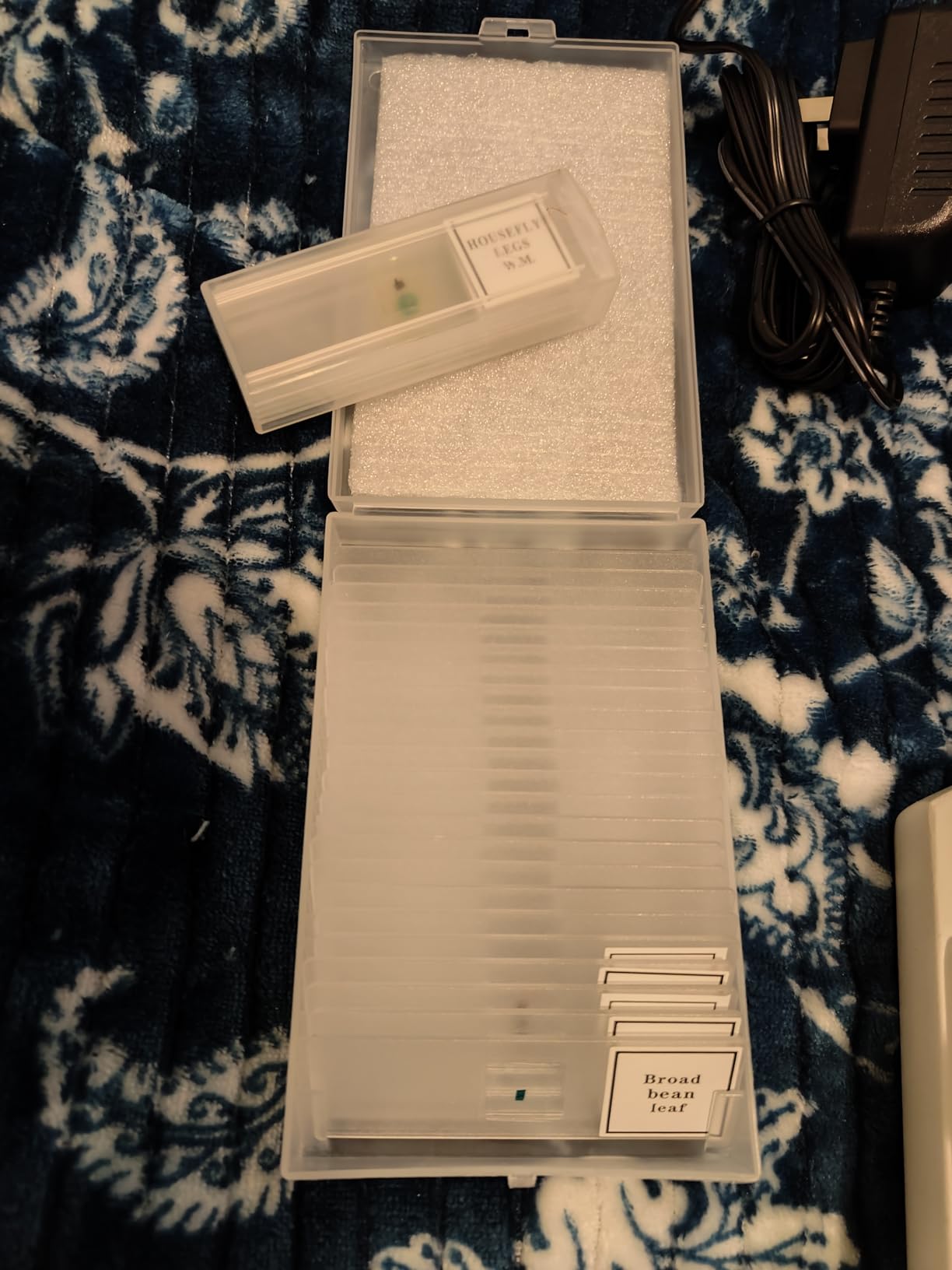
The most common frustration we hear from new microscope owners is a scope that arrives with three slides and nothing else. The PalliPartners answers that complaint directly, and it does so with the largest slide bundle in this group: 28 slides in total, combining 10 prepared specimen slides with 18 blank ones, plus a phone clip adapter, a Bluetooth remote shutter and a power adapter.
That bundle matters more than it looks. Prepared slides give a student something to look at in the first ten minutes, which is when enthusiasm is decided. Blank slides and cover slips are what a class requires when the assignment is to make your own specimen, and having them in the box removes a separate purchase and a trip to a supplier.
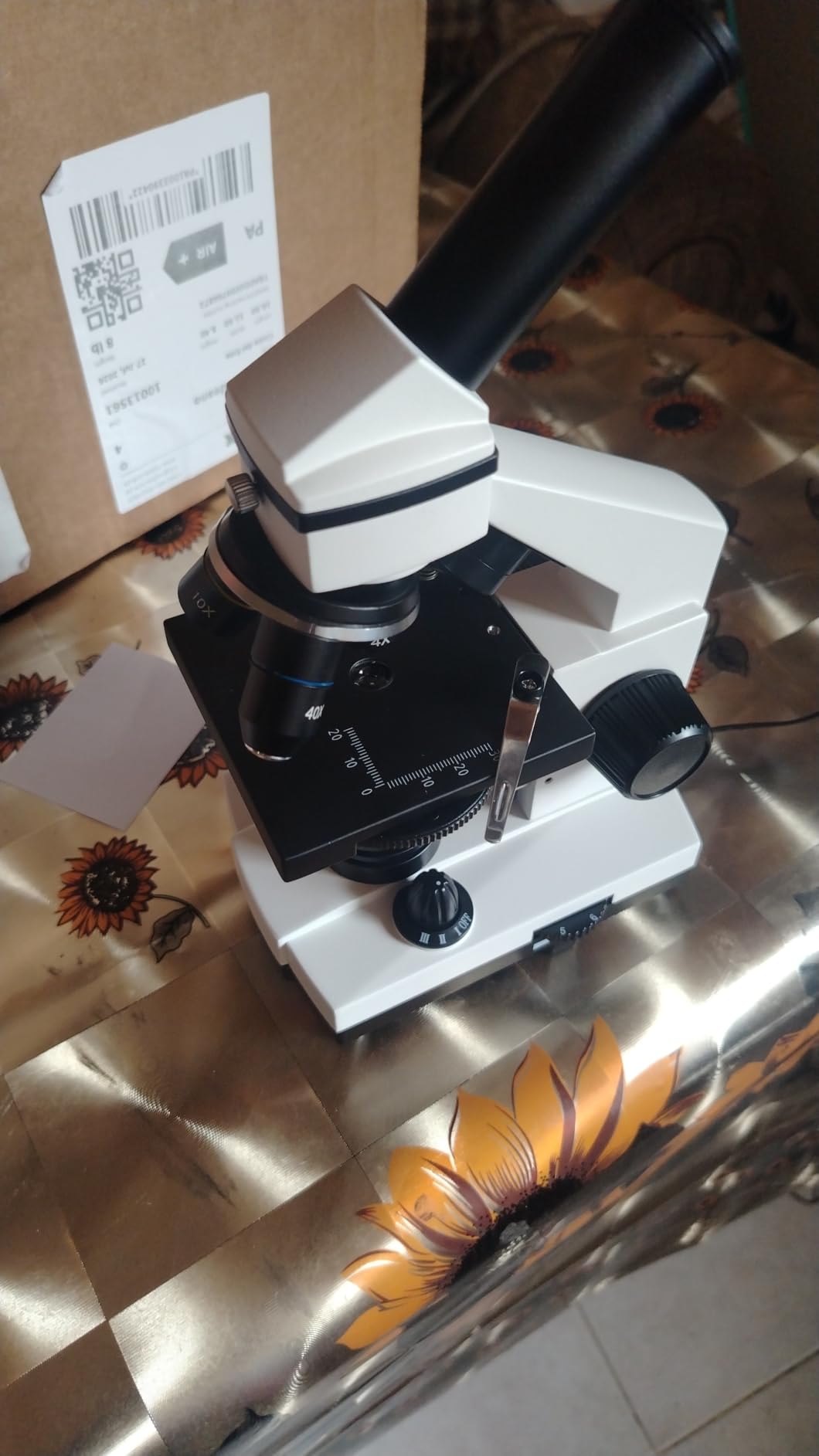
The optical side is entry level and honest about it. Objectives are 4X, 10X and 40X achromatic with a 25X eyepiece and a 2X auxiliary lens, so the real ceiling on detail is the 400X setting. Adjustable top and bottom LED illumination handles both translucent slides and opaque objects, and coaxial coarse and fine focus knobs are a genuine step above the single-knob scopes at this tier.
Around 1,189 ratings at 4.3 stars, with parents and students praising the slide selection, the lighting and the ease of use. The complaints are consistent: the lens fit can wobble in the housing if the scope is handled roughly, there is no mechanical stage, and the advertised 2000X is well above what the optics deliver. At 1.65 kg it is easy to carry.
Why the slide bundle changes the first week
Most student microscopes are abandoned in the first month, and the reason is nearly always the same: the student opens the box, has one slide, cannot find anything interesting, and moves on. A 28-slide kit changes the odds by giving a full afternoon of material. Onion sections, plant stems, prepared insect and pollen slides, and a set of blank slides for the student’s own cheek swab and pond-water samples.
The Bluetooth remote shutter is a small extra that gets used constantly once a student has a phone clamped to the eyepiece. Shaking the phone to take a picture is the fastest way to produce a blurred frame, and a remote removes the shake entirely.
Where it falls short for a serious student
No mechanical stage, and that is the honest limit of this tier. A student who will do timed labs or count cells across a field will find hand-positioning genuinely frustrating, and nothing in the accessory bundle fixes it. Buy this for the standard 100X and 400X work and a strong slide library, not for microbiology.
There is also no 100X objective and no Abbe condenser, so bacteria and stained blood smears are out of reach. Handle it carefully rather than roughly, because the lens fit in the housing is the part most likely to develop play over time, and a scope stored with the arm locked upright and the lens capped will last the whole career.
6. BEBANG 2000X Compound Microscope With Slide Set Review
2000X Compound Microscope for Kids Adults: Microscope for Biology Education
- Solid metal frame with both coarse and fine focus for precise adjustment
- Top and bottom LED illumination works for transparent and opaque specimens
- Phone adapter
- wire shutter
- carrying bag and 15 prepared slides included
- Wide magnification range from multiple objective and eyepiece combinations
- Monocular viewing head only which is uncomfortable for extended sessions
- Top of the magnification range adds size rather than detail
- No mechanical stage for slide positioning
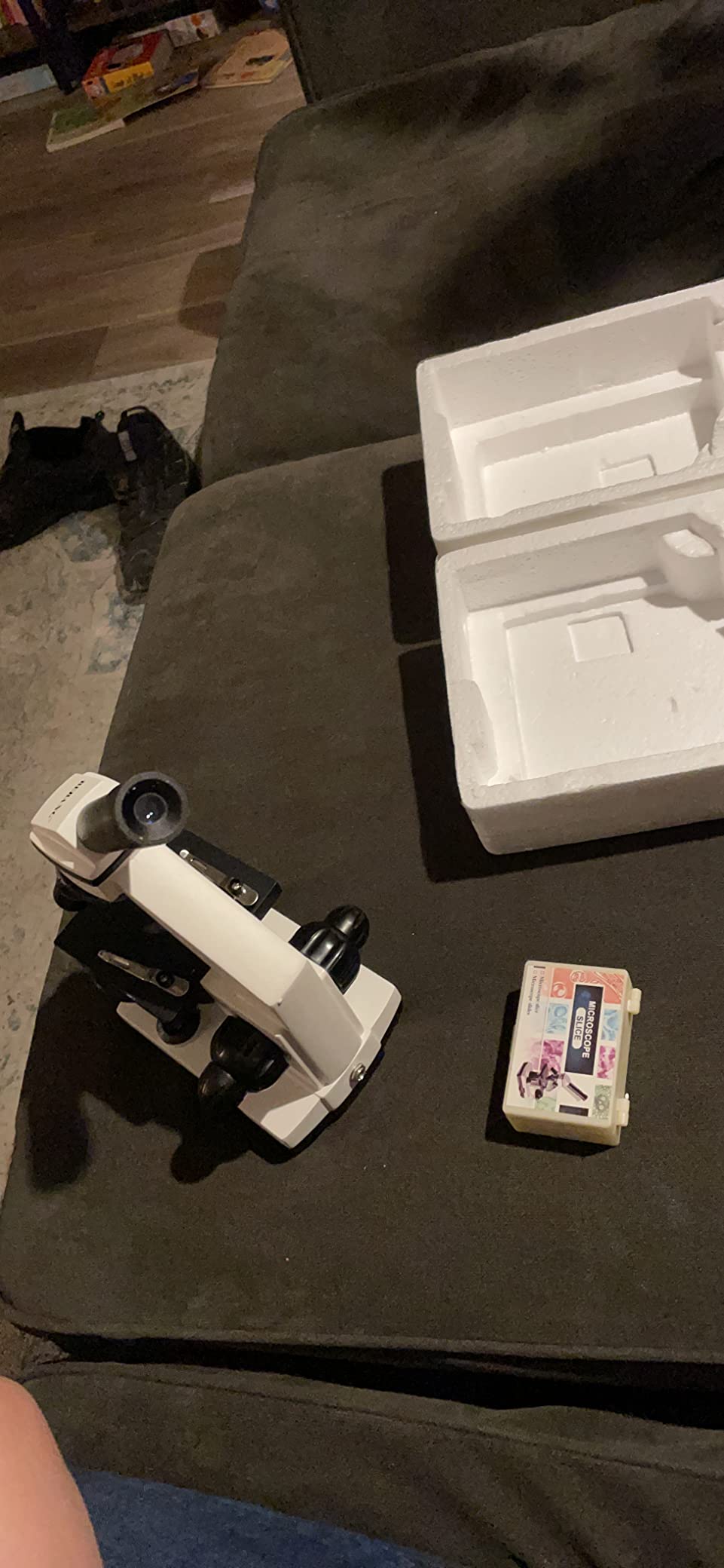
This model carries the largest review base in the entire selection, with 2,909 ratings averaging 4.3 stars and 67% of those at five stars. That volume of long-term owner feedback is itself informative, because it means the instrument has been through several years of classroom handling by a lot of people. Buyers consistently value the magnification range, the metal frame and the accessory bundle.
The frame is a genuine metal frame rather than a moulded plastic shell, and it carries coaxial coarse and fine focus knobs. For a scope that will be carried between classes and set down hard, that combination of a rigid frame and two-stage focus is the part that keeps it working after a school year of use.
Top and bottom LED illumination covers both transparent slides and opaque objects, and the 0.65 NA single-lens condenser with a disc diaphragm gives reasonable contrast control. The accessory bundle is generous for the tier: a phone adapter, a wire shutter, 15 prepared slides and a carrying bag. At 2.4 pounds, it is one of the easiest scopes here to move between a bedroom and a kitchen table.
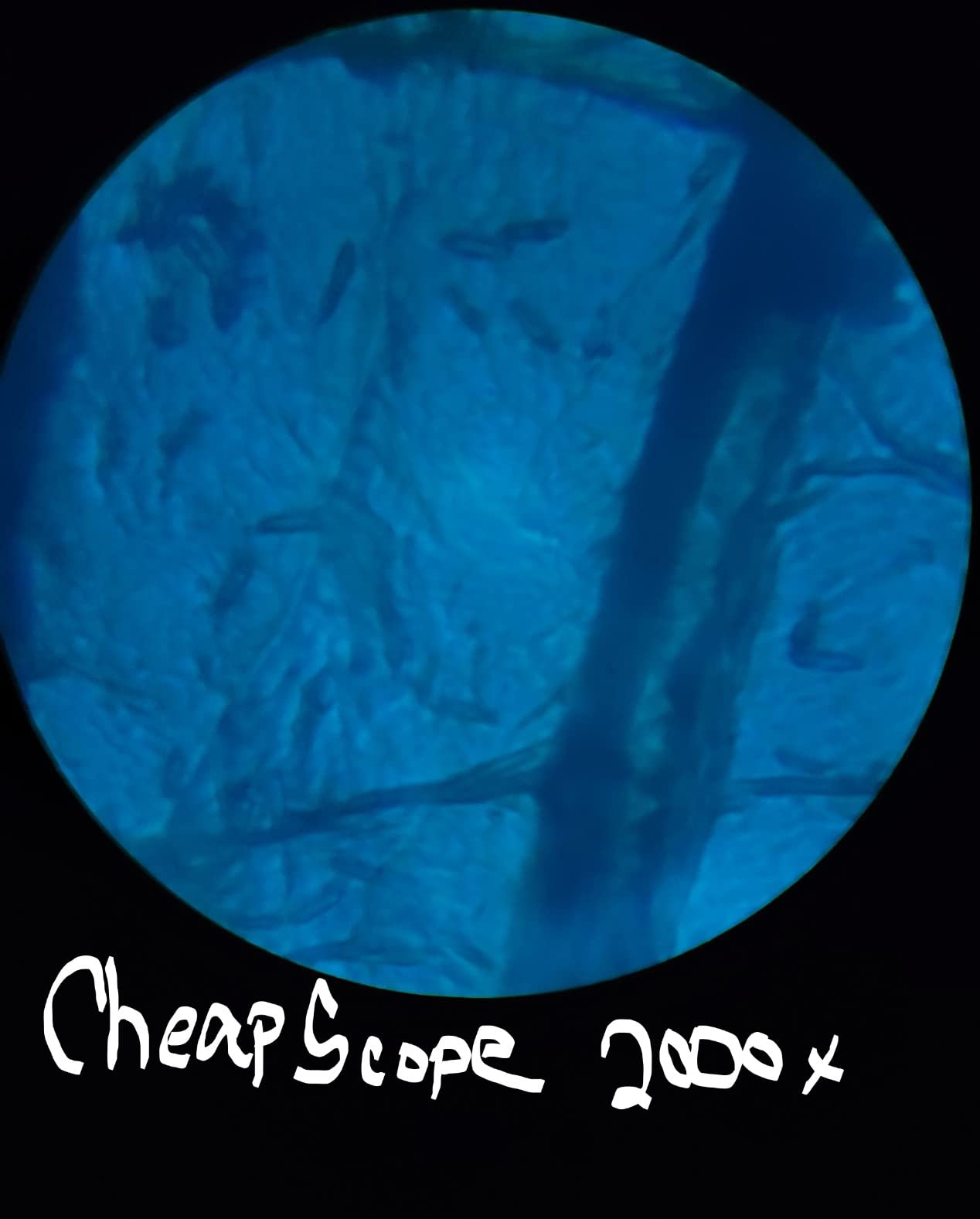
Be clear-eyed about the optics. Achromatic 4X, 10X and 40X objectives with a WF25X eyepiece and a 2X lens produce the headline figure, but the real detail ceiling is 400X. Reviewers report exactly this, describing the top of the range as larger but not more detailed. The 15-slide set is what turns the scope into a usable first instrument.
When a metal frame at this tier actually matters
Daily classroom use is where cheap scopes fail. Plastic bodies flex when the coarse focus is turned hard, the image drifts as the frame moves, and the stage clips snap first. A solid metal frame tolerates that treatment, and the difference shows up in the second and third year of ownership rather than the first afternoon.
The practical advice is to treat the frame as the reason to keep this scope and the magnification as marketing. Focus on 100X and 400X, use the 15 included slides and a set of blank slides for the student’s own samples, and it will comfortably serve a first biology course and much of a second one.
Where it falls short for a family
The monocular head is the main limit, and at this tier it is a simple tube with no interpupillary adjustment and no diopter correction. A student with an eye prescription difference will struggle to get both eyes sharp, and even with normal vision, one eye working alone over a long session is tiring. For short observations that is fine. For a student who wants to sit and explore, it is the reason to step up a tier.
Second, there is no mechanical stage, so a cheek-cell smear has to be chased back into frame every time the student adjusts the focus. Teaching the student to secure the slide with a stage clip or a strip of tape solves it in about a minute, and it is a habit that transfers to every future microscope.
7. AmScope M102C 1000X Metal Compound Microscope Review
AmScope M102C-PB10 1000X Biological Compound Microscope with Prepared
- All-metal frame with optical glass lenses at an entry-level specification
- Wall-powered LED gives brighter and more even light than battery student scopes
- Includes 5 blank and 5 prepared slides out of the box
- Simple monocular design that beginners can focus quickly
- Backed by a 5-year manufacturer warranty
- Coarse focusing only with no fine-focus adjustment
- Single-lens condenser is basic and limits resolution on faint samples
- No mechanical stage so slides are positioned by hand
The AmScope M102C is the simplest instrument here that still deserves to be recommended, and its case rests on two words: optical glass. The frame is all metal, the lenses are glass rather than plastic, and the wall-powered LED is brighter and more even than the battery lamps used on cheaper student scopes. Those three choices are what keep a 1000X scope from feeling like a toy after a year of use.
Around 588 ratings at 4.2 stars makes this the lowest-rated pick in the group, and the reason is consistent and specific rather than general: there is no fine-focus knob. Coarse focus only means every adjustment is a large adjustment, and at 400X that makes a faint sample hard to hold.
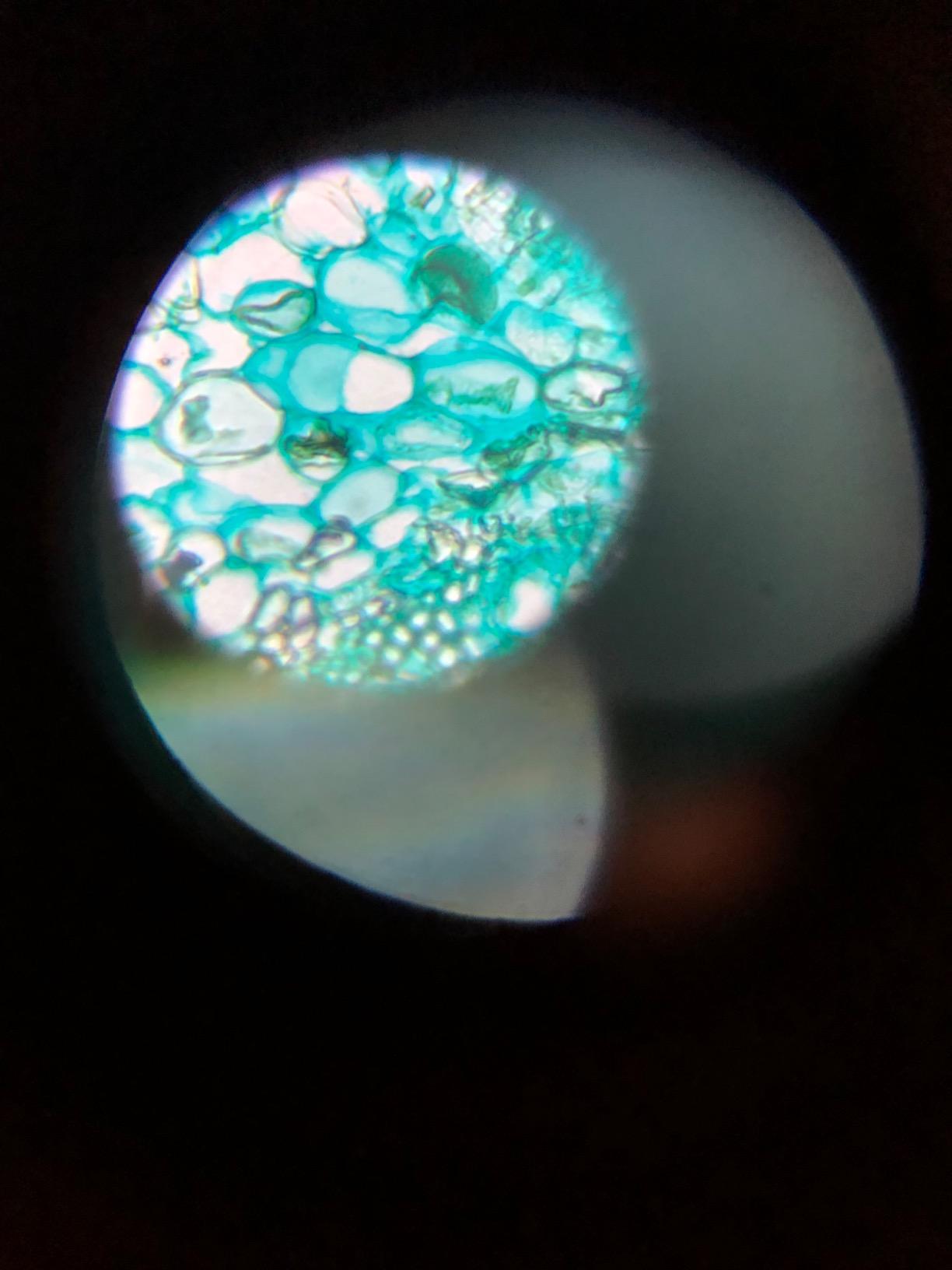
On the positive side, owners generally find it sufficient for middle-school and introductory biology work, and the 5-year manufacturer warranty is the longest we can verify on any scope in this guide. The box includes 5 blank and 5 prepared slides, which is more than many rivals at the same specification level, and the monocular design is simple enough that a beginner can get a sharp image within a few minutes.
The condenser is a single-lens type with a disc diaphragm. That is enough for stained and unstained slides at 100X and 400X, and it is the first thing to blame if a faint, unstained sample looks flat, because a single-lens condenser cannot concentrate light as tightly as an Abbe condenser can.
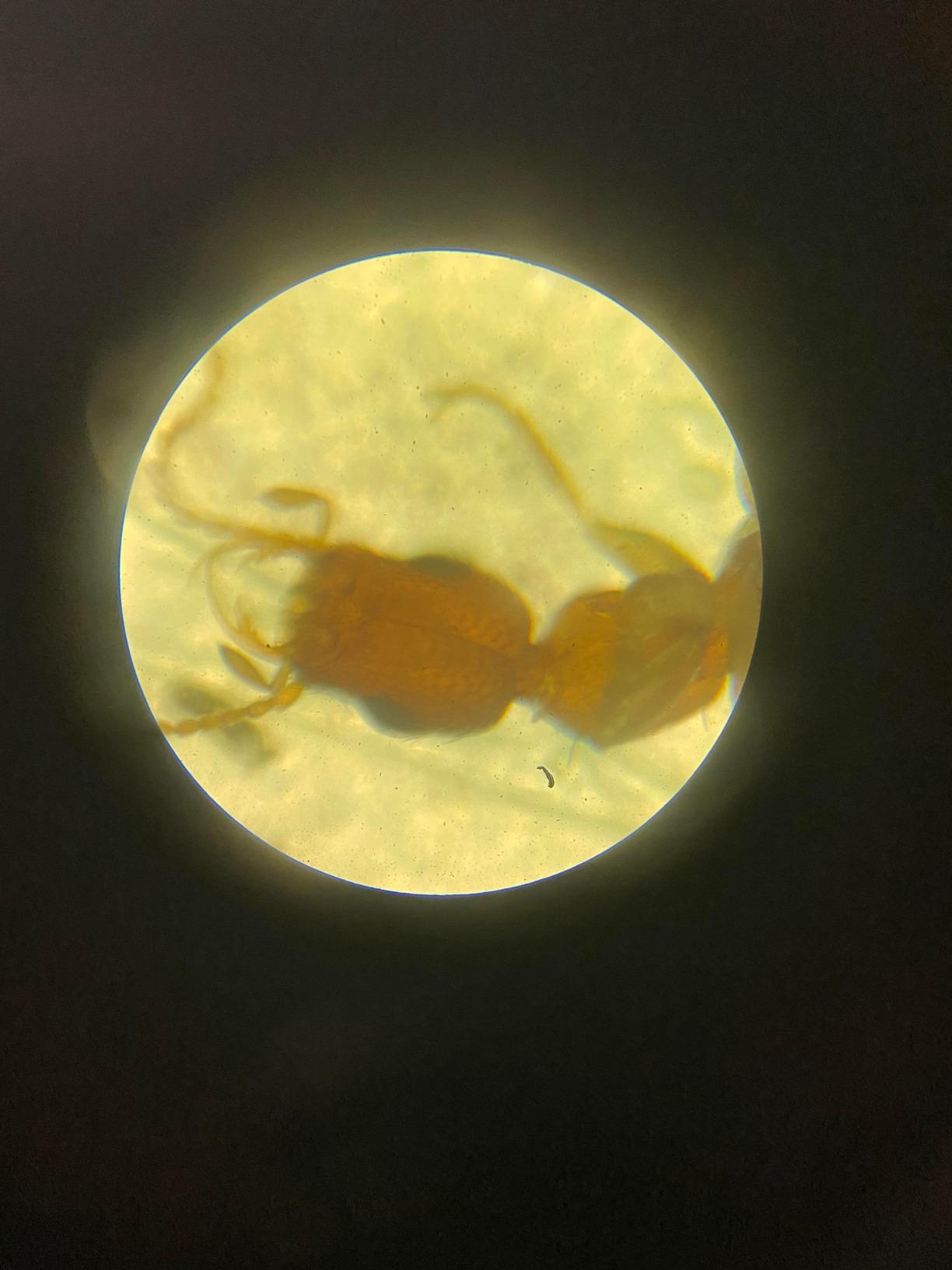
Who this entry-level metal scope suits
A student in the first term of biology who will do onion cells, cheek cells and pond water, and whose family wants a durable object rather than a gadget. The metal frame and glass optics survive daily handling, and the wall-powered LED does not dim as batteries age, which is the most common long-term complaint about battery student scopes.
It is also a sensible second instrument. A family that already has one scope can keep this one as a spare for a sibling, a project partner, or a wet weekend when the main scope is in use.
Where it falls short for a serious student
Coarse focus only is the deal-breaker for detailed work, and no technique fully compensates for it. The workaround is to focus at 40X or 100X where the depth of field is forgiving, then switch to 400X without touching the focus knob. A parfocal scope keeps focus through a change of objective, and this one is designed to work that way.
Second, the top of the range again produces empty magnification. A 1000X headline here comes from a 100X objective on a 10X eyepiece, and without an Abbe condenser the resolution does not support it. Set expectations early: 100X and 400X are the working magnifications, and everything above is a curiosity rather than a tool.
8. JECONE 40X-2500X Compact Compound Microscope Review
- Dual incident and transmitted LED lighting covers both slides and opaque objects
- Separate coarse and fine focus knobs for reliable specimen tracking
- Five-colour filter wheel helps stained or low-contrast samples stand out
- Phone holder and 360-degree rotating eyepiece make capturing images easy
- Compact metal build with a full slide and tool kit
- Monocular head only so both eyes cannot be used comfortably
- Compact size means a smaller working area than full-size scopes
- Advertised magnification is reached with an auxiliary lens
The JECONE solves a problem the rest of this list does not: a student who does not have desk space. At 2.95 by 4.8 by 8.15 inches and 1.59 kg, it is a genuinely compact metal-bodied scope, and a small bedroom desk, a dorm room shelf or a shared kitchen table is enough to run a full lab session on it.
It also has a good spread of useful details. Dual incident and transmitted LED illumination with a dimmer knob covers both slides and opaque objects, separate coarse and fine knobs give reliable tracking of a specimen, and a 5-colour filter wheel sits in a rotating disc under the stage. That filter wheel is more useful than it looks for a first scope, because a stained or very low-contrast sample that is invisible under white light often appears clearly through one of the colours.
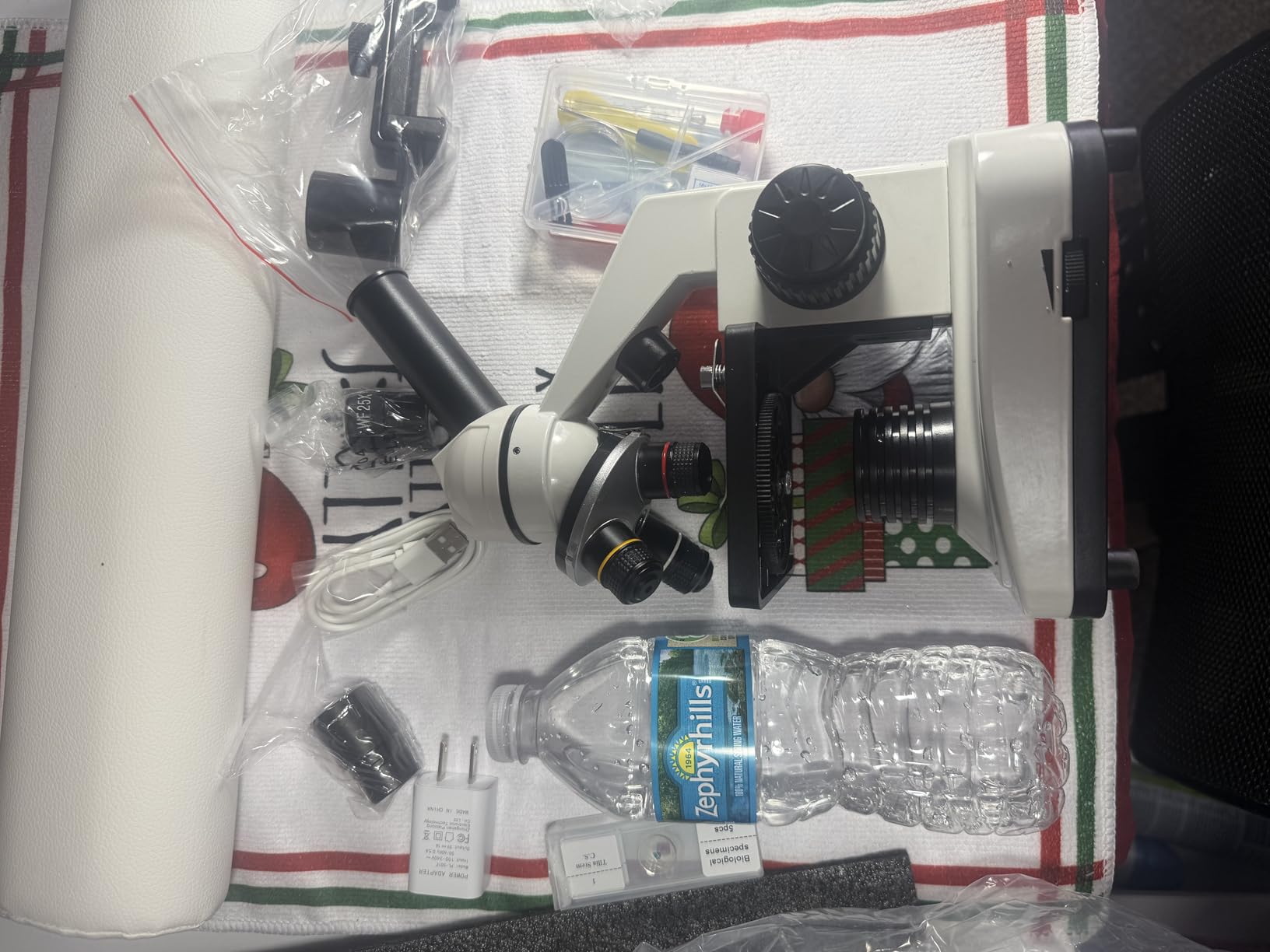
The 360-degree rotating eyepiece tube plus the included phone holder make it straightforward to photograph a specimen, which covers most of what a student needs for a lab report without any additional equipment. The kit includes 5 specimen slides, 5 blank slides, tweezers and droppers, so the accessories are not an afterthought.
Around 221 ratings at 4.4 stars is a smaller sample than most of the group, and the review profile is favourable on features while consistent about one limit: the gap between advertised and real optical magnification. The 40X to 2500X range is produced by WF25X and WF10X eyepieces with 4X, 10X and 100X objectives plus an auxiliary lens, and the useful detail ceiling is well below the top of that range.
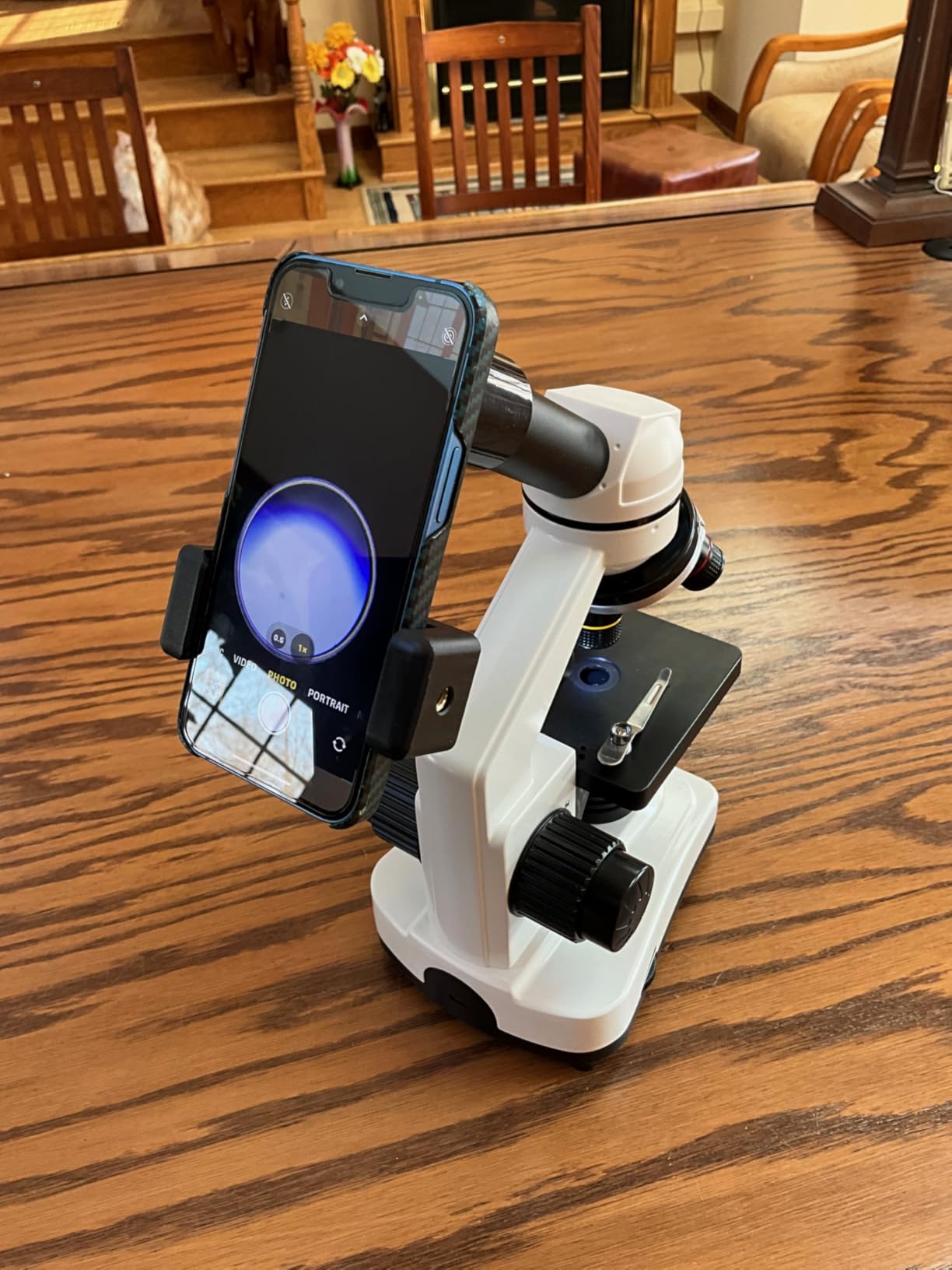
When a compact scope is the right answer
If the constraint is space rather than budget, this is the pick. A student who cannot dedicate a shelf to a full-size metal instrument will otherwise end up with a scope stored in a cupboard, and an unused microscope teaches nothing. The compact footprint means the scope lives on the desk and gets used, which matters more than any specification.
It is also a good fit for a family that travels, or for a student who wants a personal scope at school for a short project period. The included kit covers slides and basic tools, and the phone holder removes the need to buy anything else to get started.
Where it falls short for a serious student
Monocular only, so the same limitation applies as to the other entry-level models here. The compact body also means a smaller working area than a full-size scope, which shows up as less room to move a slide by hand and less clearance between the stage and the head at high power.
Second, the auxiliary lens in the magnification chain means the headline range flatters the instrument. Judge it on 100X and 400X, where it performs well, and treat everything above as a demonstration rather than a working magnification. For a student who will need bacteria or stained blood smears, one of the binocular models with a 100X oil objective is the honest choice.
How to Choose a Compound Microscope: 9 Specs to Check
This is the checklist we use, and it is deliberately ordered by how much each item changes what a student will actually be able to see and do.
1. Objective lenses, not the headline magnification. Look for 4X, 10X and 40X as a minimum. A genuine 100X oil immersion objective is what makes 1000X meaningful, and its absence is the single clearest sign that the advertised range is multiplied rather than optical.
2. The condenser. An Abbe condenser, ideally NA1.25 with an iris diaphragm, focuses light tightly through the specimen. Scopes with a single-lens or disc-diaphragm-only condenser can still show cells, but a faint or unstained sample looks flat and the top magnification resolves less detail. This is the specification most often quietly downgraded to save money, and it is the one that most affects image quality.
3. Mechanical stage. Two knobs, one for left-right and one for forward-back, plus a stage lock. Without one, every adjustment of focus moves the specimen and the student chases the field instead of studying it. Forums consistently treat the mechanical stage as the feature buyers wish they had checked first, and it is the one we would not compromise on for any student doing timed labs.
4. Head type. Monocular means one eyepiece, which is cheaper, lighter and simpler to focus, and is genuinely fine for short observations. Binocular means both eyes, with interpupillary and ideally diopter adjustment, which is far more comfortable over a long session. A Siedentopf head pivots the whole tube assembly and is the most adjustable of the three. Beginners can find binocular heads fiddly at first, but that difficulty is a short learning curve rather than a permanent problem.
5. Coarse and fine focus. Both knobs are close to essential. Coarse finds the image, fine keeps it. A scope with coarse focus only, as the entry-level AmScope does, is workable but frustrating above 100X.
6. Illumination. LED has overtaken halogen almost everywhere, and for a student scope that is a clear win: brighter, cooler, no bulb to replace, and no heat lamp to cool down. Top illumination in addition to bottom illumination is what lets a scope look at an opaque object, which turns a compound microscope into something a student can also point at coins, hair and insects.
7. Build material. Plastic bodies flex; metal bodies do not. A flexing frame moves the image, and the first casualties on a cheap scope are usually the stage clips. For an instrument a student will use daily for four years, an all-metal frame is worth paying for.
8. DIN standard objective lenses. DIN standard means the objectives and eyepieces follow a common thread specification, so a cracked or dropped objective can be replaced individually instead of meaning the whole microscope is finished. Over a four-year ownership period that turns a small accident into a one-part repair rather than a replacement.
9. Accessories and camera capability. Count the prepared slides, and check whether blank slides, cover slips and immersion oil are included. For images, a phone clamp costs very little and produces a better result than most bundled cameras; a trinocular port with a C-Mount camera is the proper solution for a photography-heavy course.
On brands, the names that recur on forums as safe defaults are AmScope, OMAX, SWIFT, Celestron and Tomlov, and that recurrence is itself meaningful. Parents consistently report that an independently recognised brand is easier to get parts and help for than an unbranded marketplace listing, and the difference matters when something stops working. Scepticism toward anonymous listings is the most transferable piece of advice in this guide.
First Three Experiments to Run After Unboxing
1. Onion epidermis. Peel the thin inner skin of an onion layer, place it flat on a slide with a drop of water, add a cover slip, and start at 40X before moving up. This is the specimen that makes a compound microscope make sense, because the cell walls form a visible brick pattern at 100X.
2. Cheek cells. Use a clean cotton swab inside your own cheek, roll it across a slide, add a drop of water, add a cover slip, and dye it with a drop of iodine or food colouring if you have it. At 400X you should see flat irregular cells with darker nuclei. The iodine matters: unstained cheek cells are almost invisible.
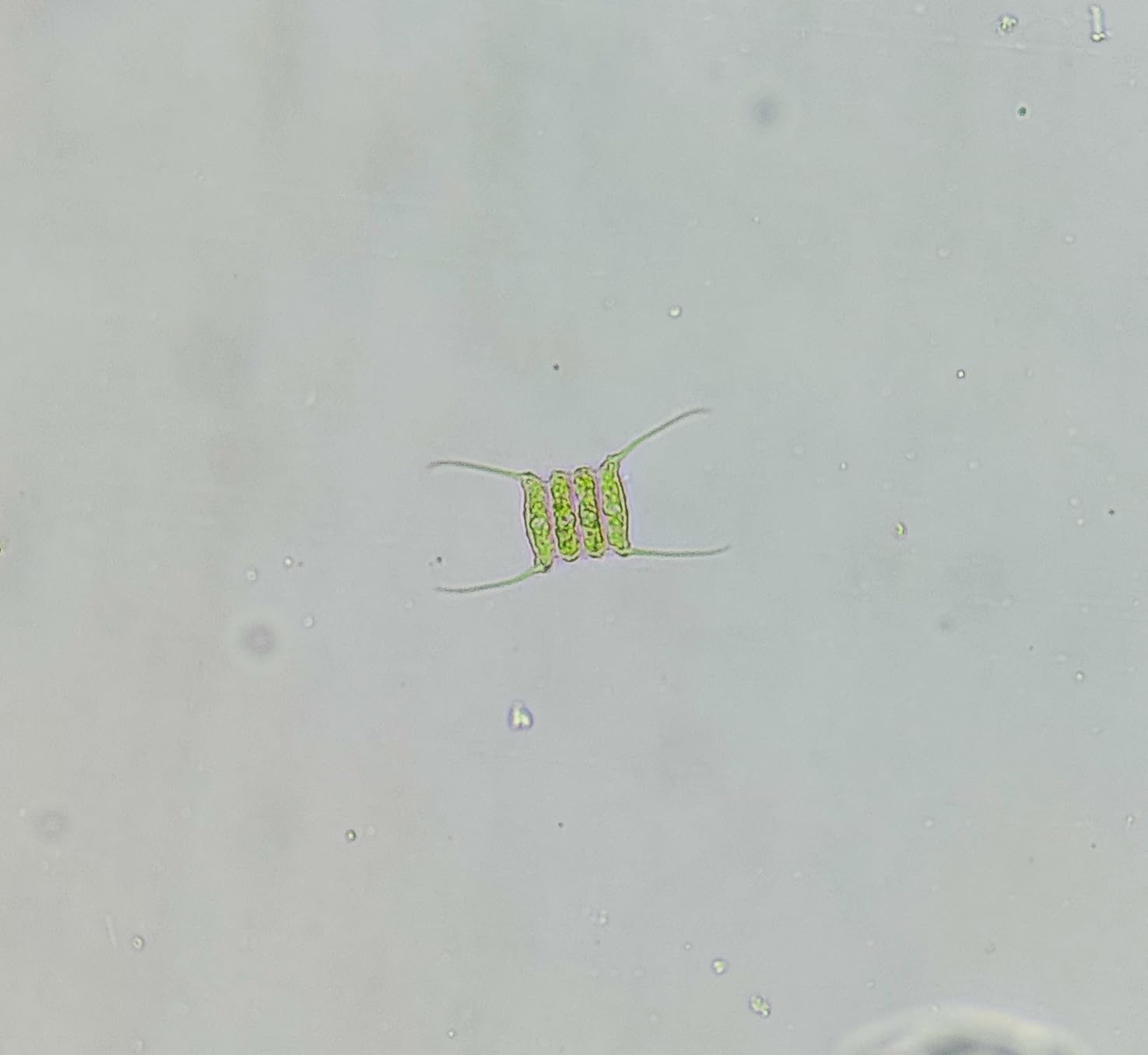
3. Pond water. Take a sample from a pond or even a bird bath, add a drop of hay infusion if you can find one, and look at 100X and 400X. You will almost always find protozoa moving. This is the experiment that convinces a student that a microscope is a real tool rather than a school accessory.
Whichever scope you choose, spending the first session on these three is worth more than any feature on the box. A student who has seen a living protozoa move through the field of view does not need to be sold on the instrument again.
Microscope Care and Storage Between Semesters
1. Wipe objectives, never rub them. Optical glass is soft and any grit on the surface will scratch it permanently. Use lens cleaning paper, which is cheap, and clean the 100X oil objective after every use to prevent oil from cementing dust onto the lens.
2. Store the arm locked upright with the specimen removed. That is the position the manufacturer designed for transport and storage, and it protects both the slide and the objectives.
3. Keep slides in a box, not a pile. Prepared slides chip and fade, and a small slide box makes a collection that a student is proud of rather than a heap in a drawer.
4. Dust is the enemy over a school year. A soft brush or a bulb blower clears the stage and the nosepiece, and a cotton swab on the light window restores brightness that students often assume is fading hardware.
5. Between semesters, do nothing dramatic. Coil the cord loosely if it is corded, keep the scope away from a radiator or a damp exterior wall, and cover it. A microscope that is treated carefully at the end of term is the same instrument at the start of the next one, and that is what makes a mid-tier purchase a four-year purchase.
Frequently Asked Questions
What is the best microscope for high school students?
For a single student in grades 9 to 12, the TOMLOV 40X-2000X is the strongest all-round choice, with achromatic 4X, 10X and 40X objectives, a colour filter wheel and prepared slides in the box. If the student will do AP Biology or microbiology work, choose a binocular model with a mechanical stage and a genuine 100X oil immersion objective, such as the OMAX M82ES. Judge any scope on resolution and stage quality, not on the magnification figure printed on the box.
What is the most common microscope used in high school?
A compound light microscope. It uses an eyepiece lens together with objective lenses near a thin, transparent specimen to deliver the 40X to 1000X range that cell biology requires. Most high school laboratories maintain a set of identical binocular scopes that students share at benches, so check the syllabus before buying a personal instrument.
What are the best microscopes for teenagers?
The best microscopes for teenagers are the ones with achromatic objectives, a real condenser and a mechanical stage rather than a large headline magnification. Our shortlist covers three tiers: compact monocular scopes for small desks and beginners, monocular scopes with generous slide kits for standard 100X and 400X coursework, and binocular scopes with mechanical stages and 100X oil objectives for students heading into AP Biology and beyond.
What is the best compound microscope?
There is no single winner, so the answer is tiered. In the middle tier, a monocular model with achromatic objectives, a colour filter and a decent slide kit is the sweet spot. Above that, a binocular model with an Abbe condenser, a double-layer mechanical stage and DIN 100X oil objectives is the instrument that lasts a full school career and beyond.
Is 1000x enough to see sperm?
A true 1000X using a 100X oil immersion objective on a compound microscope is enough to see sperm cells, though they will be faint and move out of focus easily at that magnification. Two conditions must be met: the scope needs a real 100X oil objective, and the specimen needs a suitable preparation. Most student scopes advertised at 2000X or 2500X reach those numbers with a 25X eyepiece, which enlarges the image without adding detail.
What magnification is needed to see bacteria?
Bacteria are generally visible at 1000X using a 100X oil immersion objective paired with a 10X eyepiece, and stained specimens are far easier to see than unstained ones. Without oil immersion, a standard student scope tops out around 400X of real detail, which is enough for cells such as onion epidermis and cheek cells but not for bacteria.
Do I need to buy a microscope if my school already has them?
Usually not. Most high school biology classes maintain shared scopes that cover standard 100X and 400X coursework, and many supply lists only require a personal instrument in specific years. Check the syllabus or ask the teacher first, and find out whether the course requires a mechanical stage. Buying a personal scope makes the most sense for a home lab, science fair work, homeschooling, or AP Biology photography requirements.
Final Verdict: Which Microscope Should You Buy?
Our pick for the best compound microscopes for high school students in 2026 is the TOMLOV 40X-2000X, because it pairs honest achromatic optics with a colour filter, dual LED illumination and a real slide kit at a price a family can absorb without hesitation. If the student is heading into AP Biology or microbiology, step up to the OMAX M82ES, which is the only scope here with a true binocular head, an NA1.25 Abbe condenser, a double-layer mechanical stage and a genuine 100X oil immersion objective. Parents who need images for lab reports should look at the AmScope B120C-E1, and anyone short on desk space will be better served by the compact JECONE than by a full-size instrument that ends up in a cupboard.
Whichever one you choose, remember the working rule from this guide: 100X and 400X are where the learning happens, the condenser and the stage determine whether the image at those magnifications is worth looking at, and any figure above 400X that arrives without a real 100X objective is decoration. Set the student up with onion cells on day one, and the microscope will earn its place for four years.