

A dial caliper is the fastest way to turn a guess into a number. Slide the jaws onto a board, a tenon shoulder or a dowel hole and the needle tells you the fractional part while the beam gives you the whole number. No battery, no menu, and a reading you can make in a dim shop with sawdust in the air.
That is why the best dial calipers for woodworking come up so often in shop forums. Furniture makers and serious hobbyists reach for them when an eyeballed gap has to become a repeatable measurement before glue-up. A thousandth of an inch on a tenon cheek is the difference between a snug fit and a joint that has to be filed down after the clamps come off.
We spent 2026 putting ten dial calipers side by side, from a budget four-way tool to a Japanese-made shop standard, and read what owners report after months of use rather than a single afternoon. We looked at the rack-and-pinion action, the graduation you actually get, the inside jaw depth, and how each one holds zero. You can see the wider picture in our digital caliper roundup and dial indicator reviews too, but the ten picks below are all mechanical.
Table of Contents
Top 3 Picks for Woodworking (October 2026)
The Starrett 3202-6 is the pick most shops end up with, the Mitutoyo 505-742J is the smoothest instrument here, and the iGaging 100-164 is the one that solves a problem the others do not.


Mitutoyo 505-742J
- 0.1 inch per revolution
- Shock protection
- Satin chrome dial
- Ultra-smooth slide
All 10 Dial Calipers at a Glance in 2026
Every pick below does inside, outside, depth and step measuring. The differences that matter to a woodworker are the graduation on the dial, the range, and whether the mechanism survives a dusty bench.
| Product | Specifications | Action |
|---|---|---|
| Starrett 3202-6 |
|
Check Latest Price |
| Mitutoyo 505-742J |
|
Check Latest Price |
| iGaging 100-164 |
|
Check Latest Price |
 Fowler 52-008-712-0 Fowler 52-008-712-0 |
|
Check Latest Price |
 HFS 15809 HFS 15809 |
|
Check Latest Price |
 findmall 6 Inch findmall 6 Inch |
|
Check Latest Price |
 HDLNKAK KTL001 HDLNKAK KTL001 |
|
Check Latest Price |
 Accusize P920-B216 Accusize P920-B216 |
|
Check Latest Price |
 Clockwise DDLR-0605 Clockwise DDLR-0605 |
|
Check Latest Price |
 Oshlun MTDCF-06 Oshlun MTDCF-06 |
|
Check Latest Price |
1. Starrett 3202-6 – The Shop Default for Joinery
- Positive split-gear anti-backlash control
- Hardened stainless steel jaws and rack
- Knife-edge contacts for inside and outside work
- Thumb-operated fine adjustment roll
- No batteries and a fitted case
- Imperial-only readout on this model
- Loose thumb roller for some users
- Inside jaw depth limited to about 3/4 inch
Starrett is the name that comes up most often when woodworkers talk about dial calipers, and the 3202-6 is the model behind most of that reputation. It weighs 16 ounces and measures 10.2 by 3.8 inches, which sounds heavy until you notice that the weight is all stainless steel and hardened mechanism rather than plastic.
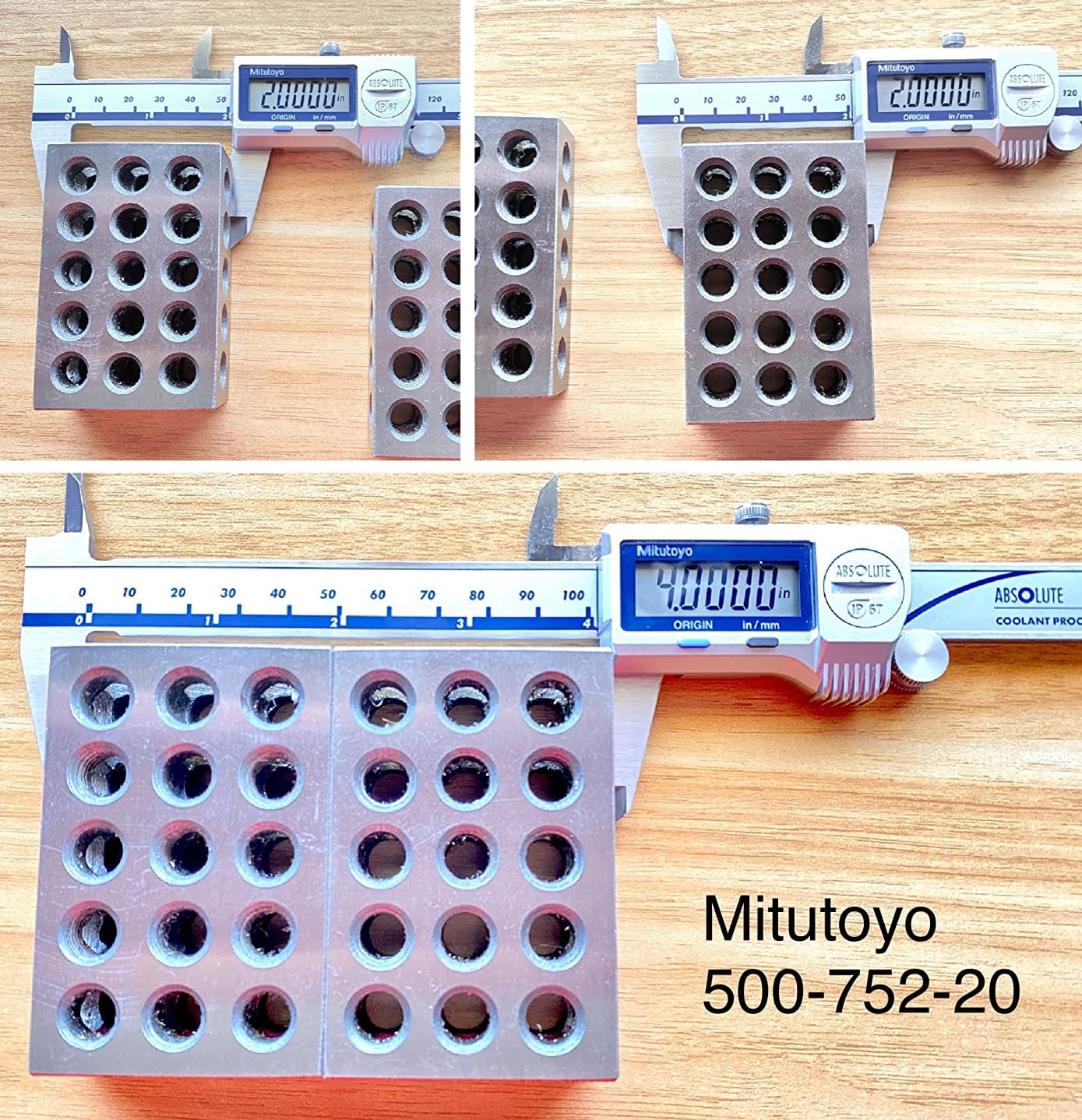
Owners rate the slide as smooth but not slick, and the positive split-gear design means the needle stays put when you push the jaws against a workpiece instead of bouncing backward. One owner validated this unit against 1-2-3 gauge blocks and a Mitutoyo caliper, and found it accurate to spec with no backlash.
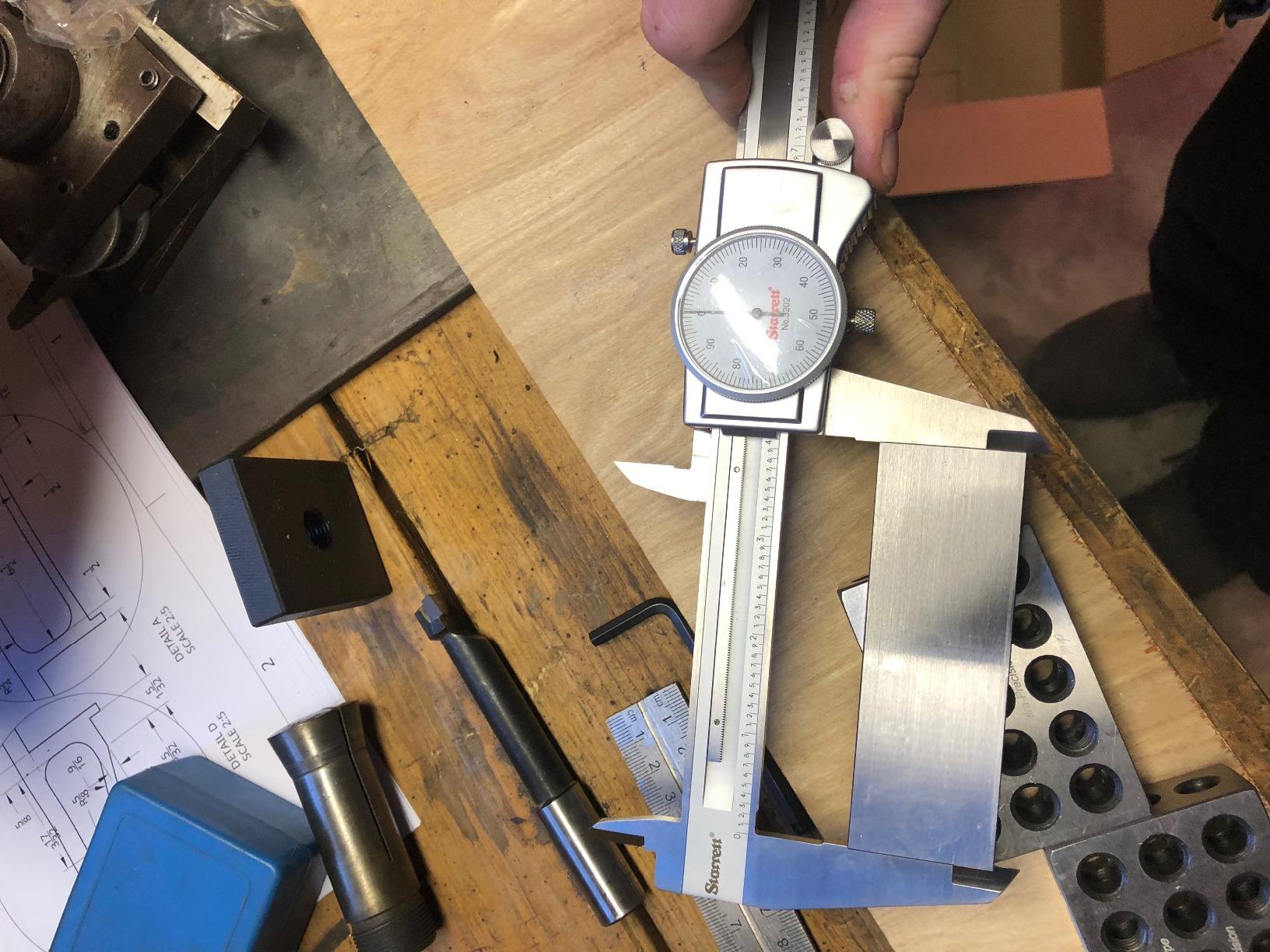
The knife-edge contacts matter more than they sound. Those tapered edges let you measure inside a mortise or a bore without the jaw thickness adding to the reading, and they scribe a clean mark on end grain when you are transferring a layout line.
One owner measured the jaws at roughly HRC 60 hardness and compared them to a Mitutoyo reference, which is the kind of detail that tells you this is a tool meant to sit in a shop for decades rather than a drawer for a year. A fitted case comes in the box, so the beam and dial are protected when the caliper is not on the bench.
When the Starrett earns its place
This is the caliper for someone laying out furniture joinery where a tenth of a thousandth is not academic. Tenon shoulders, mortise depths, dowel spacing and board thickness checks all happen with this tool, and the lock screws on both the bezel and the sliding jaw let you set a reading and move the piece without losing it.
For a shop that measures rough lumber, moves between machines and occasionally drops tools, the hard stainless build and the fitted case matter as much as the graduations. Owners on woodworking forums describe carrying Starrett fractional dial calipers for 20 years, which is the kind of longevity you can plan a shop around.
Where the Starrett disappoints
It is imperial-only, so if you work in metric you will be converting constantly, and the 0.001 inch graduation gives you tenths of a thousandth rather than the 64ths many furniture makers prefer on the dial face. The thumb roller is described by some users as loose and clicky, and the aggressive feel can annoy people who like a light touch.
Inside jaw depth runs to roughly 3/4 inch, so measuring a deep bore is out. And above about 2 inches, some drift shows up if the jaws are not seated squarely on the workpiece, which is normal but worth knowing before you chase a reading.
2. Mitutoyo 505-742J – The Smoothest Slide in the Set
Mitutoyo 505-742J Dial Caliper, 0.1″ per Rev, 0-6″ Range, 0.001″ Accuracy
- Zeroes repeatedly with essentially no backlash
- Crisp legible satin chrome dial
- Outside inside depth and step measuring
- No battery to fail
- Fitted case included
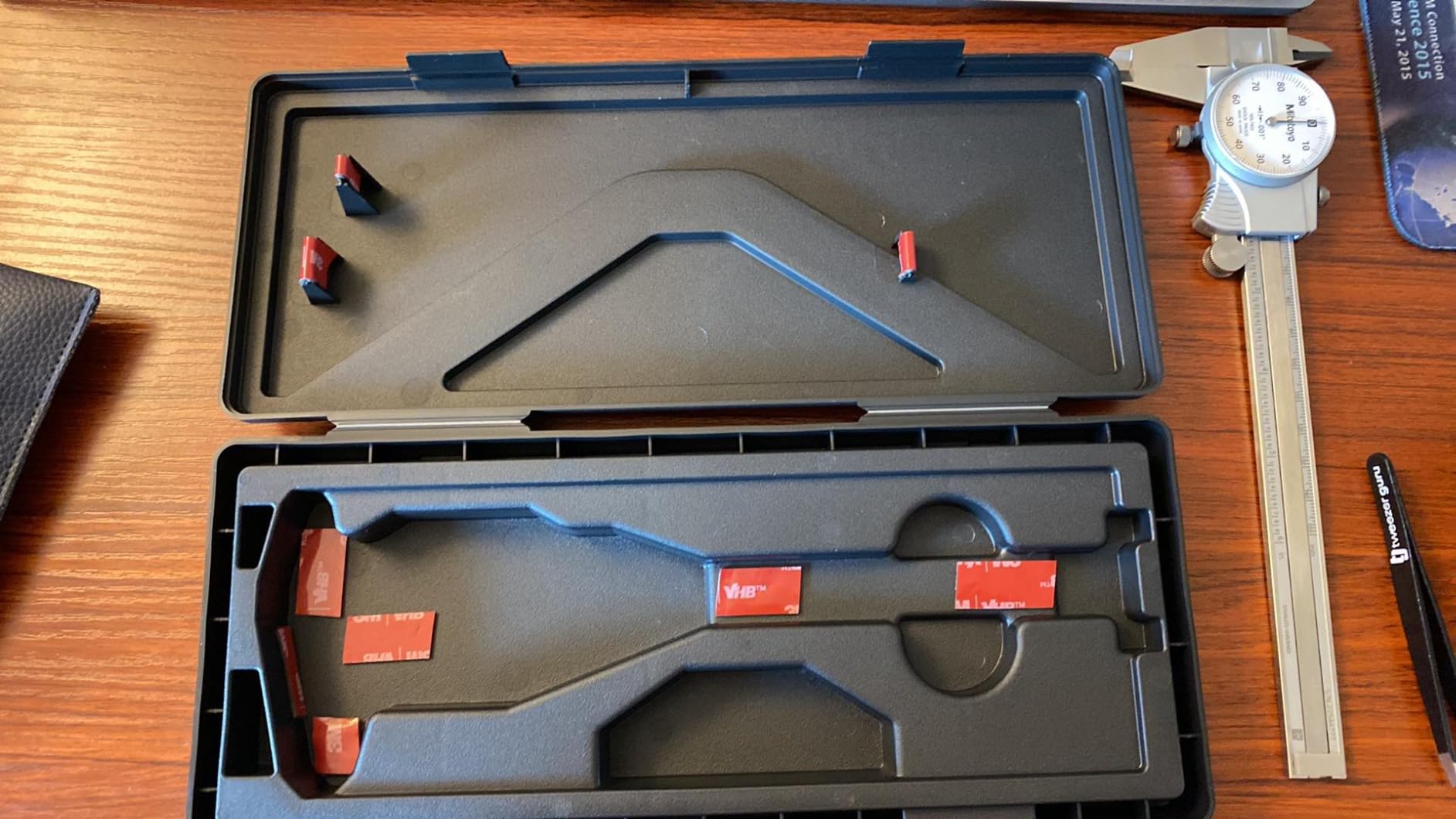
- Fitted case ships without foam padding
- Beam hinge is a thin plastic pin
- Protective preservative needs wiping off
The Mitutoyo 505-742J is the instrument we rated highest in the set at 4.7 across 660 reviews, and the reason is the slide. Owners describe running it out to 6 inches and back with essentially no backlash, then re-zeroing cleanly and finding the dial still returns to zero.
The dial turns once every 0.1 inch, so a full sweep covers a tenth rather than a whole inch. That slower sweep is why owners say they can interpolate to 0.0005 inch by eye comfortably, which matters when you are deciding whether a shoulder is done to the line.
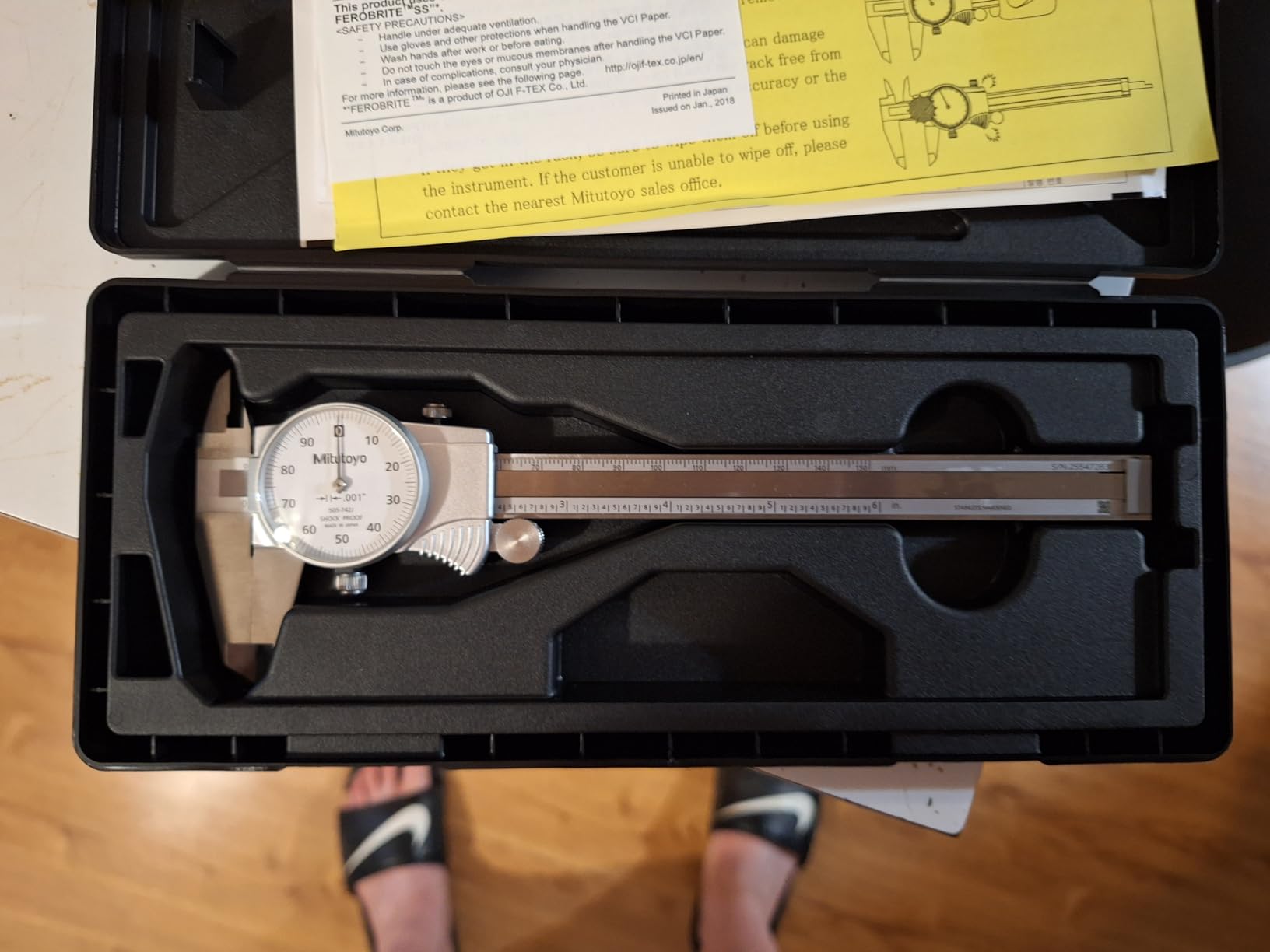
The satin chrome finish on the dial face is a practical choice rather than a styling one. It cuts glare under shop lighting, and combined with the enhanced sliding surfaces it reads fast even with older eyes. Many units are made in Japan, and owners mention a certificate that names the facility workers who inspected the tool.
This is the caliper for a furniture maker who measures all day and notices the difference between a mechanism that glides and one that grinds. The 4-in-1 design covers outside jaws, inside jaws, the depth rod and step measurement, and lock screws on both the bezel and the jaw hold a reading while you transfer it.
What you gain with the Mitutoyo
Repeatability. If you are cutting tenons to fit by measurement rather than by hand, the ability to re-zero and trust the number is worth more than any feature on the list. Shop machinists on Practical Machinist rate the Mitutoyo 505 on par with Brown and Sharpe for movement and accuracy, which tells you where it sits among the heritage names.
Shock protection is built in, so a dropped caliper is less likely to end up permanently out of zero. The satin chrome dial and the 0.1 inch pitch also make it a good choice for anyone who finds a fast-moving needle hard to read.
What to know before buying
The fitted case has no foam padding, so a lot of owners add their own, and the beam hinge is a thin plastic pin rather than a barrel hinge that may work-harden over time. The protective preservative has to be wiped off with a lightly oiled rag before the slide reaches its smoothest, and the scale on this model is imperial only.
3. iGaging 100-164 – The Fractional Dial Woodworkers Ask For
iGaging Dial Caliper 6″ Fractional & Decimal Inch Combination Dual Scale
- Fractional inch dial removes 64th-to-tenth conversion
- Reads well under shop lighting
- No play in the dial or slide lock
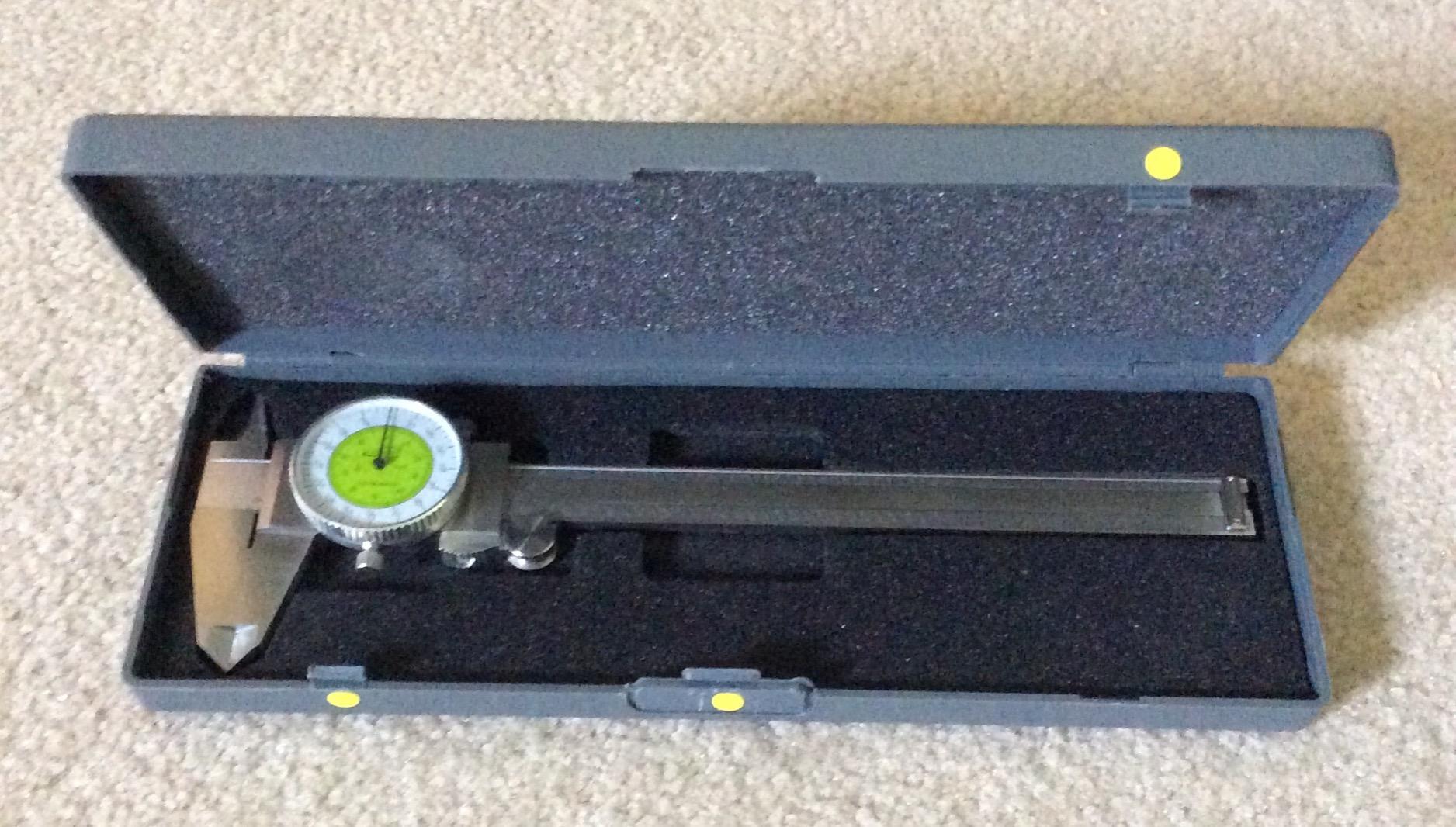
- Stainless steel body with storage case
- Listed accuracy of 0.01 inch is looser than buyers assume
- Small numerals are hard to read up close
- Case clip points are difficult to open
Almost every woodworker we talked to who loves dial calipers loves them for the same reason: the dial reads in 64ths instead of tenths. A tenon cheek is a fractional dimension, and reading 0.484 directly off the needle beats doing the conversion in your head every single time.
The iGaging 100-164 puts both scales on one dial, inch and fractional inch, which is the rare configuration in this price tier. It is a stainless steel body with a 6 inch range, an adjustable bezel, a thumb wheel for fine adjustment and a case that is actually designed to survive a toolbox.
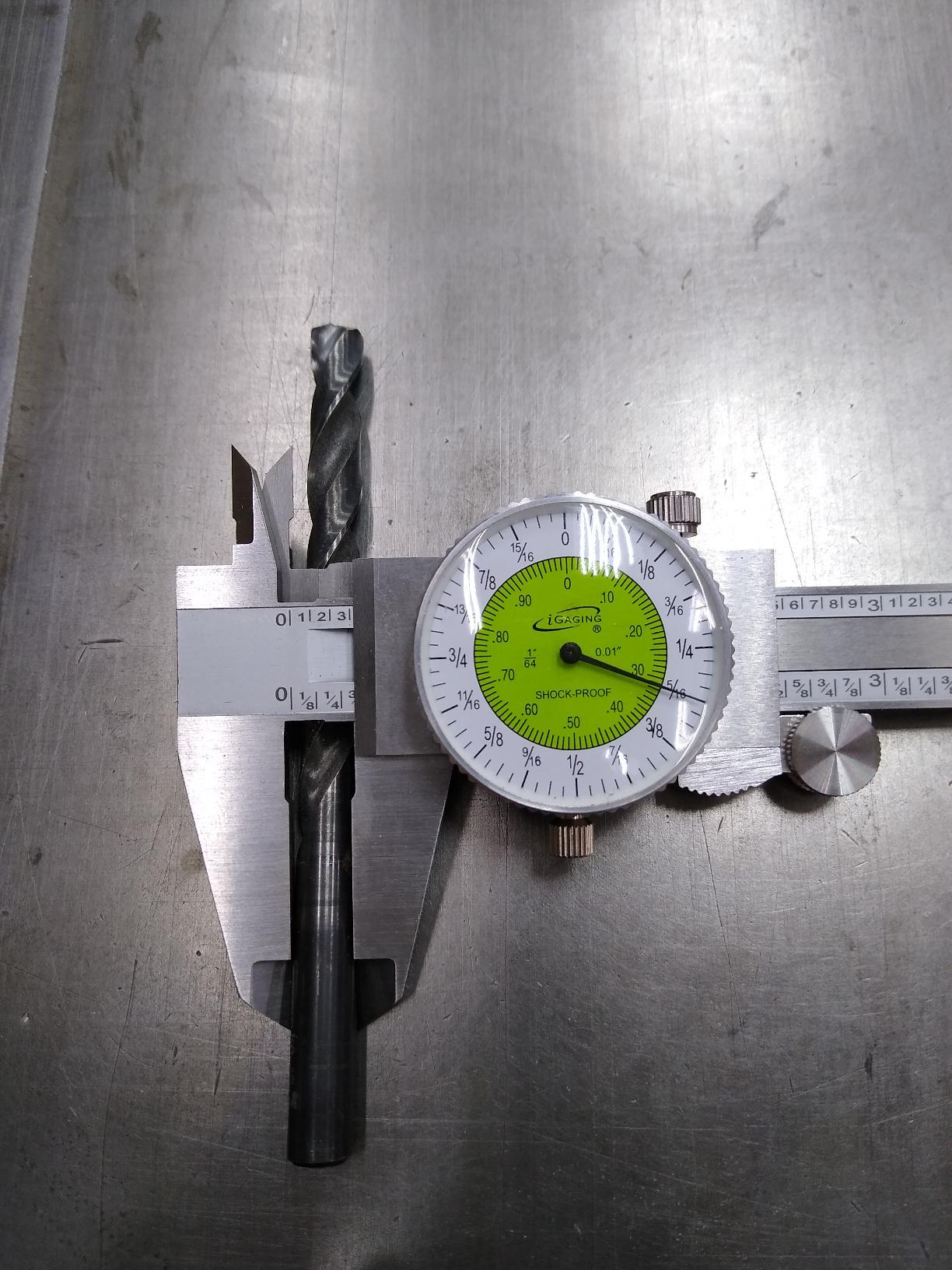
Owners report no calibration needed out of the box, readings that hold once the slide lock is set, and a dial that reads well under ordinary shop lighting. Woodworkers and reloaders in the review data single out the fractional dial as the reason to buy it and call it accurate enough for 1/64 inch layout work.
Resolution is listed at 0.01 inch and 1/64 inch, with accuracy listed at plus or minus 0.01 inch. That stated accuracy is the honest catch here, and we would rather name it than let you discover it later.
Why a fractional dial matters at the bench
Layout for furniture is usually done in 64ths, and reading those marks directly off the dial removes a mental step that is easy to get wrong when you are tired at the end of a long build. The dual scale means you can still work in tenths when thicknessing or setting a fence, without owning a second caliper.
This is the pick if you build furniture in fractional units and you want the value of a mechanical dial without a shop-grade price. The stainless body and the case also make it a reasonable first dial caliper to keep in a mobile tool bag.
Where it falls short
The stated accuracy of plus or minus 0.01 inch is much looser than the 0.001 inch figure most buyers assume from the 64th graduations, and some owners report readings that do not match the advertised figure. The numerals are small, which is hard on older eyes or when you hold the caliper close to your face, and the case has three clip points that owners find genuinely difficult to open.
4. Fowler 52-008-712-0 – 12 Inches of Reach for Wide Boards
- 0-12 inch range covers wide boards
- Covered rack blocks dirt and debris
- Two sets of jaws plus depth rod
- All-metal construction
- Knurled lock screw holds the jaw
- Readings bounce by about 0.002 inch even when new
- Not as smooth as Starrett or Mitutoyo
- Some units run hard instead of gliding
Most woodworkers never need more than 6 inches of reach, and a lot of 12 inch calipers are awkward to carry. This one earns its place for specific jobs: measuring a wide panel, checking a long tenon before you cut it, or setting a large router fence.
The mechanism is a 0.1 inch-per-revolution dial with 0.001 inch graduations and a beam engraved in 0.10 inch steps, which is the same basic reading scheme as the 6 inch premium tools. The covered rack is the detail we like most in a woodshop, because it is a direct answer to the dust problem that wears out open racks.
Inside, outside, depth and step measurement are all covered, and the box includes two sets of jaws plus a depth rod, which is more than most competitors at this size include. The knurled lock screw holds the sliding jaw, and the thumb-operated fine adjustment roller allows one-handed work.
When the 12 inch range pays off
Choose this when your work regularly exceeds 6 inches or you want one tool that covers both rough dimensioning and joinery detail. Owners call it a good-value stand-in for a premium caliper for garage, hobby and general shop measurement, and several report verified readings against gauge blocks at 25 and 50 mm span.
It is also the one to pick if you drop tools. One owner dropped it from 4 feet with no damage, and the fully metal construction has no plastic to crack.
Where the Fowler falls short
Owners consistently report readings bouncing by roughly 0.002 inch even when the tool is new, which gives it a worn-rack feel and makes it a poor choice where 0.001 inch repeatability matters. The action is not as smooth as Starrett, Mitutoyo or Brown and Sharpe, and some units run hard rather than glide.
On the smaller sizes the depth foot is narrower than the beam, which limits depth work. Check it against a known reference before you trust it on a critical tenon.
5. HFS 15809 – Full Four-Way Measuring on a Starter Budget
HFS Imperial 0-6 Inch Dial Caliper, ±0.001 Inch Accuracy, 4-Way Measuring Tool
- Four measuring modes in one tool
- Solid carbon steel measuring feel
- Locking screw holds position
- Fitted protective case
- No batteries to manage
- Carbon steel can rust if left damp
- Accuracy claims are not always borne out
- Dial legibility is only fair at this tier
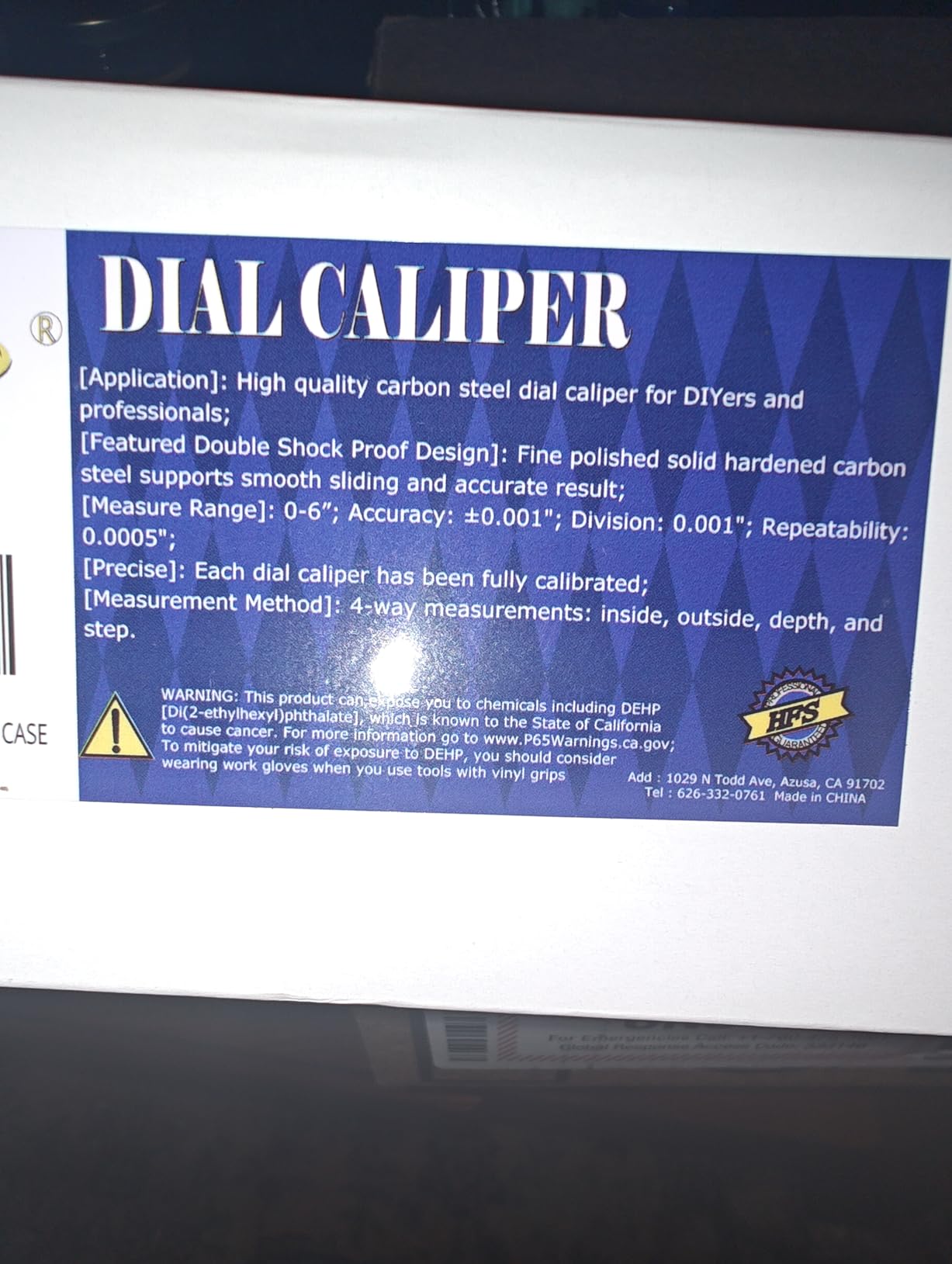
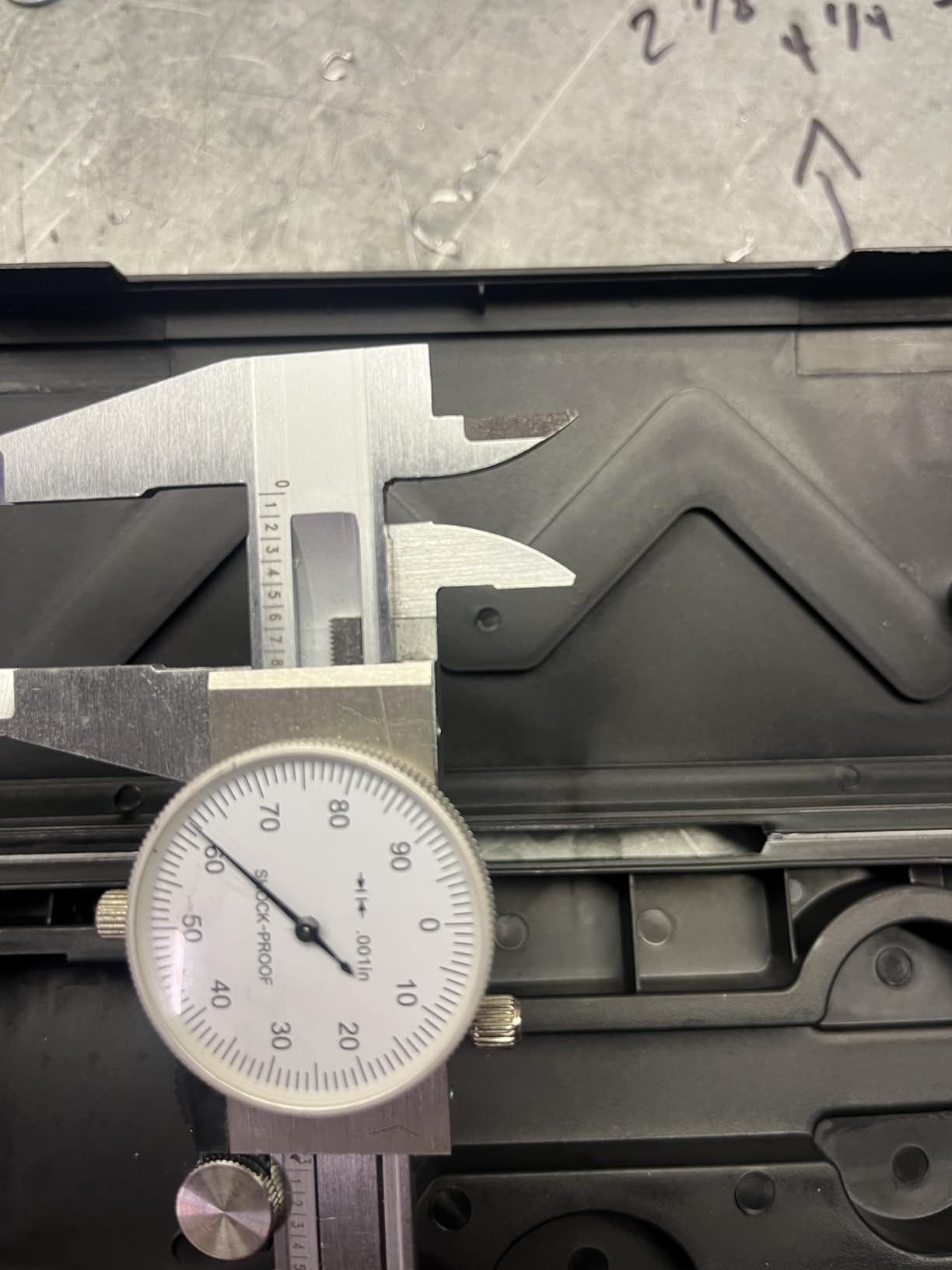
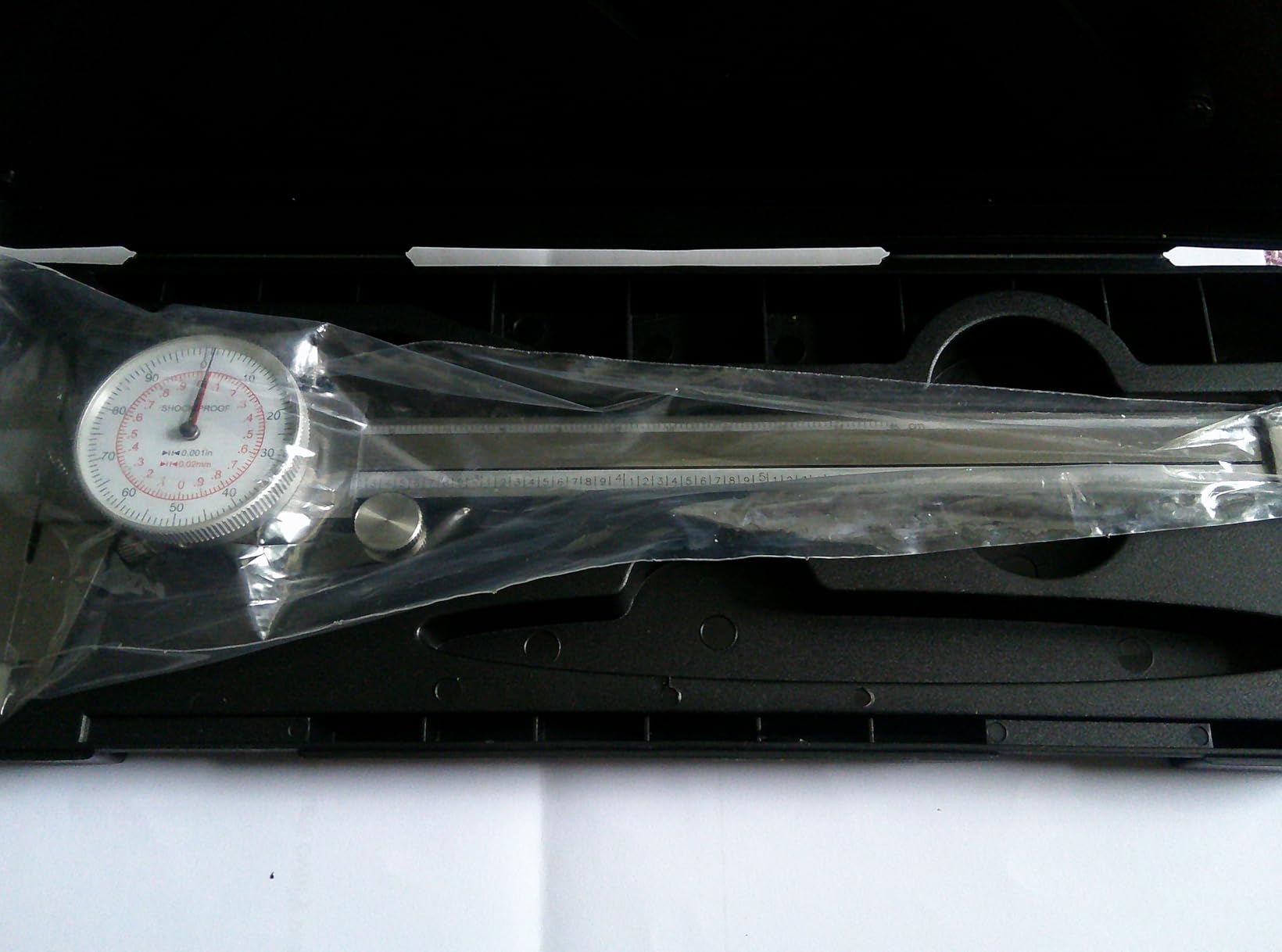
The HFS 15809 does something that is rare at the entry tier: it gives you outside, inside, depth and step measuring in a 0 to 6 inch frame with 0.001 inch graduations, a fine adjustment roller and a locking screw. For a first precision tool that is a lot of capability in one package.
It is hardened carbon steel rather than stainless, and that single fact explains most of what owners like and dislike. The solid measuring feel and the weight are praised, along with the fitted case. What that same carbon steel gives you is a tool that will spot with rust if it sits damp in a shop over a winter.
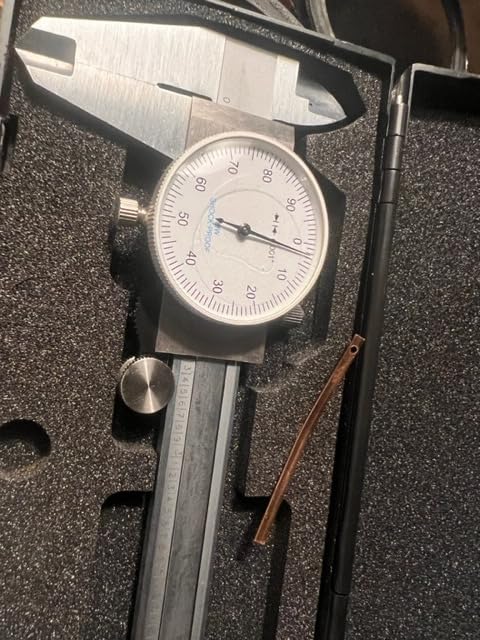
The 4.3 rating across 918 reviews reflects that trade-off rather than a defect. It ranks fourth in the Dial Calipers category, where the feature set per dollar is hard to argue with, and because the mechanical design means there is no battery to manage, no LCD to blank out in a dim shop and no corrosion problem in the battery compartment.
The dial mechanism is described as shock-resistant, which is a reasonable design choice for a tool that will be knocked around. The one thing you will not get at this level is a dial you can read at a glance from a foot away.
Who should buy the HFS
Buy it if this is your first caliper, if your shop is genuinely rough, and if you mainly need outside measurements of board thickness and rough lumber. If your main task is turning or layout, save up and get a fractional dial instead.
The value argument holds if you treat it as a beater and keep it in a drawer away from moisture. Many woodworkers find a second, cheaper caliper useful for dirty jobs precisely because it is not the one they baby.
What to watch out for
Carbon steel means rust is the main enemy, so wipe it after use and do not leave it in a cold shop. Accuracy claims are not always borne out in practice, so check it against a known reference before a critical joint. Dial legibility and slide smoothness are only fair at this tier, and that is where the money went.
6. findmall 6 Inch – The Cheapest Credible Way Into Dial Measuring
findmall 6″ Dial Caliper 0.001 Stainless Steel Caliper Measuring Tool 4-Way Measurement with Plastic Case
- 0.0005 inch resolution and repeatability
- Polished stainless steel frame
- Zeroing function with rotating bezel
- Hard glass dial cover
- Case included
- Storage case is flimsy plastic
- Sliding action is only satisfactory rather than smooth for some users
- Glass dial cover can trap lint on the needle and the lens or bezel cannot be removed to clean it
This is the pick if you want a mechanical dial caliper without spending shop-grade money, and the specification sheet is better than you would expect. It lists plus or minus 0.001 inch accuracy, 0.0005 inch resolution and repeatability, and it arrives preset to zero with a light film of oil on the contact points only.
It measures inside, outside, depth and step with two sets of jaws and a depth probe, and the zeroing function with a rotating bezel lets you set an alternative baseline. That is a real feature on a tool this inexpensive, and it is the one that saves you when a caliper gets knocked out of zero.

Owners cross-check it against a micrometer and report matching readings, and several describe the polished stainless steel frame as more rugged than the budget digital calipers they replaced. The dial numerals are clear and the accuracy holds for general shop measurement, which is what most woodworkers actually need.
It is not machinist-grade precision, and the review data is clear that buyers treat it as a value pick rather than a shop standard. The stainless frame is a genuine step up from carbon steel budget tools because it will not spot with rust.
Why the findmall makes sense for a first caliper
You get four-way measuring, a zeroing bezel and a stainless steel frame at a fraction of the price of the tools in positions one and two. For measuring board thickness, checking a mortise depth and confirming a dowel hole, that is more than enough accuracy.
It is also a good bench-check tool. Keep it in the drawer next to your real caliper and use it for rough work, which keeps the finer tool on a clean bench surface.
What you give up
The storage case is flimsy plastic, the sliding action is only satisfactory rather than smooth for some users, and the glass dial cover can trap lint on the needle with no way to remove the lens or bezel to clean it. The fractions on the dial take practice if you are used to decimals.
7. HDLNKAK KTL001 – Shock Protection as the Selling Point
- Double shockproof design with two-way roller protection
- 0-6 inch range with a 1.5 inch dial
- External internal depth and step measuring
- Adjustable bezel
- Case included
- Listed material is plastic
- Generic brand with no independent accuracy data
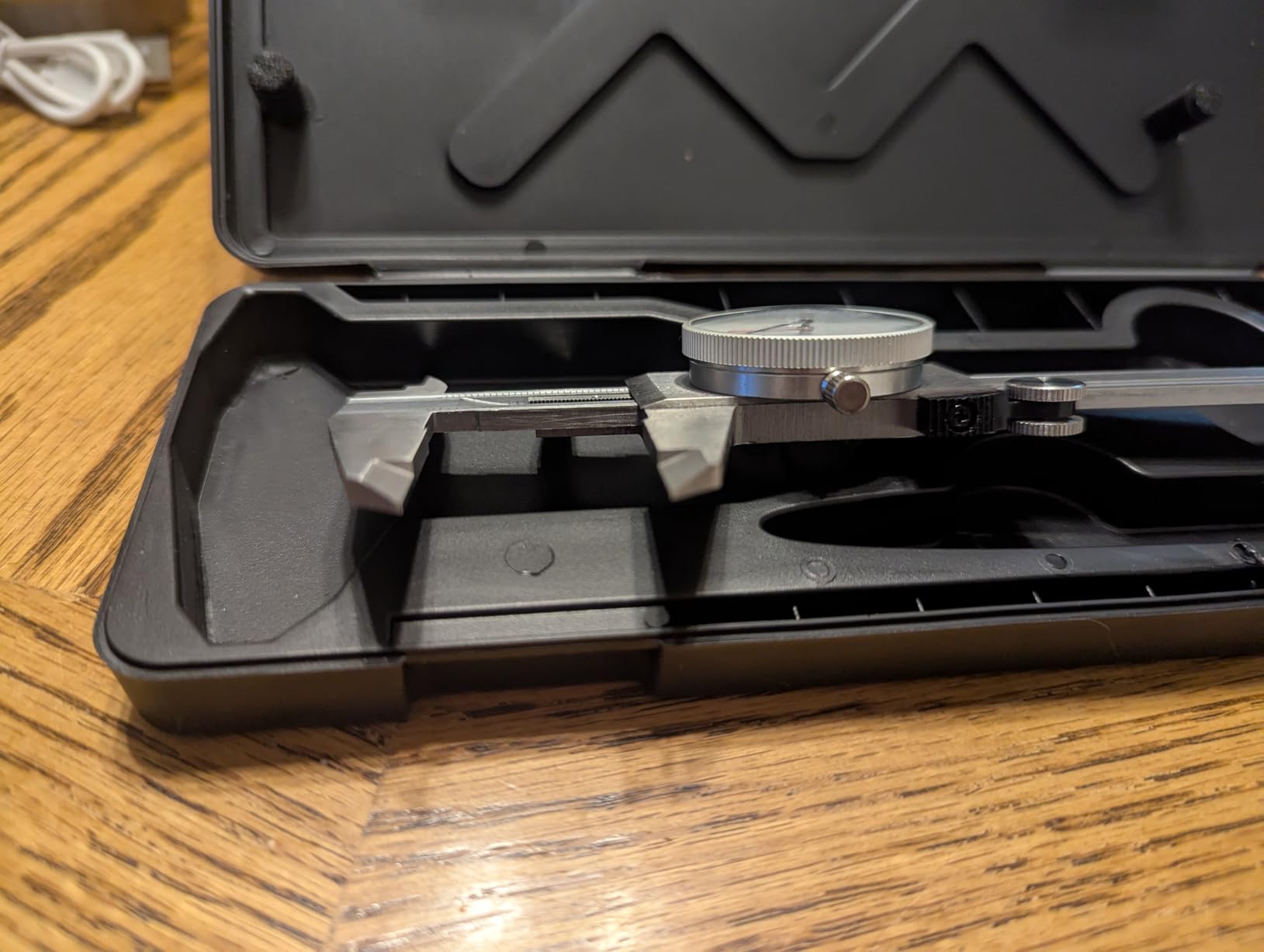
A caliper in a woodworking shop gets dropped, and the HDLNKAK KTL001 is the pick built around that fact. The listing describes a double shockproof design with two-way roller shock protection, a thumb-operated trimmer roller, knife-edge contact, active spring loading, a dual pinion and anti-rebound control.
That is an unusually long list of mechanism features for a 4.3-rated tool, and it is why the model holds a 4.3 across 259 reviews. Buyers respond to the shock protection claim and the four-way capability, and the 0 to 6 inch range with a 1.5 inch dial is a sensible size for board work.
Measurement is inside, outside, depth and step at 0.001 inch division and accuracy, with a case included. For anyone who measures on a jobsite or in a mobile shop where the tool lives in a truck, the anti-rebound control is the feature that matters most, because a dial that rebounds after a knock gives you a reading that moves.
The adjustable bezel lets you re-zero without losing your reference, which is the second thing you want from a tool designed to be dropped.
Where the shock design earns its place
Jobsite and mobile furniture work is where this one earns a place, along with any shop where the caliper lives in a toolbox rather than on a clean bench. The four-way measuring covers board thickness, mortise depth and step measurement in one tool, and the 1.5 inch dial is large enough to read at arm’s length.
If you have been re-zeroing a digital caliper every week because a dead battery put it out of service, the mechanical approach here has its own appeal.
What to know about it
The listed material is plastic, which is unusual for a precision measuring tool and raises legitimate durability questions on a heavy workpiece. The branding is generic and no independent accuracy verification is published, so check it against a known reference before a critical tenon, and do not treat the 0.001 inch figure as a guarantee.
8. Accusize P920-B216 – The Black Dial That Beats Glare
- Black dial face cuts glare and reads well
- Hardened stainless steel with satin chrome finish
- Lapped jaw measuring faces
- Covered rack keeps grit out
- Four-way measuring in a compact frame
- Shallower frame than premium 6 inch calipers
- Single measurement scale on this model
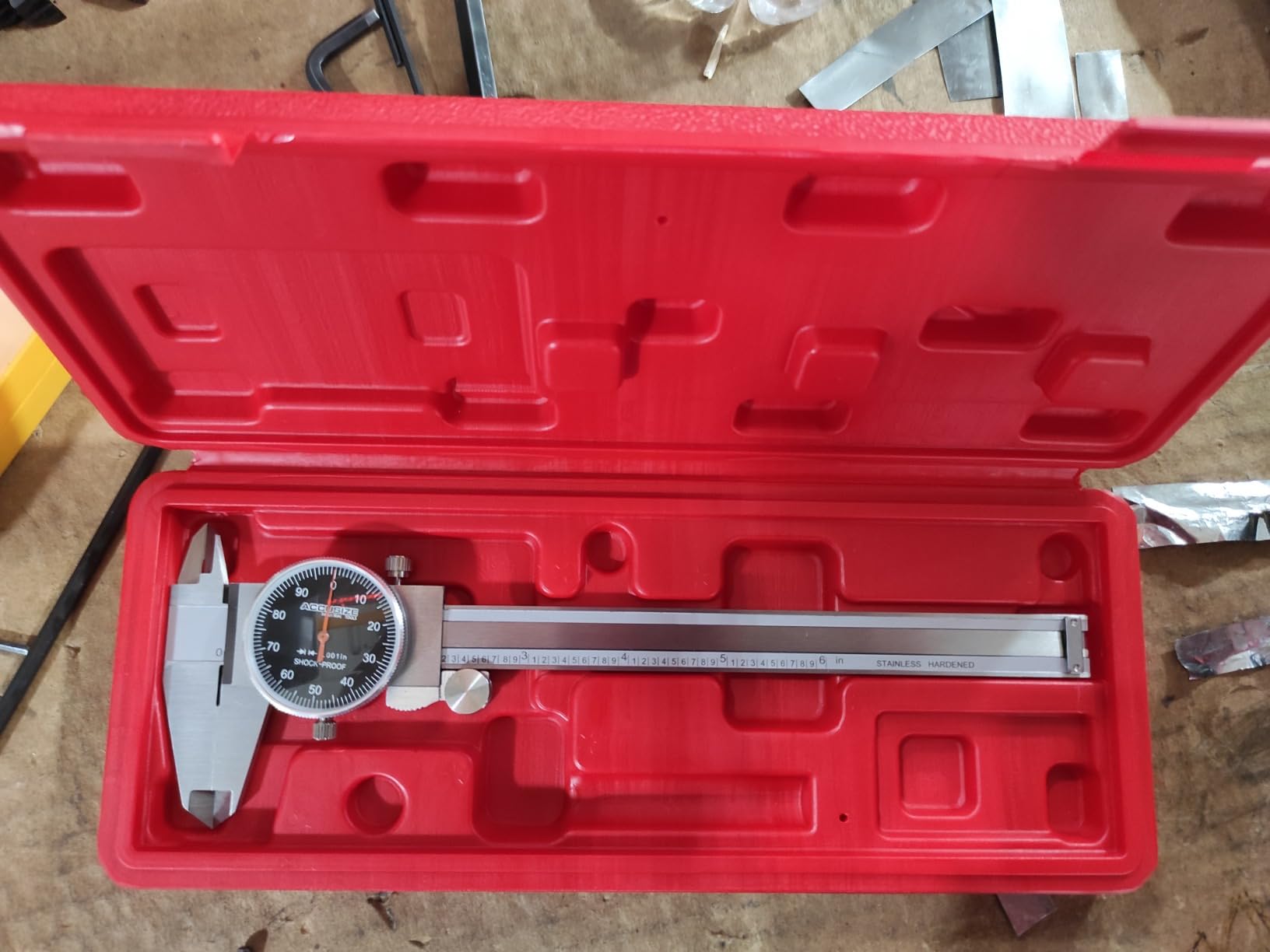
Every other white-faced dial in this roundup suffers in one specific situation, a shop with bright overhead lights directly over the bench. The Accusize P920-B216 uses a black dial face specifically to reduce glare, and owners say it is easier to read under shop lighting than a white face.
Everything else here is conventional and correct: hardened stainless steel, a satin chrome finish, lapped measuring faces on the jaws, a covered rack that protects the mechanism from grit, and inside, outside, depth and step measurement in a 0 to 6 inch range with 0.001 inch resolution.
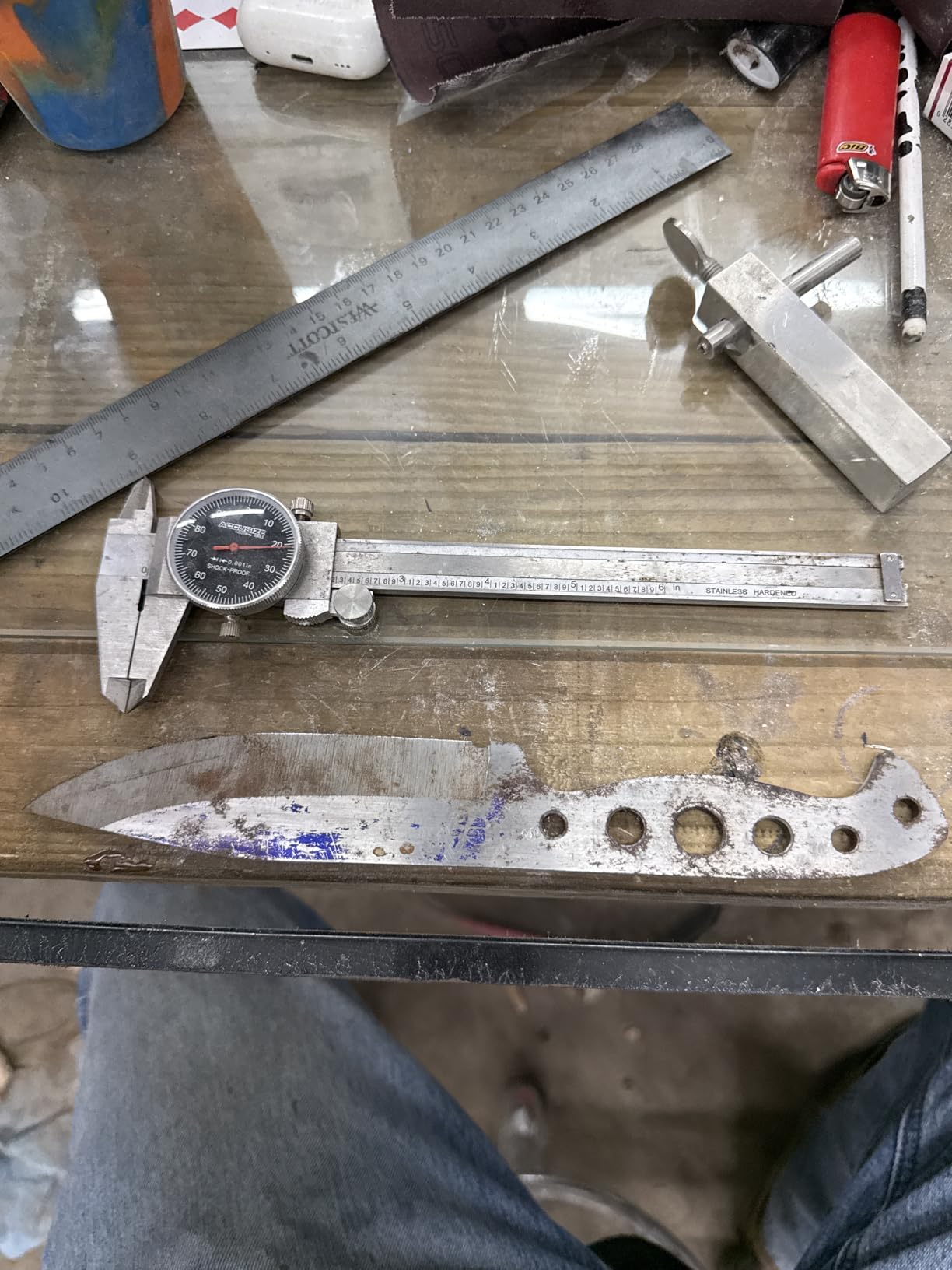
The covered rack is the second detail we would highlight. Woodworkers and machinists both name sawdust and chips as the thing that kills a dial caliper, and a covered rack is a physical answer to that complaint rather than a promise to clean it more often.
The dial makes one graduation per 0.001 inch, with a large clear face for direct reading, and the satin chrome finish keeps the graduations crisp under hard light. There are no batteries, which removes the single most common reason a precision tool leaves the bench for good.
Best for bright, dusty shops
If your bench sits under strong task lighting or you work where grit and dust are constant, this is the pick. A black face is genuinely easier to read at a glance, and a covered rack means less of the maintenance burden that wears a precision mechanism out over a few years.
The stainless body also means it will not spot with rust in a humid shop, and four-way measuring covers everything from board thickness to dowel depth.
What it does not offer
The compact dimensions listed for a 6 inch tool mean a shallower frame than the premium calipers, so check clearance in tight spots. It also carries a single measurement scale, so if you need a fractional dial or a metric readout you will need a different tool.
9. Clockwise DDLR-0605 – Accuracy Per Dollar Leader
Clockwise Tools DDLR-0605 Pro Dial Caliper 0-6 Inch Double Shock Proof Stainless Steel Body SAE Measuring Tool
- All-metal body and bezel with a smooth slide
- Fast calibration that returns to 0.00
- High-contrast uncluttered dial
- 0.0005 inch repeatability
- Multi-year warranty with responsive service
- Knurled thumb roller spins rather than grips
- Depth rod is clumsy to deploy
- Included plastic case is minimal
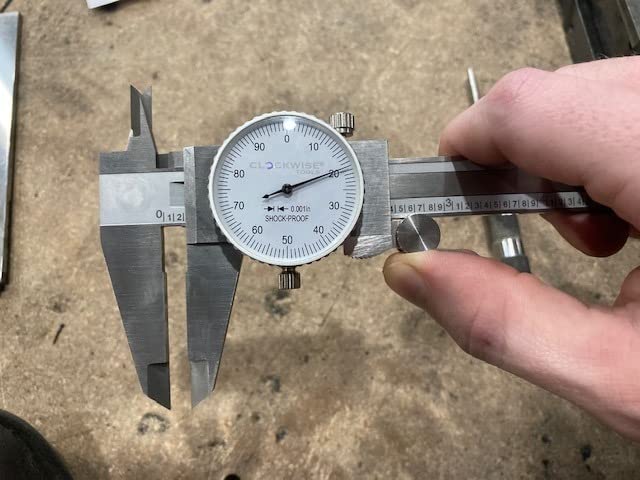
The Clockwise DDLR-0605 is the pick that surprised us most. Several owners in the reviews rate its accuracy as equal to Mitutoyo sets costing several times more, and it holds a 4.6 across 169 reviews with a double shock-resistant mechanism protecting the dial movement.
The published specification is honest and complete: 0 to 6 inch range, 0.001 inch graduation, plus or minus 0.001 inch accuracy and 0.0005 inch repeatability. Repeatability is the number that matters for joinery, because it is how close two readings of the same dimension are, and this one is tighter than its accuracy rating.
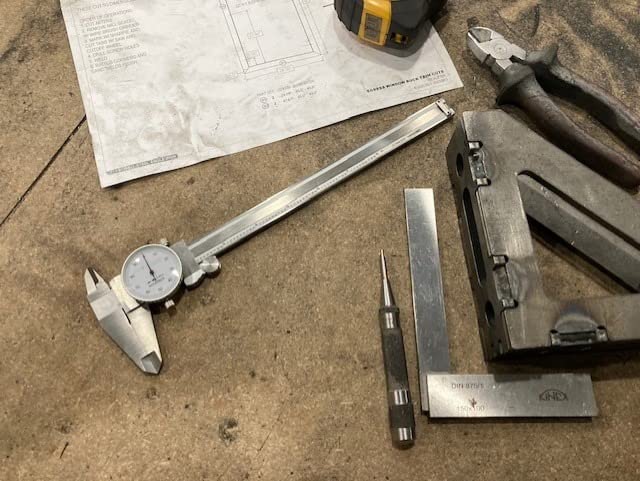
The body is finely polished, hardened stainless steel including the bezel, with a 1.5 inch dial and a high-contrast uncluttered layout. Owners mention fast, easy calibration that holds and returns to 0.00, which is what you want after a drop or a knock.
Support is a real differentiator here. The brand backs the tool with a multi-year warranty and fast replacement service, and one owner reports five years of service without issue.
Why accuracy per dollar matters here
Most woodworkers use a caliper for board thickness, tenon shoulders and mortise depth, not for press fits. A tool that resolves 0.0005 inch repeatably and zeroes reliably is more than enough for that work, and paying several times more does not change the joint you get.
It is also a good first shop-grade tool, because the all-metal construction and the double shock-proof mechanism survive the kind of handling a woodshop actually produces.
What to know before you buy
The knurled thumb roller spins rather than gripping, so fine adjustment takes practice, and the depth rod is a bit clumsy to deploy. The included plastic case is inexpensive and minimal, and no printed instructions are included, so you will be looking up usage online. A single dust particle on the jaws can affect zeroing, which is a reminder to wipe the tool before you trust it.
10. Oshlun MTDCF-06 – Fractional Dial With a Lifetime Warranty
Oshlun MTDCF-06 6-Inch Stainless Steel Fractional Dial Caliper
- Fractional 1/64 inch dial for layout work
- Stainless steel construction
- Plastic case included
- Lifetime warranty on material and workmanship
- Lowest average rating in the group at 4.1
- One inch of dial travel per revolution changes readings fast
The Oshlun MTDCF-06 is a fractional dial caliper with a 6 inch capacity, 0.010 inch and 1/64 inch resolution and plus or minus 0.001 inch accuracy. If 64ths on the dial face is what you want and the warranty matters to you, this is the only tool in the group offering both.
The warranty is the standout. Oshlun guarantees its products against defects in material and workmanship for the life of the product, excluding normal wear and improper usage. On a measuring tool that is a meaningful statement, because most competitors limit the claim to a fixed period.
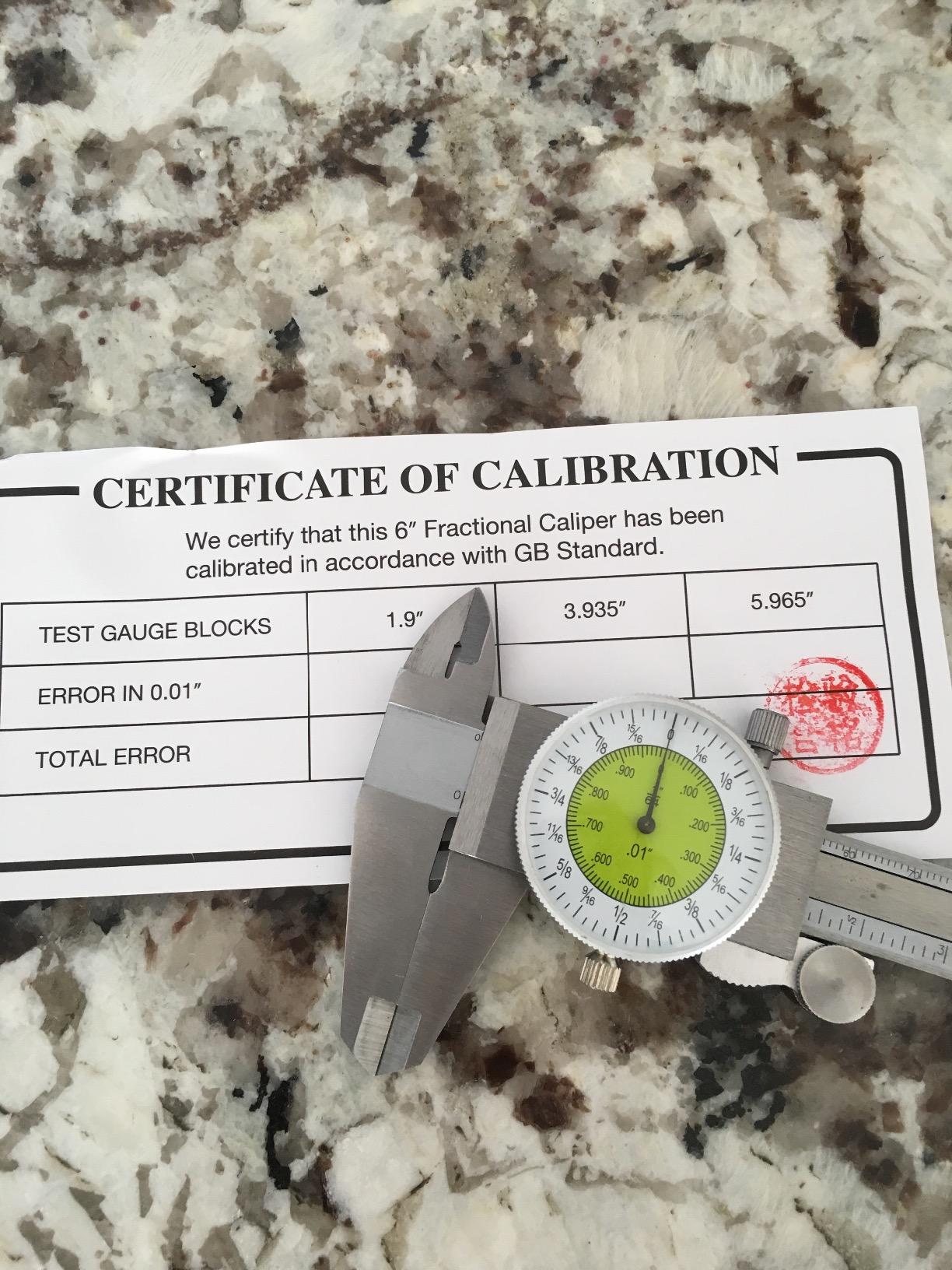
The trade-off is dial speed. This dial makes one full revolution per inch of movement, so the needle travels ten times faster than on a 0.1 inch-per-revolution model. Fine interpolation is harder as a result, and that is the main reason the rating sits at 4.1 with 9 percent one-star reviews and a review base of 147.
Stainless steel construction and a plastic storage case are included, so the basics are covered.
Where fractional layout makes sense
If you lay out in 64ths and read the dial directly rather than converting, the faster sweep is a reasonable trade. A woodworker working purely in fractional units will find the reading familiar, and the lifetime warranty removes the risk of buying a measurement tool twice.
It is a reasonable companion to a 0.1 inch dial rather than a replacement for one, since the two suit different reading habits.
What to watch for
This is the lowest-rated tool in the roundup at 4.1, and the thin review base of 147 tells you there is less long-term owner evidence behind it than behind the picks above. The 1 inch-per-revolution dial makes readings change faster than you may expect, so give yourself a week with it before deciding it is difficult.
Dial vs Vernier vs Digital: Which One Should a Woodworker Buy?
Dial calipers are not the most accurate calipers you can buy, but they are the most useful one in a woodshop, because they give you a readable fractional inch without practice, without a battery and without an LCD failing in a dusty room.
A vernier caliper is the most accurate of the three for a woodworker, and the hardest to use. A digital caliper is the fastest to read and the easiest to use, until the battery dies or the display blanks out in poor light. The dial sits in the middle: coarser than a vernier, clearer than a digital in bad conditions.
Forums make this point well. You can read the effect of varying pressure on the dial instead of watching numbers flash by, and you can interpolate between the lines. The same forum also contains the counter view: some machinists are blunt that they are never going back to a mechanical tool unless they are working in a clean room, which is fair if your measuring is done on a clean machine bed rather than a dusty bench.
For board thickness, tenon shoulders, mortise depth and dowel holes, a 0.001 inch reading with 0.0005 inch repeatability is far more than the wood asks for. Nobody is measuring a furniture joint to a micrometer tolerance. That is why a dial caliper is a genuinely good fit here, and why a micrometer is overkill for almost all furniture work.
How to Check Your Dial Caliper Accuracy at Home?
You can verify any of these calipers in five minutes with a known reference, and doing it once teaches you what a good reading feels like. Start by checking the tool against a known-good instrument, such as the digital caliper you already own.
Wipe the jaws and the beam clean, then close the jaws gently and confirm the needle reads zero. If it does not, use the bezel to reset zero.
Open and close the jaws several times and watch whether the needle returns to exactly the same zero position every time. A needle that sits high consistently is rack wear.
Measure a known dimension, such as a 1-2-3 gauge block set or a precision-ground shop reference, and record the reading.
Measure the same reference five times and compare. If the spread is more than 0.001 inch, the slide or the rack is loose.
Re-zero, then check the inside jaws and the depth rod on the same reference, because they wear at different rates than the outside jaws.
If a reading is off, re-zeroing fixes a beam or bezel problem but not a worn rack. Once a caliper has been dropped and will not hold zero, that is the signal to stop trusting it on critical joinery. For a table saw or other machine setup, use a known reference rather than the caliper you are trying to check.
How to Keep Sawdust Out of the Rack and Pinion?
Sawdust in the rack-and-pinion is the number one reason a good dial caliper stops being accurate, and it is entirely preventable. The fine rack sits in an open channel along the beam, and every bit of dust that gets in there changes how the pinion gear engages.
Brush the beam and the rack with a soft bristle brush after every session, always in the direction of the rack rather than across it.
Use a rubber blower or canned air to lift chips out of the channel before you close the jaws. Closing the jaws on grit is what causes the wear.
Wipe the jaws and the dial cover with a lightly oiled cloth. A thin film of oil on the contact points is enough, and it keeps surface rust off carbon steel tools.
Store it in the case, or at least in a sleeve, so the rack is not sitting open to a bench full of dust overnight.
Two habits do most of the work. Never measure with a visible chip in the jaw, and never close the jaws hard to make a point. The covered racks on the Fowler and Accusize help because they physically exclude grit, and a tool with a covered rack is worth considering if you work somewhere genuinely dusty.
How to Choose a Dial Caliper for Woodworking?
Choose by graduation type first, then by range, then by build. For most furniture work a 6 inch caliper graduated in 0.001 inch is enough, and a fractional dial is the feature woodworkers most often end up wishing they had bought first.
Fractional versus decimal is the decision nobody explains properly. A 1/64 inch dial reads 0.484 as directly as it reads 0.48 on a decimal dial, which removes a conversion step on every joint measurement. It is the single most cited reason woodworkers choose a dial over a digital. A dual-scale dial gives you both, and that is what makes the iGaging 100-164 interesting.
Range follows the work. A 6 inch frame covers board thickness, tenon cheeks, dowel holes and almost all furniture joinery. An 8 inch tool earns its place when you work with wider panels, and 12 inch models such as the Fowler are for long tenons and large cabinet parts. Forum users are consistent on this, and 18 to 24 inch calipers are widely described as unwieldy for most people.
Build matters more in wood than in machining. Hardened stainless steel resists the knocks and the moisture that a shop delivers, and a covered rack is worth paying for if you saw a lot. Carbon steel tools are fine as a beater but need wiping down, because they will spot with rust if they sit damp. A fitted case is not a luxury either, since a dropped caliper with a bent beam is a ruined caliper.
Starrett, Mitutoyo and Brown and Sharpe are the heritage names in this category, and owners on machinist forums rate them on par for movement and accuracy. Fowler and Accusize sit in the middle with covered racks and solid steel. Below that, the tier differences are about feel and case quality rather than headline accuracy, which is why we rank on repeatability and zero retention as much as the printed spec.
If you also lay out with a machinist indicator, our dial indicator roundup covers that side of the shop. And if you are still undecided between formats, the digital caliper comparison is worth a look before you buy the first one.
Frequently Asked Questions
What is the best dial caliper for home use?
For most home woodworkers the Starrett 3202-6 is the best dial caliper for home use, because it holds zero, ships with a fitted case and needs no battery. If your budget is tighter, the iGaging 100-164 gives you a fractional 1/64 inch dial, which is the graduation most furniture work is laid out in. Buy on graduation type first, then range, then build.
Are Starrett or Mitutoyo calipers better?
Owners rate them very close. The Mitutoyo 505 series is usually described as having the smoothest slide and the least backlash, and its dial sweeps once every 0.1 inch, which makes fine interpolation easier. Starrett is heavier, built entirely from hardened stainless, and is widely treated as the more repairable long-term tool. Practical Machinist users rate the Mitutoyo 505 on par with Brown and Sharpe.
Are dial calipers more accurate than digital calipers?
A good digital caliper usually resolves finer than a dial caliper, so on paper the digital wins. In practice a dial with 0.001 inch accuracy and 0.0005 inch repeatability is far beyond what furniture joinery needs, and a dial never fails because of a battery, a wet contact or a blank LCD in a dim shop. For joinery the two are effectively equal.
Should I get a digital or dial caliper?
Get a digital caliper for fast general measuring in a clean, well-lit shop, and a dial caliper for joinery, layout and dusty conditions. Many woodworkers own both, using the digital for rough work and the dial for anything a joint depends on. The dial is also the better choice if you measure frequently and hate stopping to re-zero a display.
What is the accuracy of a Starrett dial caliper?
The Starrett 3202-6 is rated at plus or minus 0.001 inch accuracy over a 0 to 6 inch range, with 0.001 inch graduations. Owners have validated it against 1-2-3 gauge blocks and against a Mitutoyo reference, and measured the jaws at roughly HRC 60 hardness. Some drift can appear above about 2 inches if the jaws are not seated squarely.
How do I keep a dial caliper accurate?
Brush the rack and beam along the direction of the rack after every session, blow out chips before closing the jaws, and wipe the contact points with a lightly oiled cloth. Never close the jaws on grit. Check the tool against a known reference at zero, at one known dimension and with the inside jaws, and re-zero with the bezel whenever the needle sits high.
Conclusion
Ten tools in, the answer to the best dial calipers for woodworking question comes down to two things: the graduation on the dial face and whether the mechanism stays clean. Buy the Starrett 3202-6 for the all-round shop choice, the Mitutoyo 505-742J if you want the smoothest slide, and the iGaging 100-164 if 64ths on the dial is what your joinery is laid out in.
Whichever you pick, check it against a known reference, keep sawdust out of the rack and it will still be reading accurately years from now.