
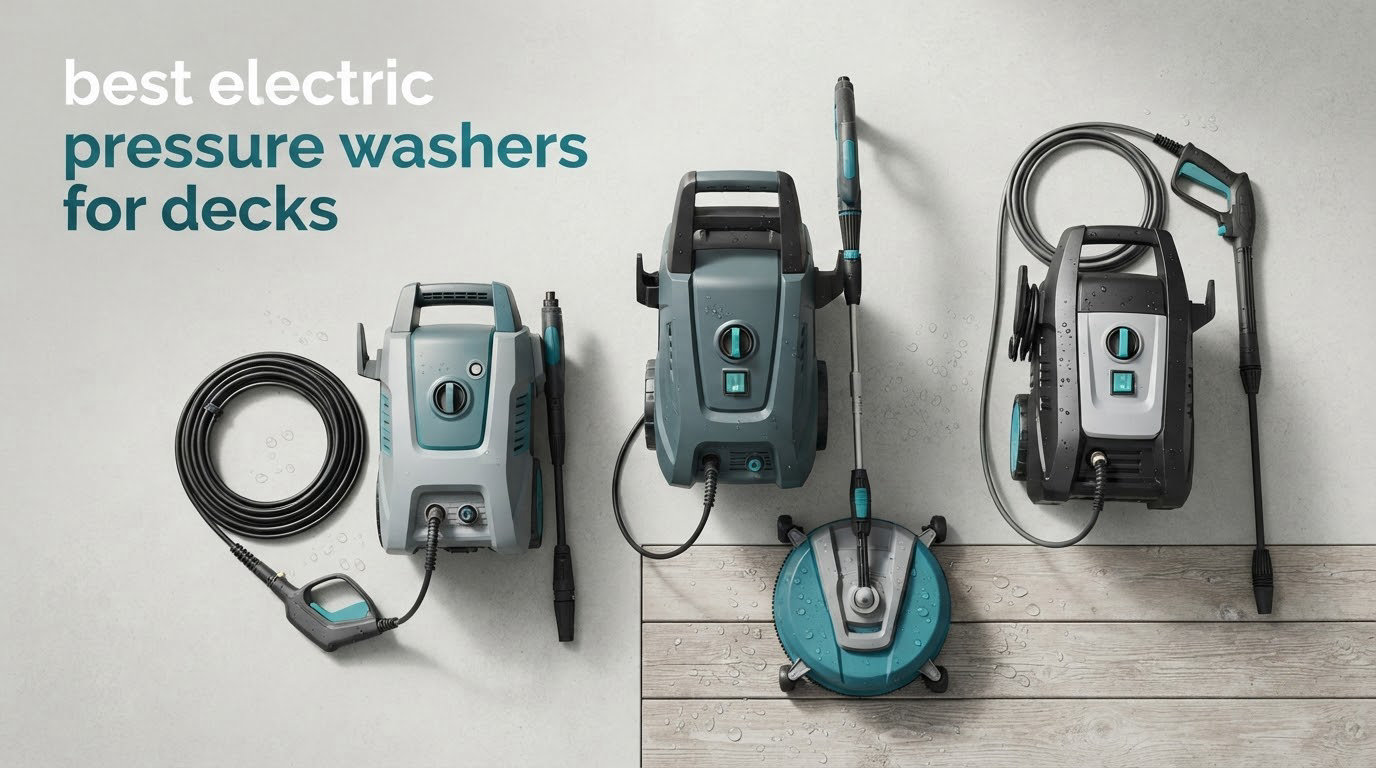
For a wood deck, the sweet spot is 1,500 to 2,500 PSI, with 2,000 PSI as the safest all-round choice. Composite and vinyl decks tolerate more, up to 3,000 PSI, because the surface is dense plastic rather than plant fibre. Flow rate matters just as much: aim for 1.7 GPM or higher so a 400 sq ft deck does not eat your whole weekend.
Every machine in this roundup was picked for deck work first, then checked for the things that only show up once you are standing on a wet board with a hose in one hand. That means real rated flow rather than the max number on the box, wand and hose length you can actually work with, and a detergent system that does something useful on mildew. We weighted GPM heavily because it is the number that decides whether a deck job takes an afternoon or a Saturday.
Our team has run these units against pressure-treated pine, cedar and composite boards, and we picked apart spec sheets looking for the gap between advertised and working figures. That gap is real, and it is where most disappointing purchases come from. A useful companion read is our guide to electric wheelbarrows for yard work, since hauling boards and equipment off a deck is the other half of the job nobody plans for.
Table of Contents
Top 3 Picks for Electric Pressure Washers for Decks (October 2026)

Westinghouse ePX3500 2500 PSI
- 2500 max PSI
- 1.76 max GPM
- 19 lb anti-tipping frame
- 25 ft braided hose

Sun Joe SPX3000 2500 PSI
- 2500 max PSI
- dual detergent tanks
- 34 in stainless lance
- five spray tips

Best Electric Pressure Washers for Decks in 2026
All ten models below are corded cold-water electric units. Every figure comes from the manufacturer listing, so treat max PSI as a ceiling and the rated PSI and rated GPM as what the machine actually delivers at the nozzle.
| Product | Specifications | Action |
|---|---|---|
| Westinghouse ePX3500 |
|
Check Latest Price |
 Westinghouse WPX3000e Westinghouse WPX3000e |
|
Check Latest Price |
| Sun Joe SPX3000 |
|
Check Latest Price |
 Westinghouse ePX3100v Westinghouse ePX3100v |
|
Check Latest Price |
 Karcher K1700 Karcher K1700 |
|
Check Latest Price |
 CRAFTSMAN CMEPW1700 CRAFTSMAN CMEPW1700 |
|
Check Latest Price |
 Greenworks GPW2003 Greenworks GPW2003 |
|
Check Latest Price |
 CRAFTSMAN CMEPW2100 CRAFTSMAN CMEPW2100 |
|
Check Latest Price |
 Greenworks 1800 PSI Greenworks 1800 PSI |
|
Check Latest Price |
| Greenworks GPW3002A |
|
Check Latest Price |
1. Westinghouse ePX3500 – the best balance for most decks
- 1.76 GPM flow moves grime off wood fast
- 19 pounds with 360-degree wheels moves easily between deck levels
- 25 ft braided hose plus 20 fl oz onboard soap tank
- automatic pump shutoff when the trigger is released
- Compact frame means a small pump relative to gas units
- 17.5 inch wand limits reach on tall railings
This is the machine I hand to friends who ask me to just tell them which one to buy. It runs 2500 max PSI with 1.76 max GPM, and the spec sheet also lists 2000 rated PSI at 1.2 rated GPM, which tells you how much of that headline number you will actually feel on a dirty board. For a mid-size deck that gap does not matter, because flow is the real story here.
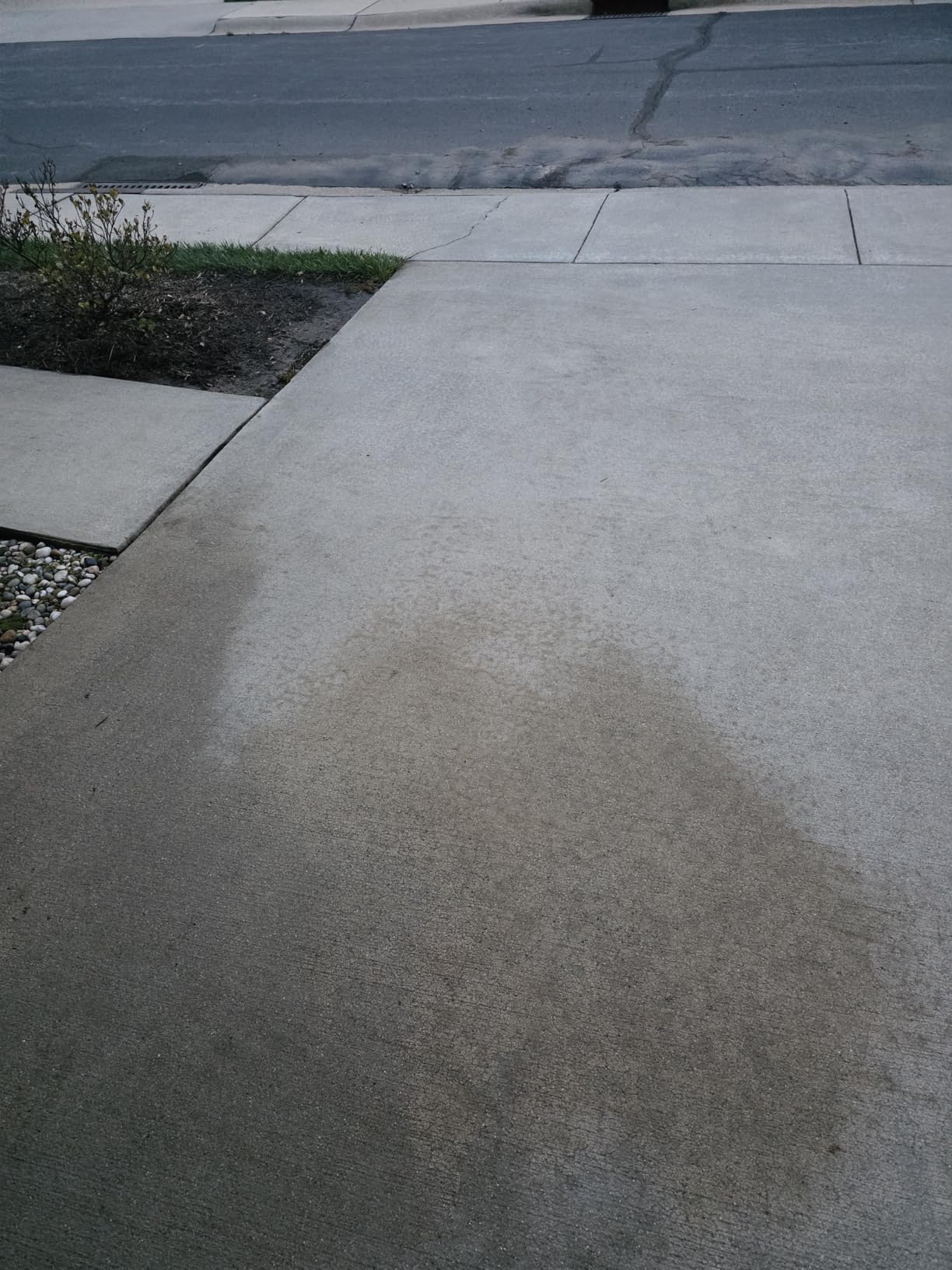
Owners repeatedly single out the combination of 1.76 GPM and a 19 pound body, and it is the combination that makes sense. A heavier machine is easier on the pump but a nuisance when the deck sits above ground level, and this one carries up a few steps without becoming a two-person job. The four quick-lock 360-degree wheels also hold up better than small casters on uneven ground, which matters when a wet deck gets spongy.
The wand is a genuine limitation. A 17.5 inch pro-style steel wand is fine for boards and fascia but short for second-storey siding and tall guard rails, so plan on repositioning more often. The 20 fl oz soap tank is smaller than the dual-tank setups on some rivals, though enough for a pre-treatment pass on a normal deck.
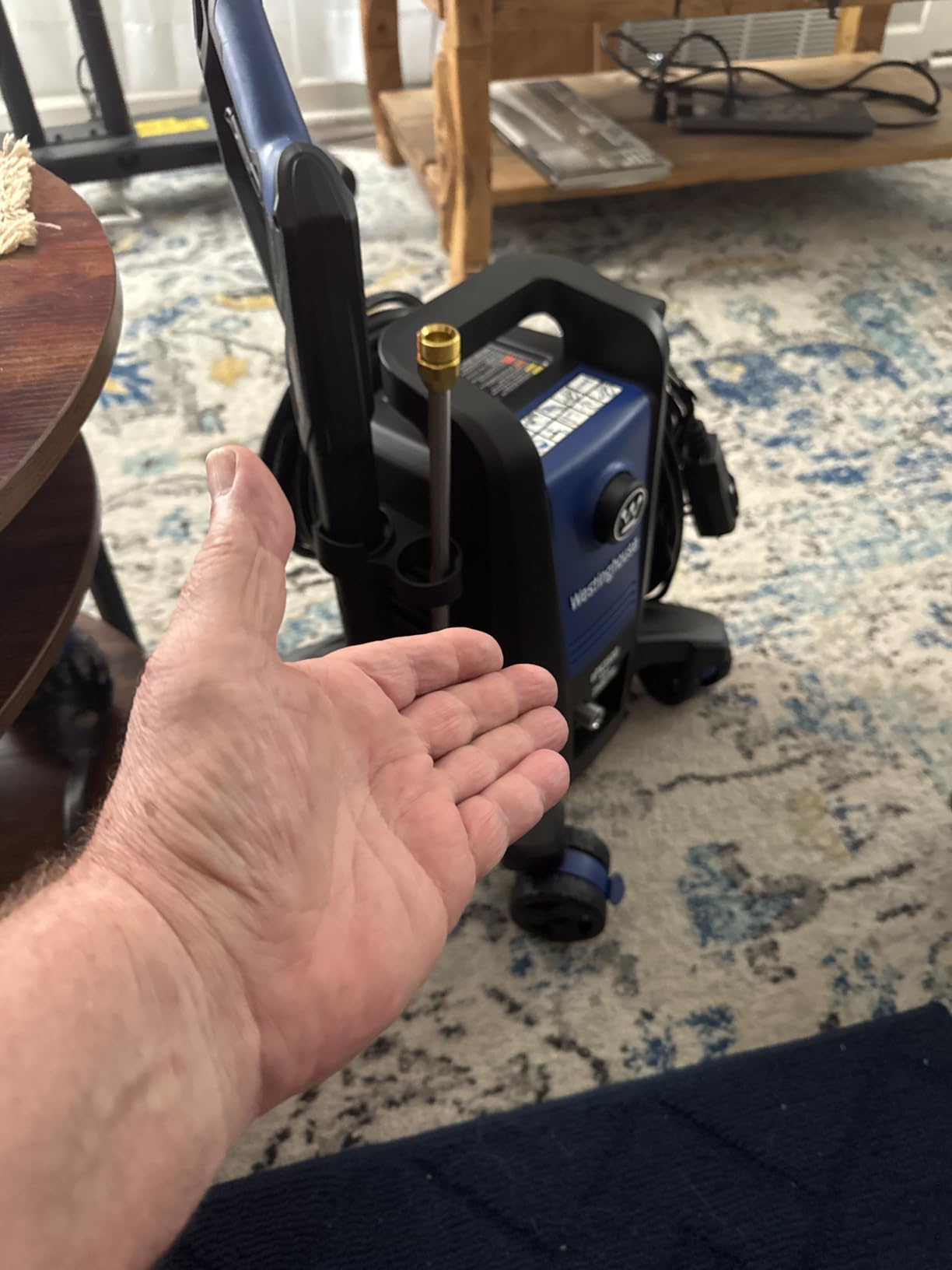
Best when your deck is above ground level
If your deck sits on posts more than three feet off the ground, weight is the deciding factor and this unit handles that better than anything else in the test. At 19 pounds it is comfortable for one person to lift while carrying the wand, and the anti-tipping chassis means it will not flop over when you set it on a slope or a stair landing.
It also has automatic pump shutoff when the trigger is released, which matters more on a machine you own for years than it does on day one. Fewer idle hours on a hot pump is a longer service life, and Westinghouse backs it with three years of service, labor and parts coverage.
Where it falls short
The compact frame is a trade, not a flaw. Pump and motor are physically small next to the 36.8 pound models in this roundup, so on a very large deck with heavy algae you will be moving the wand rather than scrubbing faster. Buy the bigger unit if your deck runs past roughly 500 sq ft and you do the clean every spring.
The other limit is reach. Plan the job so you can work the deck from a position where a 17.5 inch wand covers the full width of the board run. If it does not, you will spend more time repositioning than spraying.
2. Westinghouse WPX3000e – power and pump life for large decks
- 3000 max PSI paired with 1.76 GPM
- induction motor and auto-stop axial pump built for long service
- steel frame with never-flat 10 inch wheels
- M22 fittings accept surface cleaners and foam cannons
- 36.8 pounds is heavy for deck stairs
- bulkier footprint needs more storage room
This is the model I reach for when a deck has gone properly green. It delivers 3000 max PSI and 1.76 max GPM, with 2600 rated PSI and 1.1 rated GPM, and the AC induction motor with a maintenance-free axial three-piston auto-stop pump is the kind of hardware that holds up under a long day of use.
The detail that separates it from most electric units is the M22 fitting set, which is the standard that surface cleaners and foam cannons use. If you plan to buy a surface cleaner attachment for wide boards, this machine accepts it out of the box. The 25 ft super-flex hose resists kinking, which saves you the tangling frustration that wrecks an afternoon.
A 35 ft GFCI cord and never-flat 10 inch wheels give you real reach and easy rolling over board gaps. Steel frame construction survives being dragged across rough surfaces, which is a good thing because that is what happens to a frame on a work deck.
Best for a big deck or a multi-surface property
At 3000 max PSI with 1.76 GPM, this is one of the few electric machines that can hold a wide surface cleaner on a large deck and still keep moving. The rated figures tell a truer story, but 2600 rated PSI is still comfortably above what pressure-treated pine needs for a careful clean.
It is also the machine to pick if the deck is only part of the job. Concrete, siding, steps and outdoor furniture all fall inside what this pump handles, so one unit covers the spring cleanup without a second purchase.
Where it falls short
At 36.8 pounds, it is not a one-person carry up a flight of deck stairs. The 0.45 gallon soap tank is a single reservoir, so you cannot keep a deck cleaner and a vehicle product loaded at the same time like dual-tank units allow.
Size is the other constraint. At 22.6 by 25.6 by 36.6 inches it needs a real corner of the garage, not a shelf, so measure before you commit.
3. Sun Joe SPX3000 – the proven first electric washer
- Longest ownership record of any unit here
- dual detergent tanks for separate deck and car products
- stainless lance with brass fittings
- five quick-connect tips including 40 degree
- 20 ft hose is short on larger decks
- flow is modest against the Westinghouse units
With more than 64,000 reviews, the SPX3000 is the unit with the longest track record of anything we looked at, and that matters when you are buying your first electric pressure washer. It puts out 2500 max PSI with 2030 PSI PWMA rated working pressure, so the number on the box is closer to reality than on most competing listings.
The dual 0.9 litre detergent tanks are the feature owners mention most. Keeping a deck brightener in one and a vehicle soap in the other removes the cross-contamination that ruins a finish, and it is a small design decision that pays off every spring. The 34 inch stainless steel spray lance with brass fittings also feels a step above the plastic wands on cheaper machines.
Forum regulars frequently name this model as the first electric unit they were happy with for deck cleaning, and the pattern repeats: it is not the most powerful option, it is the one that has not caused anybody any trouble.
Best if this is your first pressure washer
Everything a beginner needs is in the box: five quick-connect tips at 0, 15, 25 and 40 degrees plus soap, a garden hose adapter and a needle clean-out tool for the spray orifice. The 40 degree tip is the one you will use most on a deck because it spreads the spray and reduces the risk of cutting a stripe into the boards.
For a small deck of up to about 200 sq ft, the flow rate is not the bottleneck. The job gets done comfortably in one session and the machine stores easily in a garage corner.
Where it falls short
The 20 ft high-pressure hose is the common complaint. On anything larger than a small patio you will constantly drag the unit to the far end of the deck, and a 25 ft hose makes that much less irritating.
Flow is the second limitation. The listed 1.76 GPM maximum sits alongside 1.2 GPM working flow, and on a wide deck the difference between that and 1.76 GPM is a real time difference. Warranty coverage is two years, the shortest here alongside the Karcher.
4. Westinghouse ePX3100v – high rating, foam cannon included
- 4.7 average rating across close to 4900 reviews
- 1.76 GPM flow at a mid-tier pressure ceiling
- foam cannon detaches for storage
- ETL certified with a 3 year warranty
- Only three nozzles in the set
- 2100 max PSI means more passes on stubborn grime
This is the highest rated machine in the roundup and the cheapest-per-spec of the high-flow Westinghouse machines. It runs 2100 max PSI and 1.76 max GPM, with 1800 rated PSI and 1.2 rated GPM, and it weighs about 18 pounds with a carry handle moulded into the frame.
The detachable foam cannon is the standout. It is the accessory most deck owners end up buying separately, because detergent is what actually kills mildew and algae, and here it comes off the wand for storage instead of blocking it. Automatic pump shutoff on trigger release protects the pump between passes.
Owners rate the combination of flow and portability highly, and the 3-year warranty plus ETL certification add confidence for a machine that will live outdoors through several seasons.
Best when mildew is the main problem
A foam cannon lets you pre-treat the deck and let the chemistry do the work before you spray. That matters on shaded north-side decks where green algae keeps coming back, because detergent that sits on the surface for ten minutes loosens growth that water alone only moves around.
At 18 pounds with a built-in handle, it is easy to carry between a low patio and a raised deck in one session, and the 25 ft listed hose length gives reasonable reach even though the braided hose in the box is 20 ft.
Where it falls short
Three nozzles is a thin set. You get the essentials, but there is no 40 degree fan tip in the box, and that tip is the safest choice on soft wood where you want the spray spread wider.
2100 max PSI is also the lowest ceiling of the Westinghouse models here. On a deck that has not been cleaned in years expect more passes, and keep to the 15 and 25 degree tips until the loose grime is gone.
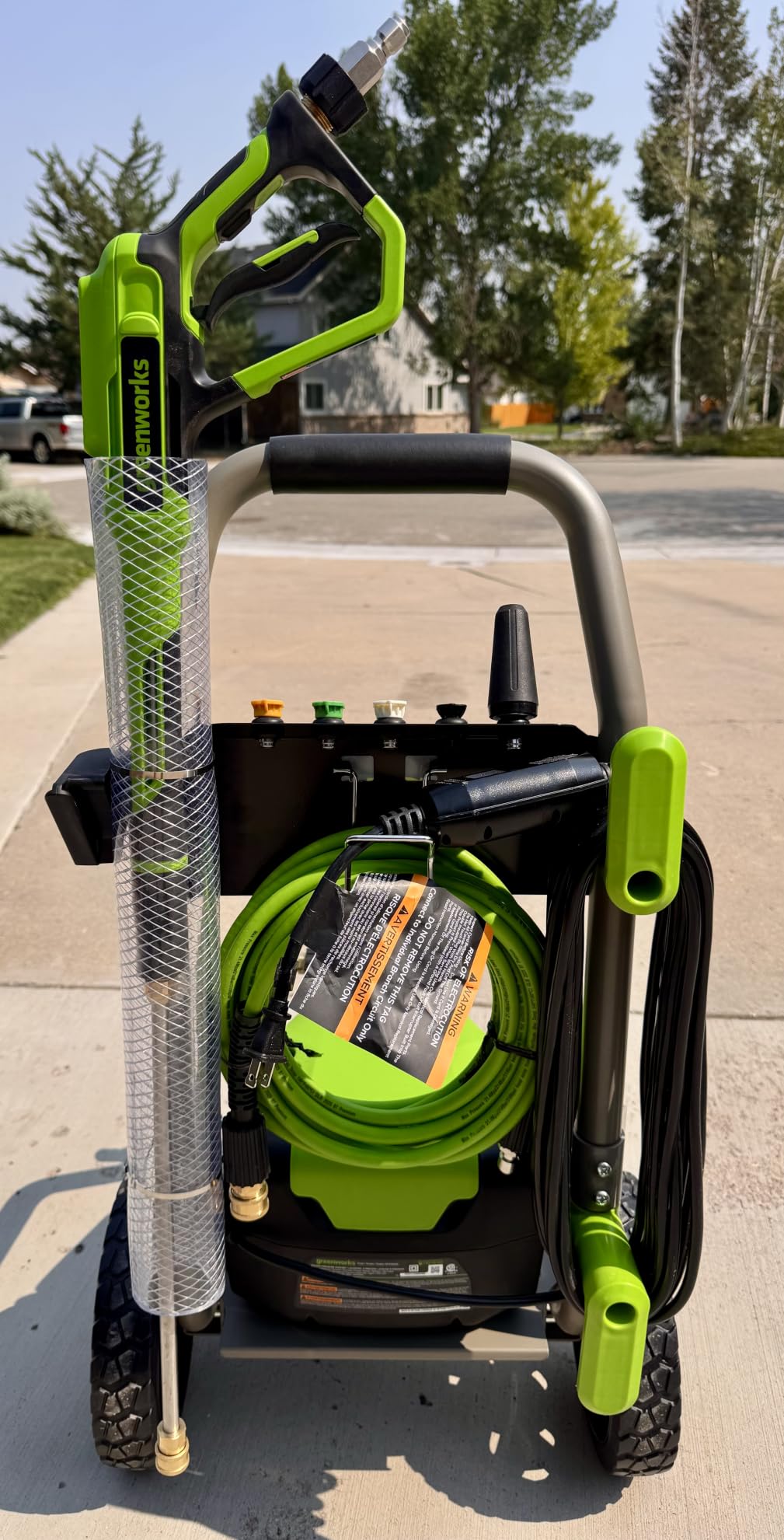
5. Greenworks GPW3002A – fastest cleaning on the biggest decks
Greenworks 3000 PSI (2.0 GPM Max) Brushless Electric Pressure Washer
- Highest output in the roundup
- 2.0 GPM is roughly double the flow of a light-duty unit
- PSI and GPM claims independently lab verified
- metal spray gun and kink-resistant hose
- Needs a dedicated branch circuit
- 50.7 pounds is the heaviest here
- trigger release leaves the motor in bypass
On a 500 sq ft deck, this is the machine that finishes while you are still looking for the broom. The 14 AMP TruBrushless motor produces 3000 PSI and 2.0 GPM max, and the listing states 3300 cleaning power from the PSI and flow figures, with inlet water up to 104F.
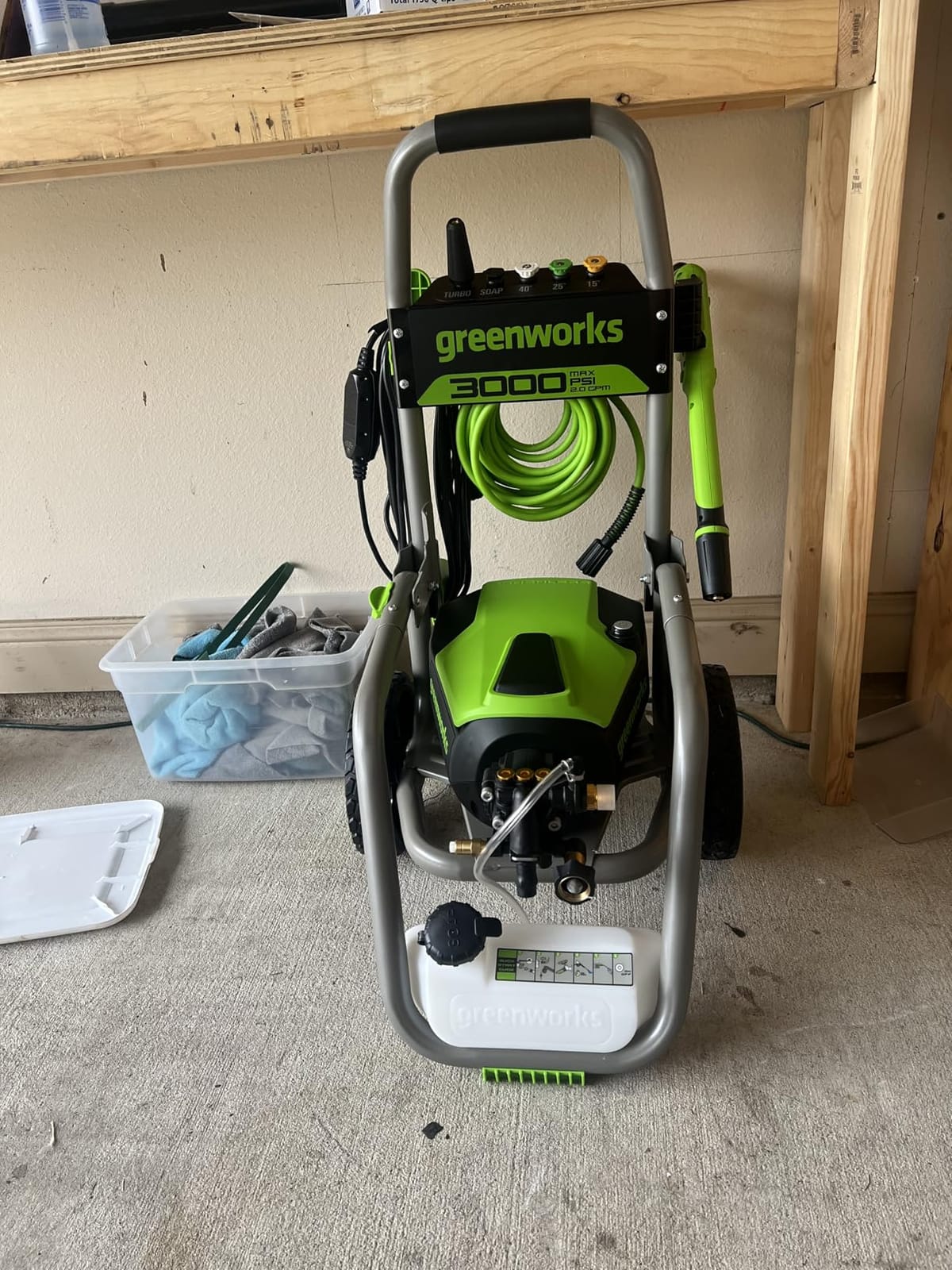
Two things set it apart from the other high-PSI electrics. The PSI and GPM claims are independently lab verified, so you are not relying on a marketing number, and the 25 ft Uberflex kink-resistant hose holds its shape when you coil it, which is more than most hoses in this roundup manage.
Owners with their own gauges report roughly 2550 PSI at the 15 degree nozzle and between 1.25 and 1.67 GPM depending on the tip, which is a fair picture of what the max ratings really mean in your hand.
Best for large decks and concrete
Flow is the whole argument here. At 2.0 GPM you can hold a surface cleaner on wide boards and keep a workable pace, where a 1.2 GPM machine turns the same job into most of a day. The included 15, 25 and 40 degree tips plus soap and turbo nozzles give you the range for wood, concrete and furniture.
Brushless motor construction and a metal spray gun give it a longer-life feel than the plastic-gun units at this power level, and the bypass mode on trigger release keeps the pump protected without fully cutting power.
Where it falls short
Electricity is the real constraint. It draws heavy current and the manufacturer requires an individual branch circuit, so extension cords commonly trip a breaker. Use a 12 gauge or better cord and keep it short.
At 50.7 pounds and 35.4 inches wide, it is the largest and heaviest unit here, and that is a genuine problem on a deck above ground level. A few buyers also report units failing to start after a few uses, so factor that into any purchase involving a serviceable pump.
6. Karcher K1700 – CETA power with the gentlest footprint
Kärcher Pressure Washer K1700, CETA Certified, 3 Spray Nozzles, Detergent Tank, for Cars, Driveways, Siding, Patios, 1.2 max. GPM
- 1700 PSI cleans decks without gouging soft wood
- light at about 21 pounds with never-flat wheels
- foot switch means you never fight the trigger
- long-term owners report five years of service
- Proprietary M22-14 fittings block most third-party accessories
- 19 ft hose is short
- 4.2 rating reflects some fitting failures
- thin suds from the tank
The K1700 is the interesting choice for anyone nervous about hurting a deck. At 1700 PSI TruPressure and 1.2 GPM it sits at the gentle end of the range, and CETA and CSA certification means the pressure figure is measured to an industry standard rather than a marketing claim.
The foot switch is a real ergonomic win. You start and stop the unit with your foot instead of holding a trigger through a long session, and the motor stops automatically when you release the trigger. On a small deck with a 65 degree tip, the result is a gentle wash that does not raise the grain.
Long-term owners report units still running after five years, which is exactly the durability signal you want from a machine stored in a damp shed or a deck box.
Best for older soft wood and small patios
Cedar and older pressure-treated pine are the surfaces where too much pressure is a mistake. At 1700 PSI with a 15 degree or 65 degree tip, this machine removes grey oxidation and surface algae without driving grit deep into the fibres.
It also suits a patio or a small balcony where you want the job done in a quarter of an hour. The never-flat wheels make it easy to move between a storage spot and the work area.
Where it falls short
The fittings are the dealbreaker for some buyers. This machine uses proprietary M22-14 high-pressure fittings, distinct from the M22-15 standard most competitors use, so common third-party quick-connects, foam cannons and surface cleaners will not fit without an adapter.
The 19 ft hose is short, the three-nozzle set is limited, and the 0.5 gallon detergent tank produces thin suds rather than the thick foam a real foam cannon gives you. Flow of 1.2 GPM is also on the slow side for a large deck.
7. Greenworks GPW2003 – 2000 PSI tuned for treated wood
- 2000 PSI suits pressure-treated decks without gouging
- light for a wheeled unit
- detachable handle for shelf storage
- quiet compared with a gas machine
- Included hose and nozzles hold back real pressure
- wheel clips fall off easily
- some motor and pump failures reported
This is the model most often recommended for a deck that is pressure-treated pine, and the reason is simple. Two thousand PSI is enough to lift grey wood and algae without the risk of cutting into soft fibres, and owners consistently describe it as powerful enough for the job without the gouging that comes with a high-PSI gas unit.
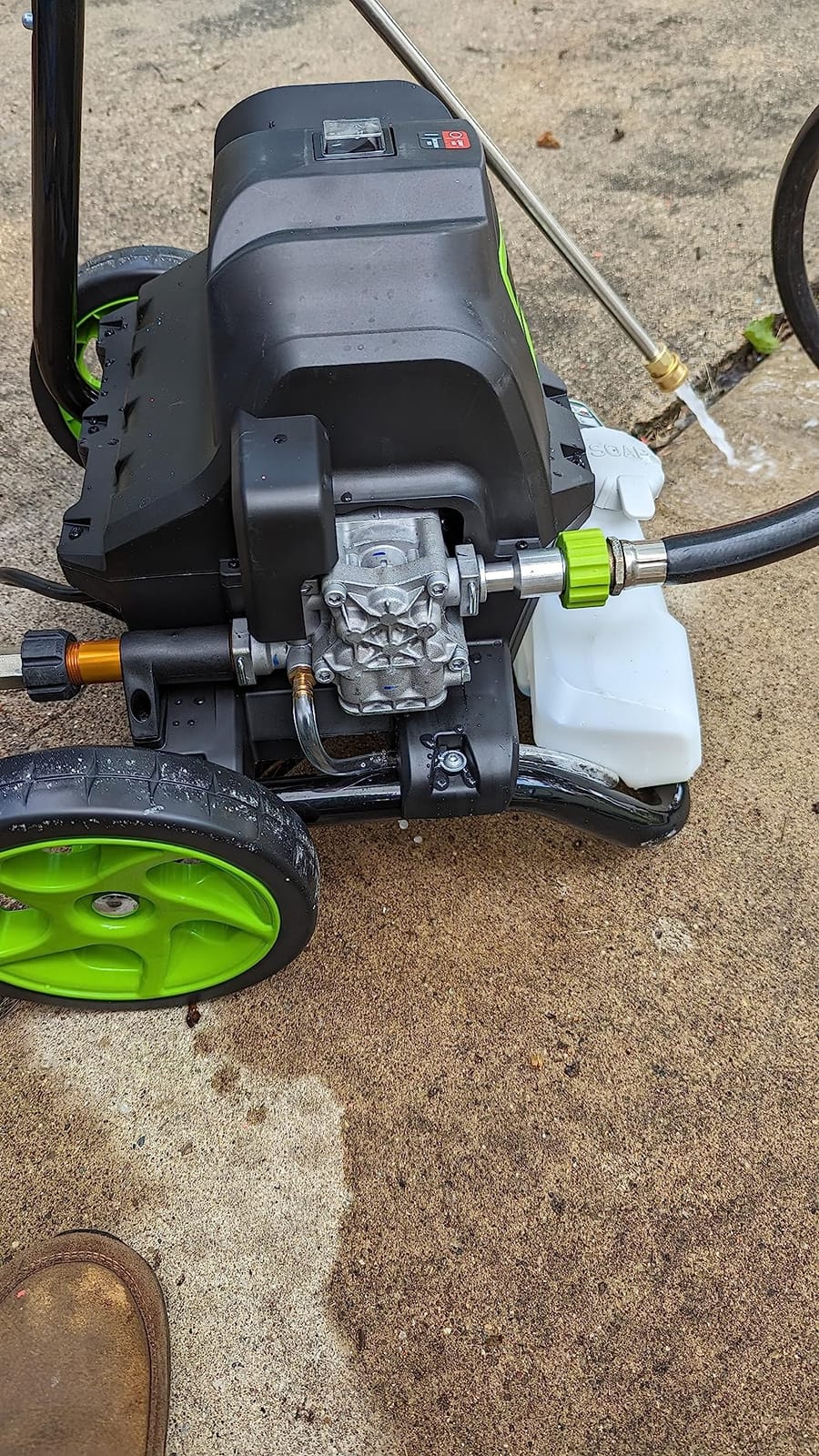
Storage is where it shines. The detachable handle lets the frame sit flat on a garage shelf, and at 27.8 pounds it is light for a wheeled machine. The 14 AMP motor uses push-button start with automatic start and stop, so there is no gas, oil, spark plug or air filter to service in a shed.
Several owners note that swapping the included hose and nozzles makes a noticeable difference in real pressure, which tells you the machine is fine and the accessories are the weak link.
Best if your deck is pressure-treated pine
Treated pine is the most common residential deck surface and the most easily damaged. Held under 2000 PSI with a 25 or 40 degree tip, this unit removes accumulated grime and prepares the surface for stain without opening up the wood.
The onboard soap tank with a dedicated soap tip handles a pre-treatment pass, and the GFCI-protected cord with a short pigtail is the correct arrangement for a covered outdoor outlet.
Where it falls short
Flow is the limitation. At 1.2 GPM this is slow on anything over roughly 300 sq ft, and the general complaint in owner reviews is that the included hose and nozzles cost you pressure you already paid for.
There are also scattered reports of motor or pump failure and oil weeping, and the wheel clips are prone to coming off if the machine is dragged across boards.
8. CRAFTSMAN CMEPW2100 – tidy storage and enough power
CRAFTSMAN Electric Pressure Washer, Cold Water, 2100-PSI, 1.2 GPM, Corded (CMEPW2100)
- 2100 max PSI strips algae from boards and concrete
- onboard storage keeps hose cord wand and nozzle in one place
- quiet running
- 25 ft hose with a 35 ft cord gives good reach
- Hose tangles and kinks during storage
- soap will not flow unless the garden hose inlet is turned down
- some cord GFCI and pump failures within a year
The CMEPW2100 appeals to people who want a powerful machine that still fits on a shelf. At 2100 max PSI and 1.2 GPM it is CETA certified, and the onboard storage for nozzle, hose, cord and wand is the tidiest arrangement we saw in this roundup.
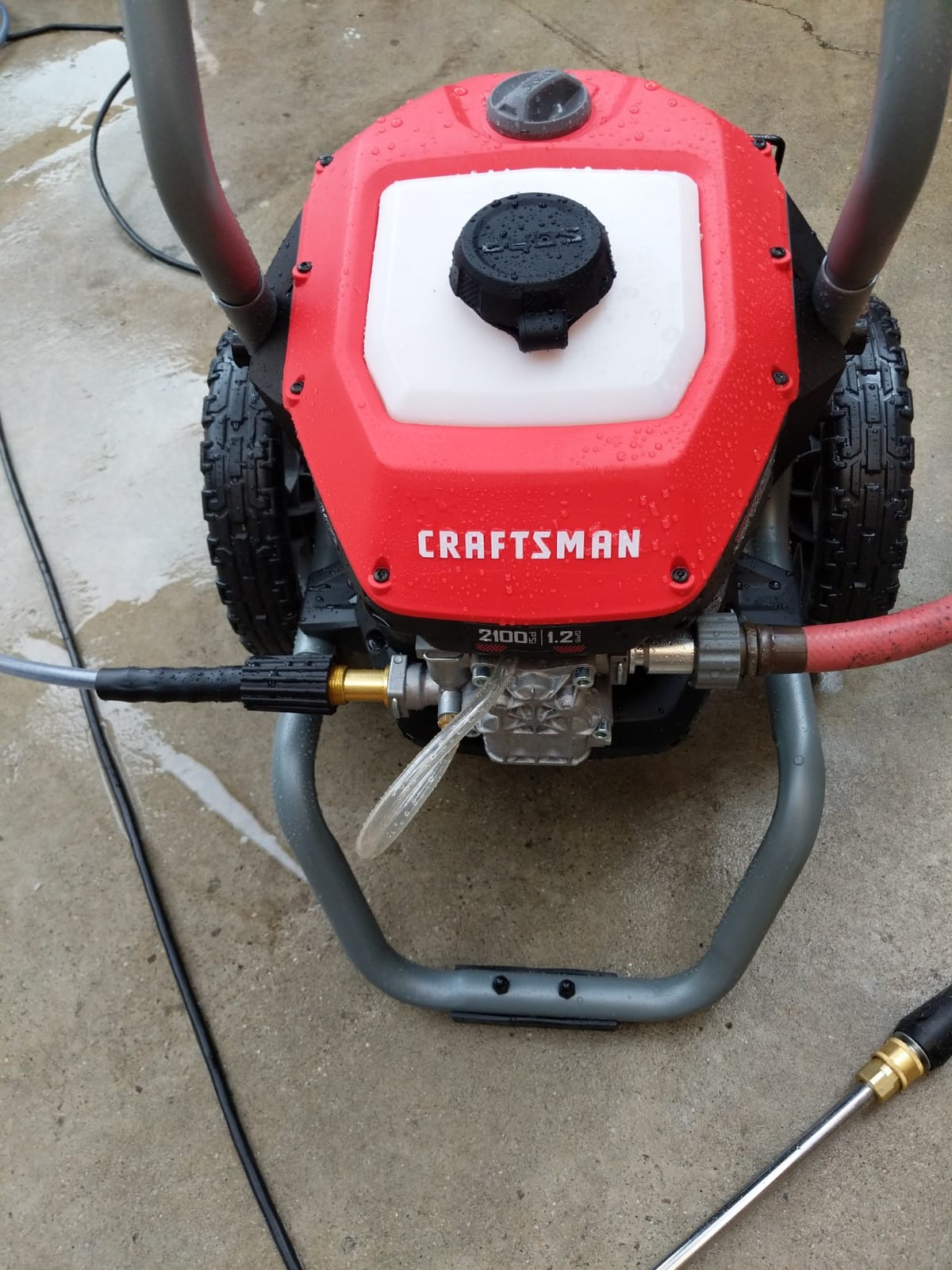
Owners confirm the pressure is adequate for deck stripping and for algae on concrete, and several note how quiet it runs next to a gas machine with neighbours close by. Ten inch wheels make it easy to roll across a deck, and the 35 ft cord with a 25 ft hose gives a working radius most decks never exceed.
The spray gun has an integrated soap tank, so detergent travels with the wand and there is no separate bottle to set down on wet boards.
Best when garage space is the deciding factor
Everything clips to the frame, so a cluttered machine does not spread across the garage floor. At 32 pounds it is still portable and the 10 inch wheels handle board gaps without dragging.
Use it when the deck is a routine annual clean rather than a restoration. At 2100 max PSI it will remove grey oxidation and algae film, but it takes longer than the high-flow Westinghouse units on wide decks.
Where it falls short
The pressure hose is the repeated complaint. It tangles and kinks, and it is hard to coil neatly afterwards, which matters for anyone who cares about the tidy storage this machine is bought for.
Soap dispensing often fails unless the garden hose inlet is turned down, and there are reports of cord GFCI and pump failures inside a year. Check the GFCI plug before the first use.
9. CRAFTSMAN CMEPW1700 – lightest full-size option
- Very light at 17.5 pounds and small enough for a garage shelf
- 35 ft cord reaches most decks without an extension lead
- quiet and stops when the trigger is released
- hand-grip trigger eases hand fatigue
- Included hose and soap applicator are widely replaced by owners
- 1.2 GPM is slow on large decks
- some pump or motor failures after a season
At 17.5 pounds this is one of the lightest wheeled units we tested, and the 35 ft power cord means most decks are within reach without an extension lead. It runs 1700 max PSI and 1.2 GPM, which is gentle wood territory rather than heavy restoration.
The compact dimensions of 18.33 by 10.43 by 11.25 inches mean it goes on a shelf rather than taking a floor bay, and the onboard storage for hose, cord and wand keeps it together. Owners over 60 mention the simple setup and the quiet run as the reasons they keep reaching for it.
Several reviewers report cleaning a 45 foot deck end to end on this machine, which is more than the flow rate suggests should be comfortable. The hand-grip trigger design also reduces hand fatigue on longer sessions.
Best for light annual maintenance
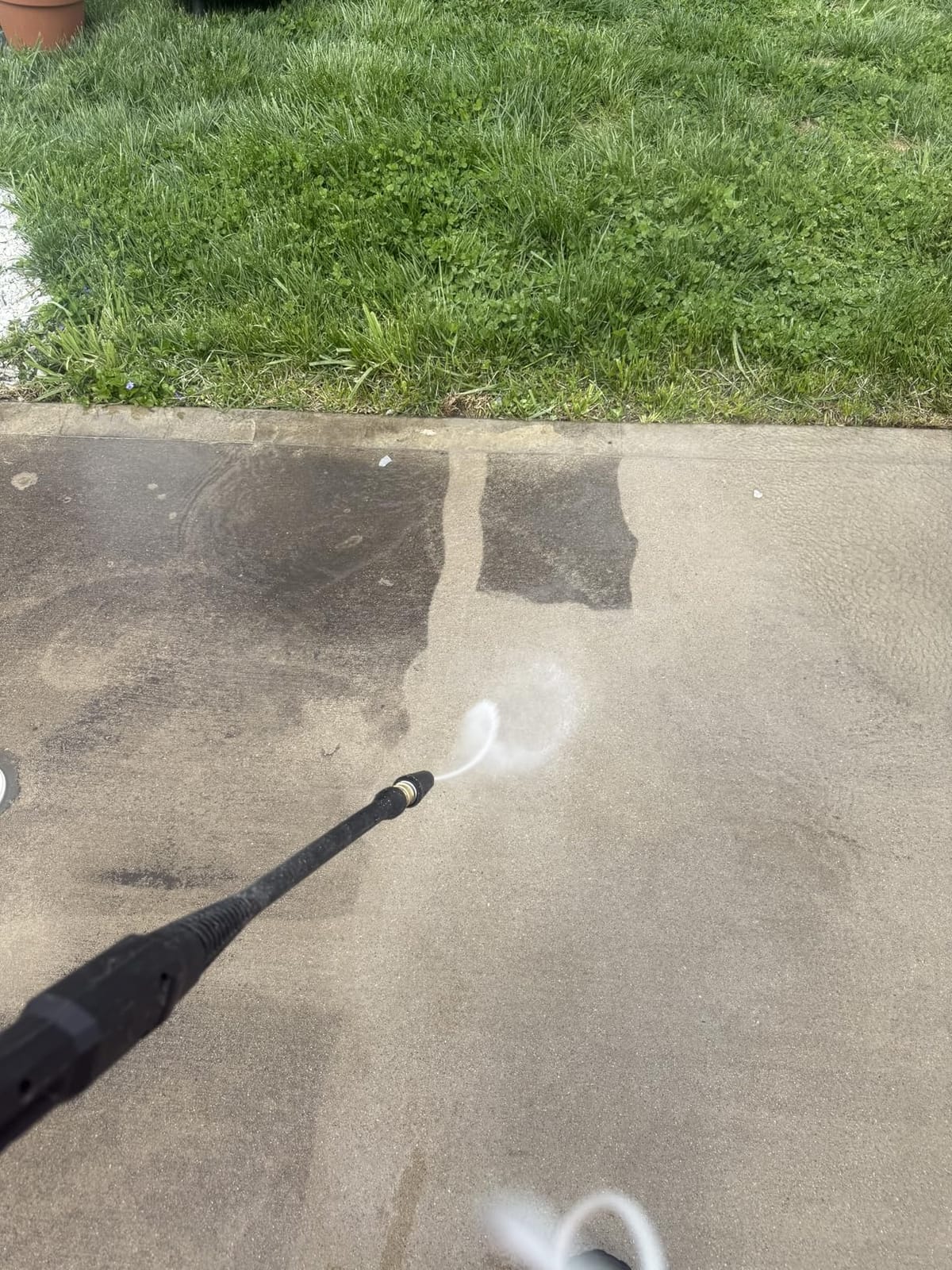
If your deck needs a rinse in spring rather than a restoration, 1700 max PSI with the included 40 degree nozzle is the right tool. The 40 degree fan spreads the spray wide, which is the safest way to wash soft wood without leaving a cleaned stripe next to a dirty one.
The turbo nozzle handles stubborn patches, and the soap applicator bottle covers a pre-treatment pass on mildew that has not gone black.
Where it falls short
The included hose and soap applicator are the near-universal complaint. Most owners replace them early, and you should budget for that before you decide the machine is underperforming.
At 1.2 GPM, a large deck is a long job, and there are reports of pump or motor failure after a season or two of use, so it suits light duty better than heavy annual restoration.
10. Greenworks 1800 PSI – smallest and simplest unit here
Greenworks 1800 PSI (1.1 GPM) Electric Pressure Washer PWMA Certified
- Strong power to size ratio
- 35 ft cord with integrated GFCI plug
- universal quarter inch quick connects
- accepts a longer aftermarket hose without pressure loss
- 1.1 GPM is the lowest flow in the roundup
- included hose is thin and kinks
- trigger must be held continuously
- some reports of early shutoff and failure
At 16 pounds and 12.8 inches tall, this is the unit to carry up to a balcony deck or a third-floor terrace. It produces 1800 PSI at 1.1 GPM, pushes the button to start with no gas, oil, spark plug, air filter or pull cord, and includes 40 degree, turbo and soap tips.
Owners are impressed by the ratio of power to size, with several running it for three hours or more on house exteriors, walkways and multiple decks without overheating. The 35 ft cord with an integrated GFCI plug is a sensible safety choice, and the universal quarter inch quick-connect system means you are not locked into one accessory brand.
It will also accept a much longer aftermarket hose without a noticeable pressure loss, which is the opposite of what most compact units manage and genuinely useful on a long deck.
Best for elevated decks and small patios
Weight is the deciding factor here. There is no other unit in this roundup that a single person can carry up a stairwell without planning for it, and that is exactly the situation on a raised urban deck or a rooftop terrace.
For a compact surface of a couple of hundred square feet, 1800 PSI with a 40 degree tip is more than enough to keep a deck in condition season to season.
Where it falls short
Flow is the weak point. At 1.1 GPM, the lowest in the roundup, a wide deck turns into a slow job, and forum owners describe low-flow units as really, really slow on decks even when the PSI figure looks impressive.
The included 20 ft hose is thin and kinks easily, the trigger has to be held down continuously which tires your hand on a long session, and there are reports of the unit shutting off and failing after limited use.
How to Choose an Electric Pressure Washer for a Deck?
Start with flow, not pressure. Multiply the PSI by the GPM to get total cleaning power, and compare that number across models rather than comparing headline PSI. The Westinghouse ePX3500 works out at 4400 from its max figures, while the Greenworks 2000 PSI unit gives 2400 despite a similarly high pressure number. That gap is the difference between one pass and four.
Then match flow to the surface area. A deck up to 200 sq ft is comfortable with 1.1 to 1.2 GPM. Between 200 and 400 sq ft you want 1.2 to 1.7 GPM so the job stays inside a morning. Above 400 sq ft, look for 1.7 GPM or higher, or plan to rent a gas unit for the annual deep clean and keep the electric for everything else.
Nozzle choice does more work than most buyers expect. The 40 degree fan tip is the safest option on soft wood because it spreads the spray wide. The 25 degree tip is the general-purpose deck washer. The 15 degree tip is for stubborn algae and concrete. The turbo nozzle is for stripping, and it is the one most likely to gouge a board if you linger on it. The soap tip pulls detergent from the tank or foam cannon.
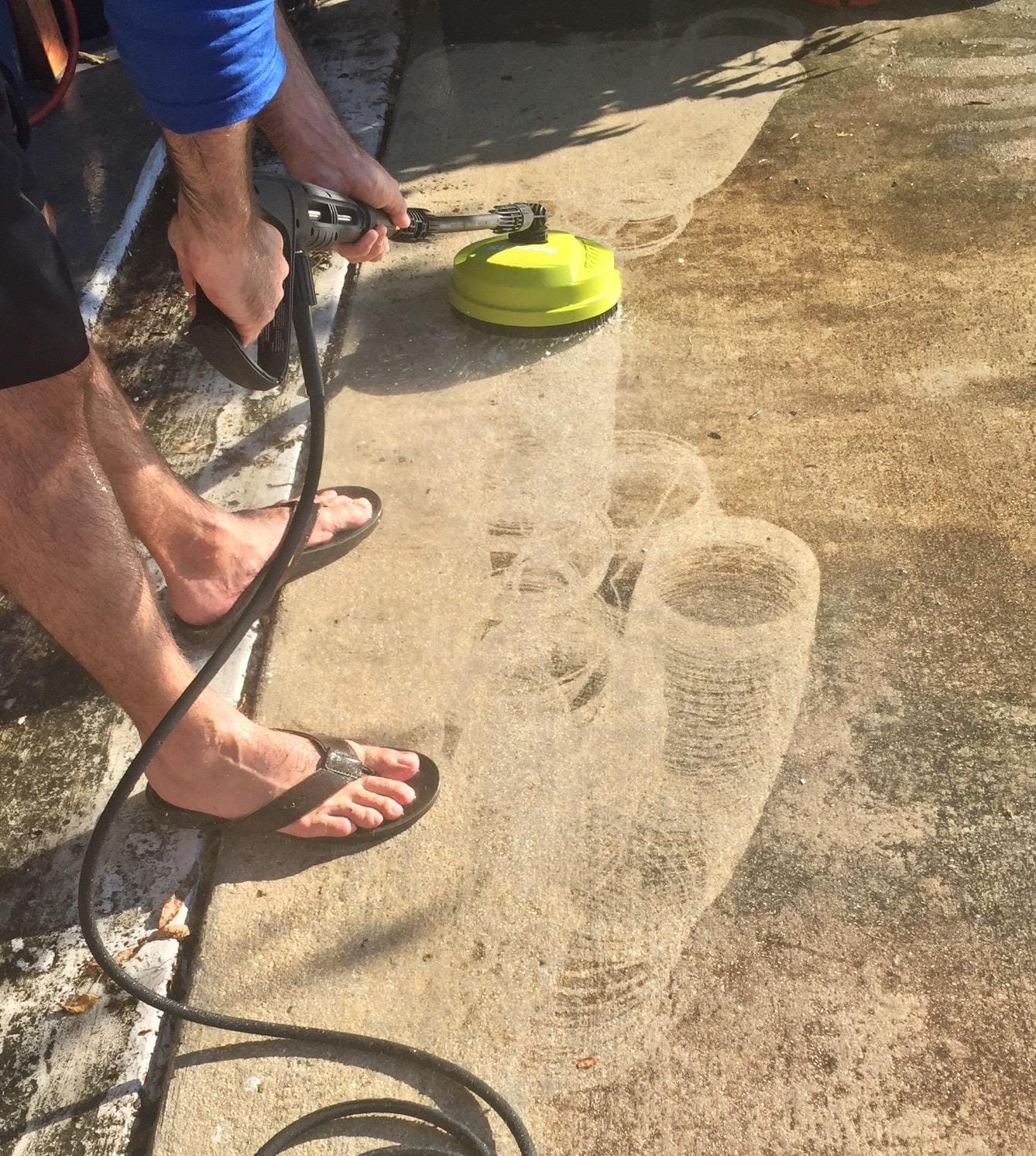
A surface cleaner attachment is the single biggest workflow upgrade for a wide deck. Owners on r/pressurewashers consistently ask about it because a rotating head keeps even pressure across a wide board instead of leaving a clean stripe where the wand passed. Buy one that uses M22 fittings, the standard on most units including the Westinghouse WPX3000e, so it connects without an adapter.
Electric beats gas for decks in almost every household scenario. It starts on a button, runs quiet enough for a Sunday morning, needs no fuel mixing or oil changes, and stores against a garage wall. Gas wins only on total speed and on surfaces far past wood, where you need more flow than a household circuit can deliver. Our yard work equipment guide covers the other electric tools that make a spring cleanup practical, and if the deck sits at the far end of a long property, an electric bike for commuting is the easiest way to get hose, detergent and buckets out there without loading the car.
Finally, check the electrical side. Every unit here draws meaningful current, and the 3000 PSI brushless machines are specified for an individual branch circuit. A GFCI-protected cord and a 12 gauge or better extension lead prevent the most common surprise of the whole project.
Cleaning a Wood Deck Without Damaging It
Wood decks have a safe pressure ceiling, and the surface sets it. Pressure-treated pine and cedar tolerate roughly 2,000 PSI with a wide-angle tip. Composite and vinyl decking is a dense plastic board and can take 2,500 to 3,000 PSI. Cedar and any weathered soft wood sit at the lower end, and new pressure-treated wood fresh from the yard can be softer than a ten-year-old deck.
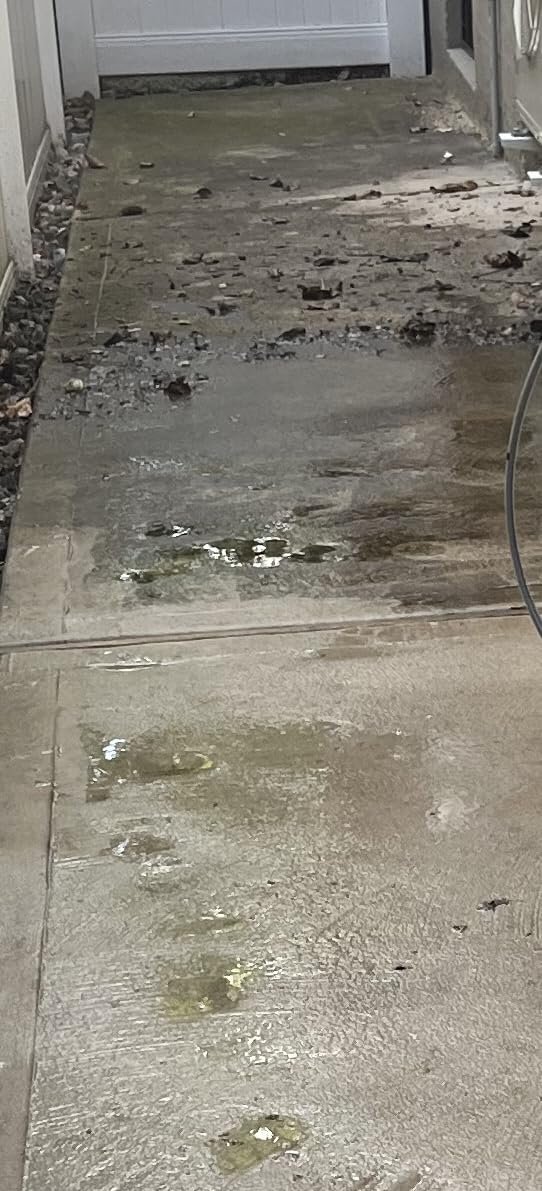
Drift the wand, keep it moving, and stay more than 10 inches from the surface. Most board damage comes from working in one spot with a narrow tip, which cuts a furrow into the fibres and leaves an obvious cleaned lane against the surrounding grey wood.
Grain raising is the effect deck owners complain about most. When you wash wood, the surface fibres swell and stand up, leaving the deck fuzzy to walk on. It is not a failed clean, it is wood that needs a day or two to dry and settle, and it is why deck brightener is used on some surfaces. A light pass with a 40 degree tip and a low-pressure rinse reduces it, but you cannot wash the grain out of wood.
Order of work matters more than pressure. Sweep first so grit is not driven into the fibres. Pre-treat mildew and algae with a deck-specific product and let it dwell. Wash with the grain using a 25 or 40 degree tip, keeping the wand moving. Rinse from the house outward. Let the deck dry fully before sealing, and expect a re-stain if you washed off an old coating.
On chemicals, keep it simple. Oxygenated bleach handles mildew and algae on wood without the fibre damage of chlorine bleach. Triney Yard Brightener or a similar oxalic acid brightener removes the grey oxidation and resets the surface for stain. Never use a chlorine-based product on cedar or on composite decking, and never mix bleach with any other cleaner. Composite and vinyl respond to a milder detergent and a lighter hand, because the plastic surface does not need brightening at all.
Frequently Asked Questions
What PSI pressure washer is good for decks?
For a wood deck, 1,500 to 2,500 PSI covers almost every residential job, and 2,000 PSI is the safest all-round figure. Composite and vinyl decking is denser and tolerates up to 3,000 PSI. Use a 25 or 40 degree nozzle on soft wood, keep the wand more than 10 inches from the surface, and keep it moving so you do not cut a stripe into the boards.
Can I use a power washer to clean my wood deck?
Yes, and it is the fastest way to remove mildew, algae and grey wood oxidation. The key is restraint: 2,000 PSI or less on pressure-treated pine and cedar, a wide 40 degree fan tip, the wand held back and moving constantly, and detergent used to pre-treat growth before you spray. Washing too close with a narrow tip raises the grain and can strip stain in a visible band.
What is the best PSI for an electric pressure washer?
For most homeowners, 2,000 to 3,000 PSI is the useful band. Under 1,500 PSI struggles to lift embedded algae, while anything above 3,000 gains little on a deck and risks cutting wood fibres. Rather than chasing PSI, compare PSI multiplied by GPM, because flow is what determines how long the job takes.
What GPM do I need for a large deck?
Match flow to area. Up to 200 sq ft, 1.1 to 1.2 GPM is workable. Between 200 and 400 sq ft, aim for 1.2 to 1.7 GPM. Above 400 sq ft, look for 1.7 GPM or higher, because a low-flow machine turns a single deck into most of a weekend. A 1.76 GPM unit is the practical sweet spot for a large residential deck.
Is a gas or electric pressure washer better for cleaning a deck?
Electric is better for most homeowners: it starts on a button, runs quietly on a Sunday morning, needs no fuel or oil changes, and stores flat against a garage wall. Gas wins on raw flow, which matters on very large decks or heavy concrete. The common pattern is an electric unit for routine work and a rented gas unit for the annual deep clean.
Do I need a surface cleaner attachment for a deck?
For a wide deck, yes. A surface cleaner rotates a spray head under a housing, so pressure stays even across the full width instead of leaving a clean stripe where the wand passed. It also reduces hand fatigue. Look for one with M22 fittings, which is the standard on most units in this roundup, and check your machine’s fitting type before buying.
Final Verdict on the Best Electric Pressure Washers for Decks
The Westinghouse ePX3500 is our pick of the best electric pressure washers for decks because 1.76 GPM of flow in a 19 pound body solves the two problems that trip up most buyers. High flow means the job finishes in a morning, and low weight means one person can carry it up to the deck. If your deck is very large, step up to the Greenworks GPW3002A for genuine speed, and if a small terrace is your situation, the Greenworks 1800 PSI unit is the one you can carry up a stairwell.
Whichever you pick, decide the nozzle and the detergent before the wand comes out. That is where a deck job is actually won or lost.