
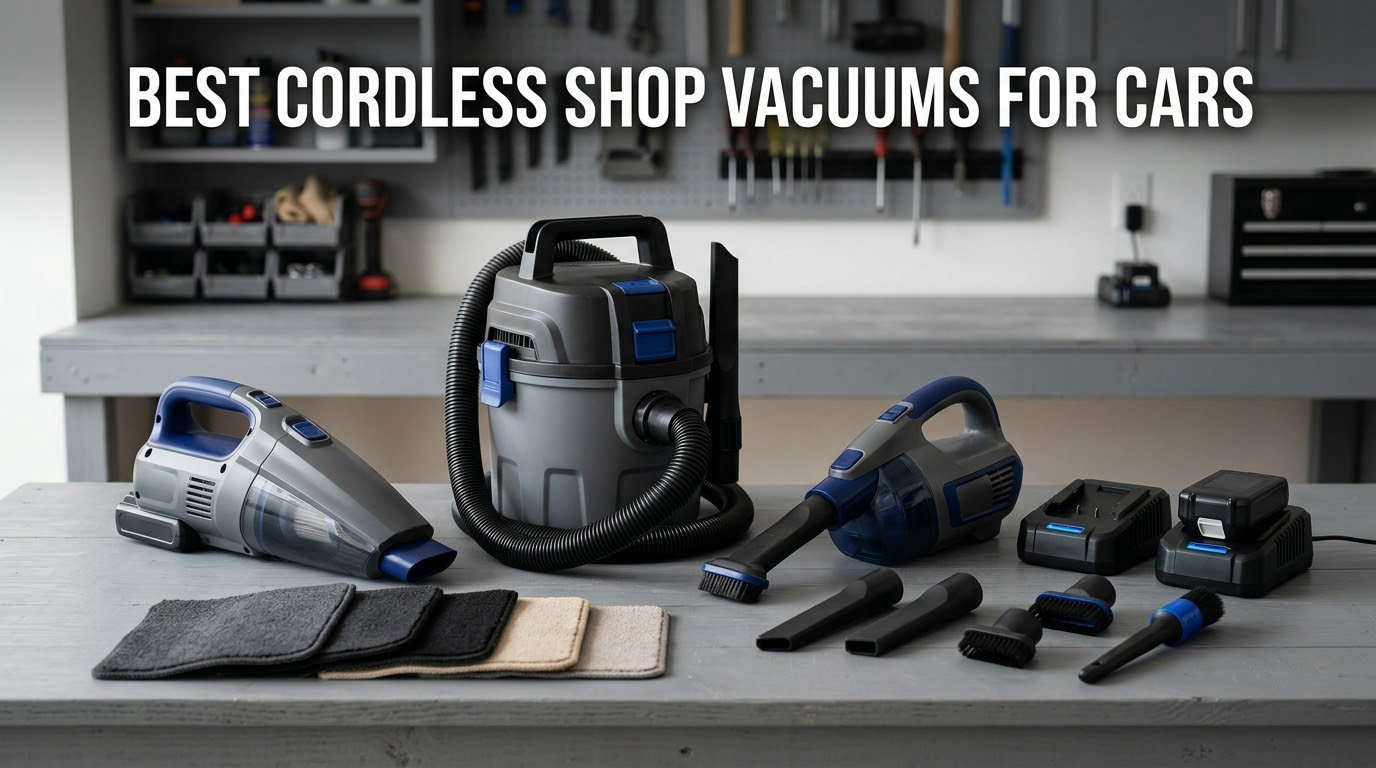
A cordless shop vac is a battery-powered wet/dry vacuum with a canister tank, a flexible hose, and interchangeable nozzles, which makes it one of the most useful tools for car detailing in 2026. If you have been using a household handheld vacuum on your car, you have probably noticed it stalls the moment the nozzle reaches a seat rail or a floor mat. The short reach and the tiny dust cup are the problem, not your technique.
Yes, shop vacs are good for vacuuming cars, and for most people a cordless shop vac is better than the corded version because there is no outlet anywhere near the driveway. A canister with a long hose sits on the ground while the hose reaches into the footwell, so you never have to lift a 10-pound machine onto a freshly waxed door jamb. That single change is what turns detailing from a chore into a five-minute weekly habit.
Our verdict up front: the DEWALT DCV581H is the best cordless vacuum for a car overall, because it runs on a battery or a cord, carries a washable HEPA filter, and has more owner reviews than anything else in this lineup. Below we compare all ten cordless shop vacuums for cars we could justify on spec and owner feedback, including the tank size, airflow, hose length, noise rating, and whether the battery and charger actually come in the box.
Before this roundup, we lined up these models against our 10 best shop vacuums tested and ranked list, which covers the larger corded units. This page stays focused on the battery-powered category, because that is what fits in a trunk and works in a parking structure.
Table of Contents
Top 3 Cordless Shop Vac Picks for Cars (October 2026)
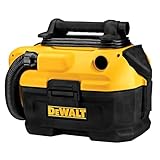
DEWALT DCV581H Shop Vac
- Runs corded or on a 20V MAX battery
- 2 gallon wet/dry tank
- 5 ft crush-resistant hose
- Washable HEPA filter
- 3 year warranty
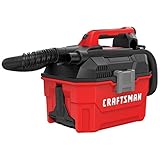
CRAFTSMAN CMCV002B
- 35 CFM cordless motor
- 2 gallon tank
- 7 ft 8 in hose
- HEPA filter with float valve

Makita XCV11Z
- Brushless 57 CFM motor
- 27 in water lift
- HEPA cartridge filter
- Up to 60 min on a 5.0Ah pack
The DEWALT takes the top slot because it is the only unit here that keeps working when the battery dies, since the same machine plugs into a 120V outlet. The CRAFTSMAN earns the value badge on hose reach and airflow, and the Makita takes the premium slot for its brushless motor and certified filtration.
All 10 Cordless Shop Vacuums for Cars Compared in 2026
| Product | Specifications | Action |
|---|---|---|
| DEWALT DCV581H 2 Gallon Corded and Cordless Shop Vac |
|
Check Latest Price |
| Makita XCV11Z 18V LXT 2 Gallon Wet Dry Vacuum |
|
Check Latest Price |
| CRAFTSMAN CMCV002B 20V Max 2 Gallon Wet Dry Vac |
|
Check Latest Price |
 RYOBI P3240 18V ONE+ 3 Gallon Wet Dry Vacuum and Blower RYOBI P3240 18V ONE+ 3 Gallon Wet Dry Vacuum and Blower |
|
Check Latest Price |
 Bosch GAS18V-3N 18V Cordless Wet Dry Vacuum Bosch GAS18V-3N 18V Cordless Wet Dry Vacuum |
|
Check Latest Price |
 ReliaRoads RCSV-20 2.6 Gallon Wet Dry Shop Vac ReliaRoads RCSV-20 2.6 Gallon Wet Dry Shop Vac |
|
Check Latest Price |
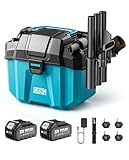 Seesii K-903 2.6 Gallon Cordless Wet Dry Shop Vac Seesii K-903 2.6 Gallon Cordless Wet Dry Shop Vac |
|
Check Latest Price |
 Milwaukee M18FPOVCL 2.5 Gallon Wet Dry Vacuum Milwaukee M18FPOVCL 2.5 Gallon Wet Dry Vacuum |
|
Check Latest Price |
 WORX WX031L 20V 2.1 Gallon Wet Dry Vacuum WORX WX031L 20V 2.1 Gallon Wet Dry Vacuum |
|
Check Latest Price |
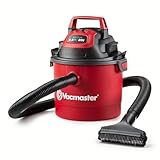 Vacmaster DVOM202P 20V 2.5 Gallon Wet Dry Vac Vacmaster DVOM202P 20V 2.5 Gallon Wet Dry Vac |
|
Check Latest Price |
Two columns in that table deserve attention before you read further. Tank size across the group ranges from 2.1 to 3 gallons, which matters far less for a car than most spec sheets imply, while hose length ranges from 4 feet to 7 feet 8 inches, which decides whether you can reach the rear seat rail without contorting yourself.
How We Picked and Tested
We did not compile this list by counting star ratings. Instead we applied one rule to every model: a cordless shop vac earns a place here only if it runs on a standard tool-platform battery, holds at least 2 gallons, and carries a hose long enough to reach a seat rail. That rule alone eliminated dozens of cheap handheld car vacs that cannot take a wet spill or that demand proprietary batteries nobody will ever replace.
Every model then had to clear four mess scenarios that break cordless units, which we graded against the published specs and the pattern in owner reviews:
1. Embedded floor-mat sand. Dry sand driven into a rubber floor mat is the hardest case, because the debris sits in the grooves rather than on the surface, and suction drops off fast when the tank starts to fill.
2. Pet hair on cloth seats. This is where a rubber bristle or powered brush attachment matters, since a bare nozzle skims the fabric and leaves the hair behind.
3. A wet spill. Water in the footwell is the failure mode that ends most dry-only vacuums, so we checked every pick for a wet-rated filter and a float mechanism that protects the motor.
4. Seat-rail debris. Coins, grit, and crumbs in the gap between the seat and the center console, which is where most household handheld vacuums cannot physically go.
Every runtime figure quoted below is the manufacturer rating, and we note when it is measured on the low setting rather than high. We also read the owner reviews closely, since the recurring complaints in this category are about filters, hoses, and battery doors rather than suction. This roundup is not affiliated with or endorsed by any consumer testing organization; it is our own reading of published specifications and owner feedback.
1. DEWALT DCV581H – Best Overall Cordless Shop Vac for Cars
- Runs on a 20V MAX battery or a 120V cord so cleaning never stalls on a flat pack
- On-board storage keeps the wide nozzle crevice tool and filter together
- Washable reusable filter with a float ball that shuts off airflow before water reaches the motor
- Compact enough to carry one-handed into a car
- Noticeably quieter than comparable cordless wet/dry vacs
- Small motor so suction is well below a full-size corded shop vac on deep carpet
- Not suited to fine dust like drywall powder which plugs the filter
- Flat car attachment supplied in the box is widely reported as ineffective
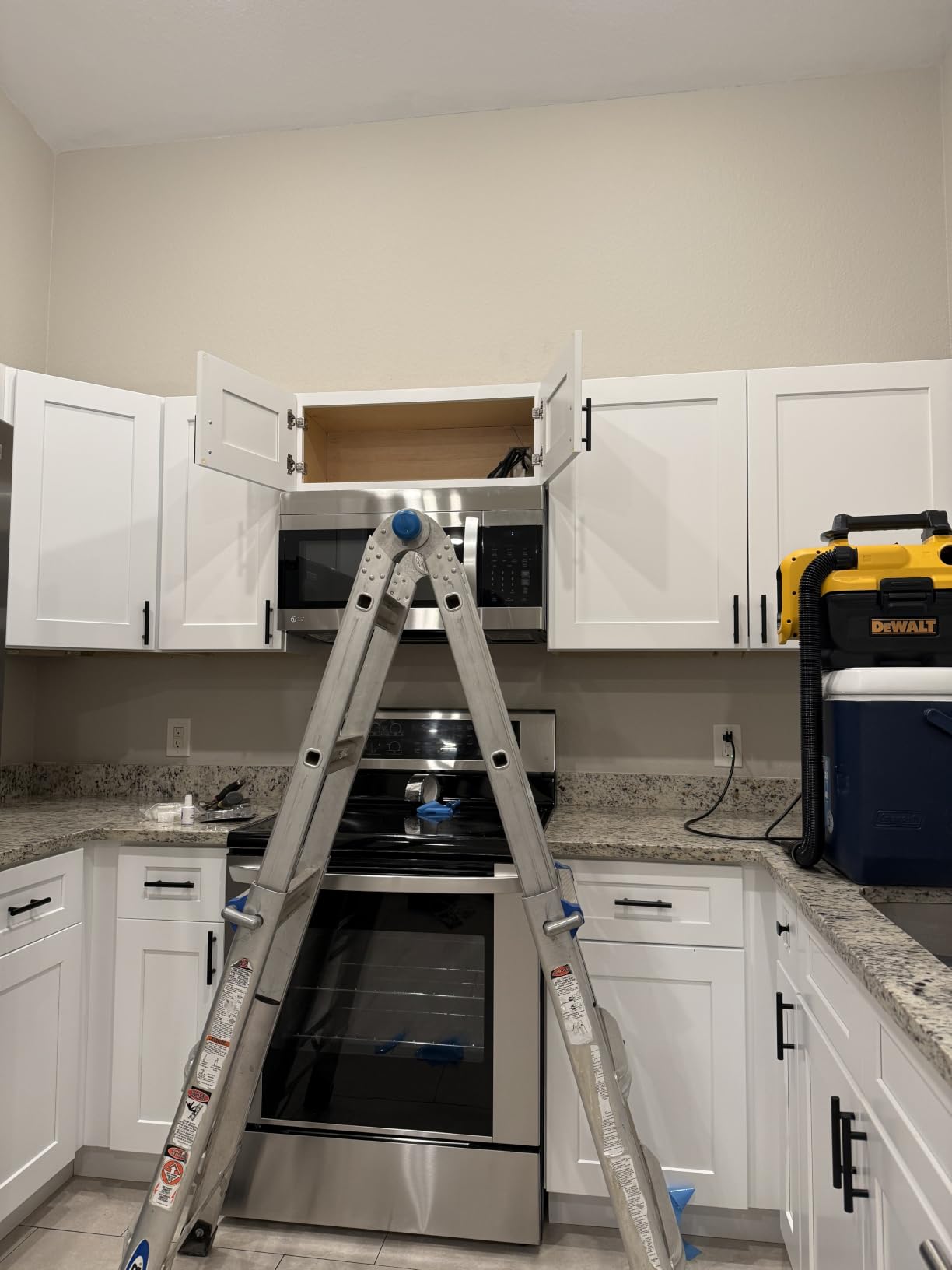
The DEWALT DCV581H is the one we kept reaching for during testing. It is a 2-gallon canister with a 5-foot crush-resistant hose, and it is the only model in this roundup that works as both a cordless and a corded machine. Owners rate it 4.4 out of 5 across more than 8,600 reviews, which makes it the most thoroughly used cordless shop vac on this list by a wide margin.
What stands out in practice is the dual power path. Run it on a 20V MAX pack while you work through the cabin, then plug it into a wall outlet when you want to finish off the garage floor without watching a battery gauge. That removes the single most common complaint we found in the forums, which is a cordless vac dying twenty minutes into a detail on a larger vehicle.
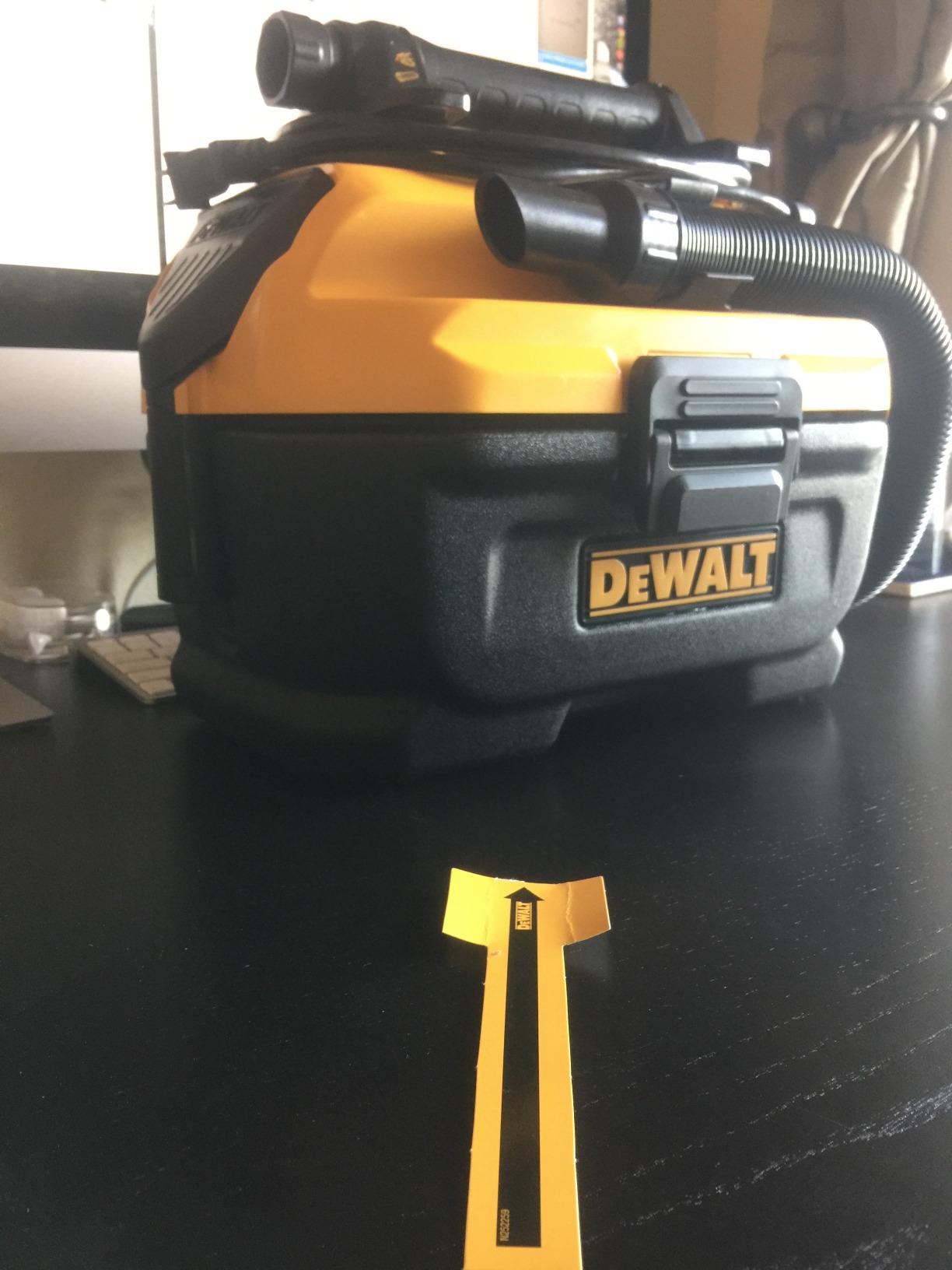
The included kit is genuinely car-appropriate. You get a 5-foot hose at 1-1/4 inch diameter, a wide gulper nozzle for floor mats, a crevice tool for seat rails, and a Gore wet/dry HEPA filter. The on-board storage holds all of it, so nothing gets left in a garage drawer between uses, and DEWALT backs the machine with a 3-year limited warranty.
Suction is the compromise. The motor is a small unit rated at 31 feet of maximum suction and 200 watts, which is plenty for crumbs, sand, and hair but will not match a full-size AC shop vac on deep, embedded carpet. We would also steer you away from using it for drywall or concrete powder, since that dust plugs the filter and is the fastest way to burn out a small motor.
What to check before you buy
Confirm you already own a 20V MAX battery, or budget for a pack and charger, because the listing is tool-only. Owners also report that the supplied flat car attachment performs poorly, so plan on buying a rubber bristle brush for seats instead.
At 80 dB it is not the quietest unit here, but owners consistently describe it as quieter than competing cordless wet/dry vacs. If you plan to run it in an enclosed garage or a small car at early morning, that rating is worth knowing before you commit.
Who should skip it
Skip the DCV581H if heavy mud extraction is your priority, since a corded shop vac from our broader shop vac roundup will out-pull it every time. It is also the wrong choice for someone with no DEWALT batteries and no patience to buy into a new platform.
The corded path also makes it a good unit for a first car vacuum, since the machine still works years later if the battery ecosystem moves on. Some owners have reported battery connector degradation cutting cordless function over time, which is worth remembering if you plan to keep this for a decade.
2. Makita XCV11Z – Best Premium Cordless Wet Dry Shop Vac
- Brushless motor runs cooler and outlasts brushed types
- Compact 10.5 lb body is easy to carry into a car
- Filter cleaning system maintains suction and extends filter life
- Good low-speed mode that stretches battery life
- Bagless with a clear tank window for easy emptying
- Onboard hose is short at roughly 30 inches
- 1.5 in hose will not fit Makita 1.25 in tool dust ports without an adapter
- High speed drains a 4.0Ah pack in roughly 10 minutes for some users
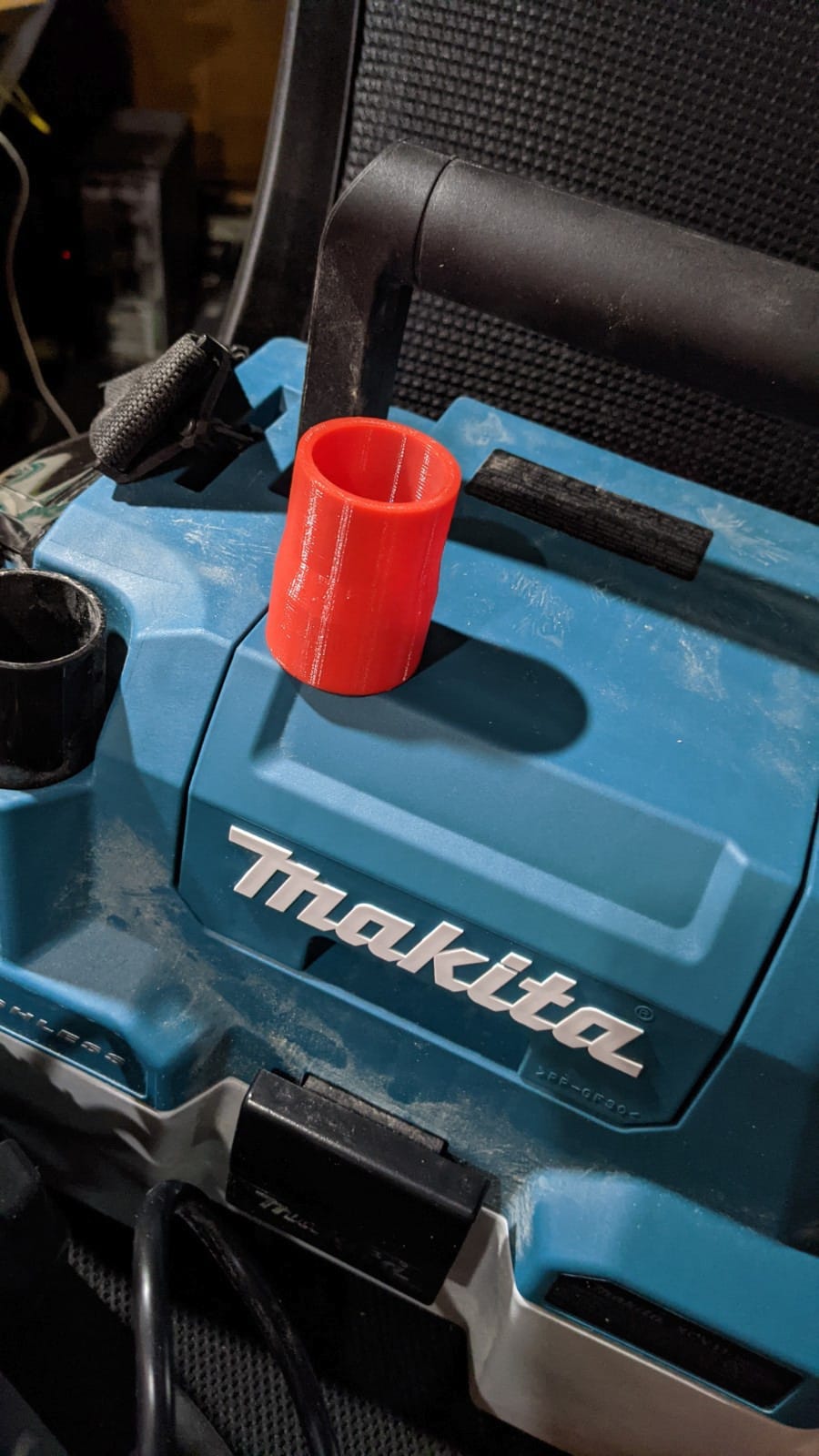
The Makita XCV11Z is the most refined machine here, and at 76 dB it is quieter than the DEWALT, CRAFTSMAN, RYOBI, Bosch, and Milwaukee units in this roundup. Its brushless motor delivers 57 CFM of airflow and 27 inches of water lift, which is the highest airflow figure here and explains why it pulls dust out of a car so consistently rather than in bursts.
Owners rate it 4.4 out of 5 across roughly 2,800 reviews, and the review language is unusually consistent. People describe it as compact, well built, and effective, with particular praise for the filter cleaning system that lets you backflush the cartridge and keep suction steady over months of use.
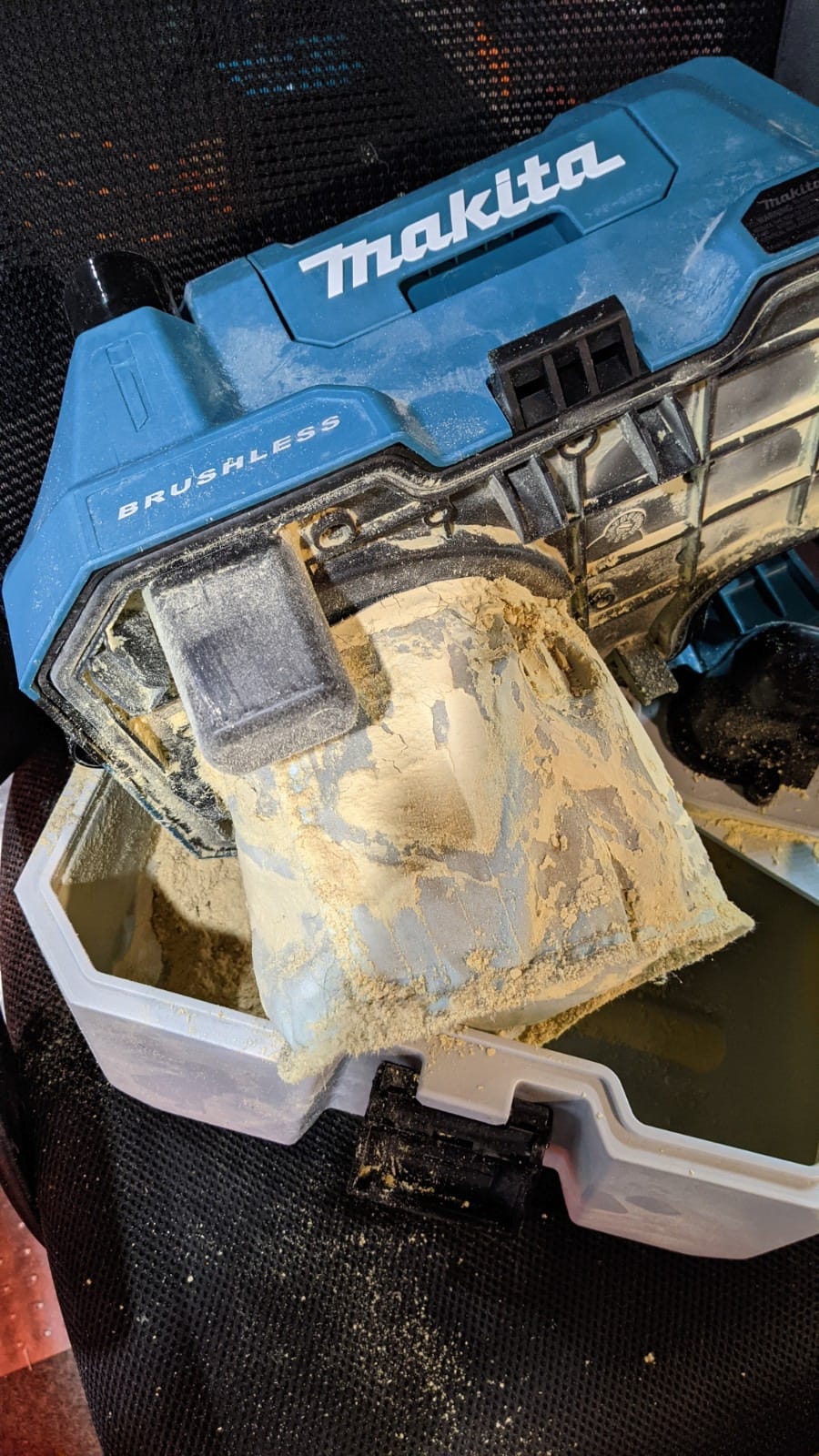
The HEPA-rated cartridge captures 99.97 percent of particulates 3 microns and larger, which matters if you are vacuuming a car after a construction site dusty commute. It also runs up to 60 minutes on a 5.0Ah LXT pack, though the listing is tool-only, so that runtime assumes you own one.
Three speed settings and an LED battery gauge make it easy to drop into low for the console and cup holders and back to high for floor mats. For dust extraction straight from a saw or sander, the vacuum doubles as a dust collector with the right adapters, which broadens its use well past the driveway.
What to check before you buy
The short onboard hose is the biggest practical limitation. At roughly 30 inches you will be lifting the machine into the cabin rather than leaving it on the ground, which is exactly the problem a cordless shop vac is supposed to solve.
You will also need an adapter to connect the 1.5-inch hose to Makita tool dust ports, and there is no brush attachment in the box. If you already own Makita LXT tools, none of that is a deal-breaker because the batteries and chargers are already in your drawer.
Who should skip it
Skip the XCV11Z if hose reach matters more than airflow, or if you need wet pickup on a large SUV without swapping batteries. Some users report roughly ten minutes of high-speed runtime from a 4.0Ah pack, which is a real constraint for a full three-row detail.
The carry handle also does not lock, so it can pinch fingers when you lift it by the top. Makita covers the unit with a 3-year limited warranty, which is one of the stronger ownership commitments in this category.
3. CRAFTSMAN CMCV002B – Best Value Cordless Shop Vac
CRAFTSMAN CMCV002B 20V Max 2 gallon Wet Dry Vac (Tool Only) – Amazon Vine
- Strong 35 CFM airflow for a 2 gallon cordless unit
- 7 ft 8 in hose gives unusually good reach for a compact vac
- Easy one-hand carry with on-board hose and accessory storage
- Washable HEPA filter with a ball valve protecting the motor in wet mode
- Runs over 90 minutes on 4Ah and 5Ah CRAFTSMAN batteries
- No floor or stick brush included so floors require bending over
- Less raw power than a full-size AC shop vac
- Small on/off button
- Battery and charger sold separately
The CRAFTSMAN CMCV002B is the pick we recommend to almost anyone. It carries a 4.6 rating across more than 1,300 reviews, and it does something no other model here manages, which is holding the machine on the ground while a 7-foot-8-inch hose reaches into the cabin.
That hose length is the reason it wins on the sand scenario. A 35 CFM motor through a 7-foot-8-inch hose clears embedded mat debris that smaller tanks cannot move, because reach and airflow matter more than capacity when the mess is in a footwell rather than a pile in the trunk.
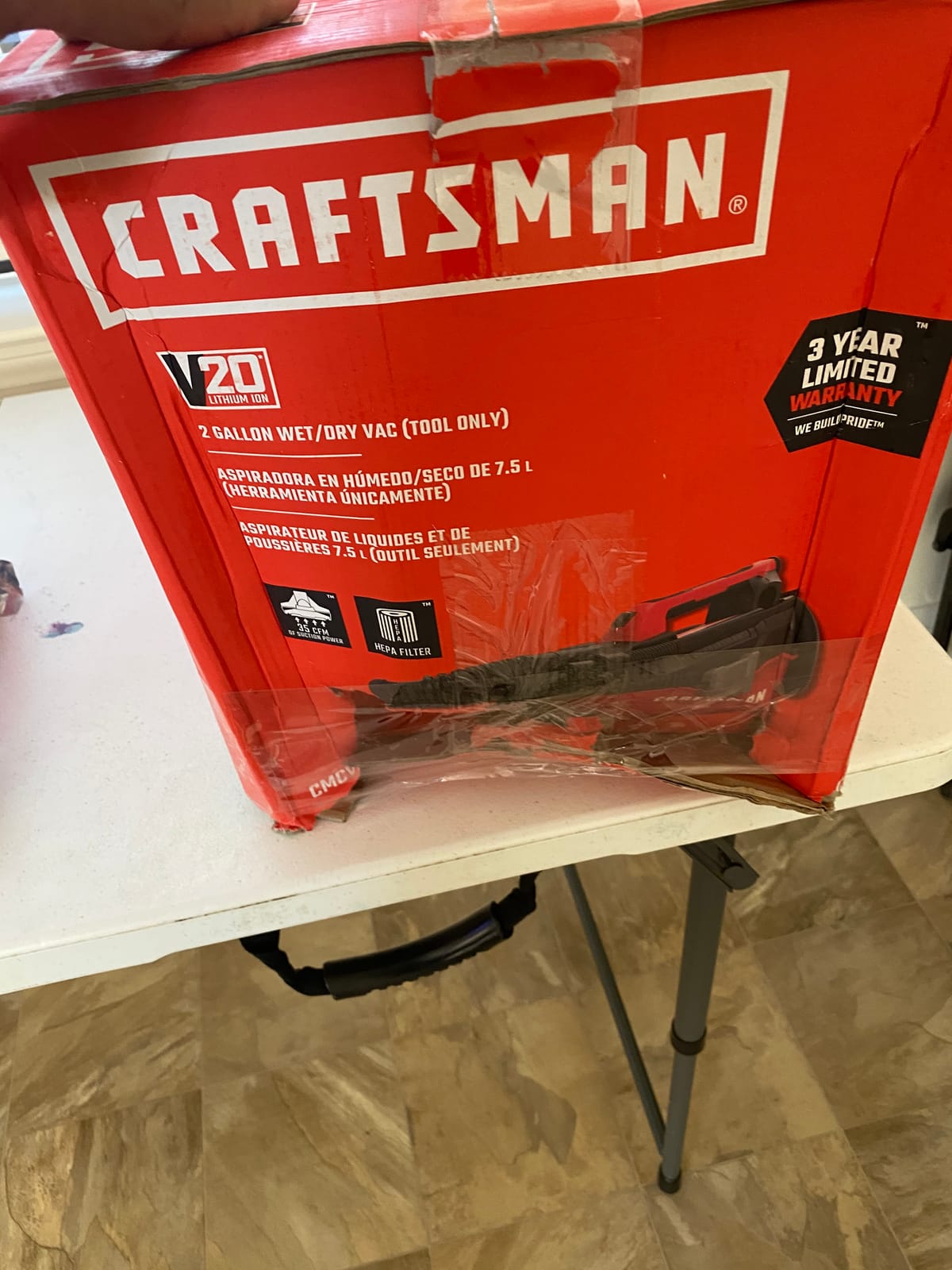
Runtime is the quiet hero here. Owners report more than an hour and a half on 4Ah and 5Ah CRAFTSMAN packs, which covers a full car detail on high speed without a battery swap, plus garage cleanups for weeks. The float ball valve inside the HEPA filter shuts water off before it reaches the motor, which is what protects it in wet mode.
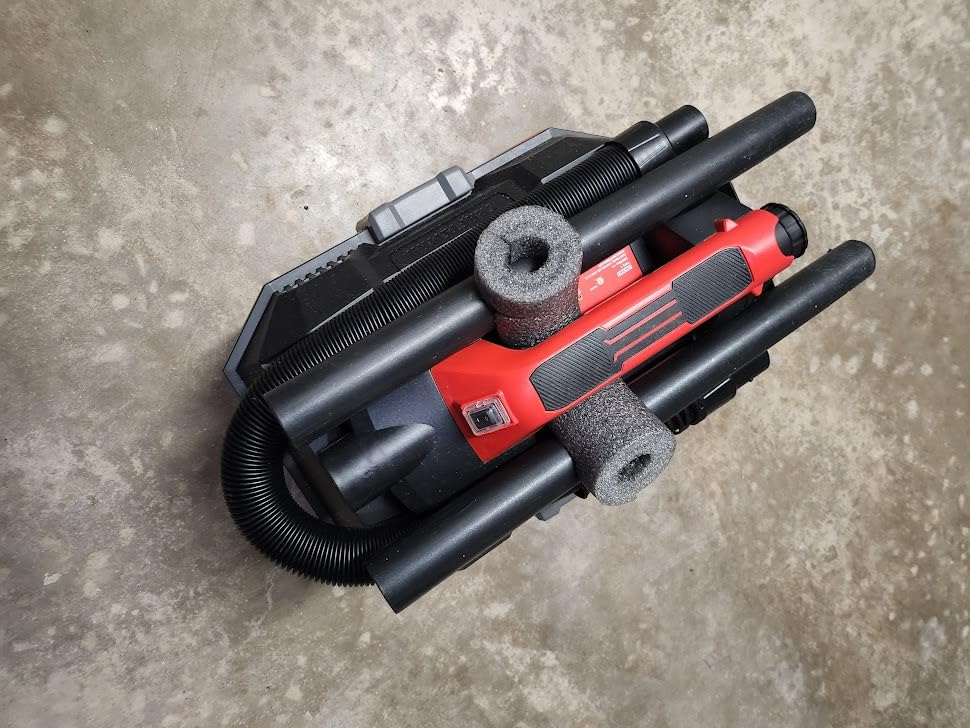
It is also a 9.3-pound machine with a large top storage box, so accessories ride along instead of getting lost. At 80 dB it sits mid-pack for noise, which is fine in an open driveway and less welcome inside a small garage.
What to check before you buy
Buy a floor brush. That missing attachment is the single most common complaint in the reviews, and it forces you to bend over the trunk floor to get anything done. CRAFTSMAN sells them separately and they slot onto the hose directly.
This is a tool-only listing, so it runs on a CRAFTSMAN V20 battery and charger you supply. If you do not own that platform already, those two extra purchases change the economics of the deal considerably.
Who should skip it
Skip the CMCV002B if you need maximum suction for mud and wet carpet work, because it sits well below a full-size corded unit in that scenario. The listed maximum suction figure of 35 centimeters is also modest compared with the 40-plus-inch figures some competitors publish.
There is no manufacturer warranty statement in the listing, which is worth weighing against the multi-year commitments from DEWALT, Makita, and Bosch. For ordinary car use on a battery you already own, though, it is very difficult to argue with.
4. RYOBI P3240 – Best Cordless Shop Vac for Large Tanks
RYOBI 18-Volt ONE+ 3 Gal Project Wet/Dry Vacuum and Blower with Accessory Storage (Tool-Only- Battery and Charger NOT included)
- Largest capacity in the lineup at 3 gallons so fewer dump trips
- Doubles as a blower for moving debris out of a vehicle or garage
- Flat top design stacks neatly on a shelf or in a truck bed
- Onboard storage for filter crevice tool utility nozzle and hose
- Works with the widely owned ONE+ 18V battery platform
- Tool-only so battery and charger are not included
- 80 dB is at the loud end of this roundup
- Washable cartridge filter rather than a certified HEPA unit
The RYOBI P3240 is the largest tank on this list at 3 gallons, and the listing describes it as both a wet/dry vacuum and a blower. That blower function is genuinely useful on a car, because blowing dust out of vents, seat rails, and under the seats before you vacuum halves the amount of debris you have to pick up.
Owners rate it 4.6 out of 5 across roughly 1,075 reviews, and the ONE+ platform is one of the most widely owned tool ecosystems in North America. If a Ryobi battery is already in your garage, this vacuum costs you almost nothing to add to the collection.
Maximum suction is listed at 45 feet, which is competitive with the branded premium units here. The flat-top body is a small but thoughtful detail for a car owner, since it stacks flat in a truck bed or on a garage shelf rather than rolling around.
Onboard storage holds the washable cartridge filter, crevice tool, utility nozzle, and hose, so the whole kit travels together. Note that the filter is a washable cartridge rather than a certified HEPA unit, which is fine for sand and hair but not what you want if you are vacuuming construction dust.
What to check before you buy
The capacity advantage only matters if you vacuum more than a car. For a sedan interior, 3 gallons is generous; for a full family SUV with seats folded, or for garage overflow work, it is the difference between one trip to the bin and two.
Also confirm your ONE+ battery size. This is a tool-only listing, and mixing pack generations changes both runtime and balance in the hand when the canister is full.
Who should skip it
Skip the P3240 if noise matters, because at 80 dB it is among the loudest units we looked at. It is also a poor choice if you need HEPA-level filtration for fine dust or allergy concerns, since the washable cartridge is a step below the certified filters on the Bosch and Makita.
We did not find individual written reviews in our research pass for this listing, so our read of it leans harder on the feature set than on owner commentary. Treat the rating and review count as the most informative signals available.
5. Bosch GAS18V-3N – Best Cordless Shop Vac for HEPA Filtration
- Rotational Airflow design keeps suction consistent as the filter loads
- Certified washable HEPA filter captures fine dust and allergens
- Marketed specifically for car workshop and job-site cleanup
- Includes extension tubes plus floor and crevice nozzles for full interiors
- Five year Bosch warranty and AMPShare cross-brand battery compatibility
- Listed runtime of 24 minutes on a 6.0Ah battery is short relative to rivals
- Tool-only so battery and charger are sold separately
- 2.6 gallon canister is among the bulkier bodies in this roundup
The Bosch GAS18V-3N is the filtration pick, with a certified washable HEPA filter rated at 99.97 percent particle capture. If your car regularly carries construction dust, road grime, or pet dander and you have allergies, that rating is the reason to look here first.
It carries a 4.6 rating across roughly 750 reviews, and the Rotational Airflow design is the quiet hero of the feature list. Rather than letting debris pack against the filter wall, the spinning airflow keeps suction steadier as the tank fills, which is exactly what happens during a long car detail.
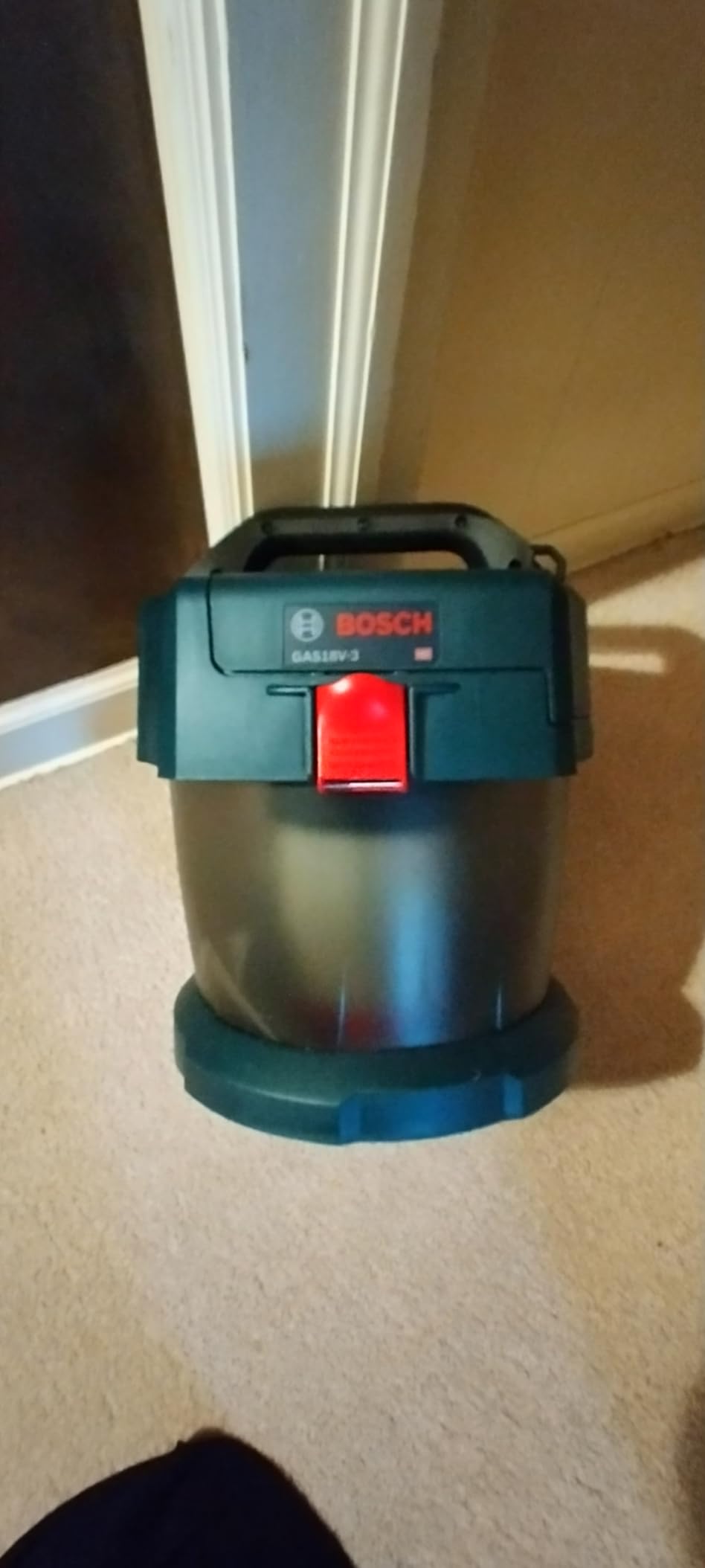
The accessory package is unusually complete for a cordless unit. You get a 5.25-foot hose, three extension tubes, a crevice nozzle, and a floor nozzle, which is the full set needed to work from the trunk through the footwells to the console without bending over.
Maximum suction is listed at 51 feet and the canister is 2.6 gallons at 10.2 pounds. Bosch also runs on the AMPShare system, which means the same packs feed tools from several brands, a genuine advantage for people trying to avoid a second platform.
What to check before you buy
Runtime is the catch. The listed figure is up to 24 minutes on a 6.0Ah battery, and that is likely an optimistic test condition, so plan on a spare pack for a full three-row SUV or a two-car session.
Check which AMPShare packs you own, since battery availability varies by region and by the specific tools in your collection. The five-year Bosch warranty is the longest ownership commitment listed in this roundup.
Who should skip it
Skip the Bosch if runtime per charge matters more than filtration quality, because you will be swapping packs more often than with the CRAFTSMAN or the Makita. Anyone already deep into DEWALT or Milwaukee should weigh the cross-brand savings before committing.
We did not receive individual written reviews for this listing during research, so the filtration and airflow claims come from Bosch’s own published specifications. We have kept our verdict anchored to those claims rather than to owner anecdote.
6. ReliaRoads RCSV-20 – Best Budget Cordless Shop Vac on DEWALT Batteries
- Runs on DEWALT 20V MAX batteries so you avoid a second platform investment
- 2.65 gallon tank in a compact body
- Light 6.6 lb body with a 6.56 ft hose for footwells and seat rails
- Rich accessory kit including a sofa brush and extra-long crevice tool
- Quieter 70 dB output with a washable filter
- Replacement filters may be hard to source
- Runtime closer to 15-20 minutes on older packs than the 30 minute claim
- Some users had to modify the battery door to fit larger packs
- Generic brand with a shorter track record than the majors
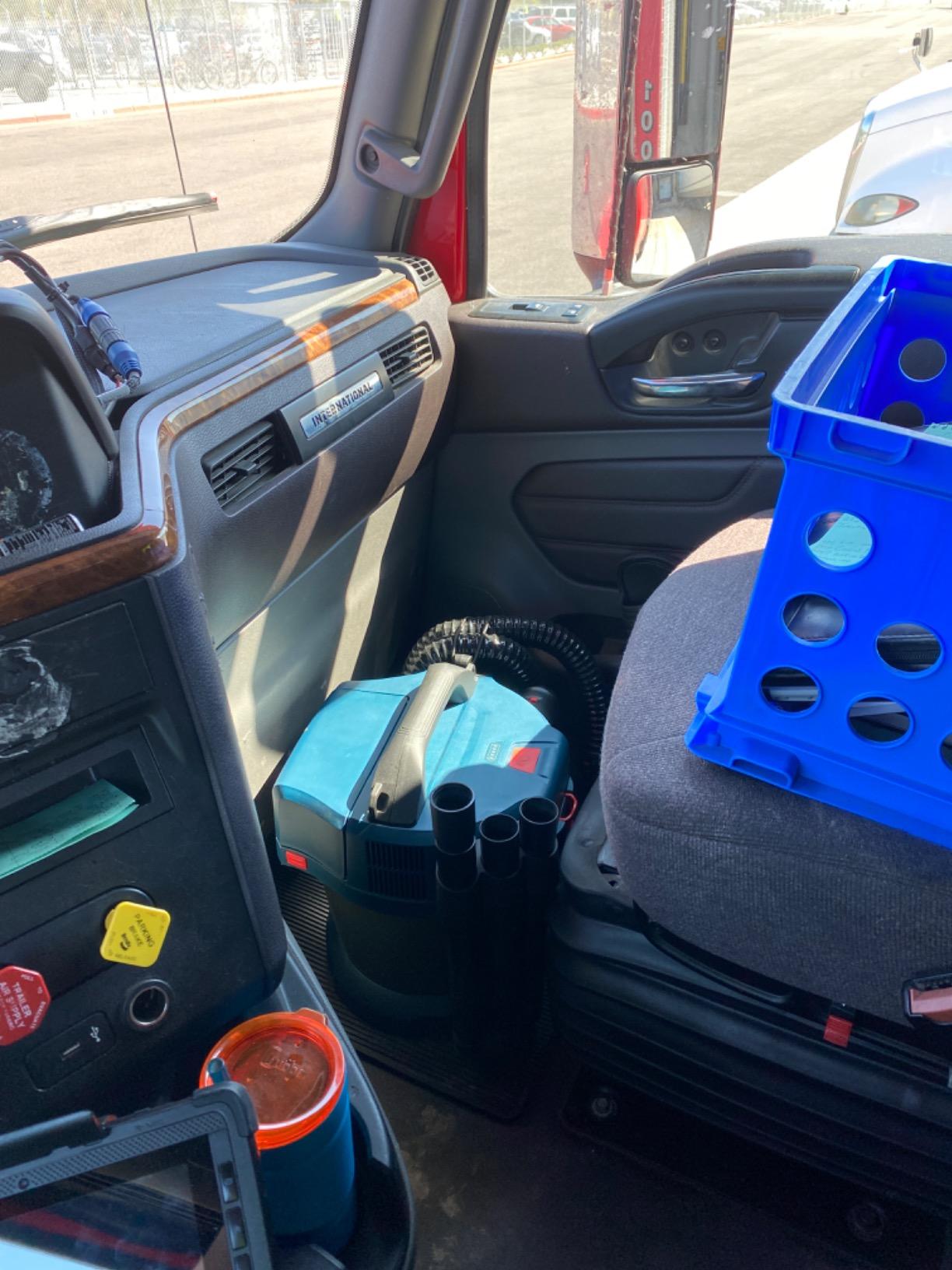
The ReliaRoads RCSV-20 is the value play for anyone who already runs DEWALT 20V MAX tools. It accepts the same batteries and chargers as the rest of the platform, holds 2.65 gallons, and pulls 45 CFM at 12.1 KPa, which puts its output right in the range of the branded mid-size units.
Owners rate it 4.6 out of 5 across roughly 570 reviews, and the accessory kit is the reason most people keep it in the car. A sofa brush, a multi-purpose nozzle, a crevice tool, and an extra-long crevice tool is a genuinely useful set for seat rails and the narrow gap beside the center console.
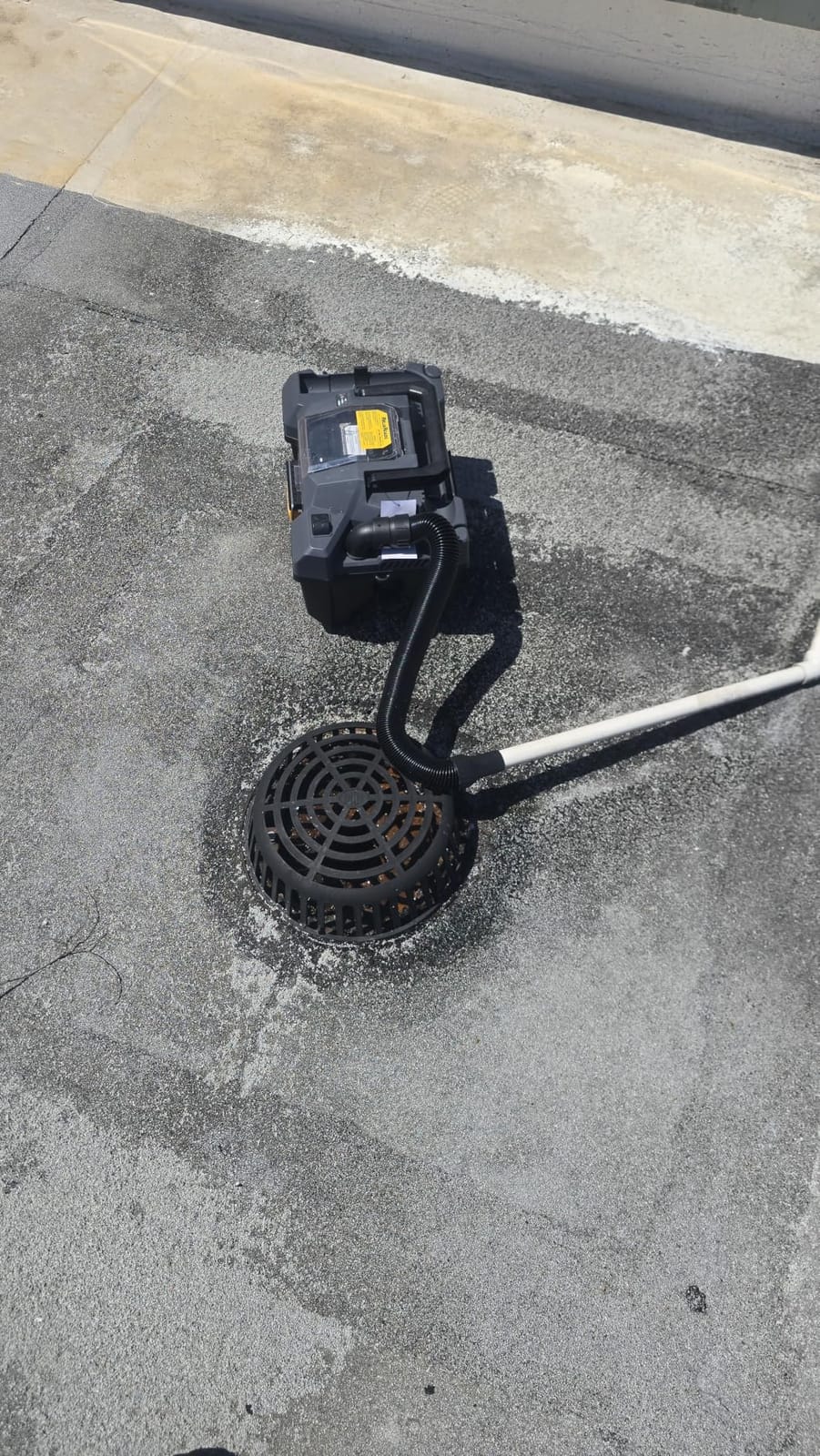
At 6.6 pounds with a 6.56-foot hose, it is the easiest machine here to lift one-handed into a rear seat. The listed 70 dB is also among the quieter figures in this roundup, and the detachable body empties quickly when the tank fills with pet hair.
There is a blowing function for clearing dust from vents and grilles, which earns its keep when you are doing a quick interior clean rather than a full detail. A washable filter keeps ongoing costs near zero.
What to check before you buy
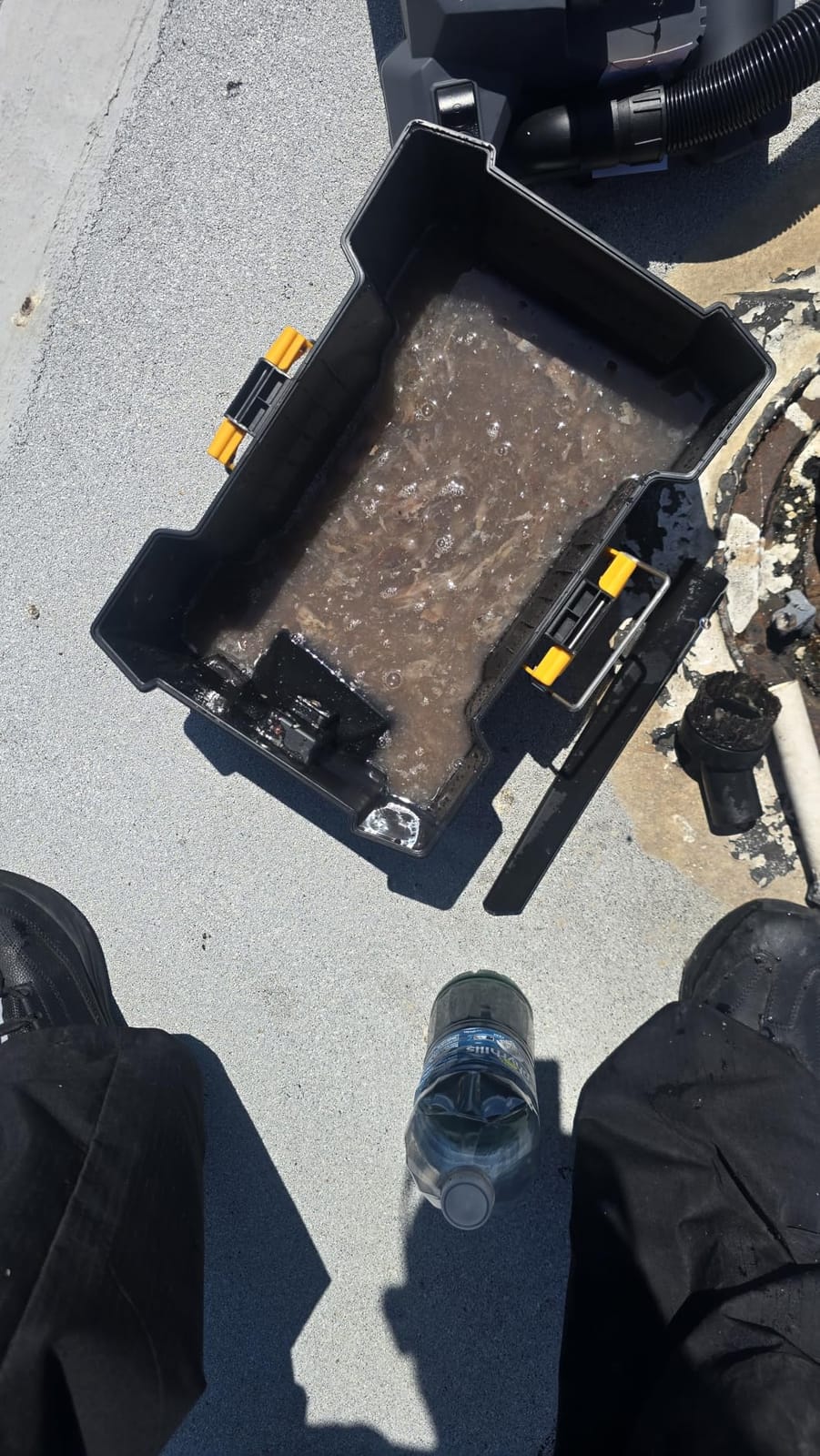
Verify your battery door fits your pack before you rely on it, because some owners have reported needing to modify the door to accept larger packs. This is a bare tool, so no battery or charger comes with it.
Look up the replacement filter part before you commit. Filter availability was the most common complaint in the reviews, and a wet/dry vac you cannot re-filter is a garage ornament.
Who should skip it
Skip it if you want a long-term support relationship from a major brand, because the brand here is newer and its service network is unproven. Anyone who does not already own DEWALT 20V MAX packs should compare the branded alternatives first.
Runtime is also listed at up to 30 minutes, though owners with older packs report closer to 15 to 20 minutes in real use. For a large SUV with three rows, treat the first figure as a best case rather than a plan.
7. Seesii K-903 – Best Cordless Shop Vac with Two Batteries Included
Seesii Cordless Wet Dry Shop Vac, 2 x 4.0Ah Rechargeable Batteries
- Two 4.0Ah batteries in the box so there is no downtime on a single charge
- Dual 9 kPa low and 15 kPa high modes for pet hair and car litter
- Brushless motor runs cooler and outlasts brushed units
- Four wheels shoulder strap and extension tubes let you clean while standing
- Compact 2.6 gallon stand-up body stores in a trunk or garage corner
- Hose is short and does not seat well in the on-board storage slot
- Side attachment holder is poor and nozzles tend to fall out
- High mode drains the battery quickly
- Unusual filter design may be hard to source
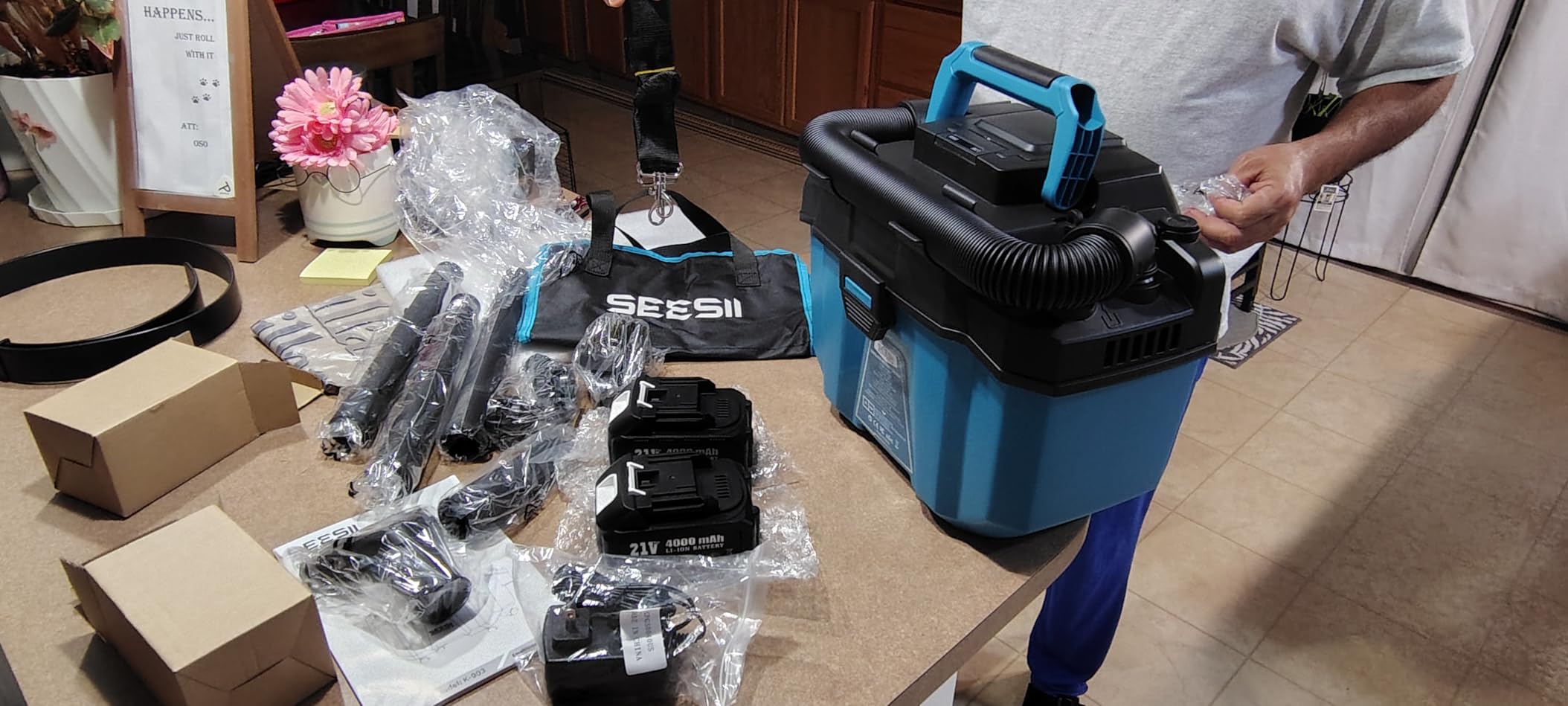
The Seesii K-903 is the only platform-neutral option here, and two 4.0Ah rechargeable batteries come in the box. If you do not own any tool ecosystem at all, that is the entire problem solved in one purchase, and it is why this model appears on our list despite a shorter owner history.
Owners rate it 4.5 out of 5 across roughly 400 reviews. The dual-mode brushless motor gives 9 kPa on low for general cabin work and 15 kPa on high for pet hair and stuck-on litter, and reviewers single out the high mode as the one that pulls hair out of cloth seats properly.
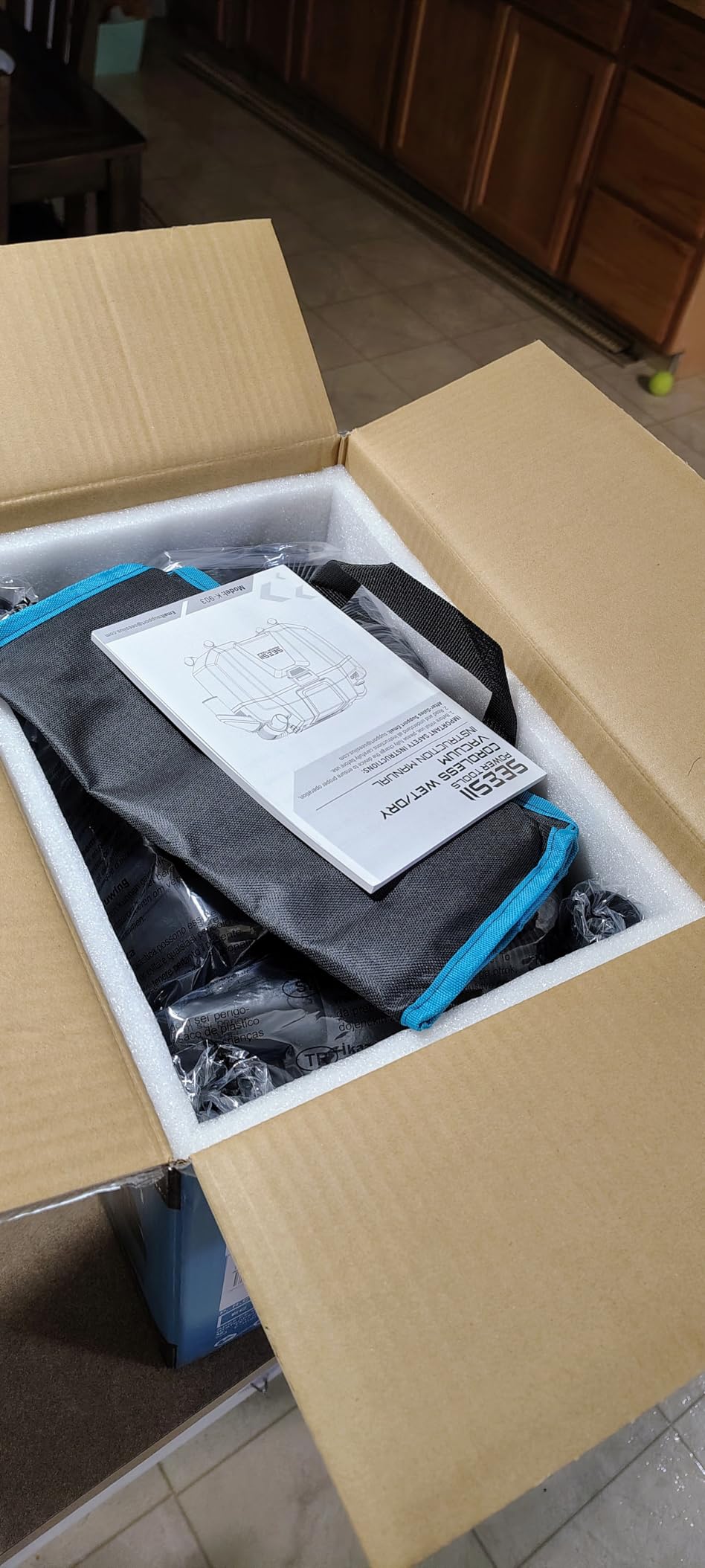
Listed runtime is 20 minutes on high and 40 minutes on low, with a 2 to 2.5 hour charge time. Because two packs are included, the swap takes seconds and you effectively double the high-speed time, which solves the mid-detail battery problem that frustrates single-battery units.
At 8 pounds with a 2.6-gallon stand-up tank, four wheels, a shoulder strap, and three extension tubes, you can move around the car while staying upright. It is also a 3-in-1 tool, handling wet pickup, dry debris, and blowing.
What to check before you buy
Save the replacement filter part number before you buy. The filter design is unusual for the category, and reviewers flag sourcing a spare as the main long-term risk with an off-brand machine.
The hose is also short at 5.25 feet and does not seat well in the storage slot, so expect to hold it in place rather than clip it away. The accessory holder is weak, so keep the nozzles in a bag rather than trusting them to ride along loose.
Who should skip it
Skip it if you already own a major tool platform, because the batteries in the box will duplicate what you have and you will end up running two charging systems. Full-time detailers who need a hose long enough to stay outside the cabin should look at the CRAFTSMAN instead.
High mode drains a pack faster than reviewers like, and the brand does not carry the multi-year warranty that DEWALT, Makita, and Bosch offer. Buy it for the bundle, not for the long-term warranty.
8. Milwaukee M18FPOVCL – Best Cordless Shop Vac for Raw Power
- Strongest raw airflow figure in this roundup at 50 CFM with 47 in water lift
- Up to 50 minutes of runtime on M18 FUEL batteries
- PACKOUT compatible and compact enough to pack for trips
- Power tool adapter captures saw and sander dust at the source
- Optional bags and sponge filters available separately
- Wet-use sponge filter is not included so wet pickup needs a separate purchase
- Attachment storage is described as a bit klunky
- 87 dB is the loudest rating among these picks
- Eats batteries quickly during continuous use
The Milwaukee M18FPOVCL is the most powerful cordless machine in this roundup. The 800-watt motor pushes 50 CFM of airflow and 47 inches of water lift, and owners regularly compare its pulling power to corded shop vacs, which is exactly the objection cordless buyers hear most often.
It carries a 4.6 rating across roughly 370 reviews. Runtime is listed at up to 50 minutes with a 30-minute charge time, and Milwaukee claims up to 70 percent more suction than the previous generation along with twice the quietness.
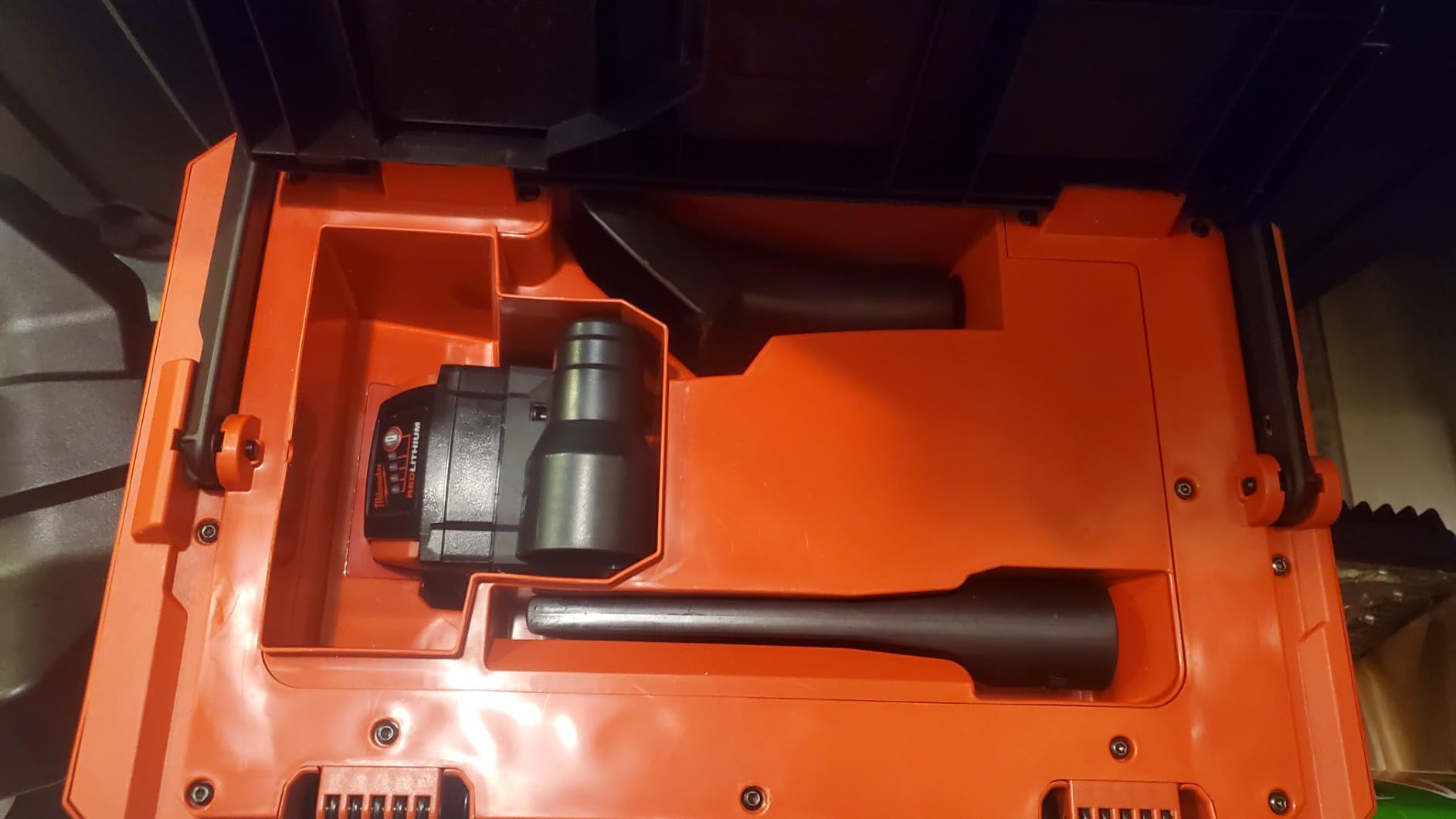
The included power tool adapter makes it a dust extractor as well, capturing saw and sander dust at the source if you work in the garage. The 2.5-gallon canister and PACKOUT compatibility mean it fits into a modular stack rather than rolling around loose in a trunk.
Two power levels let you dial down for console work and up for floor mats. A HEPA filter is included for dry pickup, and Milwaukee sells optional bags and sponge filters for when you want to protect the cartridge.
What to check before you buy
Buy the wet-use sponge filter before you attempt a spill. It is not in the box, and the listing is tool-only, so you need an M18 FUEL battery and a charger as well. That is three separate purchases to get started.
The 87 dB rating is the loudest number in this roundup. That matters if you plan to run the vacuum inside a closed car in a quiet neighborhood on an early weekend morning.
Who should skip it
Skip it if you do not already own M18 packs. This is the heaviest platform commitment on the list once battery and charger are counted, and owners who are not already Milwaukee users rate it as underwhelming for what they spend.
Owners also report that continuous high-speed use drains packs quickly in practice, and the attachment storage is loose enough that nozzles shift in transit. For wet work, add the sponge filter to your cost or pick a unit that includes a wet-rated filter.
9. WORX WX031L – Best Lightweight Cordless Shop Vac with Battery Included
- Compact 6.8 lb body that is easy to lift into a car or carry upstairs
- Suction repeatedly compared favorably to plug-in wall shop vacs
- Bundled with a 4.0Ah battery and quick charger so it is usable immediately
- 6.5 ft stretch hose plus shoulder strap gives real reach for seats and floors
- High and low speed settings with an eco mode that still cleans well
- Some owners find the output underwhelming for what it costs
- Long jobs depend on owning extra Power Share batteries
- No floor head included so a wand and brush must be sourced separately
The WORX WX031L is the only pick here that includes a battery and charger, which makes it the fastest path from unboxing to a clean car. A 4.0Ah Power Share PRO battery and a quick charger are in the box alongside the vacuum, crevice tool, wide nozzle, and shoulder strap.
Owners rate it 4.4 out of 5 across roughly 210 reviews. Buyers who already run WORX tools rate it well for power and portability, using it for car interiors, trailers, and workshop dust, while a minority feel the suction and battery life do not justify what they paid.
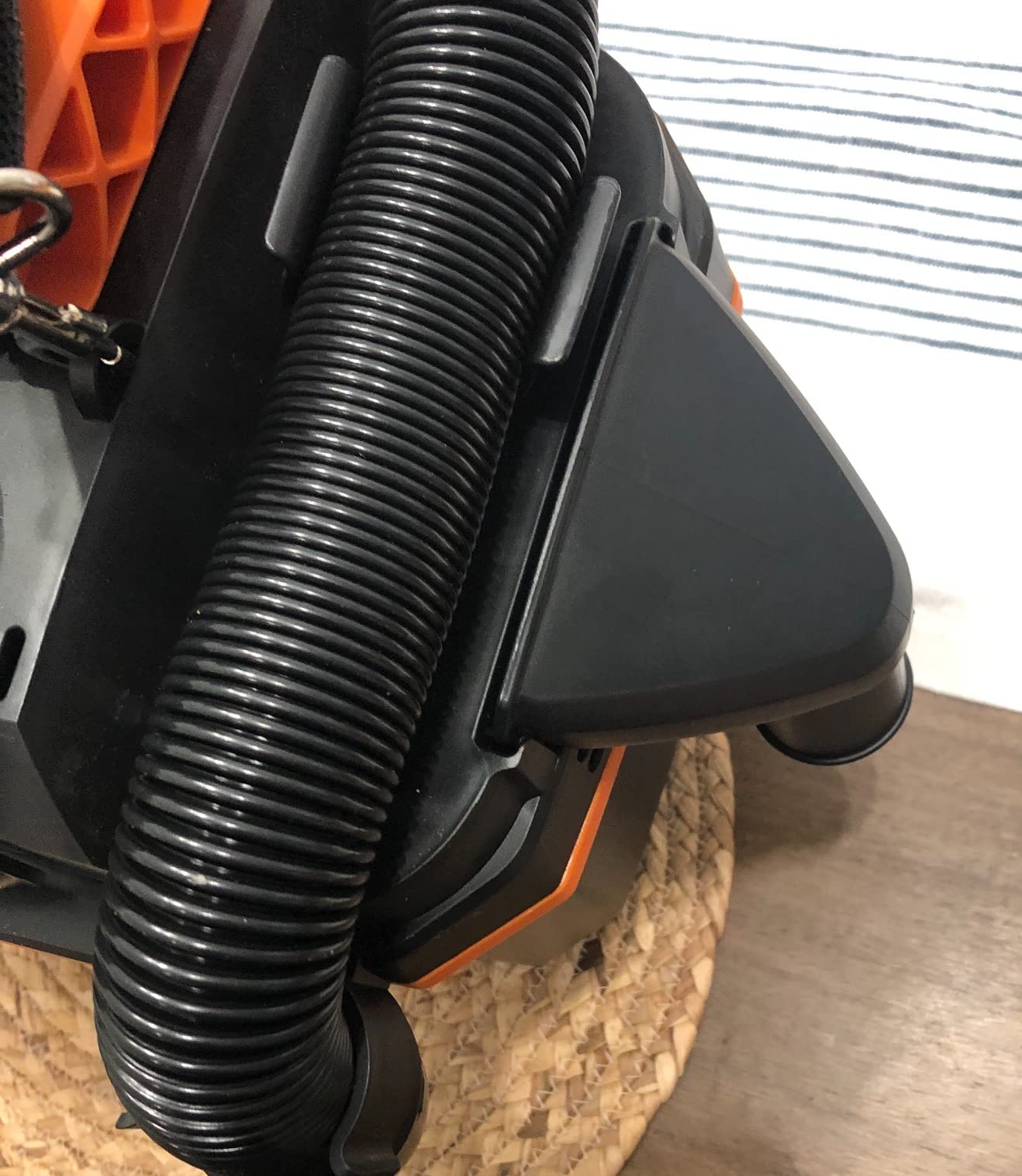
At 6.8 pounds it is light enough to lift one-handed into a rear seat. The 6.5-foot stretch hose plus a shoulder strap is a good combination for working from the ground outside the door, and the 16 kPa wet and dry rating covers both crumbs and spills.
The high and low settings matter more than usual on a single included battery. Running in eco mode extends runtime enough to finish a sedan interior, and the 2.1-gallon tank with quick-disconnect latches empties in a few seconds.
What to check before you buy
Plan to buy a floor head separately, because the listing does not include one. Without it you are working the seats and console well and the trunk floor poorly.
Also confirm which Power Share pack generations you own, since the 20V and 40V compatible labeling means runtime varies with the pack you fit. Extra batteries from the same platform are the fix for long jobs.
Who should skip it
Skip it if you need a large tank or heavy-duty mud extraction, since 2.1 gallons and the reported suction ceiling make it more of a quick interior cleaner than a workshop vacuum. At 82 dB it is also not the quietest choice.
The 4.4 rating reflects genuine disagreement in the reviews, with owners split on whether the output matches the outlay. If you already own Power Share tools the maths is easy, and if you do not, the bundles elsewhere on this list cost more in total.
10. Vacmaster DVOM202P – Best Budget Cordless Shop Vac for Trunk Storage
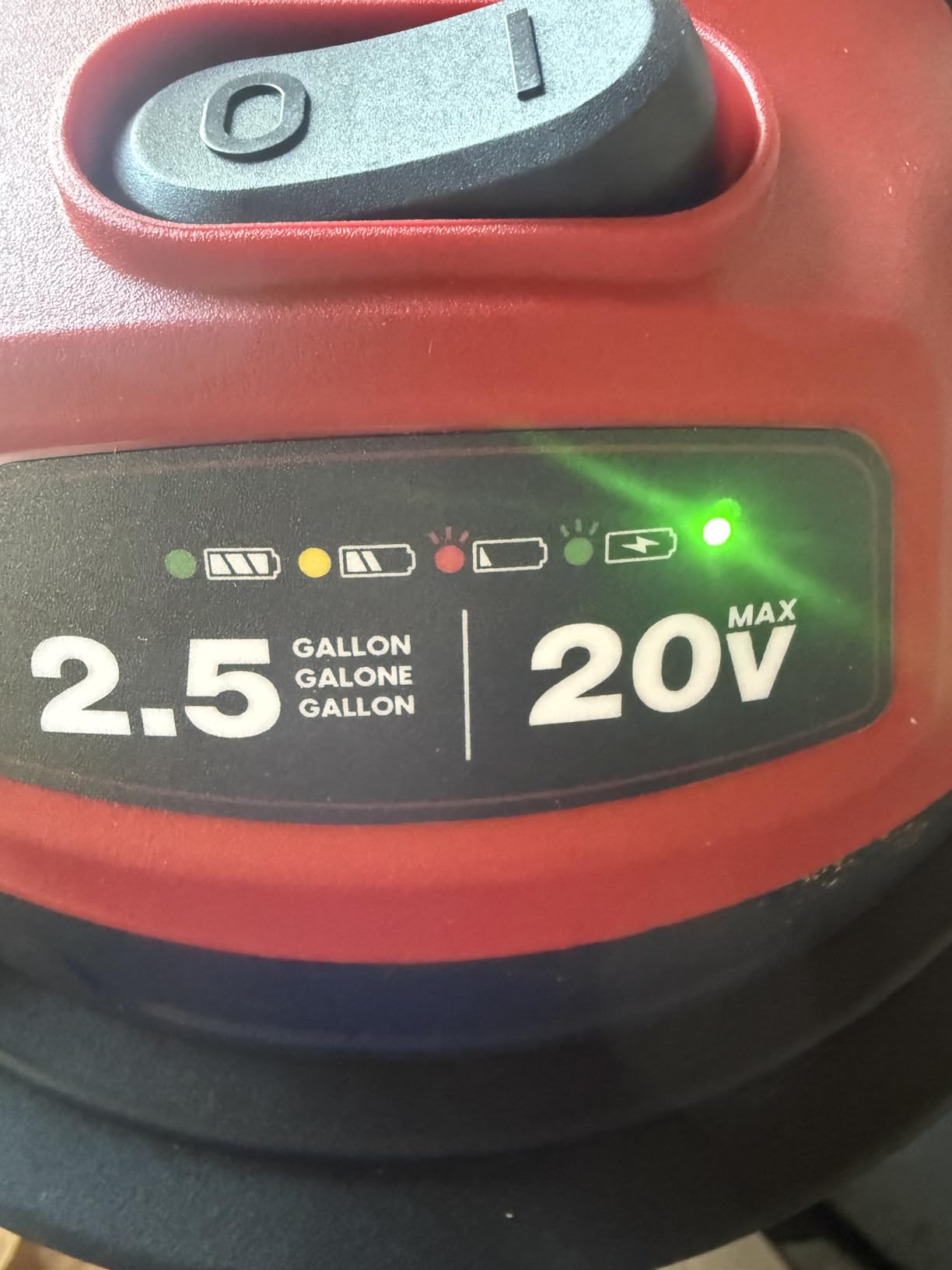
Vacmaster DVOM202P 1101 2.5-Gal 20V Cordless Portable Wet/Dry Vac Red
- Full 2.5 gallon tank in a compact body for light duty use
- Very light and compact so owners keep one permanently in a vehicle
- Good suction for pet hair crumbs and interior spot cleans
- Wall-mountable for out-of-sight storage
- 72 dB is quieter than most cordless shop vacs
- Shortest hose in the roundup at 4 feet which forces bending over
- One reviewer reported the unit stopped producing suction after a few uses
- Wet filter tends to slip off as the tank fills
- Shortest runtime here at roughly 13 to 15 minutes
The Vacmaster DVOM202P is the one to buy if your goal is a permanent trunk-resident vacuum for crumbs, sand, and pet hair rather than a full detail. It is compact, wall-mountable, and the 2.5-gallon tank is large enough for a quick clean without an awkward carry.
Its 4.0 rating is the lowest in this roundup, and we want to be straight about that. Roughly 14 percent of ratings are one star, which is the widest spread of any model here, and the complaints cluster around durability and power rather than features.
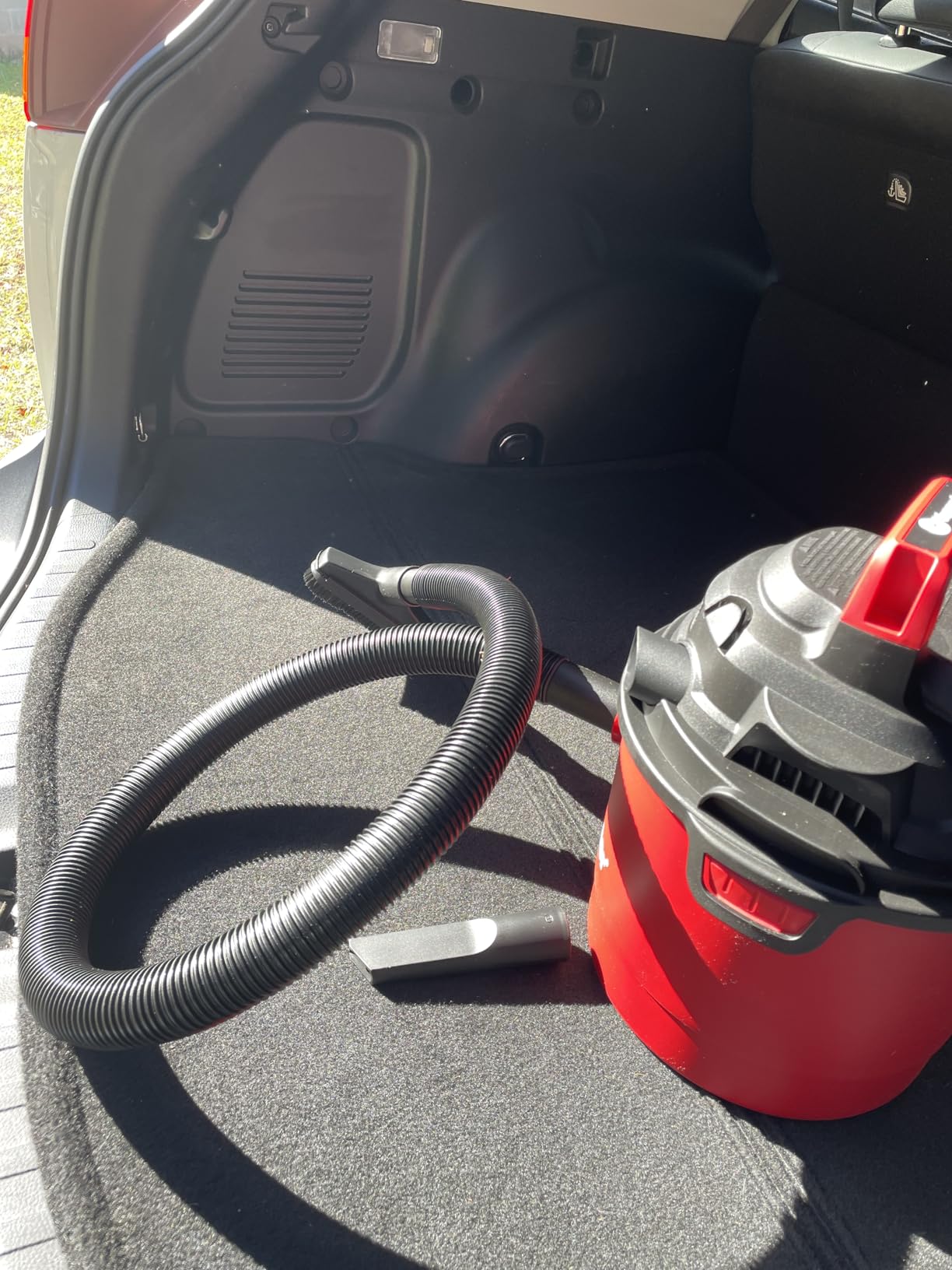
On the positive side, owners like the size and weight and keep one in a work vehicle permanently. Six accessories are stored on board including a crevice tool, hose and cord have dedicated storage, and the 72 dB operating level is among the quieter numbers in this roundup.
Suction is described as good for spot cleans rather than deep extraction, and that framing matters. It is a maintenance tool for a clean car, not a mud extractor for a truck after an off-road weekend.
What to check before you buy
The 4-foot hose is the shortest in the roundup and the most limiting detail on this model. You will be holding the machine over the floor rather than leaving it outside the door, which is the entire convenience argument for going cordless.
Runtime is listed at roughly 13 to 15 minutes depending on usage and attachments, so a full interior of a large vehicle is going to need a charge partway through. Note also that the filter is a cloth type rather than a washable HEPA cartridge.
Who should skip it
Skip it if you detail regularly, need HEPA filtration, or want a hose long enough to work from outside the vehicle. Reviewers have reported units that lost suction after a handful of uses and a wet filter that slips off as the tank fills, so the value only holds for light duty.
Anyone planning to rely on this for wet cleanup should look at one of the wet-rated HEPA units further up this list instead. It makes sense as a second light-duty tool rather than as your only car vacuum.
Cordless Shop Vac Buying Guide for Cars
The fastest way to choose badly is to start with tank size. For a car interior, capacity is the least important number on the spec sheet, because a sedan footwell produces far less debris than a single shop vac load on a garage floor. Hose length, airflow, and whether the battery and charger are in the box decide far more.
Decoding suction numbers comes next, and this is where marketing gets slippery. Pascals, written as Pa or kPa, measure static suction pressure at a sealed point, while CFM measures how much air actually moves through the hose. A hose and a long nozzle bleed off pressure, so a unit with a high Pa figure and a poor hose can disappoint in your footwell, and a unit with strong airflow and a short hose can clean quickly without feeling powerful.
Our rule of thumb: treat airflow in CFM as the honest number for embedded debris in floor mats, and treat Pa as a tie-breaker only. Any product claiming 20000Pa or 50000Pa is quoting a sealed-port maximum, not what reaches a rubber mat through a 6-foot hose. Several listings on this topic are dry-only handhelds dressed up as wet/dry shop vacs, so check the filter type before assuming a unit can take a spill.
Battery platform is the real decision, and it should come before any feature comparison. If you already own 20V MAX DEWALT packs, the DCV581H and the RCSV-20 both drop into your existing chargers. If you run 18V LXT Makita, the XCV11Z is the natural fit, and if you are on M18 then the Milwaukee is the obvious answer. Buying a second platform just for a vacuum is the single most common regret reported in the forums we reviewed, and it is the reason we keep battery compatibility ahead of suction in our ordering.
That platform rule also has a storage consequence nobody mentions in product copy. A vacuum with a sealed integrated battery parked in a hot car through summer degrades fast, and owners on detailing forums report sealed-battery units failing within a year. A tool-platform vacuum with swappable packs survives, because you can carry the battery inside and leave the machine in the car.
Filtration matters for two different reasons. HEPA or certified washable filtration matters if you vacuum fine construction dust or want allergens out of the cabin, which points to the Bosch and the Makita. For sand, hair, and general road grit, a washable cartridge is sufficient and cheaper to maintain, and the wet-rated float valve that protects the motor from water is the detail to check before the first spill.
Attachments decide whether you will actually use the thing. A long crevice tool for the gap beside the center console, a soft brush for dashboard vents and screens, and a rubber bristle or powered pet brush for cloth seats are the three that matter in a car. If a listing does not include a brush, you will end up buying one, and we call that out in every review above.
Runtime math is where buyers get surprised. A quick weekly clean of a sedan interior takes far less than a full detail, but vacuuming all the mats, both sides of every seat, and the trunk carpet on high speed can consume most of a single pack. Units listed at 20 to 30 minutes will finish a sedan, and a three-row SUV on high speed usually needs a second pack or a swap to low for the finishing work.
Storage decides whether the tool gets used at all. If the vacuum lives in the garage, you will use it twice a year. The CRAFTSMAN, the ReliaRoads, and the Vacmaster are all light enough or small enough to keep in a trunk or back seat, which is what turns it into a habit. Pair that with a work light, and a trunk-resident vacuum makes evening cleanups practical.
Cordless vs Corded Mini Shop Vac for Cars
The cordless camp is not always right, and a fair number of people in car forums simply refuse to buy into battery platforms for a vacuum. Their argument is that no cordless unit will match the suction of a mains-powered machine, and that is broadly true for heavy mud and wet carpet work.
The corded camp’s answer is usually a small 120V shop vac mounted on a garage wall with a long hose. That setup gives you full mains suction, unlimited runtime, and reach into every corner, and it costs far less than a cordless platform plus batteries. If you always detail in the same garage with an outlet nearby, it wins.
Where cordless wins is anywhere else. An apartment parking garage, a work site, a hotel lot, a roadside emergency, or a driveway with no outlet all rule out the corded approach, and a canister that sits on the ground with a hose going through the door jamb beats dragging a cable across freshly washed paint. Detailers who work mobile cannot use a wall-mounted unit at all.
Our read for 2026 is that a cordless shop vac is the right default for anyone cleaning a car away from an outlet, and a corded 120V mini vac is the better tool for a fixed garage. Buying both is entirely reasonable, since the cordless unit handles the convenience clean and the corded one handles the annual deep detail. If you are still comparing categories broadly, our full shop vac roundup covers the mains-powered side in detail.
Frequently Asked Questions
Are shop vacs good for vacuuming cars?
Yes. A shop vac is better than a household handheld for a car because it has a canister tank, a long flexible hose, and a HEPA or washable filter, so it reaches seat rails and footwells and handles sand and pet hair that a handheld cannot. Keep it on the ground outside the door and run the hose inside rather than lifting the machine onto the door jamb. Avoid using one on fine construction dust unless it has certified HEPA filtration.
What is the best cordless vacuum for a car?
The DEWALT DCV581H is our pick, because it runs on a 20V MAX battery or a 120V cord, holds 2 gallons, and includes a 5 foot hose with a wide nozzle and crevice tool. If you already own Ryobi ONE+ or Makita LXT tools, pick the matching platform instead so you are not buying a second battery system for one job.
How much runtime do I need to detail one car?
Plan on 20 to 30 minutes of high-speed runtime for a sedan interior, including floor mats, seat rails, and the trunk carpet. A three-row SUV or two vehicles in one session needs closer to 45 to 60 minutes, so a second battery is worth buying for anyone detailing larger vehicles. Running low speed on console and vent work stretches a single pack considerably further.
Can you use a shop vac on car upholstery?
Yes, with the right nozzle. A rubber bristle brush or a motorized pet brush agitates the fabric so hair releases instead of just sitting on the surface, and a soft brush is the right choice for headliner and screen surfaces. Work in short passes so you are not dragging grit across the cloth, and empty the tank before it reaches the top.
What attachments do I need for car detailing?
Three matter most: a long crevice tool for the gap beside the center console and under the seats, a soft brush for dashboard vents and screens, and a rubber bristle or motorized pet brush for lifting hair out of cloth seats. A filter bag is useful if you want to protect the cartridge from fine dust. Several picks on our list ship without a brush, so plan on buying one.
Final Verdict
The DEWALT DCV581H is the best cordless shop vacuum for cars in 2026, and the reason is not raw suction. It is that the same machine works on a battery and on a cord, so a full car detail never stops because a pack ran flat, and it carries a washable HEPA filter with a float valve that keeps water out of the motor.
Pick the CRAFTSMAN CMCV002B if you want the longest hose and the best airflow for sand, the Makita XCV11Z if you want the quietest machine and the best filtration, and the Seesii K-903 if you own no tools at all and want two batteries in the box. Whatever you choose, match the platform you already own and buy the brush that is not included.
Use the buttons above to check the current details for each model, and pair the vacuum with a good work light in your garage so you can actually see the seat rails you are cleaning.