
Packing a walker for a trip is harder than it sounds. A standard walker that works fine in a living room weighs 20 pounds or more, takes up a closet on its own, and gets gate-checked the moment you reach the jet bridge. The best folding walkers for travel solve three problems at once: they collapse small, they weigh little enough to lift one-handed, and they hold a 300-pound rating without turning into a brick.
We went through the specifications, ratings and review patterns for ten current models to sort out which ones actually travel well. Everything below is built around hard numbers: product weight, folded footprint, weight capacity, wheel size and handle height range. Where a number is not published by the manufacturer, we say so instead of guessing.
If you are also planning the trip itself, our guides to the best Sony headphones for travel and the best portable equatorial mounts for travel cover the rest of the carry-on list. This one stays focused on getting a walker through security, onto a plane and into a cruise cabin.
Table of Contents
Top 3 Folding Walkers for Travel Right Now (October 2026)
Three models cover most travel situations, and the difference between them is mostly about wheels. Two-wheel walkers fold flat into a bag you can lift into a trunk or slide under a hotel bed. Rollators add a seat and bigger wheels, which pays off when a day includes long walks and rest stops.


Quick Overview: Best Folding Walkers for Travel in 2026
The table below covers all ten models in one place. Folded footprint is the number that decides whether a walker fits in an overhead bin or stays under a seat, and product weight is what you have to lift every time you get in or out of a vehicle.
| Product | Specifications | Action |
|---|---|---|
| Stander Space Saver |
|
Check Latest Price |
| Stander Wonder Walker Plus |
|
Check Latest Price |
| Vive Lightweight Narrow Walker |
|
Check Latest Price |
 PLANET WALK Super Lightweight Rollator PLANET WALK Super Lightweight Rollator |
|
Check Latest Price |
 byACRE Carbon Ultralight Rollator byACRE Carbon Ultralight Rollator |
|
Check Latest Price |
 Vive Ultra Lightweight Rollator Vive Ultra Lightweight Rollator |
|
Check Latest Price |
 HOMLAND Foldable 3 Wheel Walker HOMLAND Foldable 3 Wheel Walker |
|
Check Latest Price |
 Drive Medical AeroWalk Ultra-Lite Drive Medical AeroWalk Ultra-Lite |
|
Check Latest Price |
 Stander Wonder Walker 5-Inch Wheels Stander Wonder Walker 5-Inch Wheels |
|
Check Latest Price |
 Walk Mate 3 Wheel Rollator Walk Mate 3 Wheel Rollator |
|
Check Latest Price |
1. Stander Space Saver – Best Folding Walker for Travel Overall
- Folds to a 5 by 7 inch package
- Lightest handling weight among two-wheel travel walkers
- 300 lb aluminum frame
- No assembly and tool-free handle adjustment
- Fixed front wheels steer less precisely
- No hand brakes for stopping
- Rear ski glides struggle on rough outdoor ground
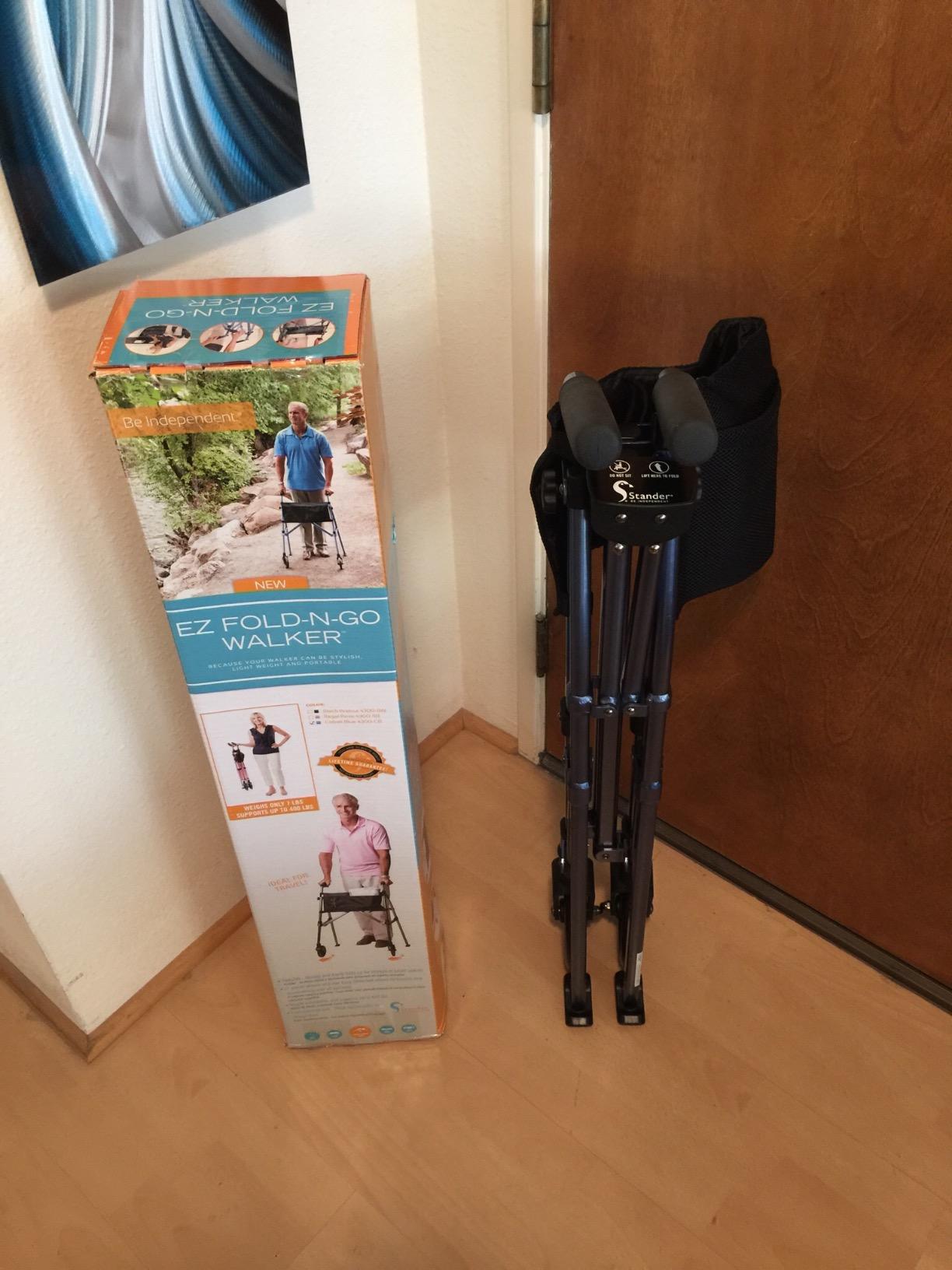
The Stander Space Saver folds down to a 5 by 7 inch package and weighs 8 pounds. That combination is the reason it sits at the top of this list for travel: it is small enough to treat like a folded umbrella, and light enough for a caregiver to lift into a trunk without thinking about it.
The mechanism is the patented EZ Fold-N-Go design, which collapses the side frames inward rather than just scissoring them. Buyers consistently describe the fold as a single quick motion, and the compact result is what makes it usable in a car, a hotel closet or a cruise cabin where floor space is tight.

Spec-wise it is a straightforward two-wheel walker. The aluminum frame is rated to 300 pounds, the padded handles adjust from 32.5 to 39 inches without tools, and it arrives pre-assembled. The front wheels are 6-inch fixed casters with rear ski glides behind them, which is what lets it roll over smooth floors instead of tipping forward.
That wheel setup is also the limitation. Fixed wheels do not swivel, so tight corners in an airport terminal take a bit more planning, and there are no hand brakes, so stopping depends on drag from the rear glides. On carpeted concourses and smooth cruise-ship floors this is a non-issue. On cobblestones or uneven tourist paving it is.

Why it works for air travel and tight storage
A 5 by 7 inch footprint is small enough to fit under a seat or inside a standard carry-on alongside a travel bag. Users in mobility communities report that a walker at this size is one of the few that can travel as ordinary luggage rather than as a special item.
The 8-pound weight is the other half of the travel case. Users with one usable hand report lifting and carrying it comfortably, which matters far more on a trip than at home.
Where it falls short
Rough ground is the weak point. The rear ski glides are designed for smooth indoor surfaces, and review patterns show they catch on seams, asphalt and thick carpet. If your itinerary includes cobblestone sightseeing or unpaved paths, a rollator with larger rubber wheels is the better fit.
There is also no brake lever. If your balance is limited enough that you need to stop quickly, that is a real consideration, and the narrow-frame Vive model reviewed below handles the same situation with hand brakes instead.
2. Stander Wonder Walker Plus – Top Rated Two-Wheel Travel Walker
- Same 5 by 7 inch fold as the Space Saver
- Locking swivel wheels for mixed terrain
- Removable storage basket
- Seven color options and a short model
- Swivel wheels can wander off track
- No hand brakes
- Bag items can fall out during the fold
The Wonder Walker Plus shares the same 8-pound weight and 5 by 7 inch folded footprint as the Space Saver, and it is the better travel buy for most people. The difference is at the front wheels: these are 6-inch locking swivel casters that can be switched between a swivel mode for maneuvering and a straight mode for tracking cleanly down a corridor.
That switch matters on a trip. Airport terminals and cruise gangways have plenty of corners, and the ability to lock the wheels straight for a long stretch of walkway removes most of the steering complaints that come with free-swiveling casters.
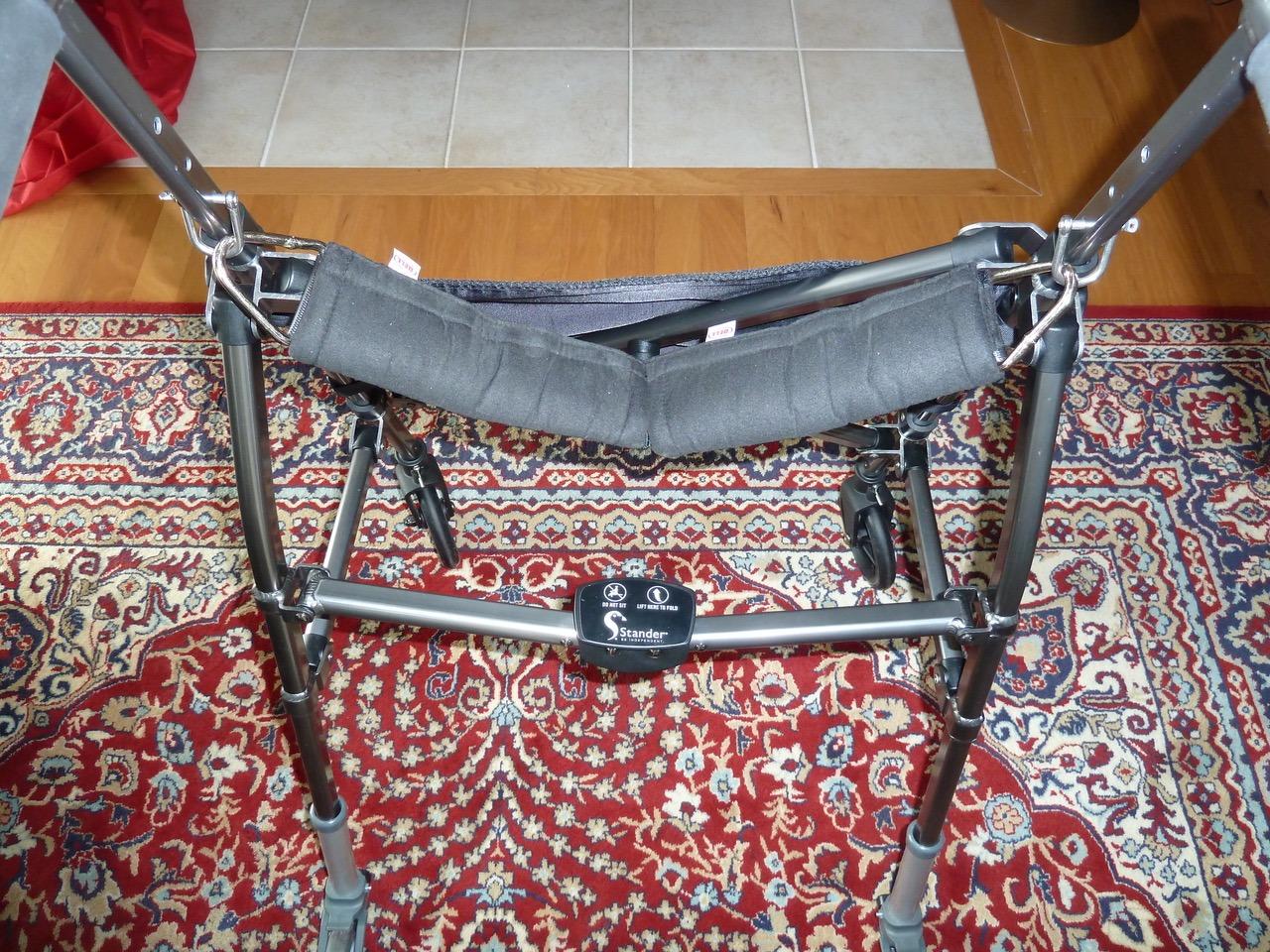
The frame is aluminum, rated to 300 pounds, and the padded handles adjust from 32.5 to 39 inches. It also includes a removable storage basket, which is genuinely useful on a sightseeing day when you want both hands free. A short model is available for users under about five feet, which is worth matching carefully to the handle height range.
Two things to know before buying. The casters only track properly when they are locked in the correct forward orientation, and the basket fabric is light enough that loose items can drop out as the frame folds. Neither is serious, but both are worth a mention if you rely on the basket for a water bottle.
What you gain over the Space Saver
The lockable swivel wheels are the practical upgrade. On smooth cruise-ship carpeting, a hotel lobby or a terminal concourse, you get a tighter turning circle than a fixed-wheel model without the wandering you get from unlocked swivels.
The fold is identical in size, so this model packs exactly like the Space Saver. If airline cabin space is your binding constraint, the extra wheel control costs you nothing in portability.
What you give up
There are still no hand brakes, so stopping is friction-based through the rear glides. That is fine for someone with solid balance and less suitable for someone who needs to arrest a roll quickly.
Rear glides also remain the weak link outdoors. On gravel, cobblestone or wet pavement the glides drag, and a rollator with 8-inch rubber wheels will handle those surfaces with far less effort.
3. Vive Mobility Lightweight Walker – Best for Airplane Aisles and Tight Spaces
- Narrowest frame in the lineup
- Hand brakes give real stopping control
- Open frame with no rear cross bars
- Locking system keeps the folded package closed
- Heavier than ultra-compact two-wheel models
- Fixed front wheels limit cornering
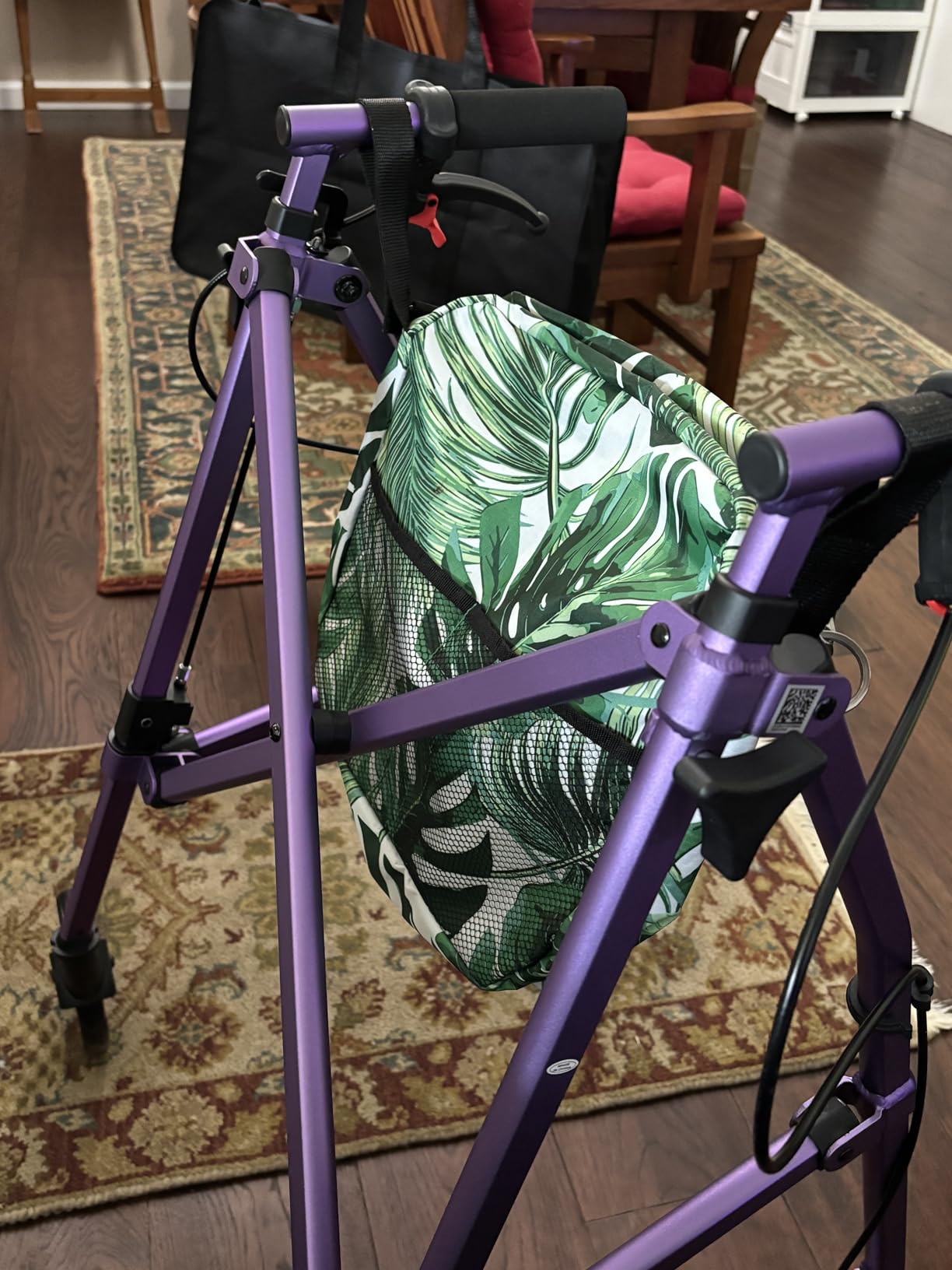
This is the model to look at if the tight spaces are indoors rather than in your luggage. The Vive Lightweight Walker has a narrow open frame, measures 21 by 26 by 42 inches, and is listed at 11.2 pounds with a 300-pound capacity. Handle height adjusts from 33 to 39 inches on a slip-resistant ergonomic grip.
Aircraft cabins and older hotel rooms are where a narrow frame earns its keep. A standard walker can be awkward to maneuver down a tight cabin row, and a wide U-shaped frame will catch on the seat arm. This one is built to be pushed through without turning sideways.
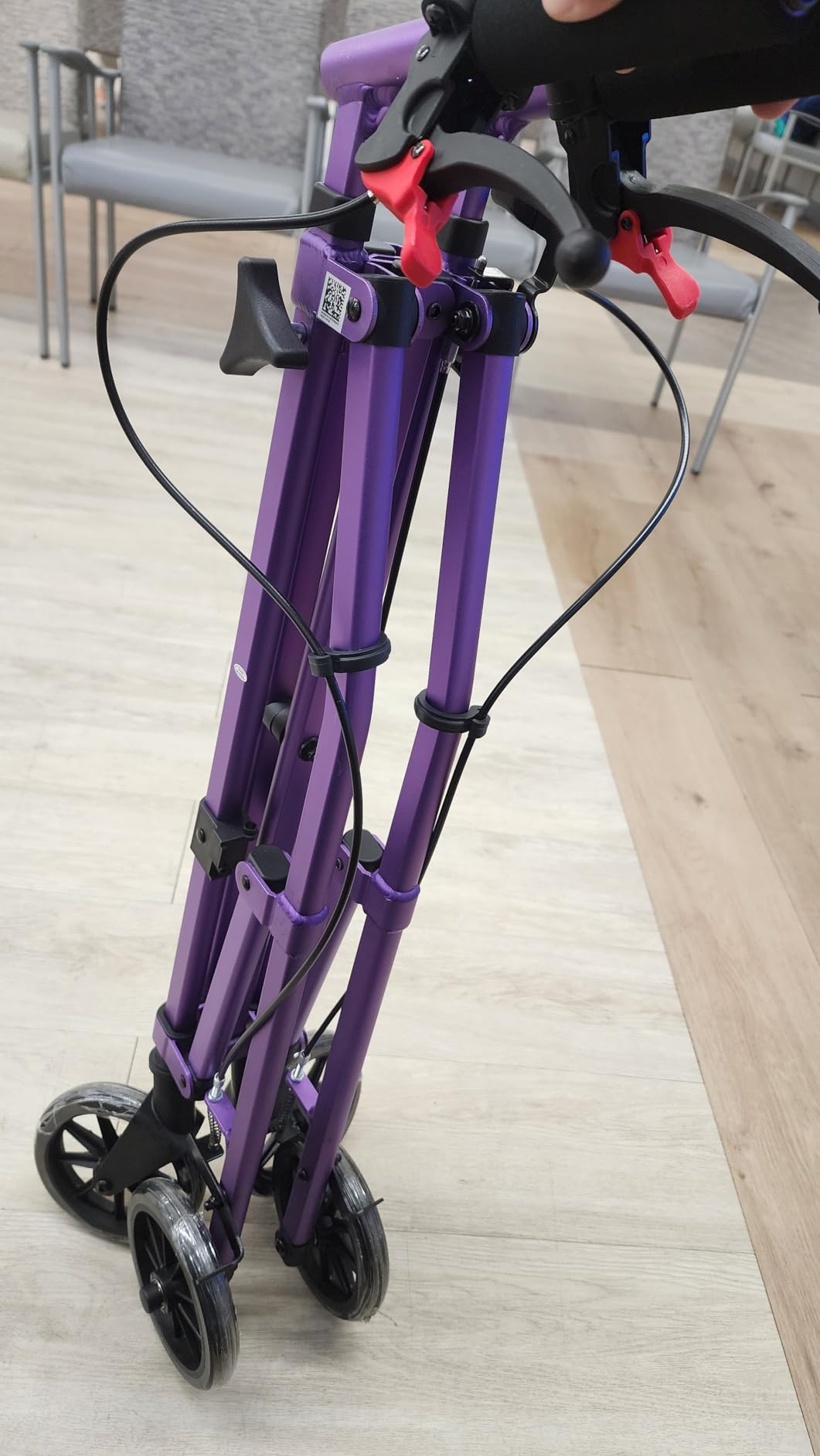
Two features separate it from the basic two-wheel walkers. First, it has hand brakes, so stopping is a squeeze rather than a drag across the floor. Second, the open-frame design has no obstructive rear cross bars, which allows a natural stride without a leg catching a horizontal bar behind you.
The folding mechanism uses a patent-pending locking system that keeps the walker closed while it is stored or sitting in a trunk, rather than springing open on its own. Buyers rate that detail highly because it removes the annoyance of finding a half-open walker in a car.
Why the narrow frame matters in transit
Jet bridges, escalators and narrow cruise gangways reward a slim footprint. Reviewers consistently single out the small width and the ease of sharp turns as the reason this model suits crowded environments and compact bathrooms.
It is also the option here with genuine hand brakes, which makes it a safer default for anyone whose balance is variable day to day.
Where the extra weight goes
At a listed 11.2 pounds, this is heavier than the two-wheel Stander models at 8 pounds and the 7-pound Wonder Walker. That is the trade for the hand brakes, the narrow aluminium frame and the locking mechanism.
The product listing also describes the frame as ultra-lightweight at 9.5 pounds in its feature summary, so treat the 11.2-pound figure as the more cautious number when you are deciding whether you can lift it into a high vehicle. The fixed front wheels also mean cornering needs a wider arc than a swivel-wheel model.
4. PLANET WALK Super Lightweight Rollator – Best for Cruise Days and Sightseeing
- 13 lb is far lighter than most four-wheel rollators
- One-hand fold to a 10.9 inch width
- 8 inch wheels clear uneven ground
- Dual brakes with a parking function
- Seat height is high for shorter users
- Frame is wide for small doorways
- Instructions are easy to misread
A rollator earns its extra weight when a travel day is long. This one folds side-to-side to a 26.5 by 10.9 by 35 inch package and weighs 13 pounds, which is a substantial step down from the twenty-plus-pound rollators most people picture. The open dimensions are 26.5 by 25.2 by 35 inches with a 300-pound capacity.
The 10.9-inch folded width is the useful number. It stands the rollator on its side against a wall or stows it across a trunk without taking the whole cargo area, and buyers report that one person can load it into a vehicle without a struggle.
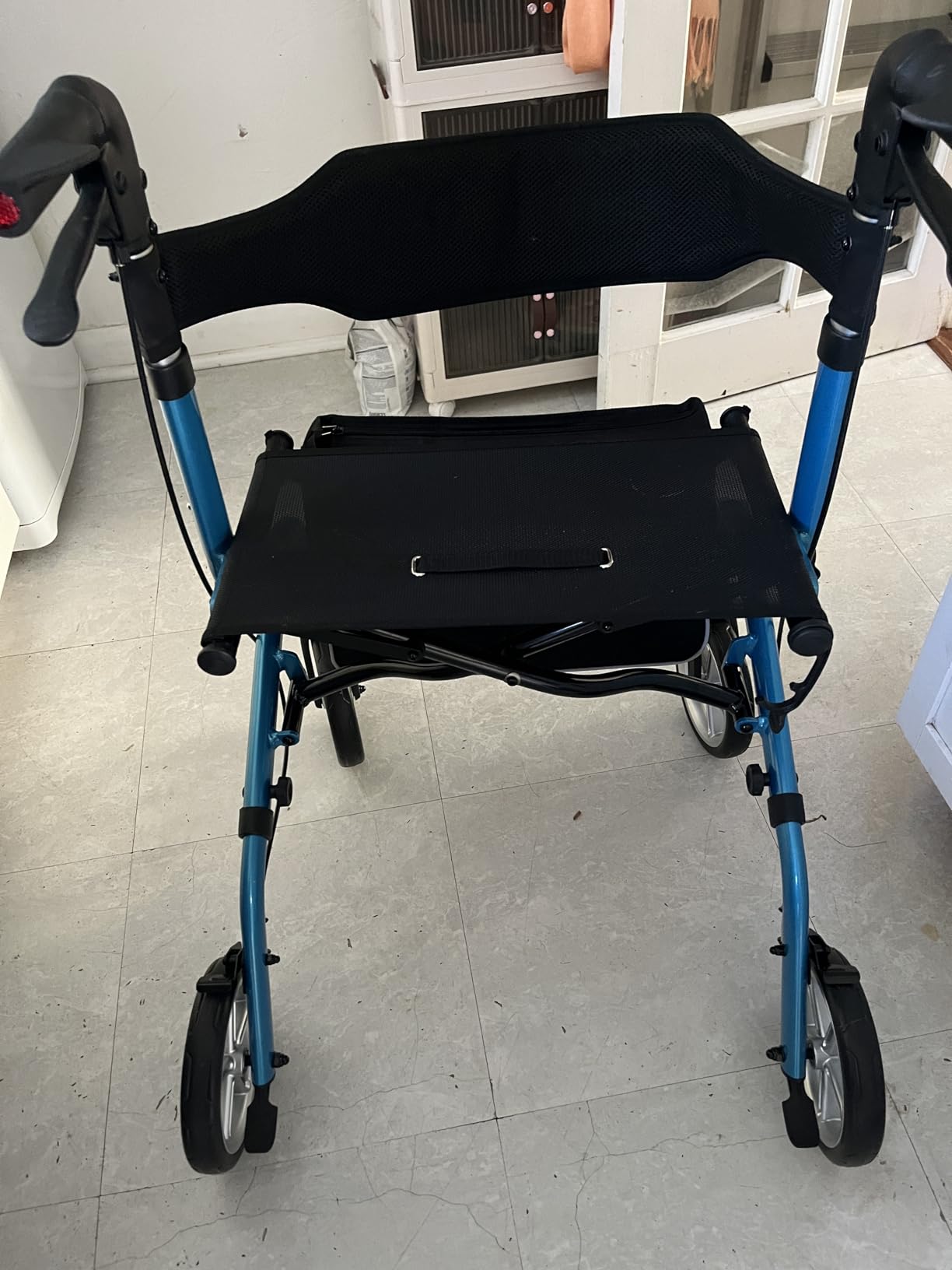
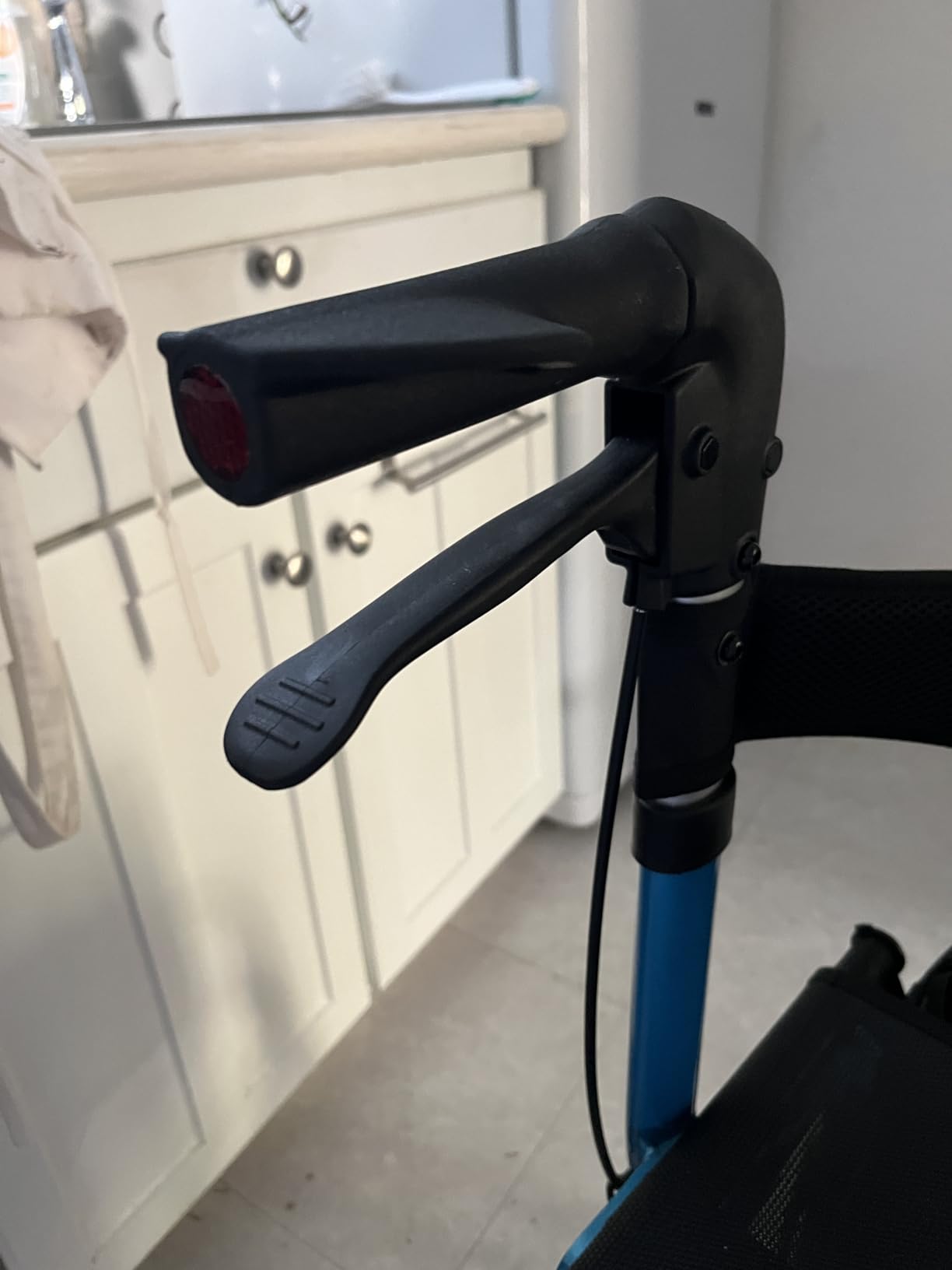
The wheels are the reason it works outdoors. Four 8-inch rubber wheels with anti-skid tread and 360-degree swivel fronts roll over boardwalks, pavers and uneven paving that would stop a ski-glide walker. A two-way parking brake and a dual-brake system give you controlled stopping and a locked position on slopes.
Handles adjust across five levels from 35 to 39 inches, and the 18.5-inch breathable waterproof seat is wider than most travel rollator seats. A widened backrest and a detachable storage bag round out the package, and reflective strips on the front wheels help in low light at night.
When a seat changes the day
A ship day involves a lot of standing around: gangway waits, buffet lines, shore excursions, and lobby queues. A seat turns those into manageable pauses rather than a stamina test, and a breathable waterproof seat is more comfortable in a warm cabin than a vinyl perch.
Buyers also comment on the wide stance, which keeps feet from catching on the side rails, and on styling that looks good enough to use in a resort town rather than hiding in a hallway.
Where it does not fit
Seat height is the recurring complaint. The handle range starts at 35 inches, so shorter users may find their feet do not reach the floor when seated. If you are under about five feet four inches, this frame needs careful checking before you commit.
At 26.5 inches wide, it will not pass through the narrowest doorways, and a small cruise-ship bathroom may be tight. A three-wheel model such as the HOMLAND reviewed below passes through a 25.9-inch doorframe, which is a useful number to compare against the narrowest door on your itinerary.
5. byACRE Carbon Ultralight Rollator – Premium Pick for One-Handed Lifting
- 10.6 pounds is the lightest rollator weight in this group
- Upright handles let you walk inside the frame
- Arrives fully assembled with no tools
- Three track widths available
- Seat is small and shallow
- Seat height is not adjustable
- Less stable than a heavier rollator
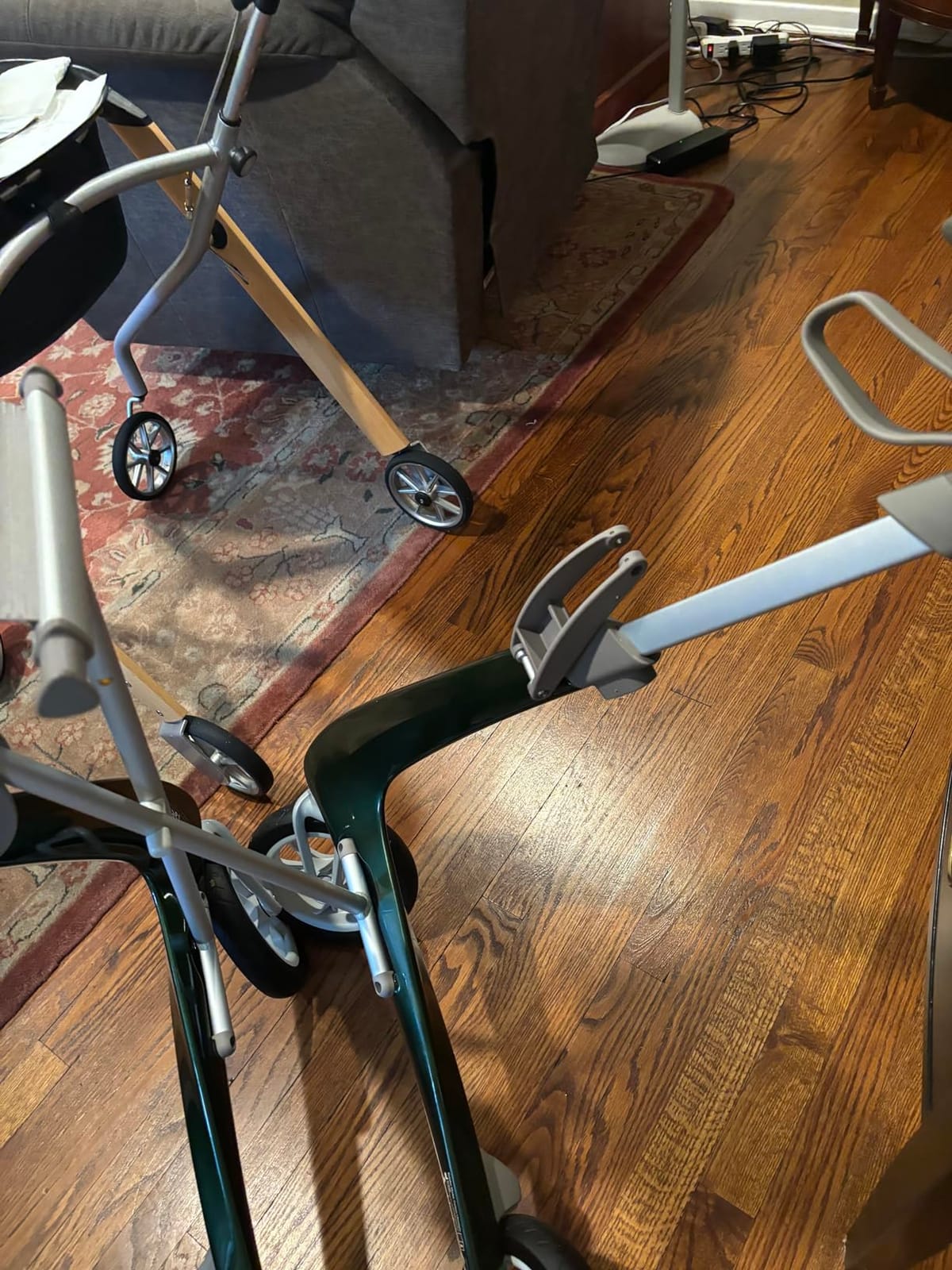
The byACRE Carbon Ultralight is built around one number: 10.6 pounds. Among four-wheel rollators that is the lightest figure in this group, and it is the reason this model makes sense for anyone who has to lift their aid into a high car trunk or carry it up a set of steps alone.
The carbon fiber frame is the reason for the weight, and it arrives fully assembled with no tools or setup. That matters on day one of a trip, when you are unpacking in an unfamiliar room and would rather not assemble anything.
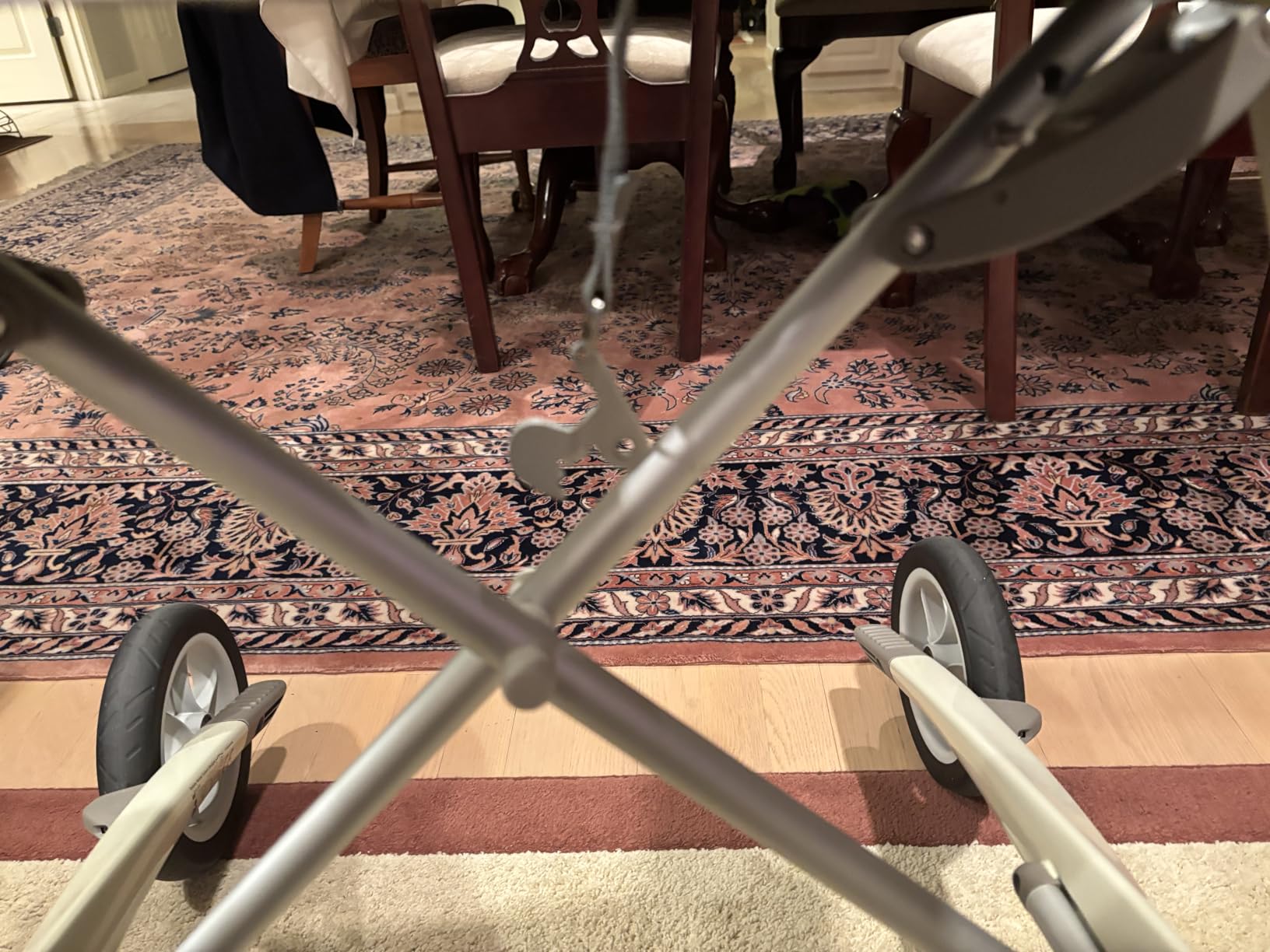
Two design choices are unusual in this category. The handle geometry is upright rather than raked, so you walk within the frame instead of behind it, which buyers credit with better posture and less neck and shoulder strain over a long day. Brake cables are routed inside the frame supports, so nothing hangs loose to snag on clothing or door frames.
Wheels are puncture-proof and include a curb-lift feature, which is useful on the concrete lips between ship gangway and quay. There is a lifetime frame warranty, and the frame comes in compact, regular and wide track widths.
Why lightness matters more on a trip
Travel is the one scenario where a heavy rollator becomes a real obstacle. The aid gets lifted into a trunk, carried through a station, maneuvered down a jet bridge and stowed in a compact hotel room, often several times in one day.
Owners who switched from heavier rollators point to the difference in lifting as the deciding factor, and the upright geometry means the walker does not need to be pulled from behind at all.
What the light frame costs you
The seat is narrow and shallow. It works for a short rest on a promenade but is not a place to sit for an hour, and the seat height does not adjust, which can be too tall for shorter users.
There is a stability trade-off too: a frame this light feels less planted than a heavier four-wheel rollator if your balance is poor or your movements are quick. Wide track versions also will not clear every doorway, so pick the compact track if you are touring small rooms. One accessory note: the optional backrest is hard to fit without strong hands.
6. Vive Ultra Lightweight Rollator – Best FSA and HSA Eligible Four-Wheel Pick
- Listed as FSA and HSA eligible
- Underseat storage compartment
- Tool-free assembly in minutes
- Six-inch wheels roll without scuffing floors
- Heavier than the lightweight name implies
- Front end is wider than buyers expect
This rollator is the straightforward one in the group. It weighs 14 pounds, measures 23 by 24 by 36 inches, carries a 300-pound capacity, and has a 24-inch-wide by 23-inch-deep frame. Handles adjust from 31 to 36 inches, which is a lower range than several other models here and suits shorter users.
The practical reason to notice it is coverage. The listing states the product is FSA and HSA eligible and is backed by a 1-year Vive guarantee. If you are paying out of pocket for a mobility aid, that combination of eligibility and a stated warranty is worth comparing against alternatives.
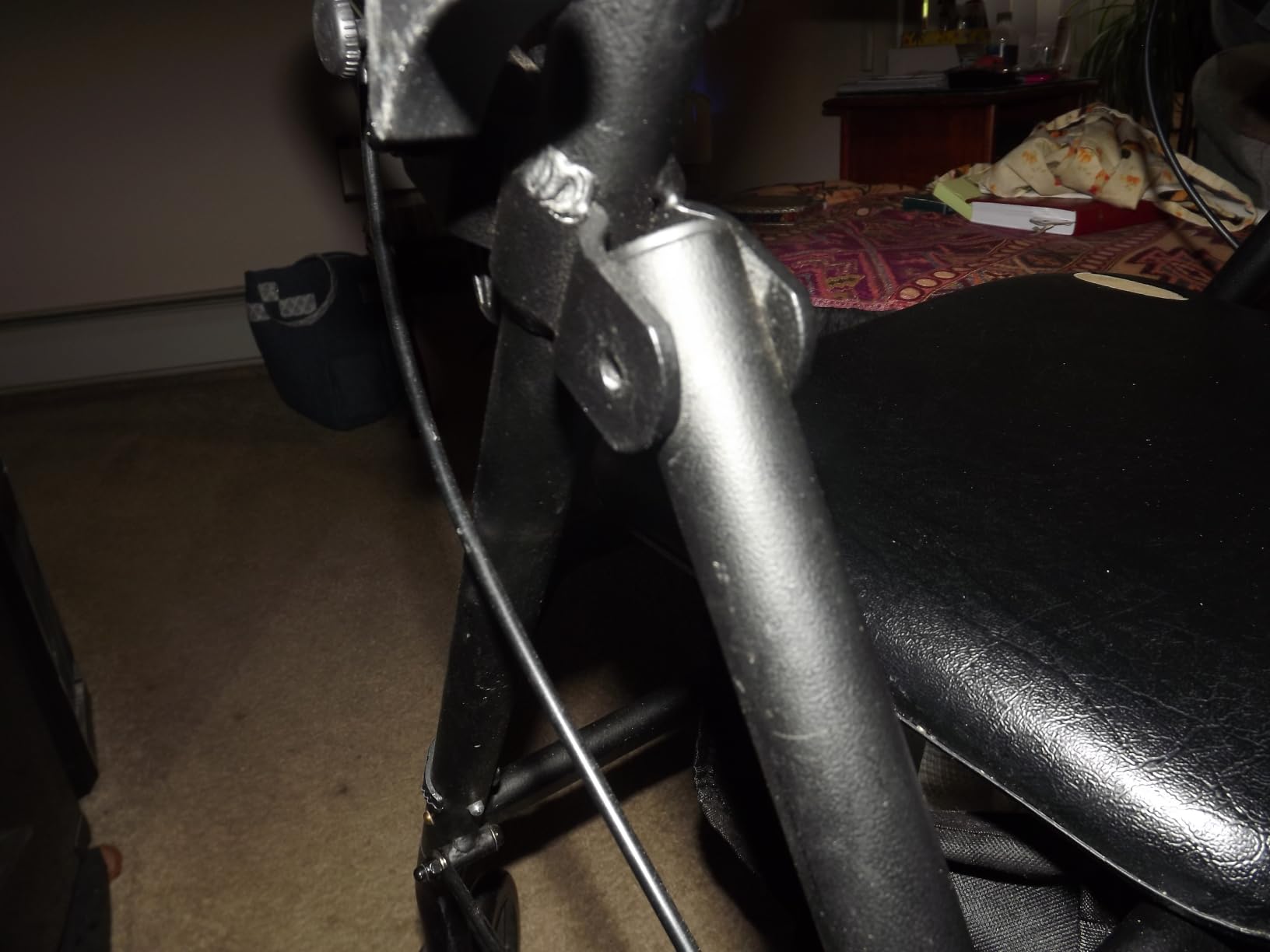
The seat is 14 by 12 inches with a padded backrest, and the handle height is fixed at 21 inches from the floor. An underseat storage compartment keeps a small bag or jacket off your back, which is useful when you are walking through an airport for an hour.
Assembly is tool-free and takes minutes, so it can be set up in a hotel room without hunting for hardware. The 6-inch wheels are intended for both indoor and outdoor surfaces, and buyers note that it rolls without marking hardwood floors.
When the underseat bag earns its place
Long terminal walks and museum queues are where a storage compartment changes the experience. Carrying a bag by hand while steering a rollator is the part travelers complain about most, and the compartment removes it.
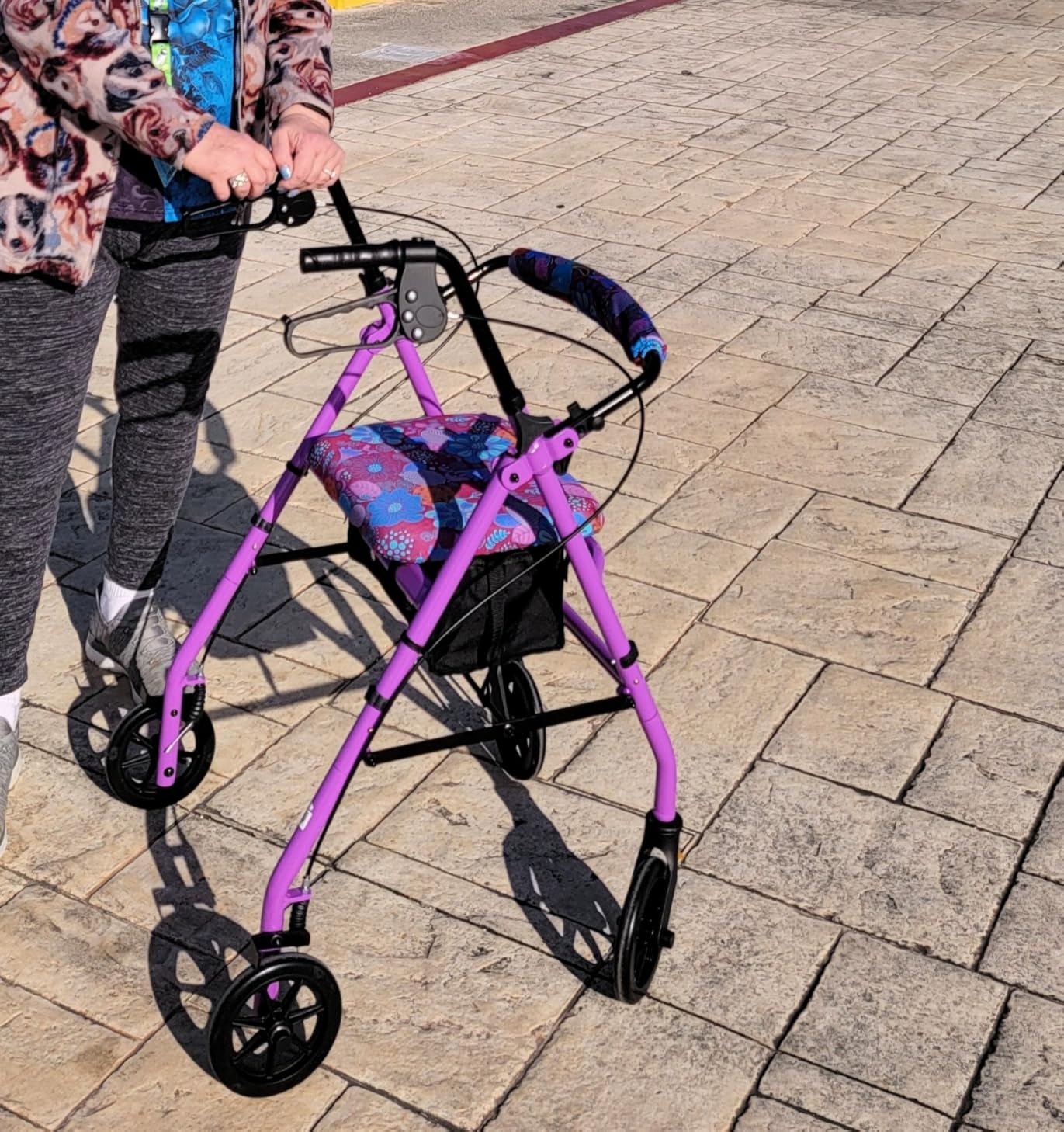
The color range is also unusually wide, with eight fabric and frame combinations listed, including floral seat covers, which matters if you intend to use it in public rather than only in a hallway.
Where the lightweight label stretches
At 14 pounds, this is not the lightest rollator in the list. Buyers who bought it expecting an ultra-lightweight frame report that it feels heavier than the name implies, particularly for anyone carrying it down steps.
Second, the front end is not as narrow as a three-wheel design. Users who have used a tri-wheel model sometimes find the four-wheel frame turns more slowly in tight spaces, and the 24-inch width will not clear a narrow doorway.
7. HOMLAND Foldable 3 Wheel Walker – Best for Narrow Doorways
HOMLAND Foldable 3 Wheel Walkers for Seniors, Lightweight Aluminum Frame
- Documented 25.9 inch doorway clearance
- Three-wheel frame turns tightly
- Quick fold for closets and trunks
- Detachable storage bag
- Three wheels offer less lateral stability
- Frame weight is listed differently from total weight
The HOMLAND is a three-wheel walker with a published clearance figure, and that is exactly the point of it: the manufacturer states it passes through 25.9-inch-wide doorframes. When you are booking a trip, a single hard number like that is more useful than a general claim about being narrow.
It is listed at 12.32 pounds, with the frame itself at 10.56 pounds, and the full dimensions are 29.5 by 25.6 by 38 inches. The aluminum frame folds quickly for a closet or a car trunk, and handle height adjusts to support posture without loading the shoulders.
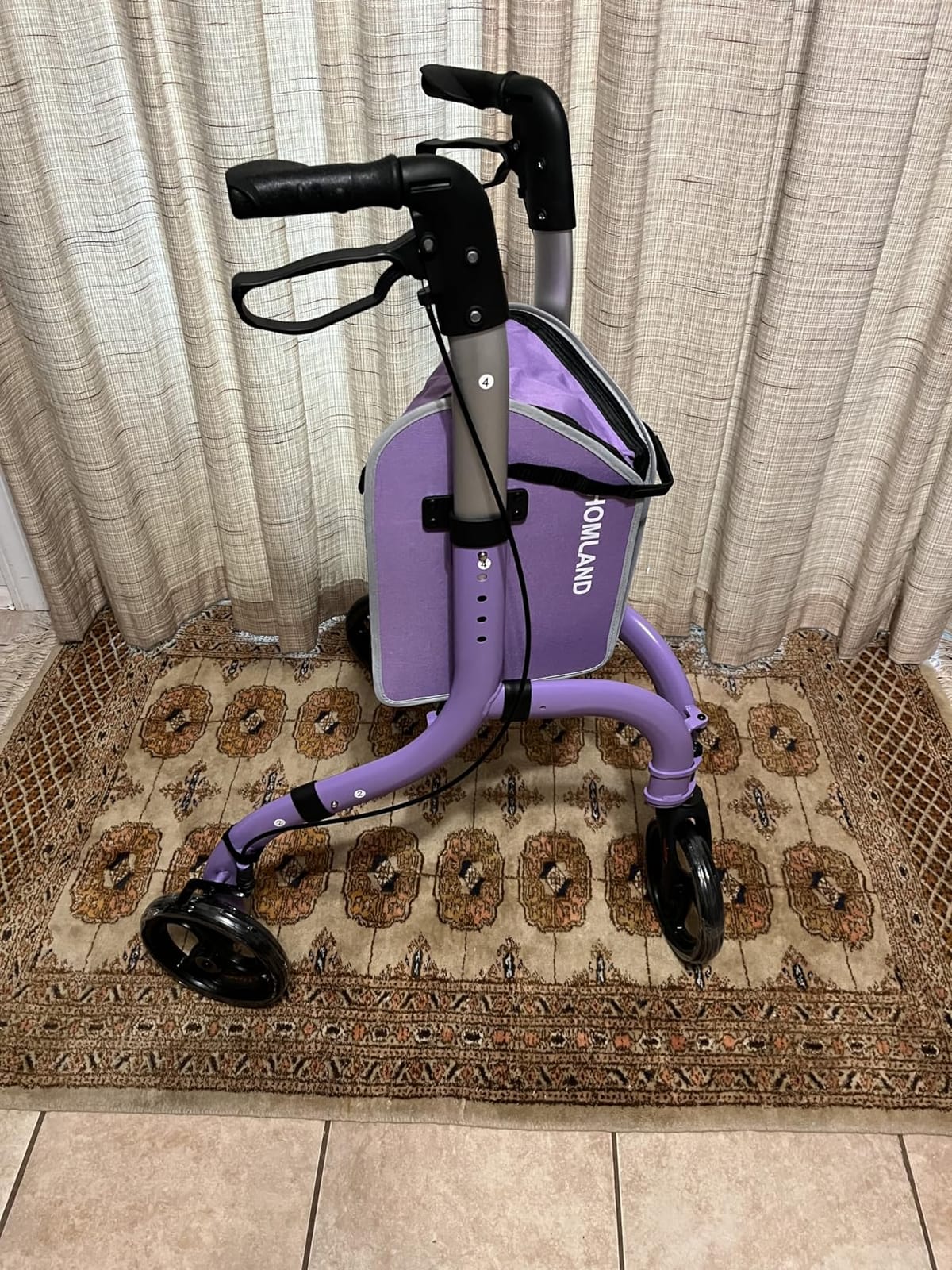
A three-wheel base turns on its front swivel and maneuvers where a four-wheel rollator has to be pushed forward and rotated. That is a genuine advantage in a small cruise cabin, a compact hotel bathroom or a crowded restaurant aisle, where you are constantly changing direction.
A detachable storage bag with tool-free assembly is included, and a brake stability system handles stopping. Colors listed are purple, red and black.
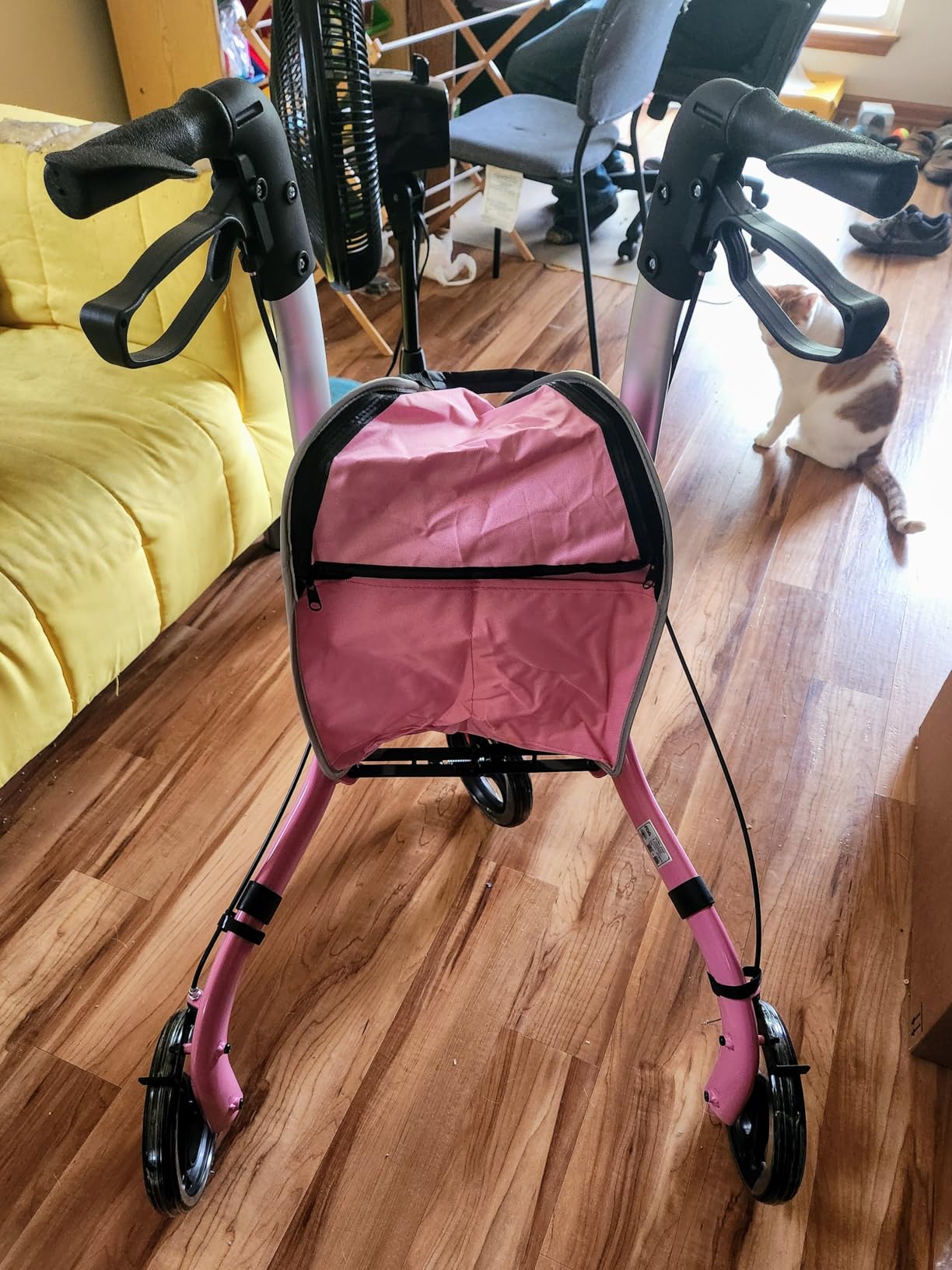
Why three wheels suit small spaces
Reviewers focus on the light frame, the doorway clearance and the quick fold. A tri-wheel walker needs less turning space than a four-wheel rollator, which matters on a ship where corridors are narrow and the room layout is unfamiliar.
It also folds into storage quickly, so a walker is not a permanent obstacle in a rented cabin or a small hotel room. That has real value when the room is not yours.
Where stability is the trade
Three wheels mean less lateral support than a four-wheel frame. If your balance is limited or you tend to make sudden movements, this is the reason to move up to a four-wheel rollator like the Drive Medical model further down this list.
Also note the weight figures differ: 12.32 pounds is the listed product weight while the frame alone is stated at 10.56 pounds. Use the higher figure when planning a lift.
8. Drive Medical AeroWalk Ultra-Lite – Best for Rough Ground and Higher Capacity
Drive Medical AeroWalk Ultra-Lite Rollator, 15.2 lb, 23″ Seat Height, Gray
- Highest capacity rating in the group at 330 lb
- 9 inch front and 7.5 inch rear wheels
- Height-adjustable extending backrest
- Enclosed brake cables
- Heavier to lift than carbon models
- Seat height must be chosen carefully
- Standard and tall variants
The AeroWalk Ultra-Lite is the one to consider if your itinerary includes uneven ground. Its front wheels are 9 inches and the rear wheels are 7.5 inches, the largest wheel package in this group, which is what allows it to roll over pavers, gravel paths and broken pavement without the constant drag that stops a ski-glide walker.
It weighs 15.2 pounds and measures 23.3 by 26.5 by 37.5 inches. The weight capacity is listed at 330 pounds, the highest rating among the ten models here, and the aluminum frame folds side-to-side for vehicle storage.

Comfort features are unusually well considered for a travel rollator. The backrest is height-adjustable and extends to add lumbar support, which is a real advantage on a long sightseeing day. Brake cables are enclosed inside the frame so they do not catch on clothing or a suitcase handle, and the handles adjust for height.
Several color and height variants are offered, with grey, blue and white frames in standard or tall seat-height options. Seat height is 23 inches on the model listed here.
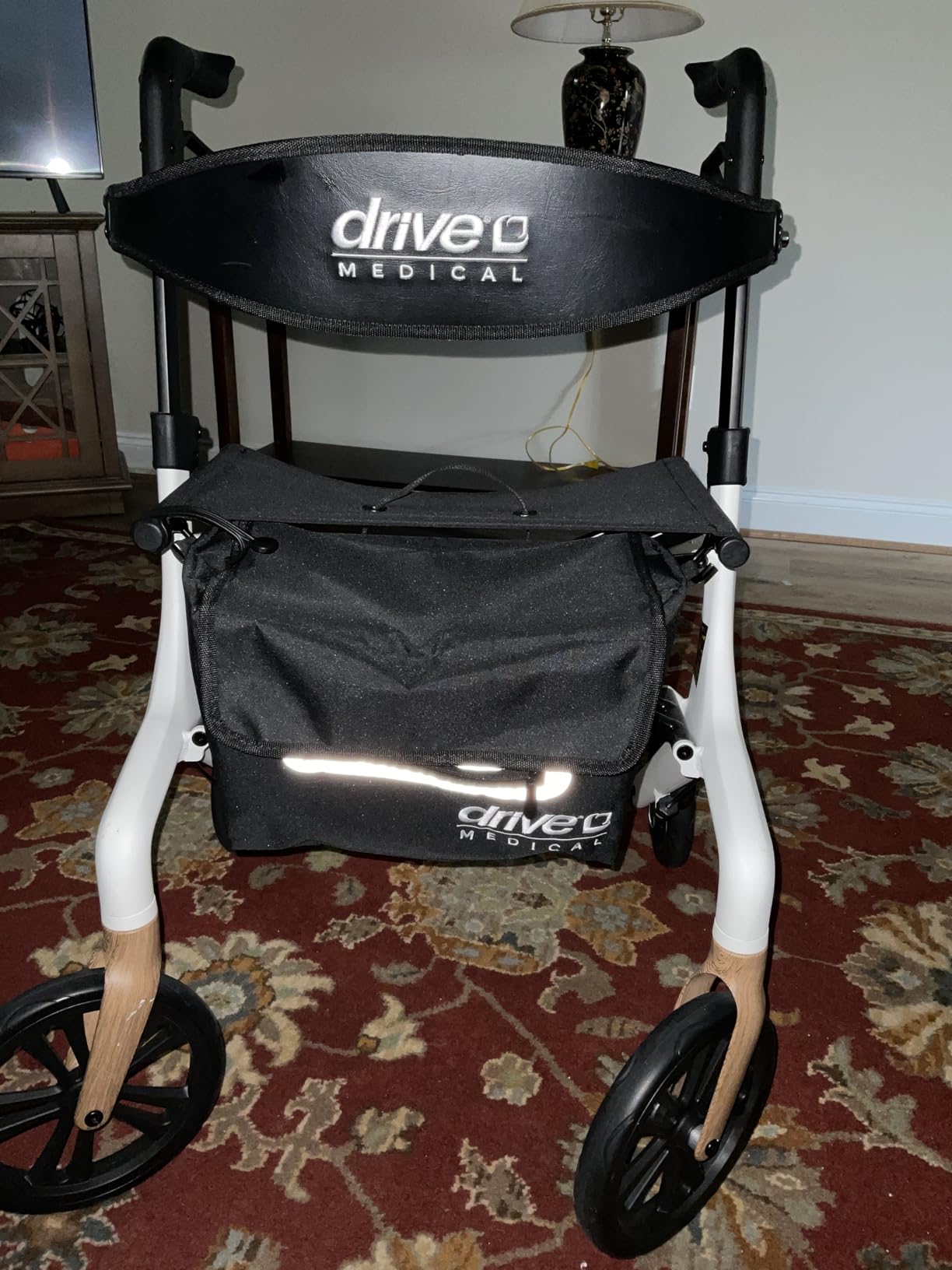
Why big wheels matter outside the terminal
Airport carpeting and cruise decks are kind to almost any wheel. Historic city centers are not. Cobblestones, tram tracks, canal paths and garden gravel punish small wheels, and larger diameter wheels roll over that surface instead of catching on it.
The 9-inch fronts also handle thresholds and kerb edges more gracefully than the 5-inch and 6-inch wheels used on the compact two-wheel walkers in this list.
Where 15.2 pounds becomes a problem
This is not the lightest rollator here. Buyers note that lifting it into a vehicle takes real effort for anyone with limited upper-body strength, and the carbon model at number five exists specifically for that reason.
The capacity advantage also comes with a fitting caveat: because seat height comes in standard and tall options, a shorter user has to choose the variant carefully rather than adjusting on the fly.
9. Stander Wonder Walker with 5-Inch Wheels – Lightest Walker in the Lineup
- Lightest weight here at 7 pounds
- 6 by 8 inch folded package
- Tool-free assembly in two steps
- Open U-shaped frame improves posture
- No hand brakes
- Best on smooth floors only
- Wider 25 inch frame
- Storage pouch not included
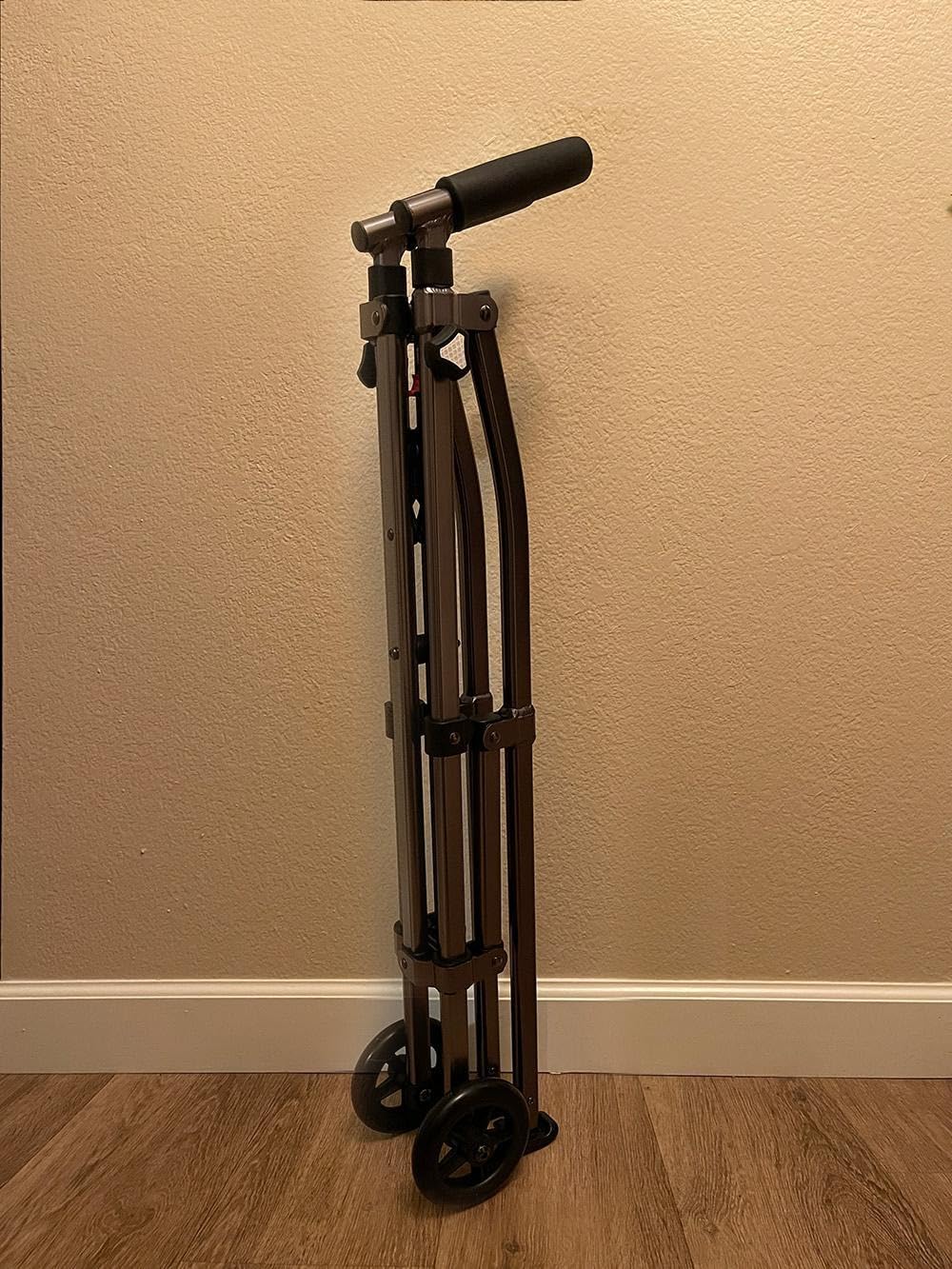
At 7 pounds, this is the lightest walker in the group, and it folds to a 6 by 8 inch package. If lifting capability is the constraint rather than preference, this is the model that removes it: a 7-pound aid can be picked up one-handed without planning for it.
Assembly is genuinely simple. You add the padded handles and the front wheels, with no tools and no cross-brace to line up. The full dimensions are 21.5 inches deep by 25 inches wide by 39 inches high, and the handles adjust from 32.5 to 39 inches.
The frame is a 25-inch-wide U-shaped open design rather than a closed rectangle. That shape lets you stand closer to the walker and walk in a more upright posture, which reviewers consistently notice as a comfort improvement over a standard two-wheel frame.
The aluminum frame is rated to 300 pounds, matching the other two-wheel Stander models. Wheels are 5-inch front casters with rear ski glides, the smallest set on the list, which keeps the weight down and is the reason the folded package is only 6 by 8 inches.
Why the lowest weight matters for travel
Every trip involves lifting a walker at least a few times. Out of a trunk, through a station concourse, into a rental car, out of a hotel closet. At 7 pounds those lifts are unremarkable rather than an event, and that is the single strongest argument for this model.
The tiny folded package also means it can share a suitcase with other gear, or sit in a small cabin without occupying floor space.
What you trade for the weight
There are no hand brakes. Stopping relies on the drag of the rear glides, so this suits someone with reliable balance rather than someone who needs a controlled stop.
The 25-inch width is wider than the narrow-frame Vive model, so it is less suited to tight doorways, and the storage pouch is not included with the frame. Smooth floors are the sweet spot: the 5-inch wheels and glides are not built for cobblestone or gravel.
10. Walk Mate 3 Wheel Rollator – Best for Smaller, Lighter Users
- About half the weight of a standard four-wheel rollator
- Folds to a car-friendly size
- Turns on the spot in tight rooms
- Storage bag and cane holder included
- Seat is very small
- 250 lb capacity is the lowest here
- Some reports of loose joints and brake wear
- Rear wheelbase is long
The Walk Mate is built for a specific user: someone lighter and slimmer than the average four-wheel rollator is designed for. Its capacity is listed at 250 pounds, the lowest in this group, and the fit range is stated for users from 4.8 feet to 6 feet tall across six handle levels from 32.3 to 37 inches.
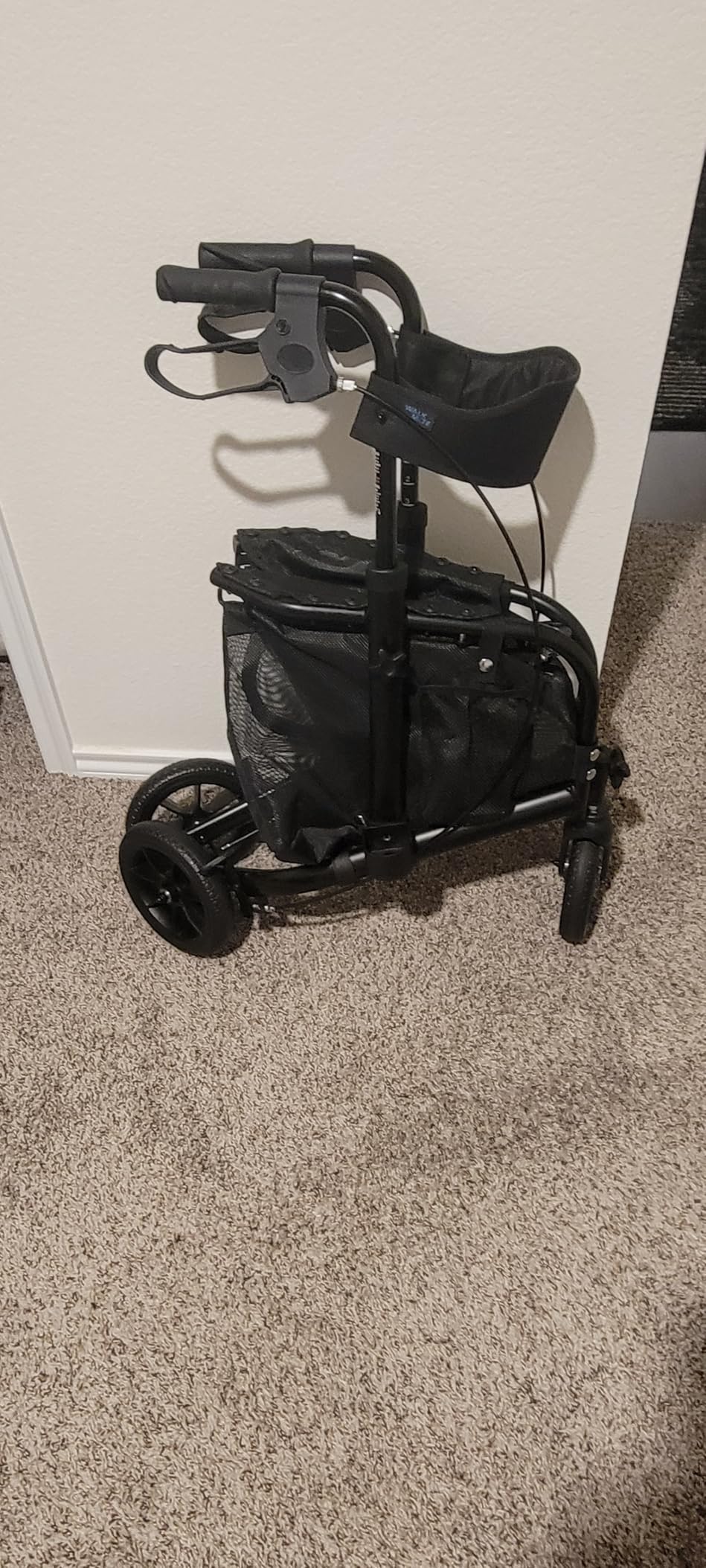
It weighs 10.67 pounds and measures 32.3 by 27.2 by 32.3 inches. The three-wheel layout with a 360-degree swivel front wheel turns on the spot, which buyers specifically like in small kitchens and tight hotel rooms.
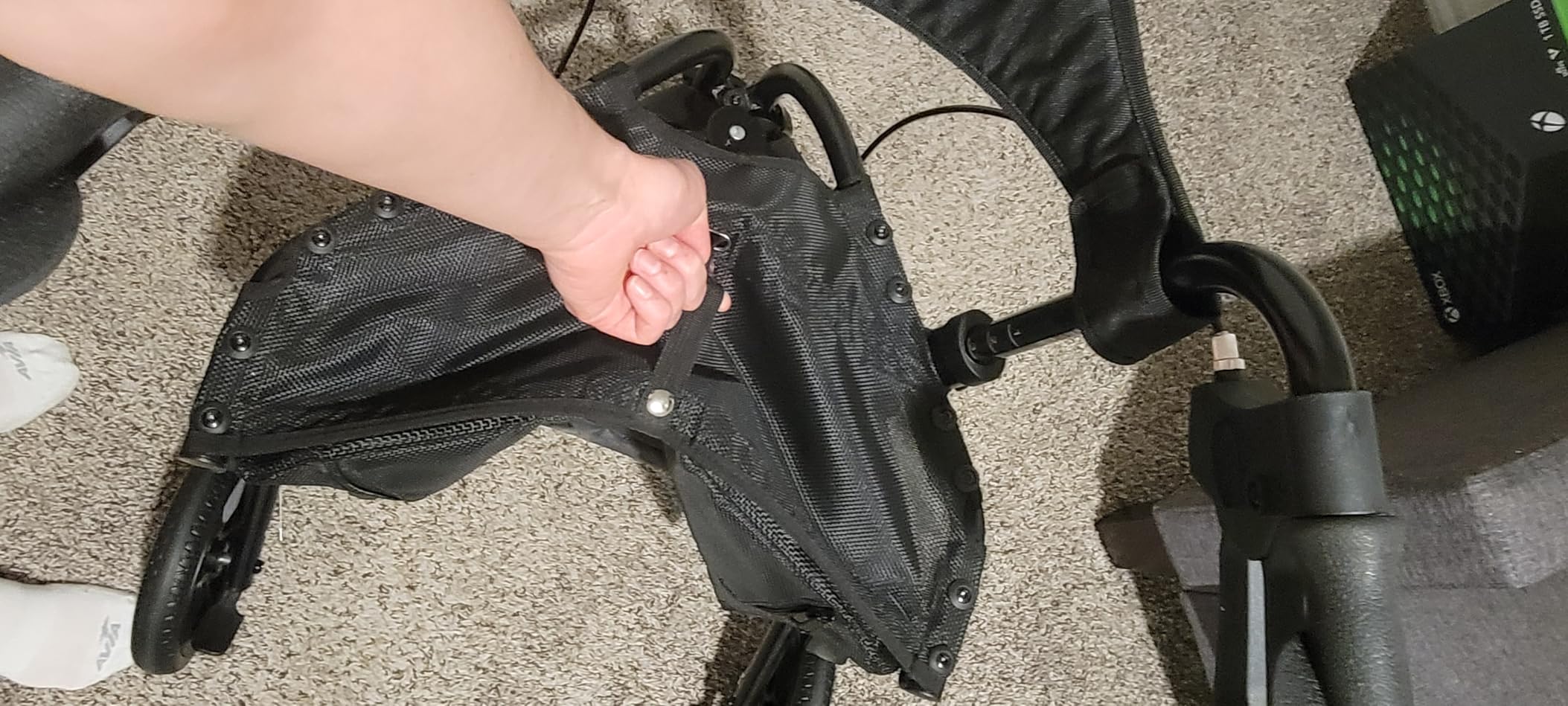
The wheels are 8 inches with anti-skid tread, so outdoor surfaces are handled better than a ski-glide walker would manage. An elastic band secures the folded frame, and the removable mesh storage bag, side pocket and cane holder keep hands free on a long day.
One pull on the strap partially collapses the frame, narrowing it for crowds and tight spaces. That makes it easy for a family member to lift into a car, which is a common travel concern.
Why the small footprint is useful indoors
A tri-wheel frame changes direction without the forward-and-rotate maneuver a four-wheel rollator needs. In a compact cabin, a restaurant booth aisle or a domestic kitchen, that difference is what makes a rollator practical rather than frustrating.
For a traveler, the roughly 10.7-pound weight is also among the lighter rollator figures available, and the folding design keeps the package small for a trunk.
Where the small size becomes a limit
The seat is very small, around a women’s US size 8, and suits short sitting periods only. If you plan to rest frequently on a long sightseeing day, the PLANET WALK or Drive Medical seats are considerably roomier.
Two further cautions. The rear wheelbase is long and wide, so the folded unit may not fit behind a driver’s seat and can be hard to clear a narrow bathroom doorway. And this product carries the widest spread of negative reviews in the group, with reports of creaking frames, loose joints, brake wear and a small number of tip-over incidents. Seat locking and unfolding also take real arm strength, and a few buyers report fitting wheels backwards on first assembly.
Can You Fly With a Folding Walker? Airline Rules and Cabin Fit
Yes, you can bring a folding walker on an airplane. Standard folding walkers and rollators are accepted as mobility aids, and airlines may stow them in the cabin, in the overhead bin or the under-seat space, or tag them for gate check. Most carriers treat a collapsible walker as a mobility device rather than ordinary baggage. Confirm the specific policy with your airline before you fly, because storage arrangements vary.
Gate check is the term for when a mobility aid is handed to the airline at the aircraft door and returned at the jet bridge on arrival. It is not the same as checking a suitcase: mobility aids are typically handled separately from regular baggage and are meant to come back with you at the gate. Even when cabin stowage is arranged, carriers sometimes gate check an aid anyway, so plan for the handoff.
Most travelers want to know whether they can keep a walker in the cabin. The safest approach is to contact the airline’s accessibility desk with the walker folded dimensions, the date, the route and your reservation number, and ask where the device will be stowed. Users report that the uncertainty itself causes more anxiety than the gate check does, so a written answer before you travel is worth the effort.
Regarding the best walker for a long day, weight and footprint are the deciding factors. Models in this group range from 7 pounds and a 6 by 8 inch folded package up to 15.2 pounds for a full rollator. The light two-wheel walkers slide under a seat or into an overhead bin, while rollators usually need gate handling because of their height.
Two more practical points from people who fly regularly with an aid. If your trip includes a tight connection, ask the airline in advance how the transfer works, because availability between terminals varies. Airport carts are intended for passengers with disabilities, so you can reasonably expect one to be offered at a gate rather than treated as a general luggage trolley.
On packing: a folded walker at 5 by 7 inches or 6 by 8 inches fits inside a carry-on or a checked suitcase alongside other gear, and travelers report doing exactly that. There is no doctor note requirement for most folding mobility aids, though it helps to have documentation of your device if you are requesting cabin stowage or a pre-boarding time.
One final note on risk. In mobility forums, the general experience reported is that walkers and manual wheelchairs come back undamaged from the baggage hold far more often than people expect. If damage does occur, report it to the airline representative at the gate before leaving the airport, and photograph the device.
How to Choose a Folding Walker for Travel
Standard walker or rollator
A two-wheel standard walker supports you from the front, which is the most stable and most transferable support position. It folds smallest, weighs the least, and is the right answer when your priority is getting through airports and cruise gangways.
A rollator adds a seat, larger wheels and hand brakes. Choose one when the trip involves long walking days, sightseeing on rough ground, or a need to rest frequently. A three-wheel rollator turns more tightly than a four-wheel model but gives up some lateral stability.
Weight and folded size are two different numbers
Weight capacity is how much body weight the frame supports. Product weight is how heavy the device is when you lift it. Shoppers constantly mix these two up. A 300-pound capacity says nothing about whether you can get the walker into a high car trunk.
For travel, treat anything under 10 pounds as a true portable model and anything above 15 pounds as a lifting decision. The lightest option here is 7 pounds, and the heaviest rollator listed is 15.2 pounds.
Read the folded footprint, not the assembled dimensions
Assembled dimensions tell you about the device in use. Folded dimensions tell you whether it fits your life. The 5 by 7 inch and 6 by 8 inch footprints on the compact Stander models are the reason they are the easiest to travel with.
For rollators, the folded width matters most. A model that folds to about 11 inches stands against a wall or lies across a trunk without consuming cargo space.
Match wheel size to the terrain on your itinerary
Small casters with rear ski glides, in the 5-inch and 6-inch range, are built for smooth floors, carpet and level indoor surfaces. They are the right choice for terminals, ships and hotel rooms, and the wrong choice for cobblestone, gravel or wet pavement.
Rubber wheels of 6 inches and up handle smoother outdoor surfaces. The 8-inch and 9-inch wheel sets on the rollators in this group are what make sightseeing on old paving and garden paths practical rather than exhausting.
Consider grip strength and the folding mechanism
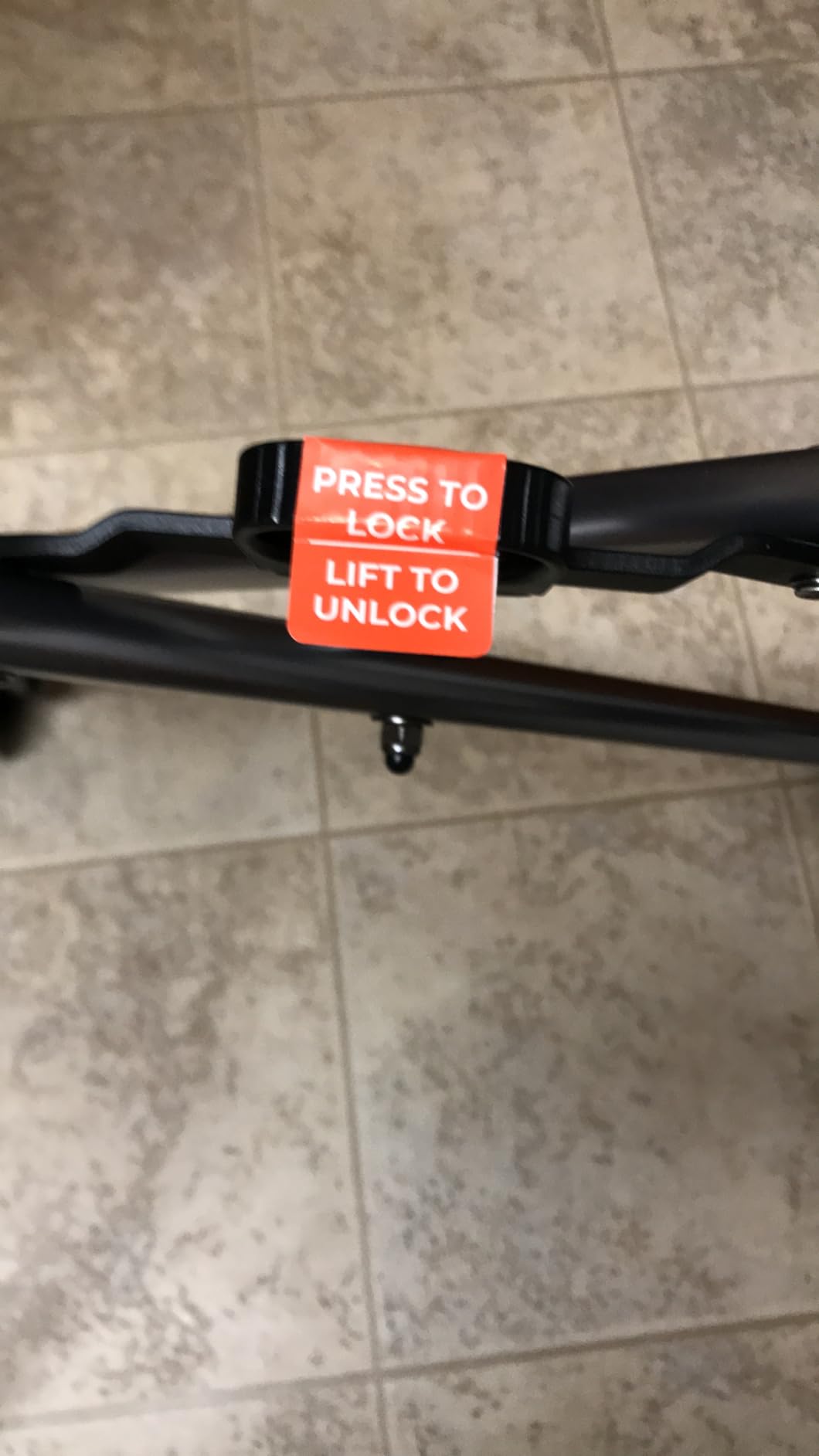
Two-button and trigger-release folding mechanisms require two hands and a firm grip. If you have limited hand strength or only one usable hand, this is a genuine limitation, and it is one of the most common complaints from users recovering from surgery or a stroke.
One-handed fold mechanisms exist and are worth seeking out deliberately. Ask for a demonstration before you buy, ideally with the device already assembled, and check whether the fold can be done while the walker is standing on the floor rather than lifted.
Decide on a seat honestly
A seat adds weight, bulk and fold time. It also decides whether a long day is manageable. Small seats on three-wheel models work for a brief pause; larger padded seats with a backrest are what you want if you plan to sit regularly.
Also check seat height against your own height. A seat set too high leaves your feet off the floor, which is the most common complaint across the lighter rollators in this group.
Coverage: Medicare DME, FSA and HSA
What kind of walker will Medicare pay for? Original Medicare covers durable medical equipment including walkers, and the item must be prescribed by a doctor and supplied by an approved supplier. Coverage rules differ under Medicare Advantage plans, so check with your specific plan before assuming anything is included.
Flexible spending accounts and health savings accounts commonly cover walkers and rollators as medical equipment. Eligibility depends on your plan documents, but it is worth checking whether the product listing is marked eligible before you buy.
For a single trip, renting from a medical supplier at your destination is often cheaper than buying, and a local supplier can advise on models that fit local doorways. If the plan is a short holiday, renting for the duration is a reasonable option. The travel trailer guide we keep updated covers the same buy-versus-rent question for a different piece of travel gear if you want the general framework.
Medical and affiliate disclosure: This guide is for general information and is not medical advice. Talk to your doctor or occupational therapist before switching walker type, increasing weight capacity, or using any mobility aid for the first time. As an Amazon Associate we earn from qualifying purchases.
Frequently Asked Questions
What is the best walker to bring on an airplane?
The best walker for a plane is a lightweight two-wheel model that folds into a package small enough for an overhead bin or under-seat space. The Stander Wonder Walker with 5-inch wheels at 7 pounds and a 6 by 8 inch folded footprint is the lightest option, while the Stander Space Saver folds to 5 by 7 inches at 8 pounds. A rollator is more comfortable on long days but usually needs gate handling because it is too tall for cabin stowage.
Can I bring a foldable walker on an airplane?
Yes. Airlines accept folding walkers and rollators as mobility aids rather than ordinary baggage, and most will stow a collapsible model in the cabin or gate check it at the jet bridge and return it when you land. Contact the airline accessibility desk with your folded dimensions before travelling so you have a confirmed answer.
Do airlines gate check walkers?
Many do, even when a walker qualifies for cabin storage. Gate check means the device is handed over at the aircraft door and returned at the jet bridge, not sent through regular baggage handling. A gate check is usually routine rather than a problem, but you should plan for the handoff and report any damage to the airline representative at the gate before leaving the airport.
What are the best travel walkers for seniors?
For the most compact option, the Stander Space Saver and Wonder Walker Plus fold to a 5 by 7 inch package at 8 pounds. The Stander Wonder Walker with 5-inch wheels is the lightest at 7 pounds with a 6 by 8 inch fold. If you want a seat and outdoor wheels, the PLANET WALK rollator weighs 13 pounds with 8-inch rubber wheels, and the byACRE Carbon Ultralight is the lightest rollator here at 10.6 pounds.
What kind of walker will Medicare pay for?
Original Medicare covers walkers as durable medical equipment when they are prescribed by a doctor and supplied by an approved supplier. Medicare Advantage plans set their own rules, so confirm with your specific plan. Flexible spending and health savings accounts commonly cover walkers and rollators as medical equipment, subject to your plan documents.
Will a folding walker fit in an overhead bin?
A two-wheel walker folded to 5 by 7 inches or 6 by 8 inches will fit easily, and it can also slide under the seat in front of you. A four-wheel rollator folds to roughly 10 to 11 inches wide but stays tall, so airlines usually handle those at the gate. Check the folded footprint published for the specific model rather than the assembled dimensions.
Should I rent or buy a walker for a single trip?
For a single holiday, renting from a medical supplier at your destination usually costs less than buying and takes up no luggage space. A local supplier can also advise on models that fit local doorways and terrain. If you travel several times a year or plan a trip where you need a familiar aid, buying a compact model and carrying it is more predictable.
Final Verdict
The best folding walkers for travel come down to one number: how small and how light the package gets. The Stander Space Saver is our pick overall, folding to 5 by 7 inches at 8 pounds with a 300-pound rating and thousands of reviews behind it. Pick the Wonder Walker Plus if you want lockable swivel wheels, and the Wonder Walker with 5-inch wheels if lifting is the hardest part of your day.
For cruise days, sightseeing and rough ground, go with a rollator. The PLANET WALK at 13 pounds with 8-inch wheels is the balanced choice, the Drive Medical AeroWalk adds the highest capacity here, and the byACRE Carbon is the one to lift alone. Check your airline’s mobility policy before you fly, and make sure your walker is fitted to you rather than to a specification sheet.